
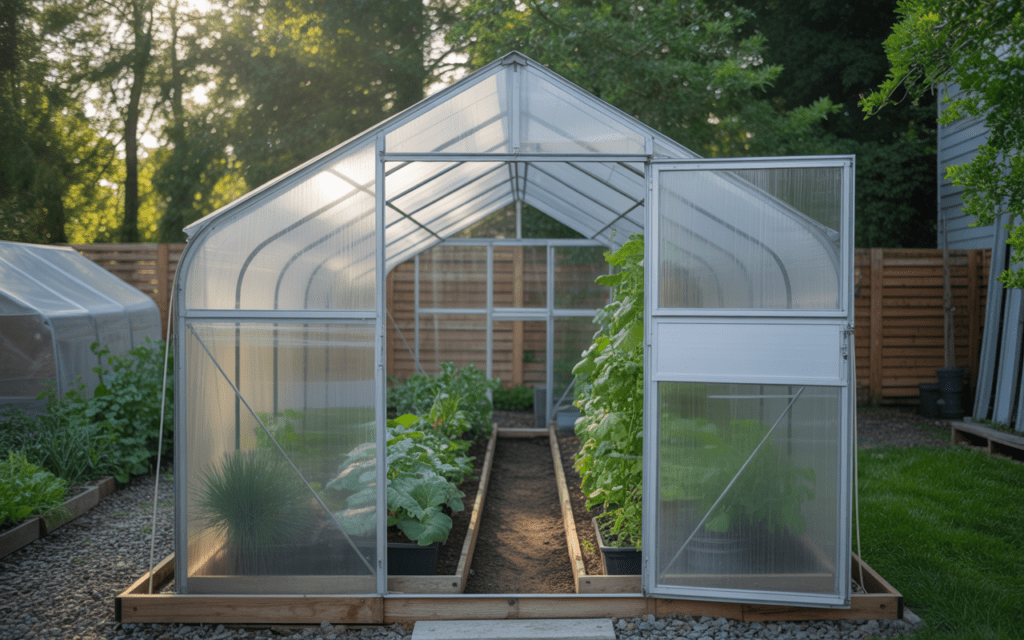
Growing fresh herbs in the middle of winter feels a little rebellious, doesn’t it? While everyone else stares sadly at frozen flower beds and lifeless tomato plants, greenhouse gardeners keep harvesting lettuce like it’s still spring. Honestly, it’s kind of a flex.
A greenhouse completely changes the gardening game. It gives plants protection from harsh weather, extends the growing season, and lets you experiment with flowers, vegetables, and tropical plants that normally wouldn’t survive in your climate. Plus, there’s something ridiculously calming about stepping into a warm greenhouse on a cold morning. It’s basically therapy with tomatoes.
The best part? You don’t need a giant backyard or a millionaire budget to make it happen. Some greenhouse ideas look ultra-modern and sleek, while others feel charming and rustic. Some fit tiny patios, and others turn entire backyards into mini botanical gardens. So if you’ve been thinking about building one, upgrading one, or just daydreaming about one while avoiding your responsibilities, these greenhouse ideas should give you plenty of inspiration.
1. Classic Glass Greenhouse
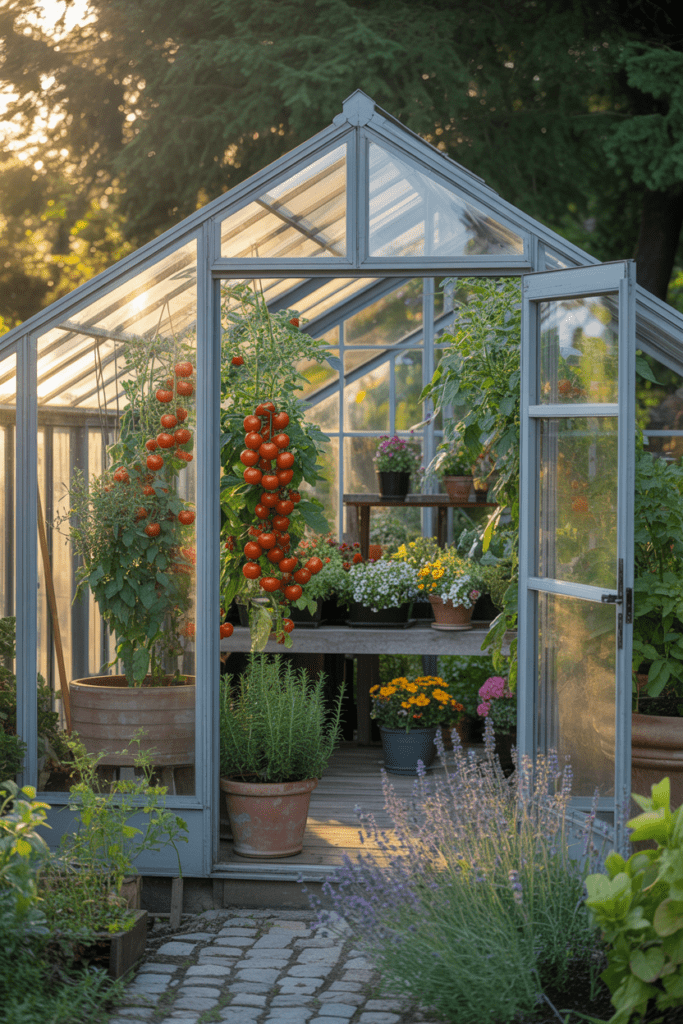
A traditional glass greenhouse never goes out of style. The clean lines, transparent walls, and bright interior create the perfect environment for year-round gardening. It also makes the backyard look oddly sophisticated, like you suddenly know Latin plant names and drink tea while pruning roses.
Glass greenhouses allow maximum sunlight, which helps vegetables, herbs, and flowers thrive even during colder months. They work especially well for gardeners who want to grow tomatoes, cucumbers, peppers, and citrus trees.
A few reasons gardeners still love this setup:
- Excellent natural light
- Elegant and timeless appearance
- Great for larger plant collections
- Easy to customize with shelving and benches
The only downside? Glass requires occasional cleaning because dirt and pollen love ruining your aesthetic. Nature really said, “Not so fast.”
2. Mini Greenhouse for Small Spaces
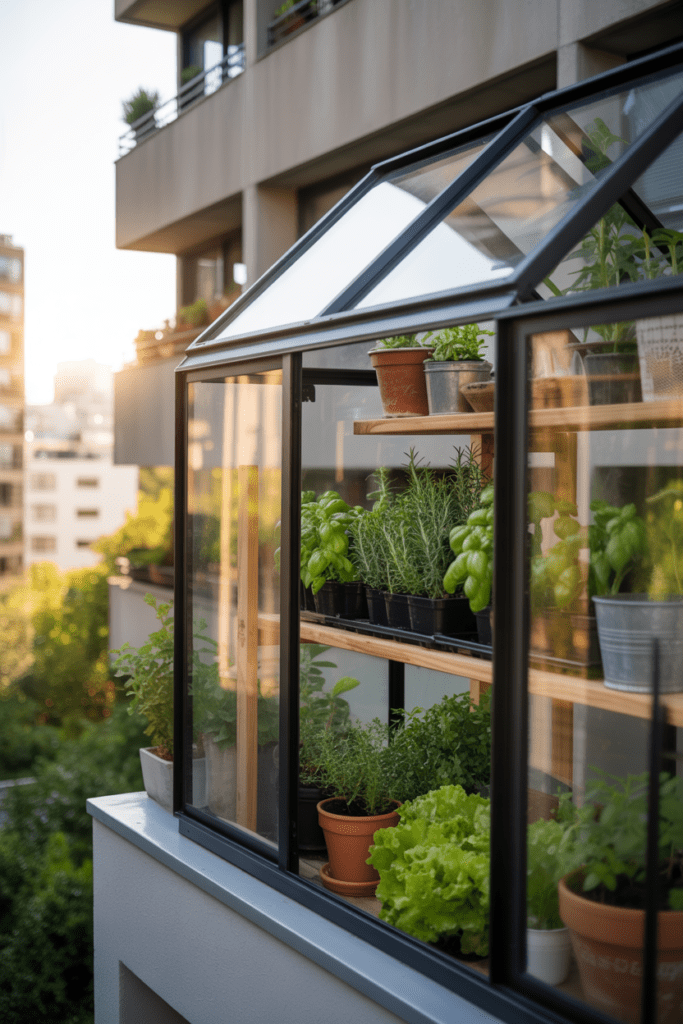
Not everyone has room for a giant backyard greenhouse, and honestly, that’s fine. A mini greenhouse works perfectly for balconies, patios, or tiny urban gardens. You can still grow herbs, seedlings, and leafy greens without sacrificing your entire outdoor space.
These compact structures usually feature lightweight frames with plastic or polycarbonate covers. Many even come with zippered doors and adjustable shelves, which makes organization surprisingly easy.
IMO, mini greenhouses work best for beginner gardeners because they feel manageable. A massive greenhouse sounds exciting until you realize you’re responsible for watering 87 plants every day 🙂
3. Lean-To Greenhouse Attached to the House
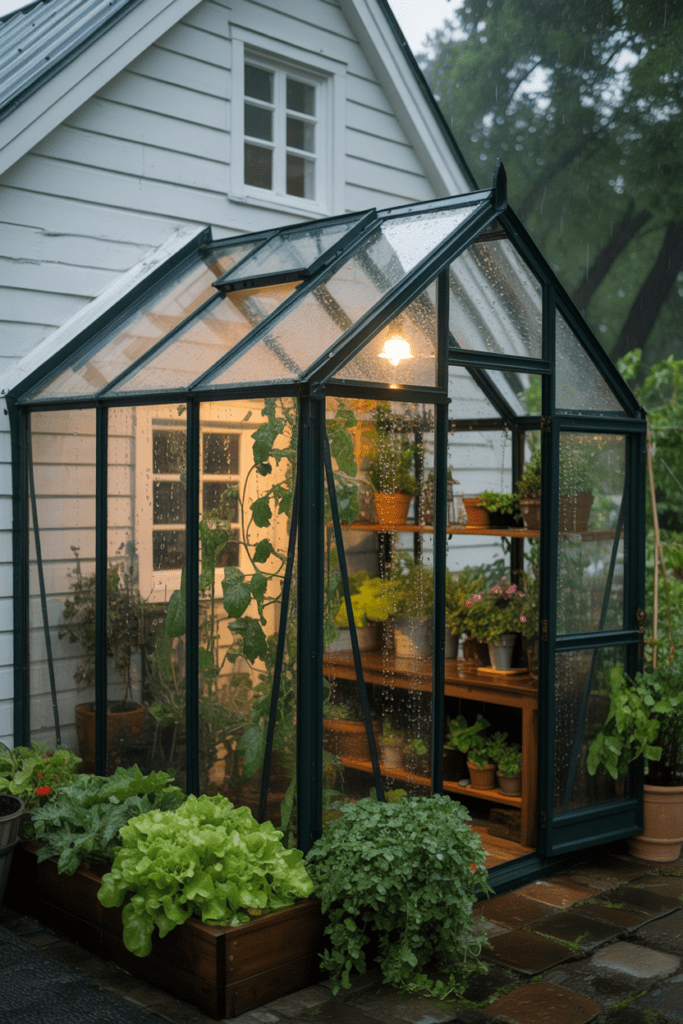
A lean-to greenhouse connects directly to an exterior wall of your home. This setup saves space while also using the house for insulation and warmth. Smart and practical? We love that combo.
This type of greenhouse works especially well in colder climates because the attached wall helps retain heat during winter. It also gives you easier access during bad weather. Nobody wants to march through freezing rain just to check on basil plants.
You can use a lean-to greenhouse for:
- Growing herbs year-round
- Starting seedlings early
- Protecting tropical plants
- Creating a cozy indoor-outdoor garden space
Add a small chair and suddenly you’ve created the world’s most peaceful coffee spot.
4. Rustic Wooden Greenhouse
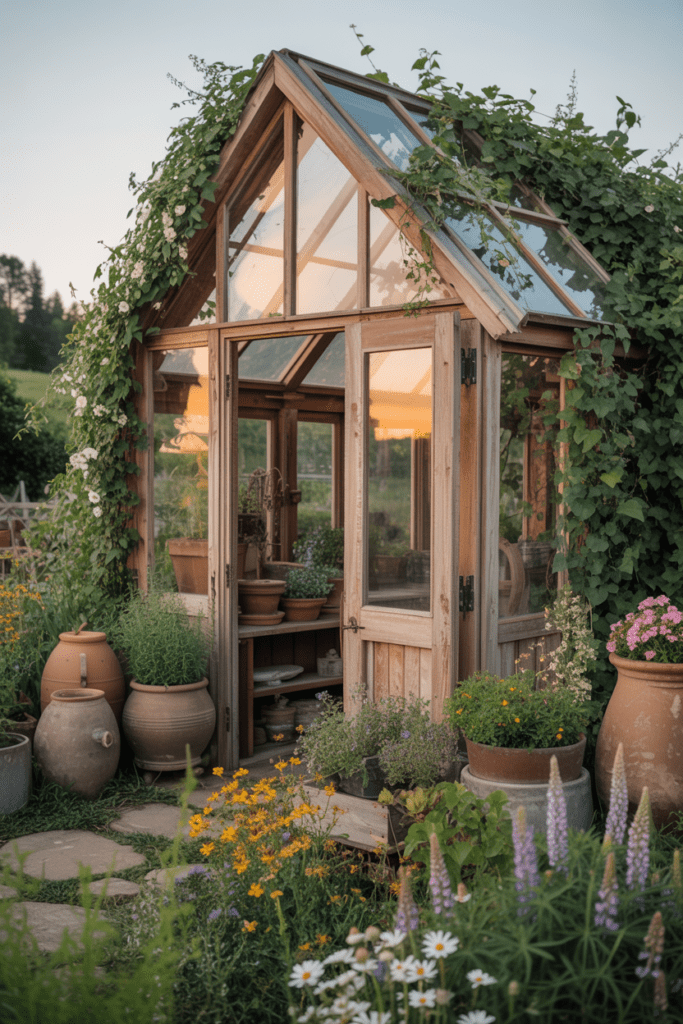
A wooden greenhouse adds warmth and charm that metal frames sometimes lack. The natural texture of wood blends beautifully with cottage gardens, wildflower landscapes, and rustic outdoor spaces.
Cedar remains one of the best wood choices because it naturally resists moisture and pests. Plus, it smells amazing when the sun heats it up. Little bonus perk there.
This style works perfectly if you want your greenhouse to feel decorative instead of purely functional. Add hanging baskets, vintage pots, and climbing vines, and the whole space starts looking straight out of Pinterest.
5. DIY Pallet Greenhouse
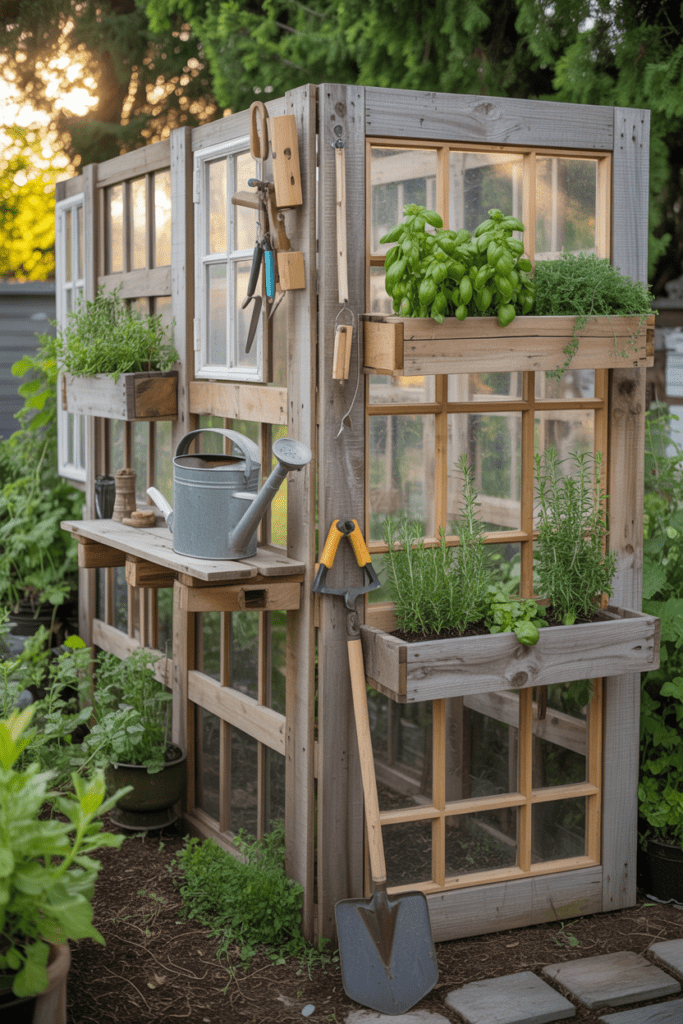
Pallet greenhouses prove you don’t need a huge budget to create a productive growing space. Repurposed wooden pallets can form the frame, walls, shelving, or planting stations.
This idea works especially well for gardeners who enjoy weekend DIY projects. Sure, assembling pallets takes patience, but it’s also weirdly satisfying once everything comes together.
A pallet greenhouse can include:
- Vertical herb gardens
- Built-in storage shelves
- Recycled windows for sunlight
- Hanging planters for extra greenery
FYI, sanding rough pallet wood before building saves your hands from endless splinters. Learned that one the hard way.
6. Modern Black Frame Greenhouse
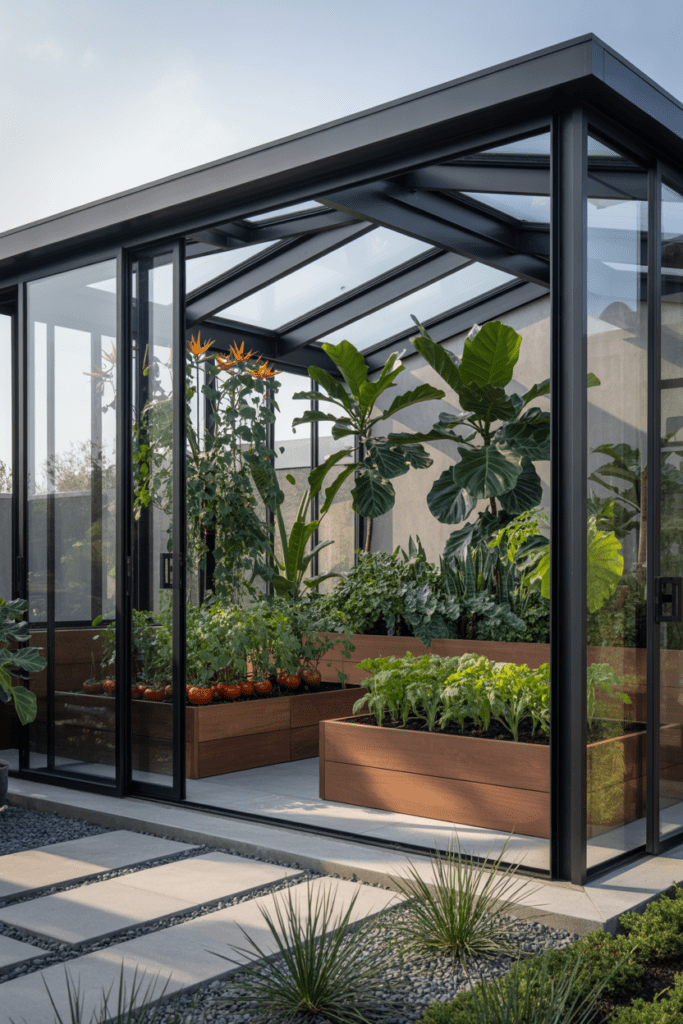
Modern greenhouses with black aluminum frames look incredibly sleek and stylish. They almost feel too pretty for gardening. Almost.
The dark framing creates dramatic contrast against green plants and colorful flowers, giving the entire structure a high-end architectural vibe. These greenhouses pair beautifully with minimalist landscaping and contemporary homes.
Besides looking amazing, aluminum frames also resist rust and require very little maintenance. That means less time fixing things and more time pretending you’re starring in a luxury gardening show.
7. Greenhouse with Raised Garden Beds
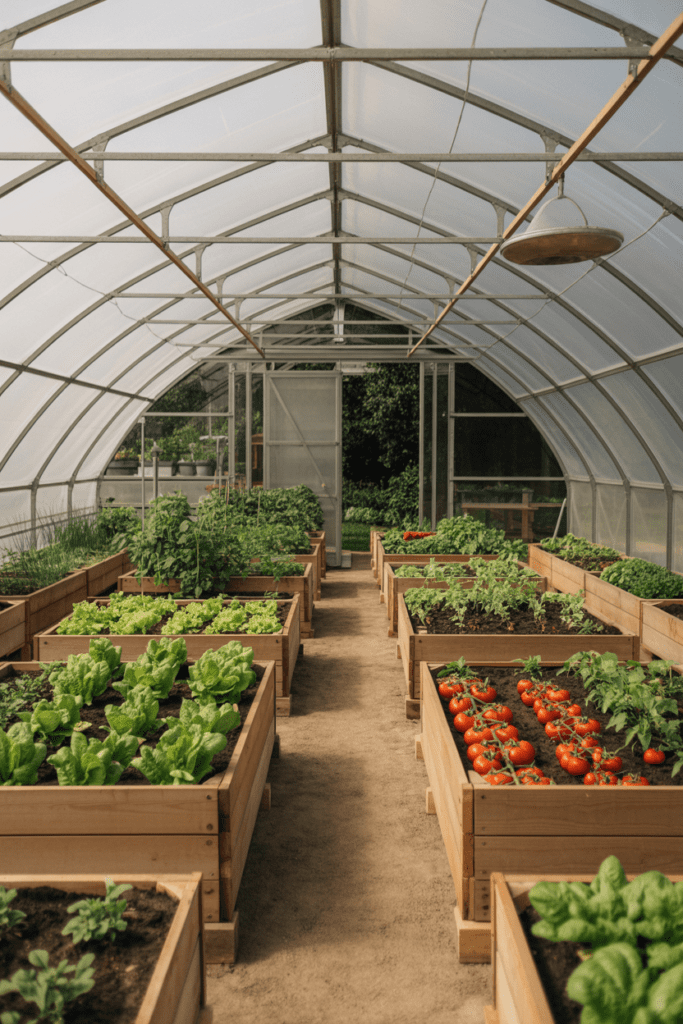
Combining raised beds with a greenhouse creates a highly organized and efficient growing setup. Raised beds improve drainage, reduce soil compaction, and make gardening easier on your back.
Seriously, bending over for hours loses its charm very quickly.
Inside the greenhouse, raised beds also help maintain soil temperature and create dedicated planting zones. You can separate vegetables, herbs, and flowers without everything turning into chaotic plant spaghetti.
Popular raised bed greenhouse crops include:
- Lettuce
- Spinach
- Tomatoes
- Strawberries
- Peppers
The structured layout makes the greenhouse feel cleaner and more manageable too.
8. Vintage Window Greenhouse
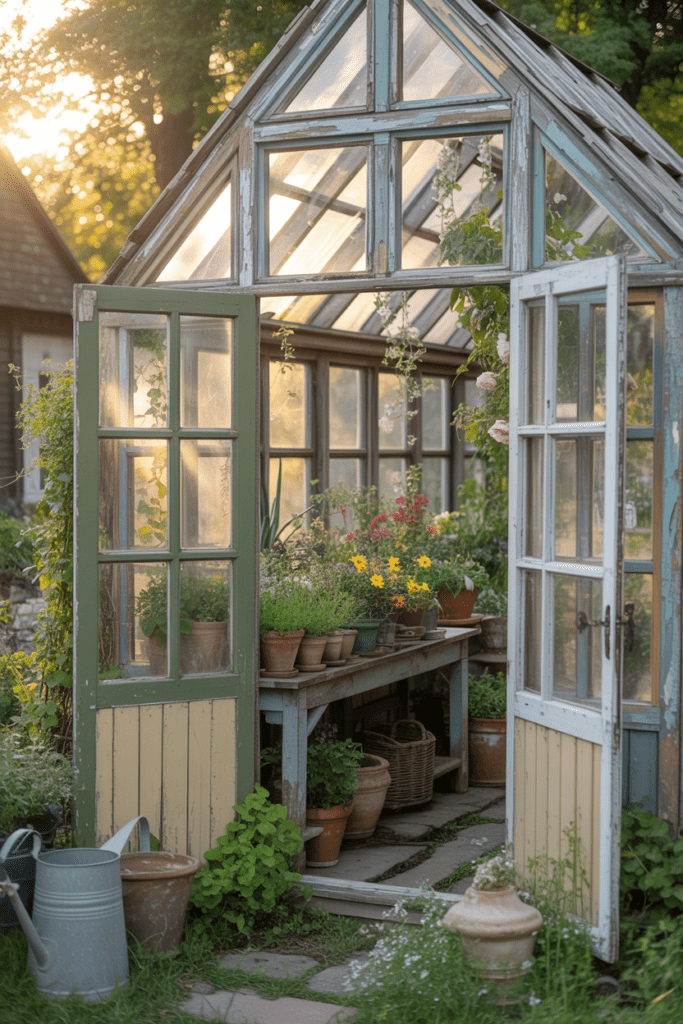
Vintage window greenhouses look incredibly charming because they use mismatched recycled windows to create the walls and roof. Every greenhouse ends up looking unique, which adds personality and character.
This project works well for creative gardeners who enjoy thrift stores, flea markets, or salvage yards. Old windows with chipped paint somehow make everything feel more magical.
The slightly imperfect look gives the greenhouse a cozy cottage-garden vibe that feels warm and inviting. It’s basically controlled chaos in the best possible way.
9. Polycarbonate Greenhouse
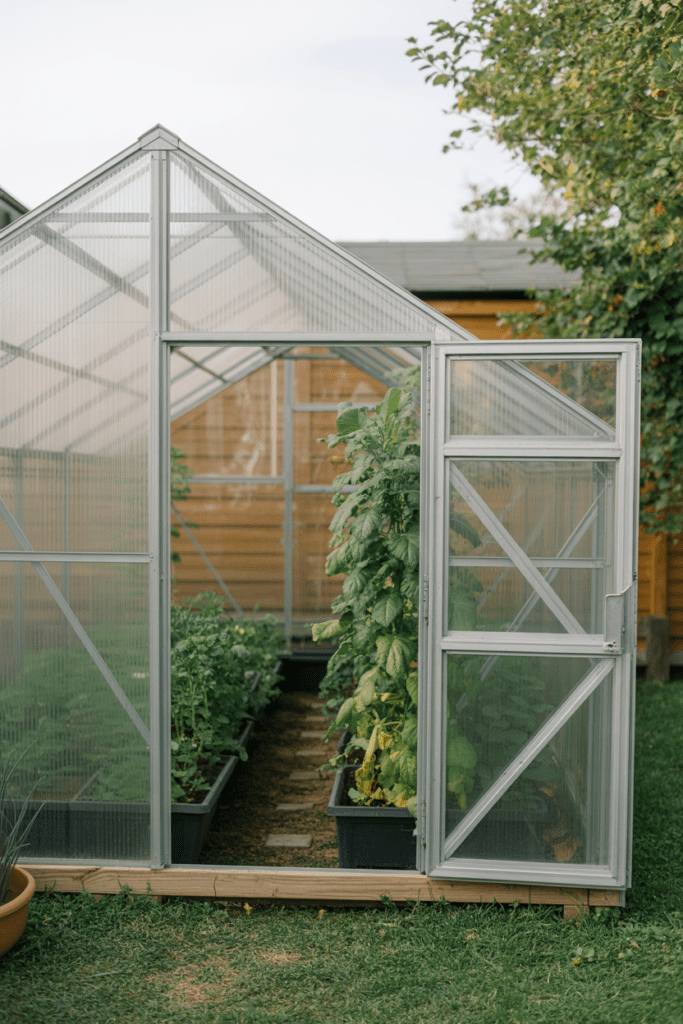
Polycarbonate greenhouses have become wildly popular for good reason. The panels provide excellent insulation while remaining lightweight and durable.
Unlike glass, polycarbonate resists cracking and handles rough weather much better. That makes it a smart option for areas with hail, heavy rain, or strong winds.
Benefits of polycarbonate greenhouses include:
- Better heat retention
- Lower maintenance
- UV protection for plants
- More affordable than glass
They may not have the same crystal-clear appearance as glass structures, but your plants honestly won’t care.
10. Greenhouse Potting Station
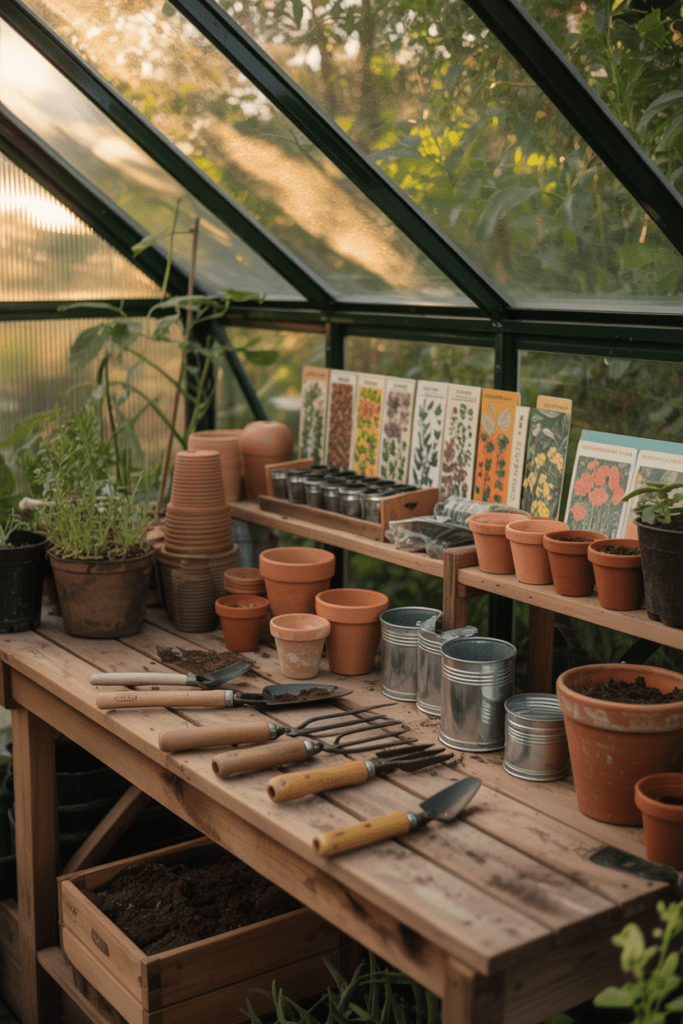
A dedicated potting station makes greenhouse gardening so much easier. Instead of searching for tools every five minutes like a confused raccoon, everything stays organized in one spot.
A good potting station usually includes:
- Storage shelves
- Soil bins
- Tool hooks
- Workspace counters
- Seed containers
Adding a workspace transforms the greenhouse into a fully functional gardening zone rather than just a place to store plants.
And yes, organization absolutely makes gardening more enjoyable. Nobody likes losing pruning shears for the seventh time.
11. Greenhouse with Hanging Plants
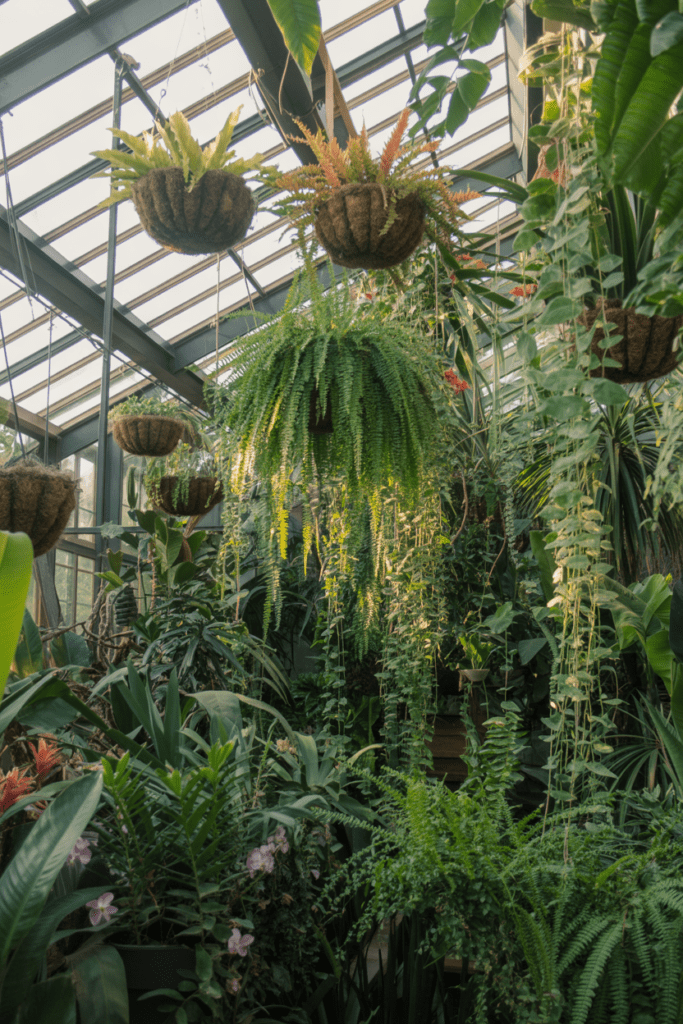
Hanging plants instantly make a greenhouse feel lush and layered. Instead of using only floor space, you create vertical interest overhead.
Trailing vines, hanging herbs, and flowering baskets soften the structure while maximizing growing space. This works especially well in smaller greenhouses where every inch matters.
Some excellent hanging greenhouse plants include:
- String of pearls
- Pothos
- Ferns
- Petunias
- Cherry tomatoes
Walking into a greenhouse filled with hanging greenery feels almost tropical. Suddenly winter doesn’t seem so depressing.
12. Tropical Greenhouse Escape
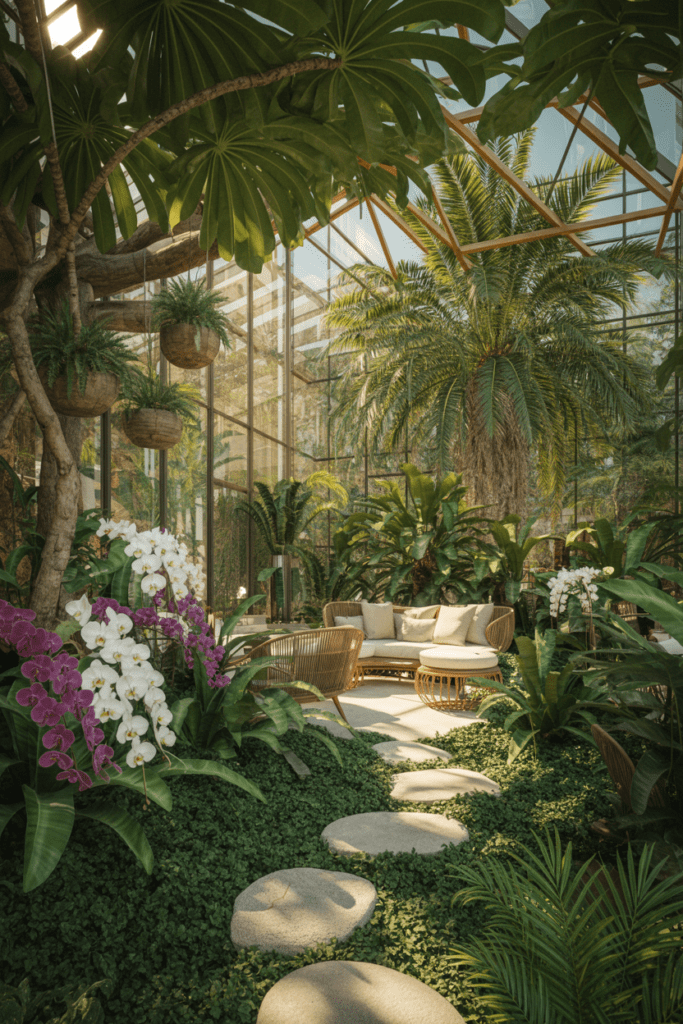
Some gardeners use greenhouses purely for food production. Others turn them into full tropical retreats. Honestly, both approaches deserve respect.
A tropical greenhouse usually includes humidity-loving plants like palms, orchids, monsteras, and ferns. Add warm lighting, stone paths, and cozy seating, and the space starts feeling like a private vacation spot.
This setup requires humidity control and consistent warmth, but the atmosphere makes the effort worthwhile. Ever sat inside a tropical greenhouse during a snowstorm? Weirdly magical.
13. Backyard Greenhouse Shed Combo
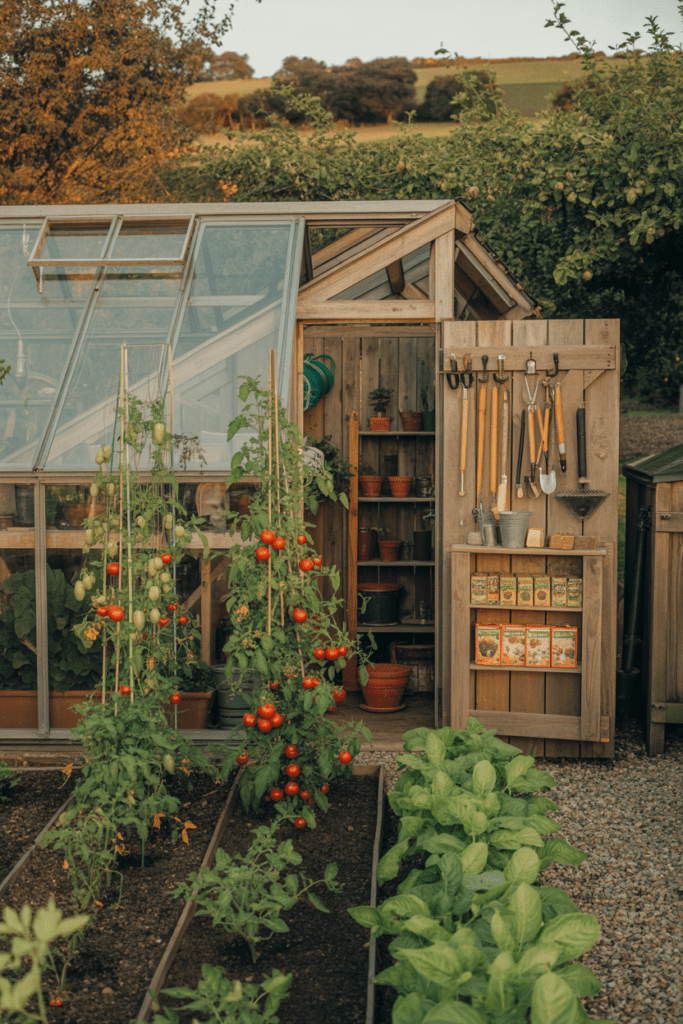
Combining a greenhouse with a storage shed solves two problems at once. One side stores tools, pots, soil, and supplies, while the other side houses plants.
This setup keeps gardening equipment organized and protected from weather. It also prevents the garage from turning into a chaotic pile of fertilizer bags and empty pots. Your future self will appreciate that.
A combo greenhouse works especially well for serious gardeners who need extra storage space year-round.
14. Vertical Gardening Greenhouse
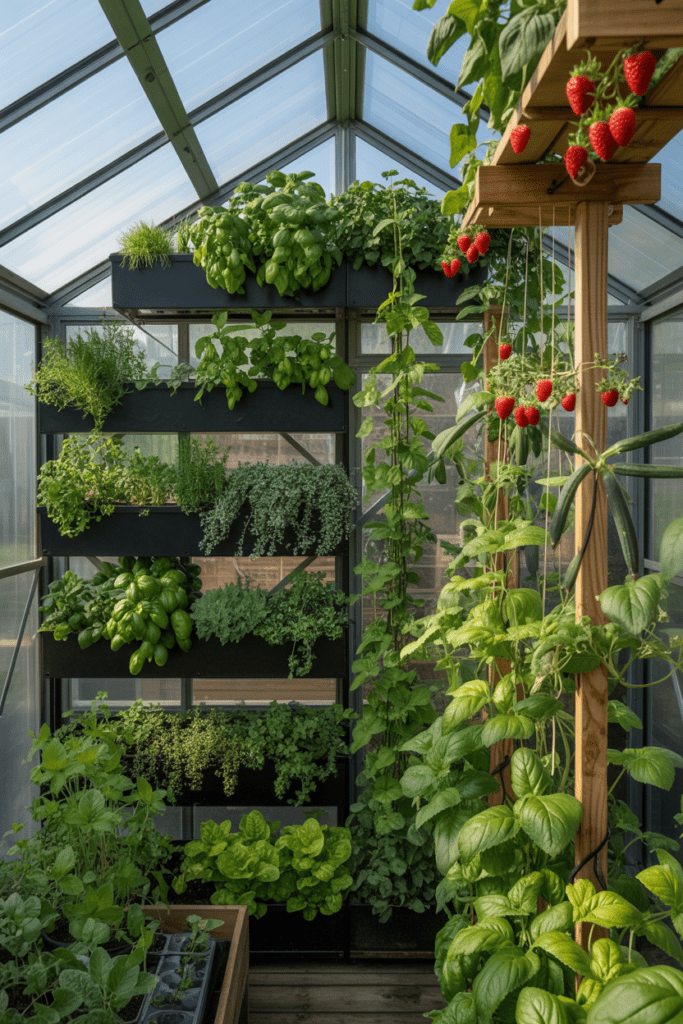
Vertical gardening helps maximize production inside smaller greenhouses. Instead of spreading plants outward, you grow upward using shelves, wall planters, and trellises.
This method works perfectly for:
- Herbs
- Strawberries
- Lettuce
- Cucumbers
- Pole beans
Vertical layouts also improve airflow, which helps reduce mold and plant diseases. Plus, they look incredibly satisfying once everything fills in.
There’s something oddly rewarding about seeing walls completely covered in greenery.
15. Solar-Heated Greenhouse
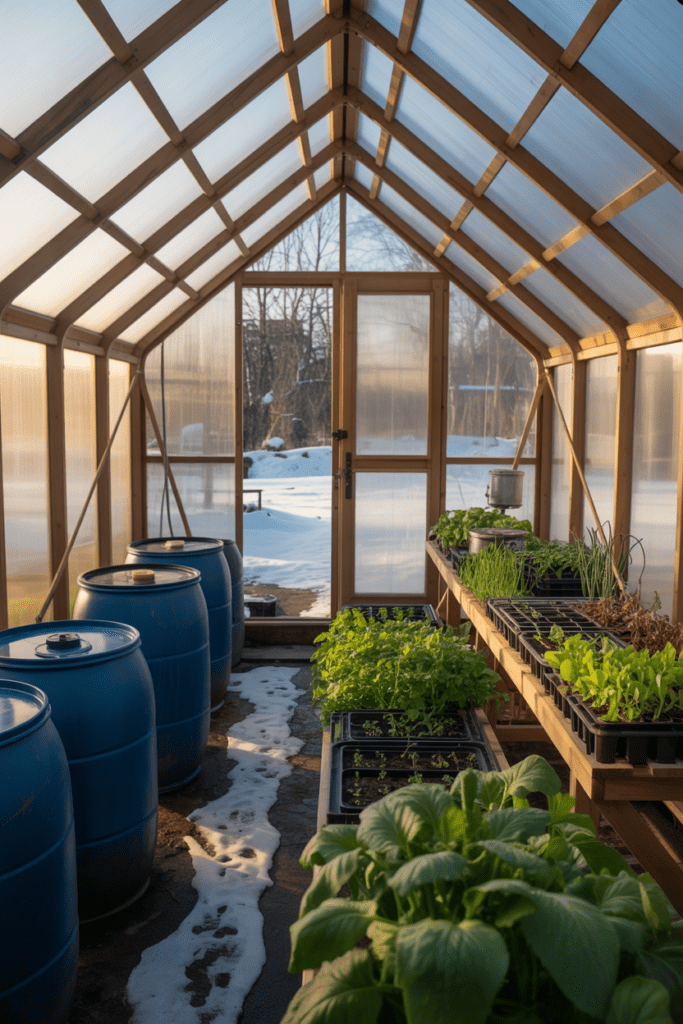
Heating costs can get expensive during winter, so solar-heated greenhouses offer a more energy-efficient solution. These structures capture sunlight during the day and retain warmth at night using thermal mass materials like stone, brick, or water barrels.
This eco-friendly approach lowers energy use while helping plants survive colder temperatures naturally.
Key features often include:
- South-facing orientation
- Insulated walls
- Heat-retaining materials
- Ventilation systems
It’s basically your greenhouse working smarter instead of harder.
16. Greenhouse Dining Space
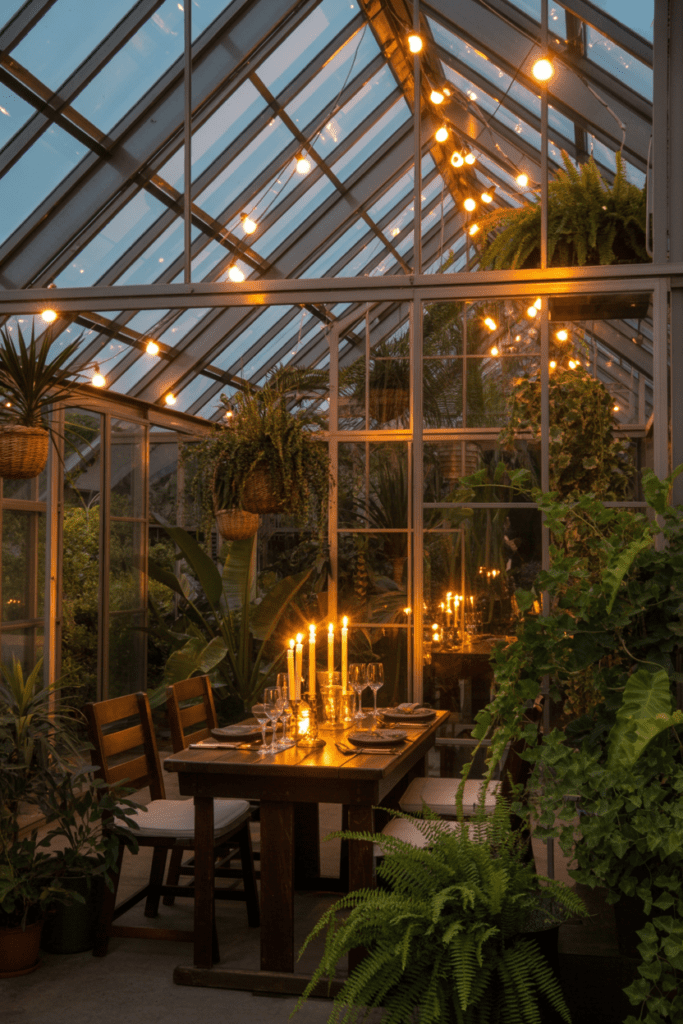
Okay, hear me out. A greenhouse dining area sounds extra… because it absolutely is. But it also looks stunning.
Adding a small table and chairs inside a greenhouse creates an unforgettable entertaining space surrounded by greenery and natural light. It works beautifully for brunches, coffee breaks, or cozy evening dinners.
String lights make the atmosphere even better at night. Suddenly your greenhouse becomes the most popular spot in the backyard.
Your guests will definitely post photos of it online. Prepare accordingly.
17. Four-Season Greenhouse
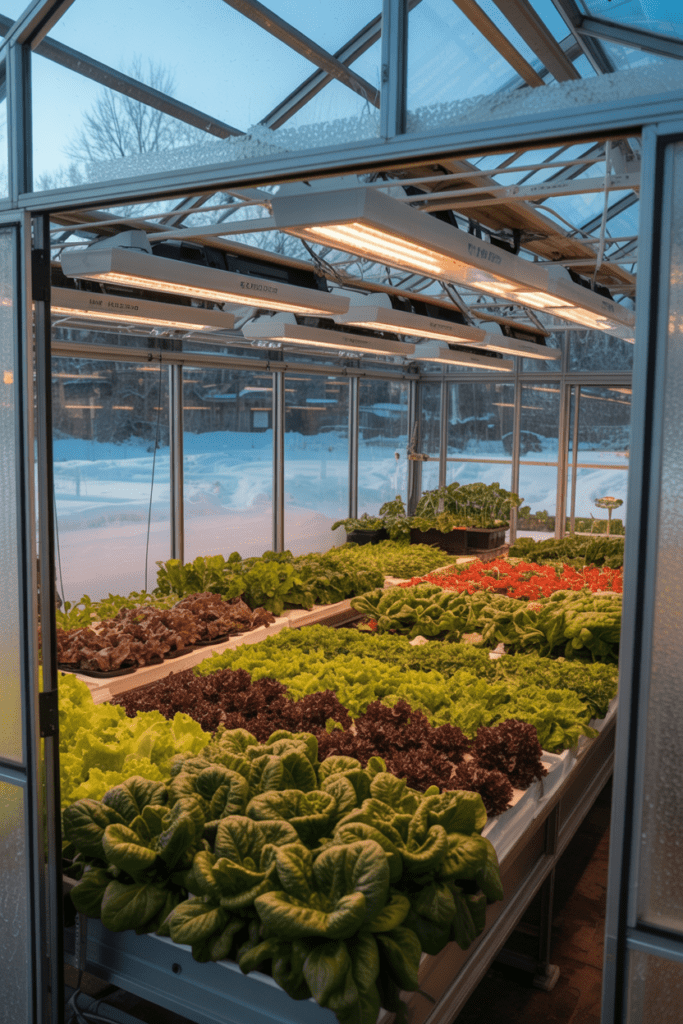
A four-season greenhouse focuses entirely on year-round functionality. These structures use heavy insulation, heating systems, ventilation, and durable materials to support gardening in every season.
This setup works best for gardeners who want continuous harvests no matter the weather outside.
A strong four-season greenhouse usually includes:
- Double-pane panels
- Automated vents
- Supplemental heating
- Grow lights
- Temperature monitoring systems
Yes, it requires a larger investment upfront. But harvesting fresh greens in January feels ridiculously satisfying.
Tips for Making Any Greenhouse More Functional
No matter which greenhouse style you choose, a few upgrades can dramatically improve the space.
Add Ventilation
Proper airflow prevents overheating and reduces mold problems. Roof vents, fans, and adjustable windows all help maintain healthy growing conditions.
Use Smart Storage
Shelves, hooks, and bins keep tools organized and save space. Clutter spreads fast in greenhouses. One minute you’re organized, and the next minute you’re stepping over empty seed trays like an obstacle course.
Install Grow Lights
Grow lights help during darker winter months when natural sunlight becomes limited. They’re especially useful for seedlings and herbs.
Include a Water Source
Dragging hoses across the yard gets old quickly. Installing a nearby water source makes greenhouse maintenance much easier.
Conclusion
A greenhouse creates opportunities far beyond traditional gardening. It extends the growing season, protects delicate plants, and turns outdoor spaces into lush retreats even during colder months.
Some gardeners prefer sleek modern structures, while others love rustic DIY designs full of personality. Honestly, there’s no wrong answer here. The best greenhouse simply fits your space, budget, and gardening style.
And once you start harvesting fresh herbs in winter while everyone else complains about dead gardens? Yeah… you’ll probably feel a little smug about it. Completely understandable.