
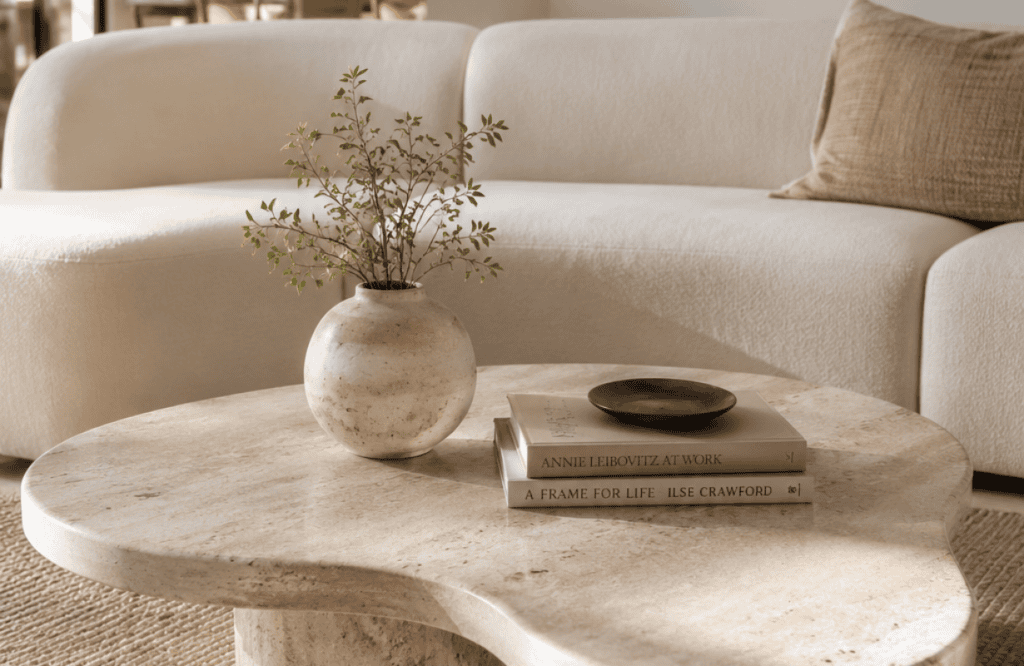
Not every living room needs a full renovation to look expensive. Some of the best high-end spaces owe their polish to smart choices, not massive budgets A bigger rug, better lighting, one bold piece instead of ten competing ones. The difference between a room that feels “fine” and a room that feels genuinely elevated usually comes down to a handful of decisions most people never think twice about.
Ever walked into a space and immediately felt like something was just off, even though you couldn’t point to exactly what? That’s usually not one glaring mistake — it’s a bunch of small ones stacking up. A rug that’s too small. Curtains hung too low. Furniture that all matches a little too perfectly. None of these things are dealbreakers on their own, but together they keep a room from ever reading as intentional.
The good news: the fixes are just as small as the problems. You don’t need a designer on retainer or a five-figure furniture budget to make a real difference. You need a clear plan, a willingness to edit what’s not working, and a few of the right upgrades in the right places.
That’s exactly what this list covers 17 practical, tested ways to take a living room from “decent” to genuinely high-end, whether you’re working with a modest budget or you’re ready to go all in.
1. Commit to One Statement Piece
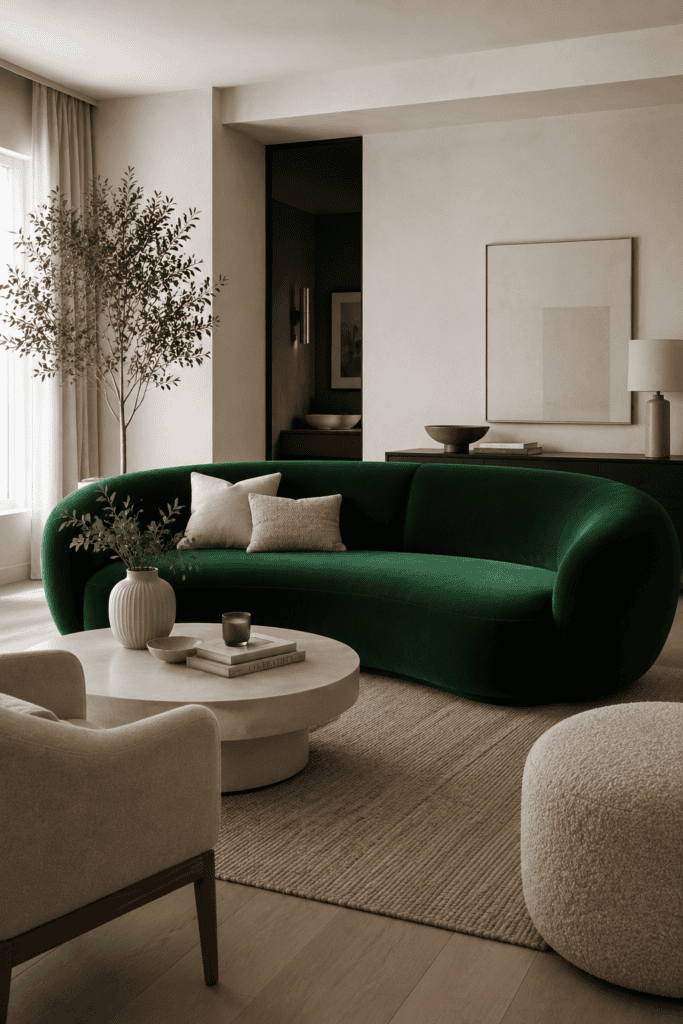
Every high-end room has a hero. One piece the eye lands on first — a bold sofa, a dramatic light fixture, an oversized piece of art. Everything else in the room supports it.
I made the mistake early on of trying to make every single item a “statement.” The result looked like a showroom that had a small explosion. Pick one hero, and let the rest of the room quiet down around it.
How to Choose Your Hero
Ask yourself what you actually notice first when you daydream about the room. For most people it’s either the sofa or the lighting. Whichever one you pick, spend the bulk of your budget there and keep everything else supporting, not competing.
2. Go Bigger With Your Rug
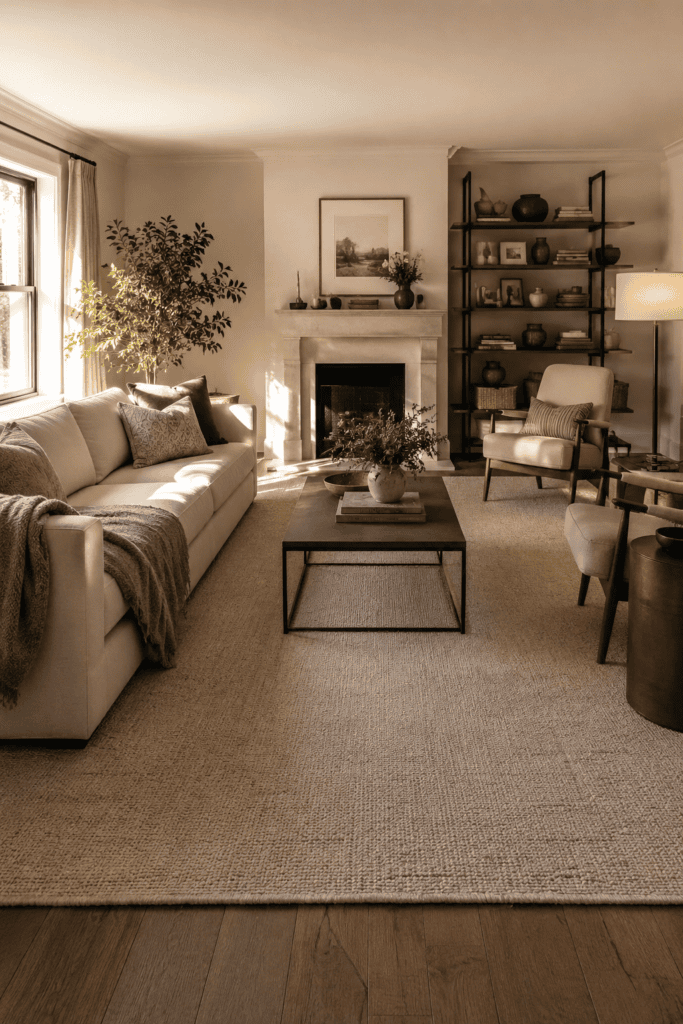
Small rugs are the number one thing that makes a living room look like it’s still furnishing itself. A rug that’s too small floats your furniture in the middle of the room like it’s stranded on an island.
The fix is simple: size up. Your front furniture legs should sit on the rug, not hover awkwardly beside it. IMO, this single change does more for a room’s “expensive” factor than almost anything else on this list.
If a full 9×12 feels out of budget right now, a smaller rug isn’t a crime — just make sure it’s still large enough that all your seating touches it in some way. Nothing screams “starter apartment” quite like a rug floating alone in the middle of the floor with furniture pushed out to the walls.
3. Layer Your Lighting
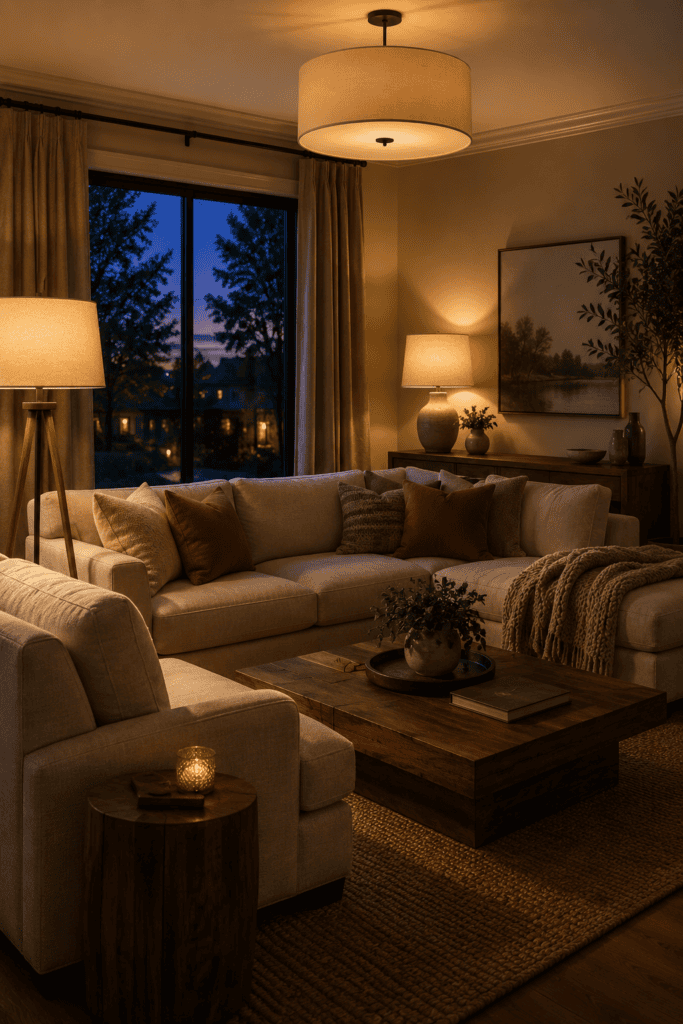
Overhead lighting alone is the enemy of ambiance. Ever notice how hotel lobbies never rely on one harsh ceiling light? That’s not an accident.
- Add a floor lamp in a reading corner
- Include table lamps on consoles or side tables
- Use dimmers on any overhead fixtures you keep
Three light sources at different heights instantly makes a room feel curated instead of just illuminated. I switched every bulb in my living room to warm white a couple years back, and honestly, that alone changed the whole mood of the space more than half the furniture I’d bought.
Don’t Forget Bulb Temperature
Cool white bulbs belong in a garage, not a living room. Stick to warm tones (around 2700K) if you want that soft, hotel-lobby glow instead of an interrogation-room vibe.
4. Invest in Real Wood, Even Just One Piece
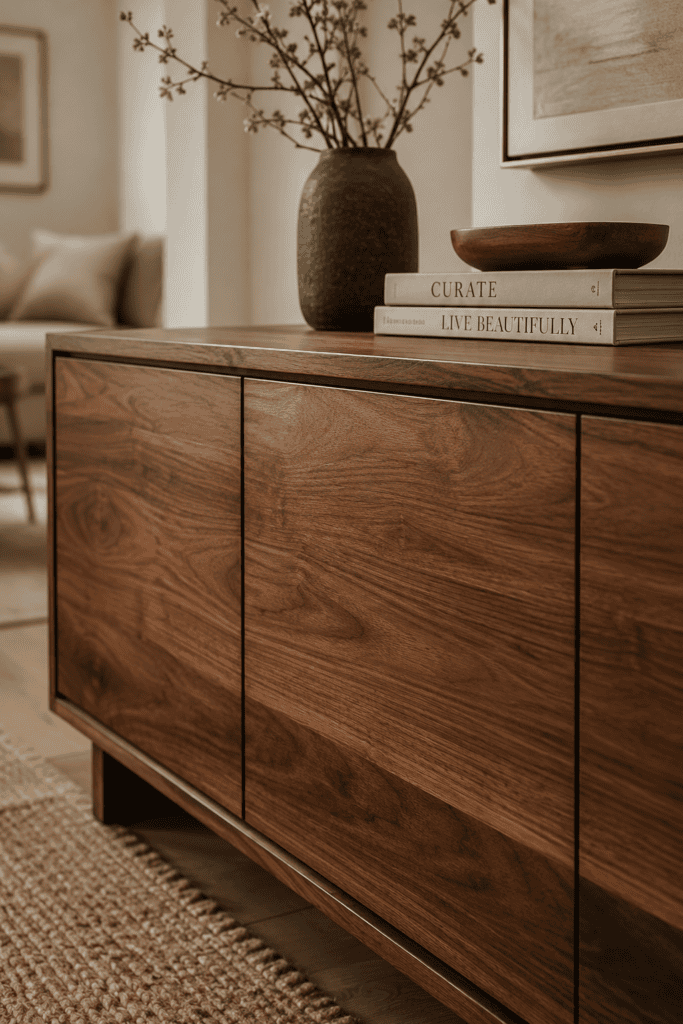
You don’t need to furnish the whole room in solid oak. But one genuine wood piece — a coffee table, a media console, a set of side tables — brings a texture and warmth that laminate just can’t fake.
I bought a secondhand walnut sideboard for less than a new particleboard version would’ve cost, and it’s the piece guests always ask about. Vintage and estate sales are goldmines here, and honestly, older furniture tends to be built way sturdier than a lot of what’s sold new today.
Facebook Marketplace and local estate sales are underrated resources. People sell gorgeous solid wood pieces for a fraction of retail simply because they’re moving or redecorating, and most buyers overlook them because the listing photos are bad. That’s your opportunity.
5. Choose a Sculptural Coffee Table
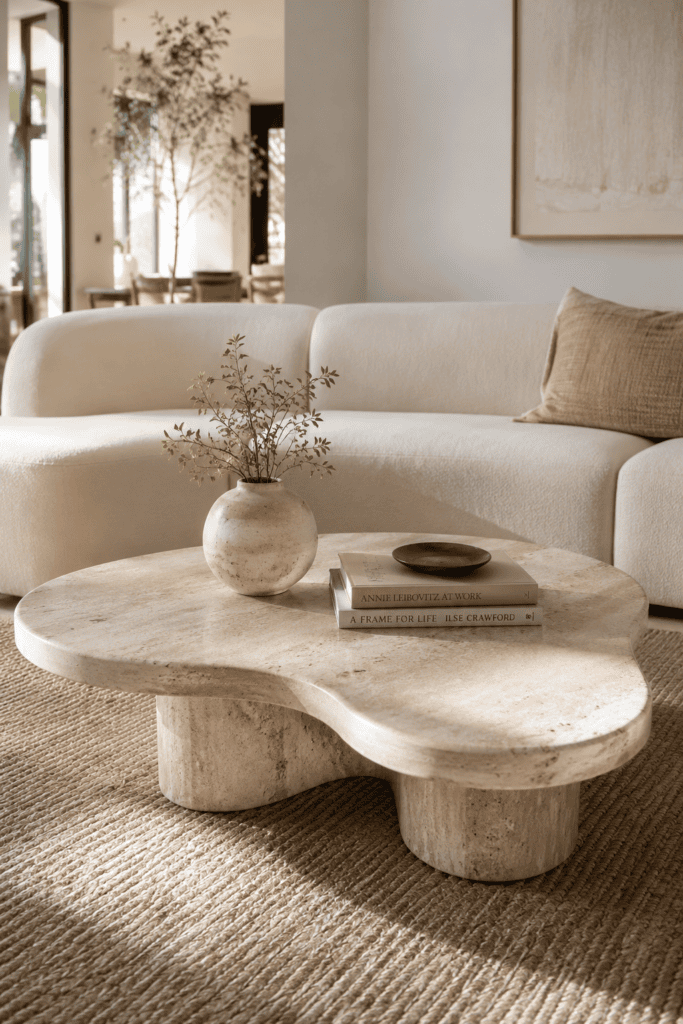
A coffee table doesn’t have to be a plain rectangle with four straight legs. Curved edges, organic shapes, or interesting materials like travertine or fluted wood turn a functional piece into a focal point.
This is one area where design and function overlap beautifully. You still get somewhere to put your coffee cup, but now it looks intentional instead of default.
If a full stone or travertine table is out of reach budget-wise, a lot of brands now make lightweight versions using resin composites that mimic the look convincingly. Nobody’s checking the material with a geologist’s kit.
6. Add Architectural Detail With Molding
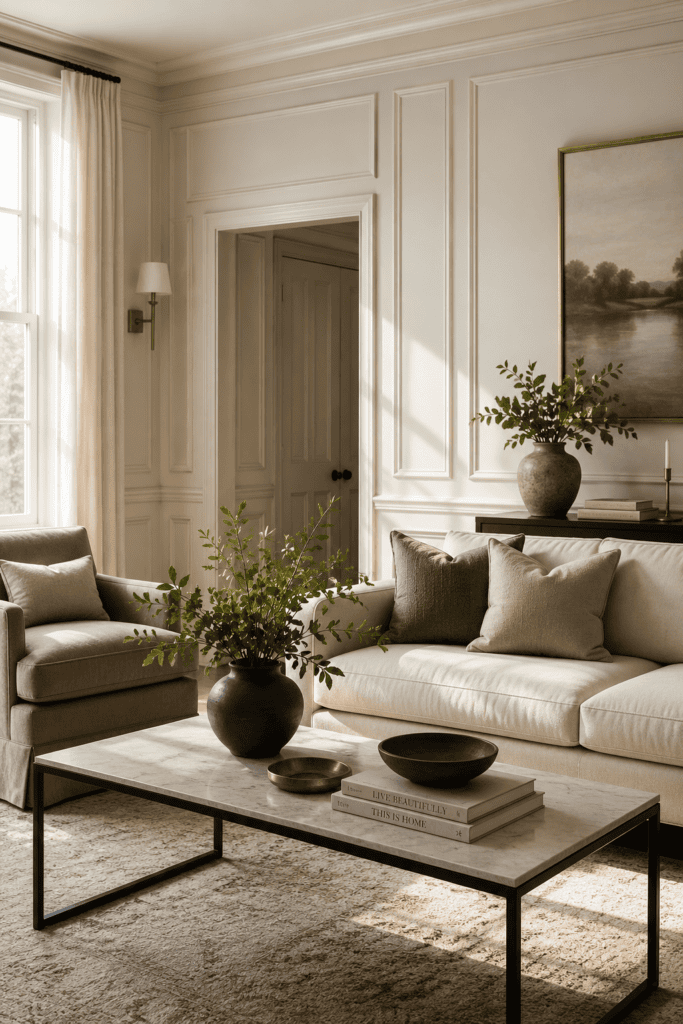
Plain drywall reads as unfinished, even when it’s freshly painted. Picture rail molding, wainscoting, or even simple trim around doors and windows gives a room the bones of a much pricier space.
This isn’t a weekend DIY for everyone, IMO, but it’s one of the most reliable ways to make a builder-grade room feel custom-built. Rental-friendly peel-and-stick molding options exist now too, if you’re not ready to commit to nail holes.
Even a single accent wall with simple grid molding, painted the same color as the wall, gives a room dimension without turning into a huge renovation project.
7. Ditch the Matching Furniture Set
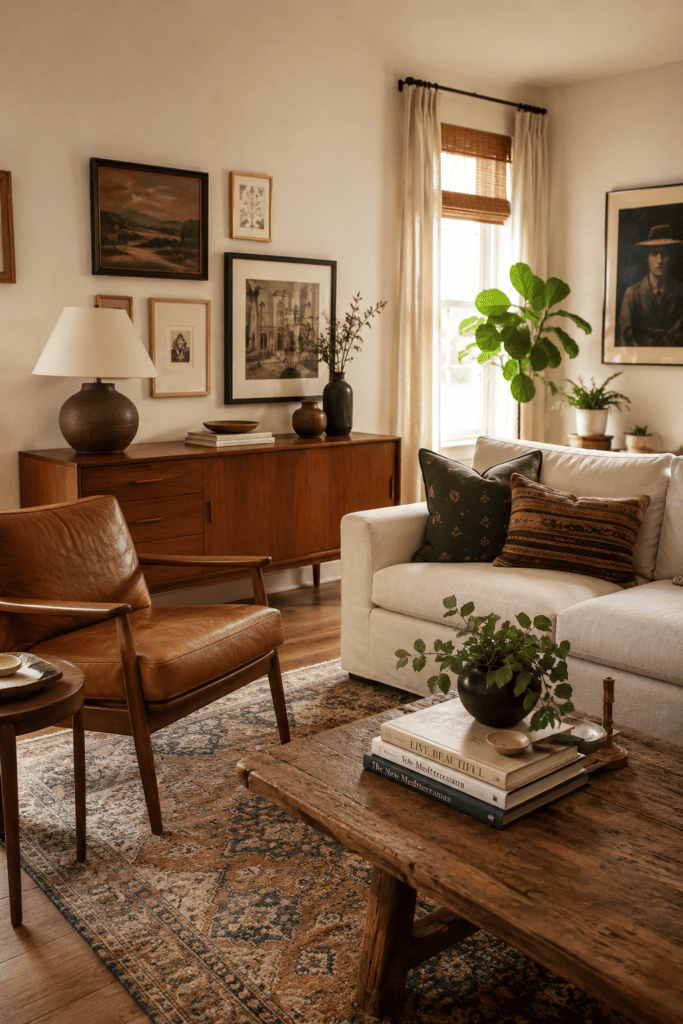
Buying a “living room set” is the fastest way to make your space look like a furniture store display. High-end rooms almost never match perfectly — they’re curated over time, mixing pieces that share a color story or material language instead of coming from the same box.
Mix a leather chair with a linen sofa. Pair a mid-century console with a contemporary lamp. The contrast is what reads as expensive, not the uniformity.
Think about it this way: nobody’s actual home came from a single catalog page. Real collections build up over years, through different phases of life and taste. A room that looks assembled piece by piece over time carries way more character than one that arrived on a single delivery truck.
8. Use a Grounding Neutral Palette (With One Bold Moment)
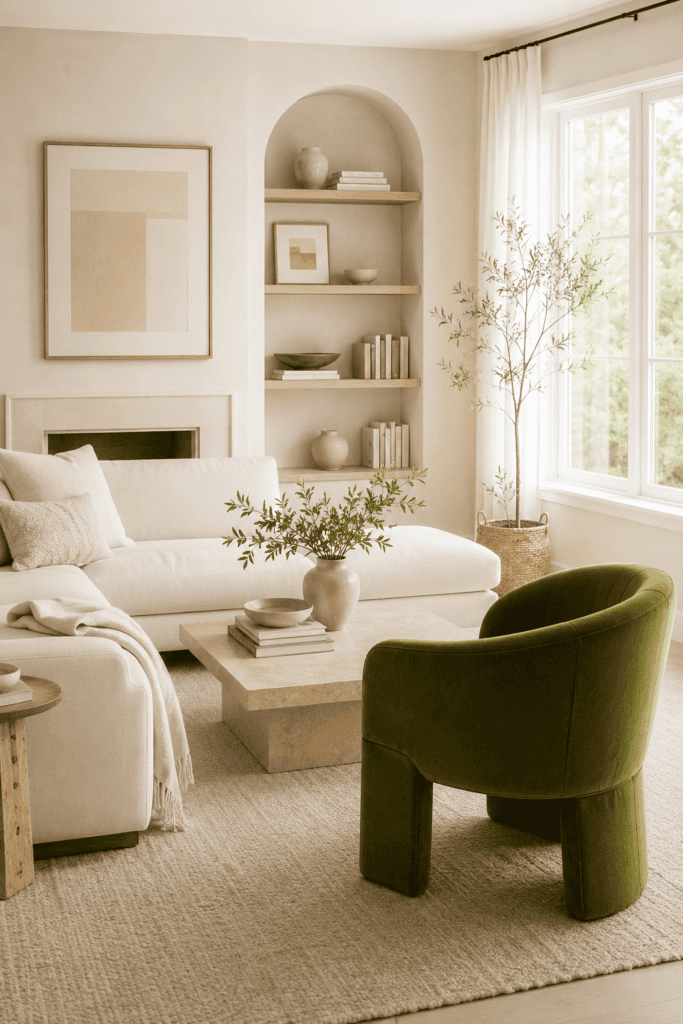
Here’s a formula that almost never fails:
- Base neutrals — walls, large furniture, rug
- A mid-tone accent — pillows, throws, art frames
- One bold color moment — a single chair, a bold piece of art, or a dramatic pendant light
Too many colors competing for attention reads as chaotic. One bold moment against a calm backdrop reads as confident.
I learned this one the hard way after painting an accent wall, buying patterned curtains, and adding a bold rug all in the same redesign. The room looked less “curated” and more like a color wheel had a disagreement with itself. Pick your one moment and let the rest hold it up quietly.
9. Bring in Real Plants (Please, Not the Sad Fake Ones)
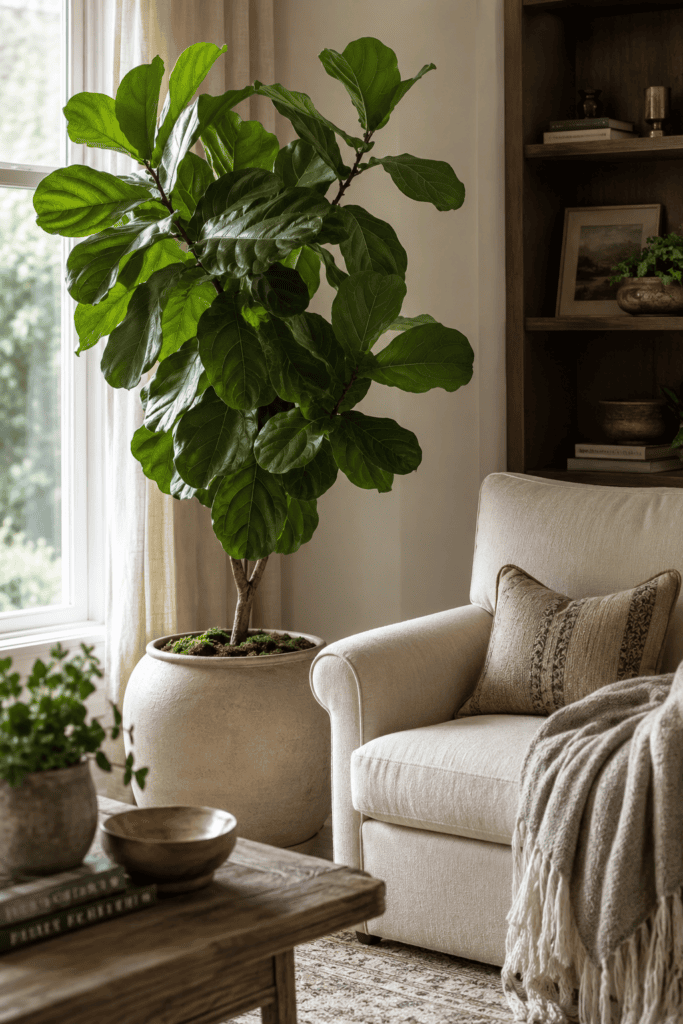
I get it — plants require actual care, and not everyone has the world’s greenest thumb. But a large, real plant does something fake greenery just can’t: it moves, it grows, it changes with the light. That subtle life is part of what makes a room feel lived-in and cared for.
If you truly can’t keep anything alive, invest in high-quality faux options rather than the dollar-store kind. Cheap fake plants are an instant giveaway :/
A single large fiddle leaf fig or a snake plant in a nice ceramic pot does more visual work than five small plants scattered around. Go big, go singular, and place it somewhere it’ll actually get enough light to survive.
10. Frame Your Art Properly
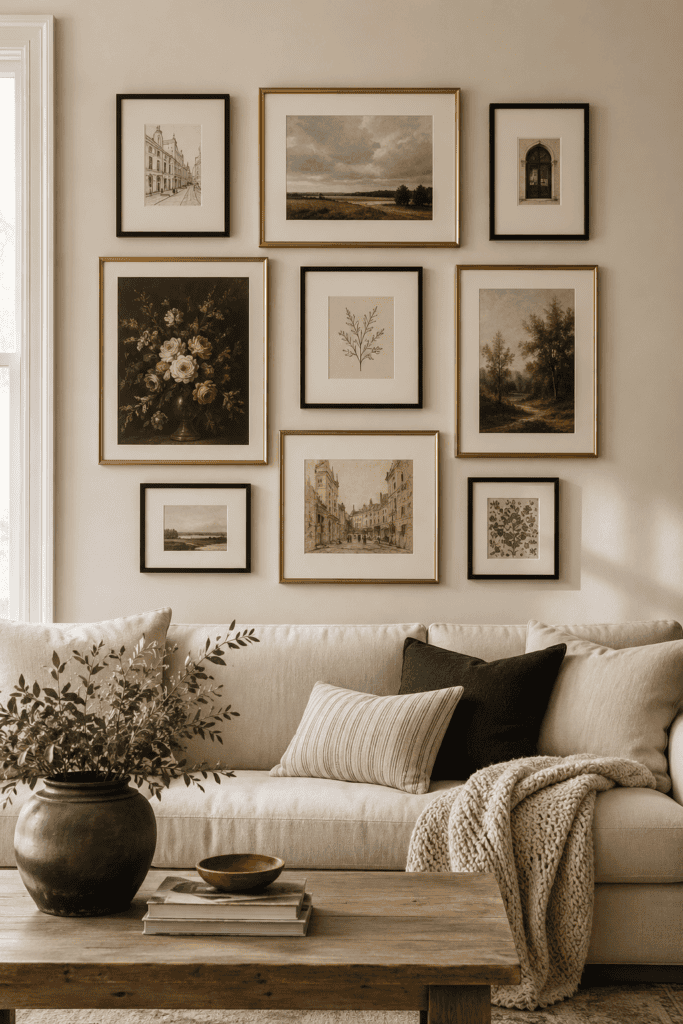
Unframed prints tacked to the wall or propped on a shelf can work in a casual space, but a high-end living room takes framing seriously. A well-chosen frame elevates even a modest print into something gallery-worthy.
- Match frame finishes to your room’s metal accents (brass, black, or wood)
- Avoid mismatched white plastic frames from a big-box store
- Consider a gallery wall with consistent spacing for maximum impact
You’d be shocked how often a genuinely great print gets ruined by a cheap frame, and how often a mediocre print looks like a museum piece once it’s properly matted and framed. The frame is doing more work than people give it credit for.
11. Introduce Texture Through Textiles
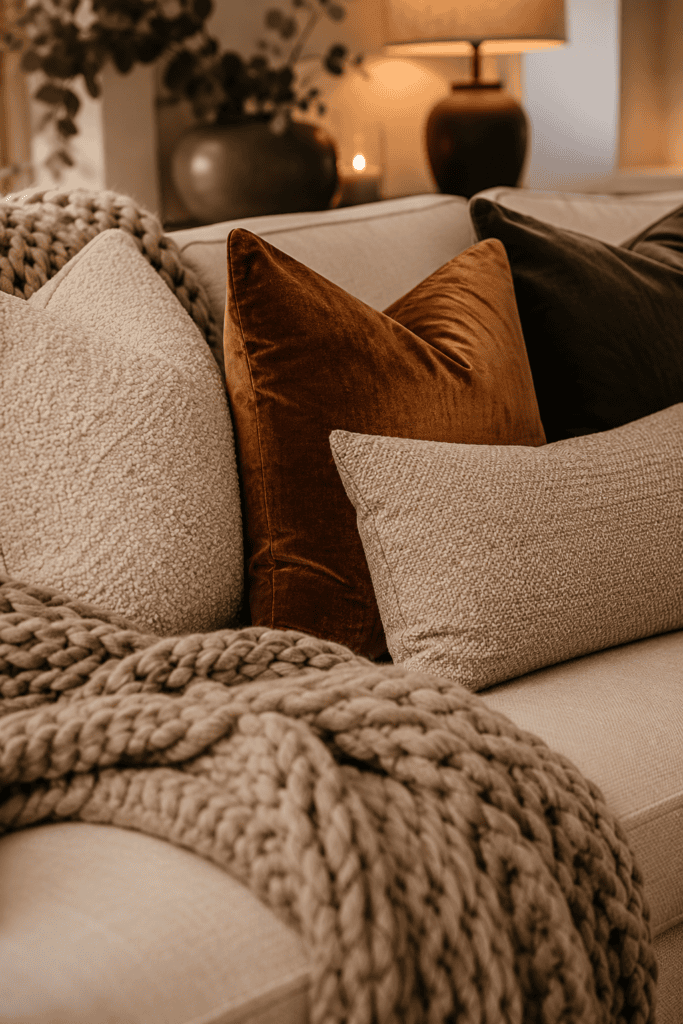
A flat, single-texture room feels underdressed. Layer in:
- A chunky knit throw over the sofa arm
- Velvet or boucle pillows for contrast against linen upholstery
- A woven pouf or textured ottoman near your seating
Texture is what separates a room that looks nice in photos from one that feels genuinely inviting in person. Photos flatten everything, but texture is what makes people want to sit down and stay a while once they’re actually in the room.
Don’t be afraid to mix textures that feel a little unexpected together, either — a smooth leather chair next to a nubby boucle ottoman creates way more visual interest than everything matching in the same fabric family.
12. Get Curtains That Actually Reach the Floor
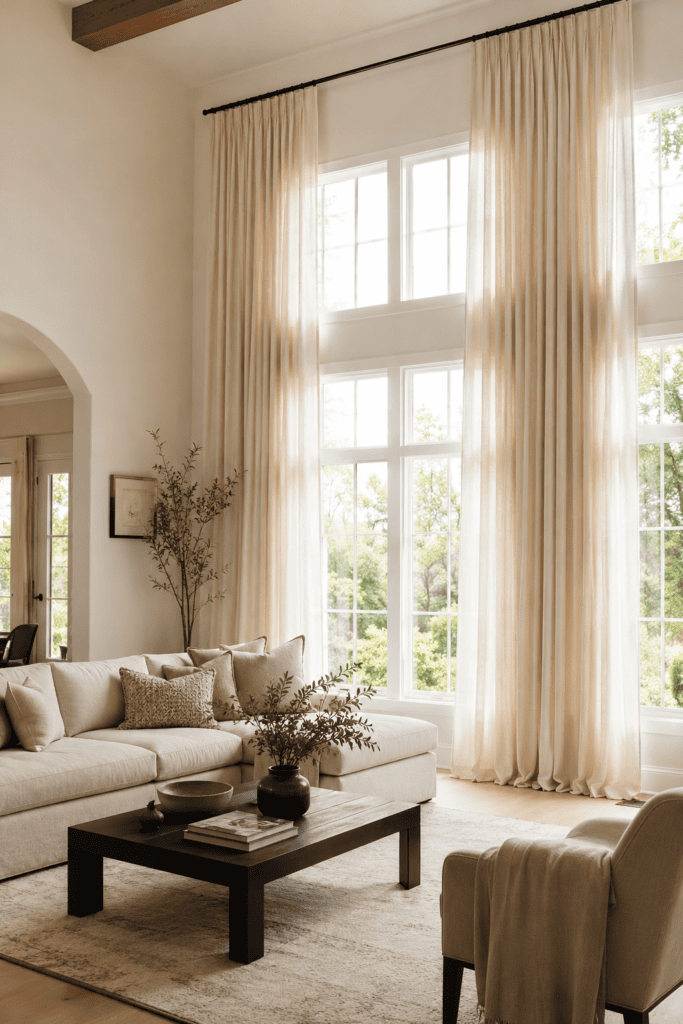
Short curtains that hover above the windowsill are one of the biggest budget-decor giveaways there is. Full-length curtains — hung high and wide, extending past the window frame — instantly make ceilings feel taller and windows feel grander.
This is a $40 fix at most fabric stores that punches way above its price tag. Genuinely one of the best value-for-money changes on this whole list.
Hang the rod as close to the ceiling as you reasonably can, well above the window frame itself, and extend it a few inches past the window on each side. It tricks the eye into thinking the window (and the whole room) is bigger than it actually is.
13. Swap Out Your Switch Plates and Hardware
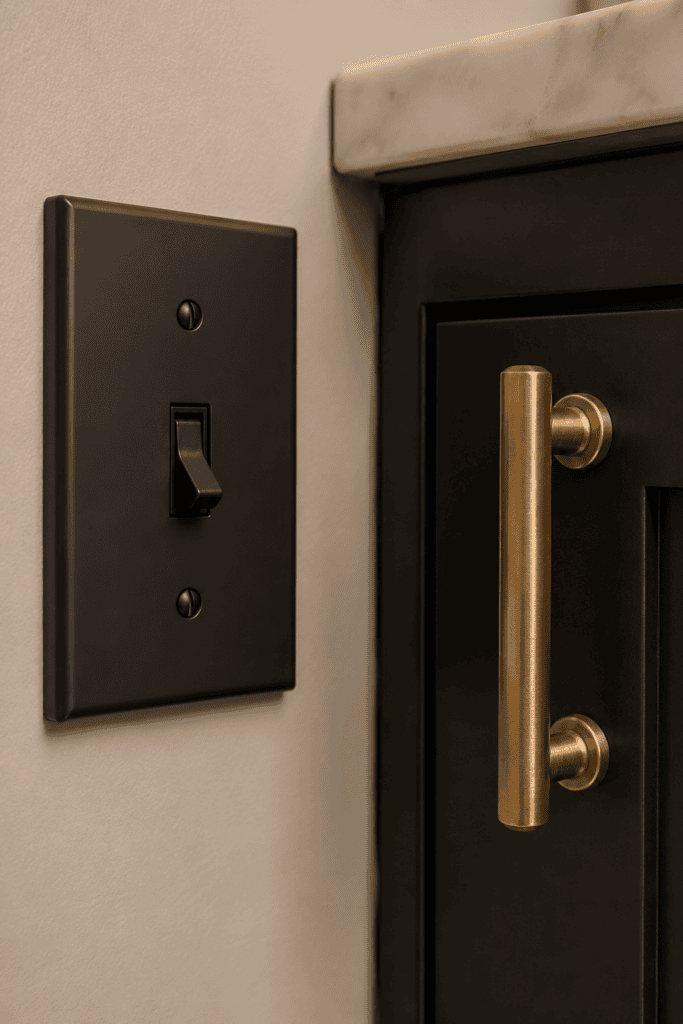
Nobody thinks about switch plates until they see a nice one. Builder-grade plastic covers, especially in a room with otherwise elevated finishes, stick out immediately once you notice them (and now you will).
Matte black or brushed brass plates cost only slightly more than the plastic default but tie the whole room’s hardware language together — think cabinet pulls, light fixtures, and switch covers all speaking the same design language.
It’s a tiny detail, sure, but high-end design is basically a thousand tiny details agreeing with each other. Skip this one and it’s not the end of the world, but do it and you’ll notice the difference every time you flip a light switch.
14. Create a Furniture Arrangement That Encourages Conversation
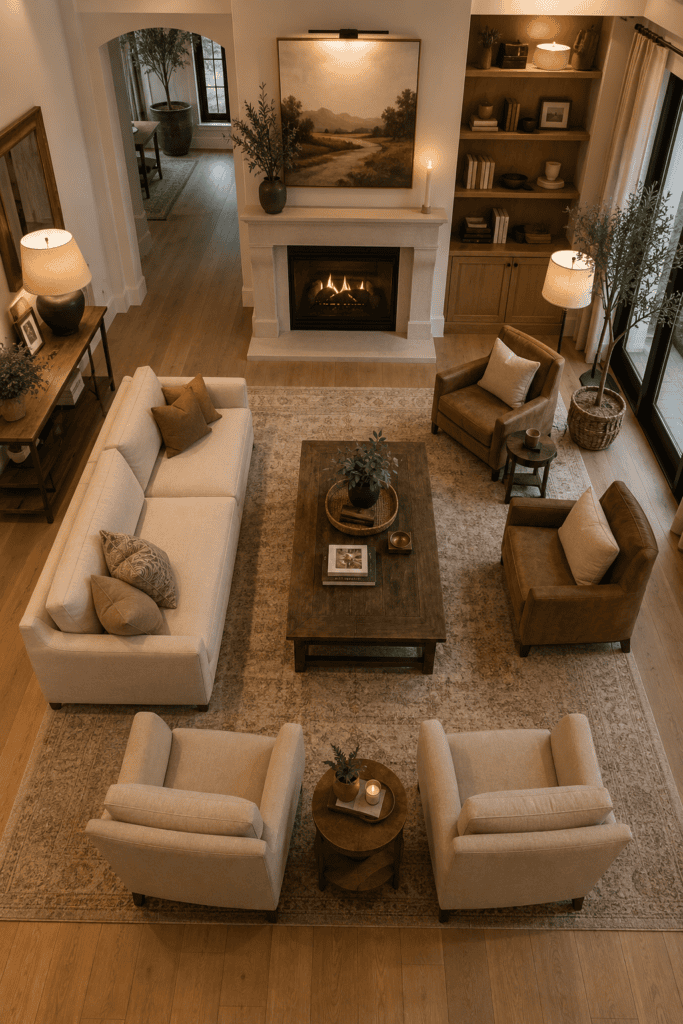
Ever been in a living room where all the seating points at a TV like it’s a shrine? Functional, sure. Elegant, not really.
High-end rooms arrange seating to face each other, encouraging actual conversation. Try angling chairs toward the sofa instead of lining everything up against the walls. It makes the room feel social and intentional rather than purely functional.
Pull your furniture away from the walls a little, too, if the room allows for it. Floating a sofa a few inches off the wall, with a console table behind it, reads as far more considered than everything pushed flush against the perimeter.
15. Add a Bar Cart or Beverage Station
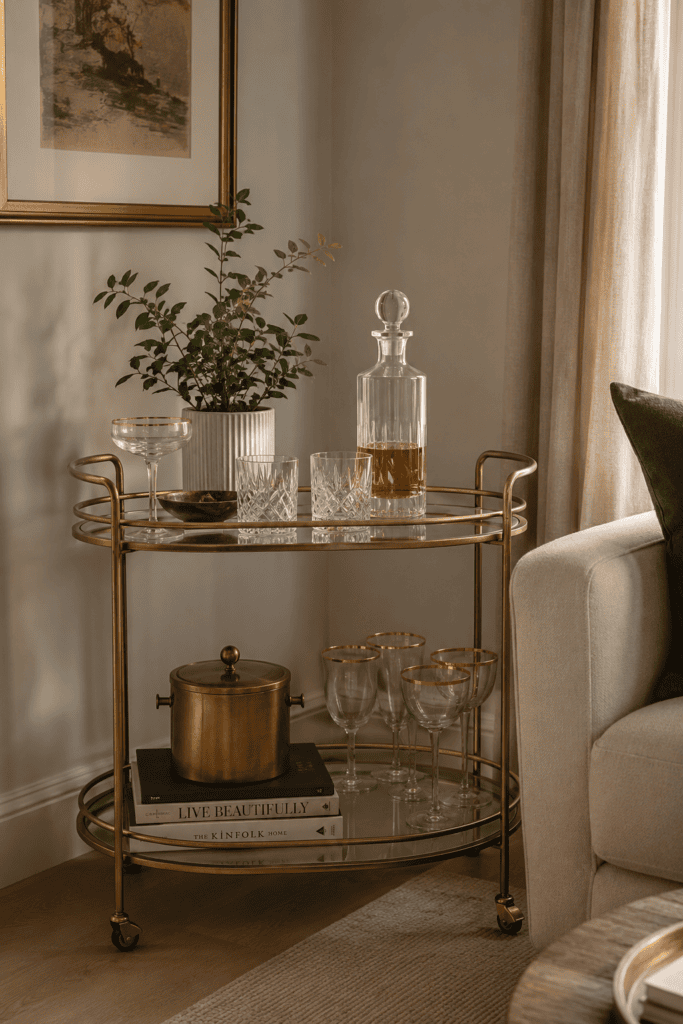
A small, well-styled bar cart signals hospitality and a certain “I’ve got my life together” energy — even if the reality behind closed doors is a little messier (no judgment, we’ve all been there).
- A brass or black metal cart works with almost any style
- Style it with a few good glasses, a decanter, and one plant or small art piece
- Keep it edited — three to five items max, not a cluttered mini liquor store
You don’t even need to drink much to make this work. A cart styled with sparkling water, nice glassware, and a small plant reads just as intentional as one stocked with top-shelf liquor.
16. Use Crown Molding or Ceiling Detail to Draw the Eye Up
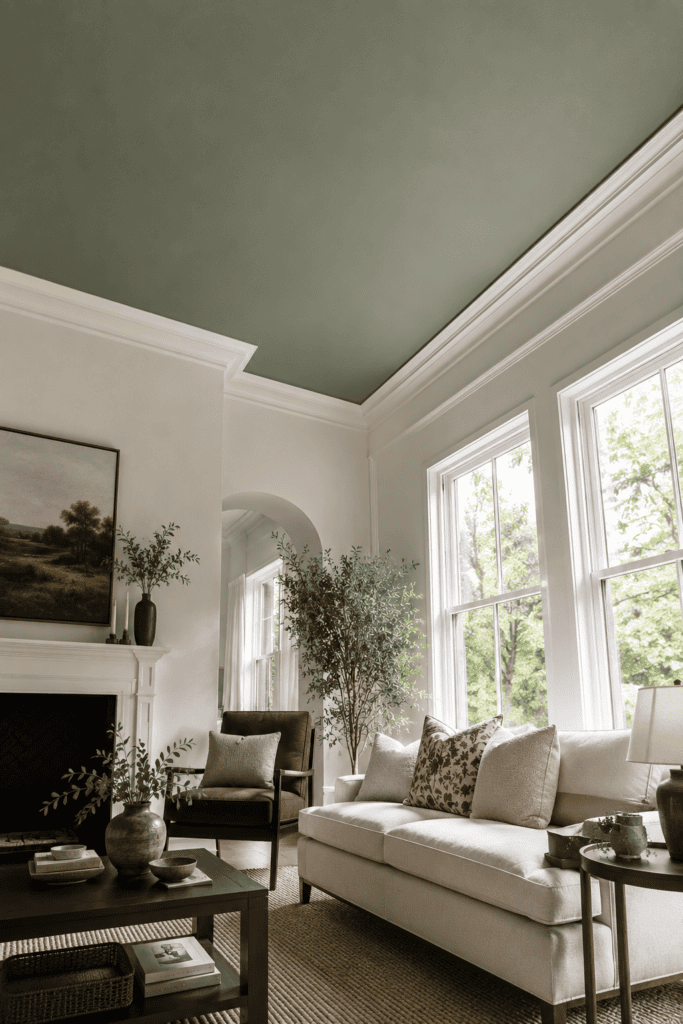
We spend so much time decorating at eye level that ceilings get completely ignored. A painted ceiling in a soft contrasting tone, exposed (clean) beams, or simple crown molding draws the eye upward and makes the whole room feel taller and more considered.
FYI, this doesn’t have to mean a full renovation — even a can of paint on just the ceiling can shift how a room feels.
A soft blush, sage, or deep navy ceiling against white walls creates a “fifth wall” effect that designers love, and it costs about as much as any other paint job. It’s a small risk with a genuinely big payoff.
17. Edit Ruthlessly
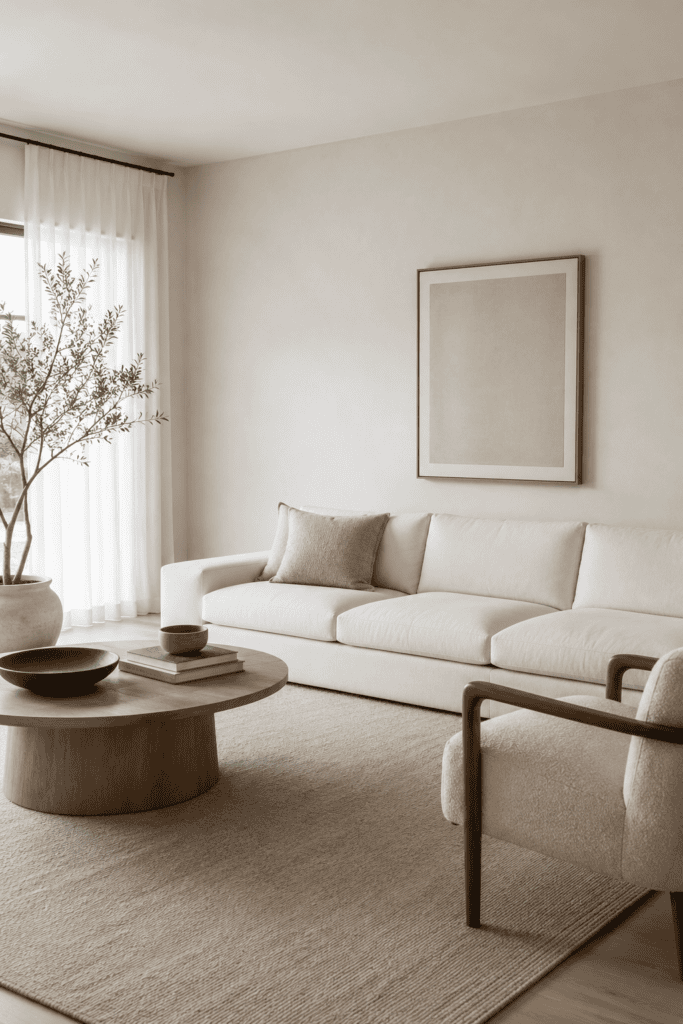
This is the one nobody wants to hear: the biggest thing separating a high-end living room from a cluttered one is often just… less stuff. Every accessory, every knick-knack, every random item on a shelf should earn its place.
Walk through your living room and ask yourself honestly: does this item add something, or is it just filling space? If you can’t answer with a clear yes, it’s probably time to let it go. Editing is free, and it’s arguably the single highest-impact change on this entire list.
I do a version of this every few months — a walk-through where I pick up every loose object and ask if it’s earning its spot. It’s uncomfortable at first, especially with gifts or sentimental items, but the rooms that end up feeling the most expensive are almost always the ones with the least amount of stuff competing for attention.
Final Thoughts
You don’t need a designer’s budget to make your living room feel like it belongs in a magazine spread. A bigger rug, floor-length curtains, better switch plates, and a little editing discipline will take you further than most people expect.
Start with one or two ideas from this list — I’d personally start with the rug and the curtains, since they’re the fastest wins and build from there. Your living room (and everyone who walks into it) will thank you.