
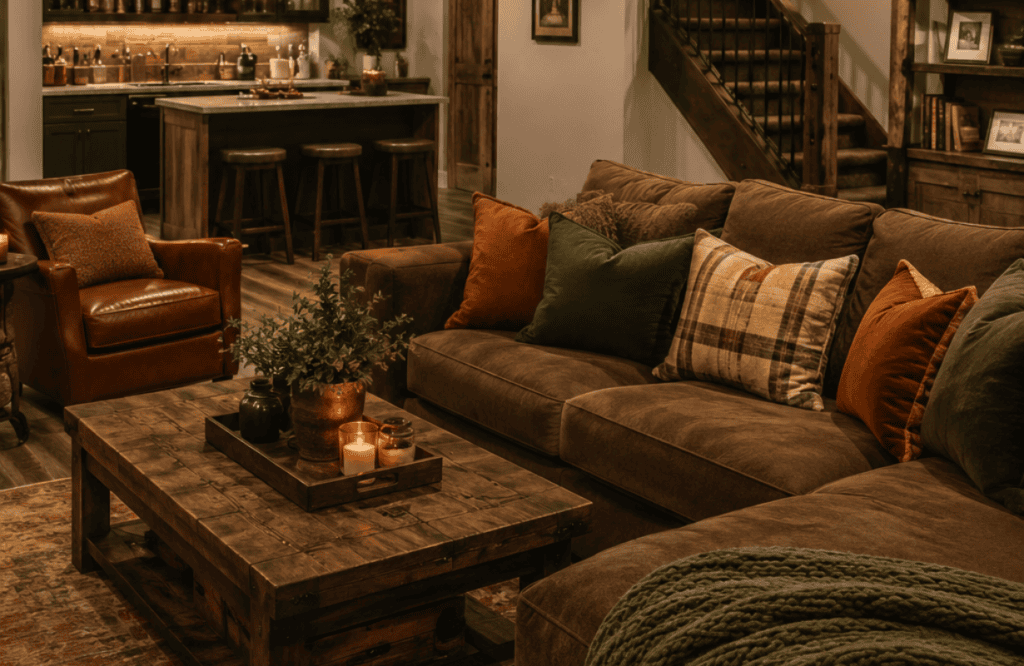
Walk into ten basements and nine of them will feel exactly the same: gray walls, one sad ceiling light, and a faint smell of damp cardboard. It’s practically a design cliché at this point.
The frustrating part? None of that is necessary. Basements have more design potential than almost any other room in the house, yet they consistently get treated like an afterthought instead of a genuine living space.
Rustic style flips that script entirely. Instead of hiding a basement’s quirks low ceilings, exposed beams, concrete underfoot—it works those features into the design itself. What looks like a limitation upstairs becomes character downstairs.
Think about the last time you sat in a lodge, a mountain cabin, or even a rustic-themed restaurant. There’s a reason those spaces feel instantly comfortable rather than cold or unfinished. It comes down to specific, repeatable design choices: warm materials, layered lighting, and textures that invite you to sit down and stay a while.
None of that requires knocking down walls or hiring a full renovation crew. Small, intentional upgrades can completely change how a basement feels and functions. A finished basement isn’t a luxury reserved for huge budgets—it’s a matter of knowing which changes actually move the needle.
That’s exactly what this list covers. Below are 13 rustic basement ideas, each one practical, achievable, and proven to work in basements.
1. Exposed Wood Beams (Real or Faux)
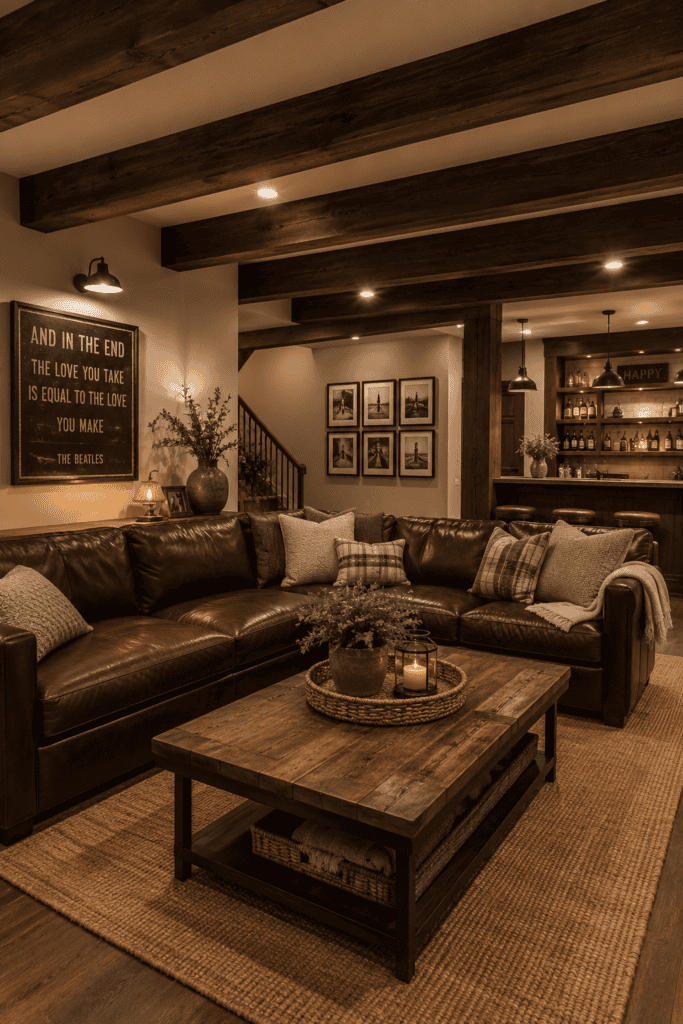
Nothing screams rustic like exposed beams overhead. They add texture, warmth, and instantly make a basement feel less like a bunker and more like a cozy cabin retreat.
IMO, faux beams are the smarter move for most homeowners. They’re lighter, cheaper, and won’t mess with your ceiling’s structural integrity. You get 90% of the visual payoff for a fraction of the cost and effort.
- Reclaimed barn wood beams for authentic texture
- Polyurethane faux beams that mimic wood grain
- Painted or stained beams to match your color scheme
2. Stone Accent Walls
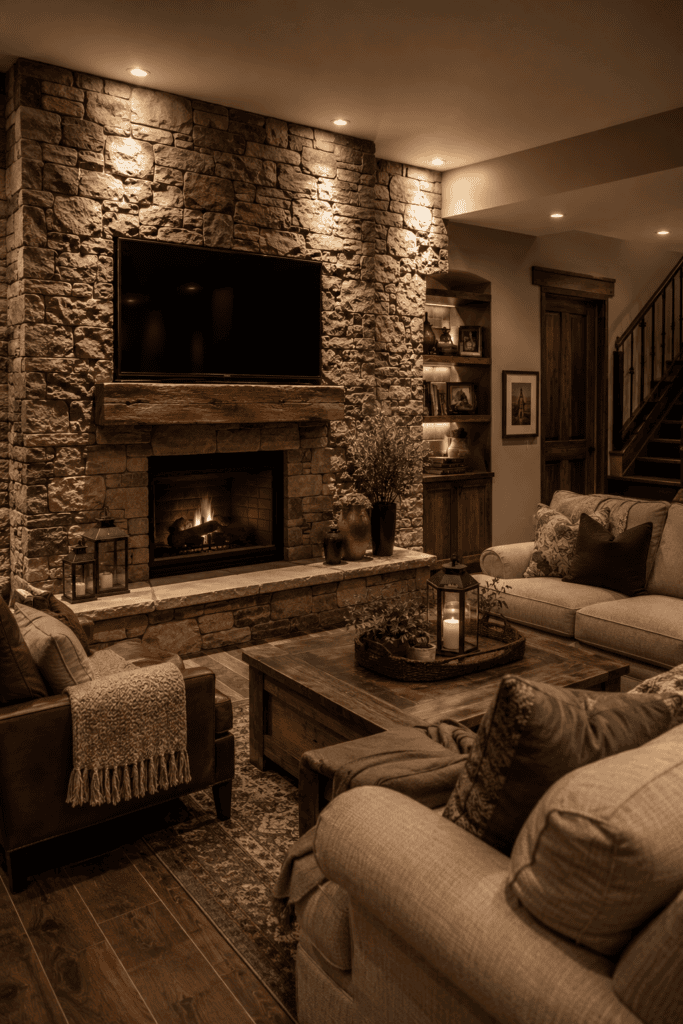
A stone accent wall grounds the whole room—literally and figuratively. It’s the kind of feature that makes guests stop mid-conversation and ask, “Wait, did you do this yourself?”
I went with a faux stone panel system in my own basement, and I don’t regret it one bit. Real stone is gorgeous, but it’s heavy, pricey, and honestly overkill for a basement that already fights moisture issues.
Popular stone wall options include:
- Manufactured stone veneer
- Reclaimed fieldstone
- Stacked slate panels
- Faux stone foam panels (budget-friendly and lightweight)
3. Warm, Layered Lighting
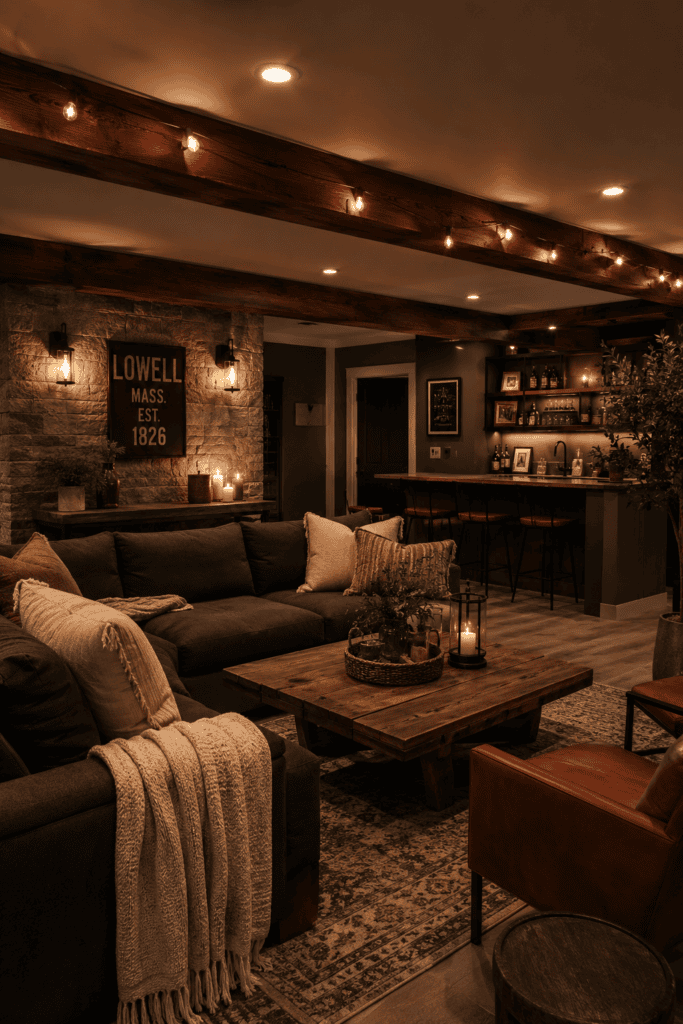
Basements notoriously lack natural light, so why do so many people just slap in one harsh overhead fixture and call it done? That’s not rustic, that’s an interrogation room.
Layer your lighting instead. Combine ambient, task, and accent lighting to create depth and warmth throughout the space.
- Ambient: recessed lighting or a statement chandelier
- Task: reading lamps near seating areas
- Accent: wall sconces or string lights along beams
Ever wondered why cabins and lodges feel so inviting even at night? It’s almost always the lighting doing the heavy lifting.
4. A Reclaimed Wood Bar
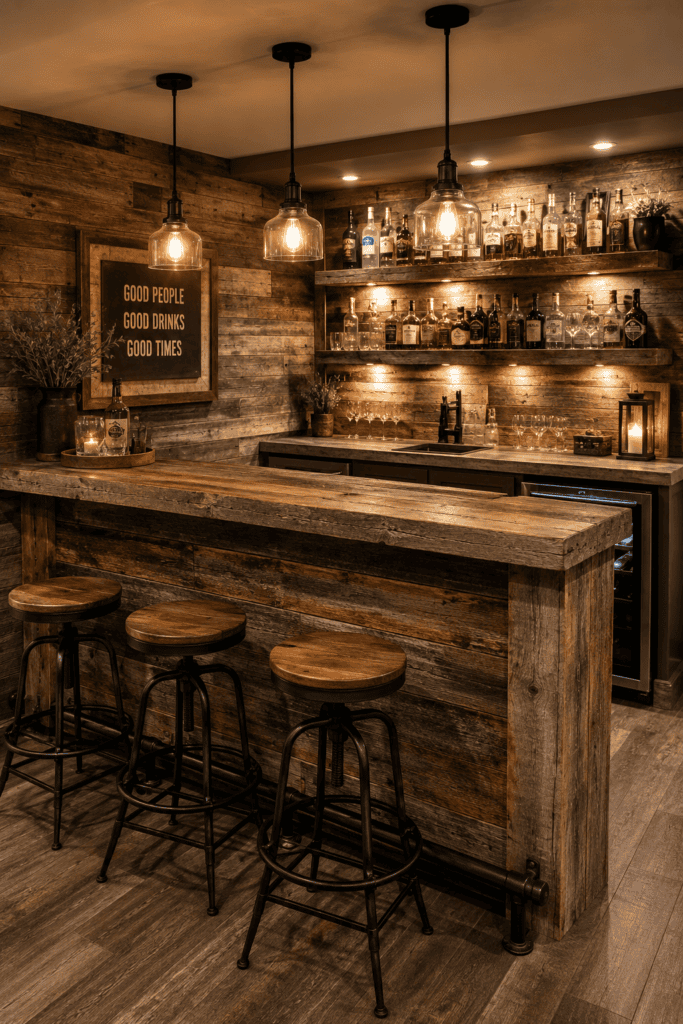
If you’re building a basement hangout spot, a reclaimed wood bar is non-negotiable in my book. It’s functional, it’s a conversation piece, and it instantly signals “this is a room where fun happens.”
I built mine from old fence boards a neighbor was tossing out. Total cost? About $80 and a weekend of sanding. Reclaimed wood carries character that new lumber just can’t fake—every knot and nail hole tells a story.
5. Cozy Textiles Everywhere
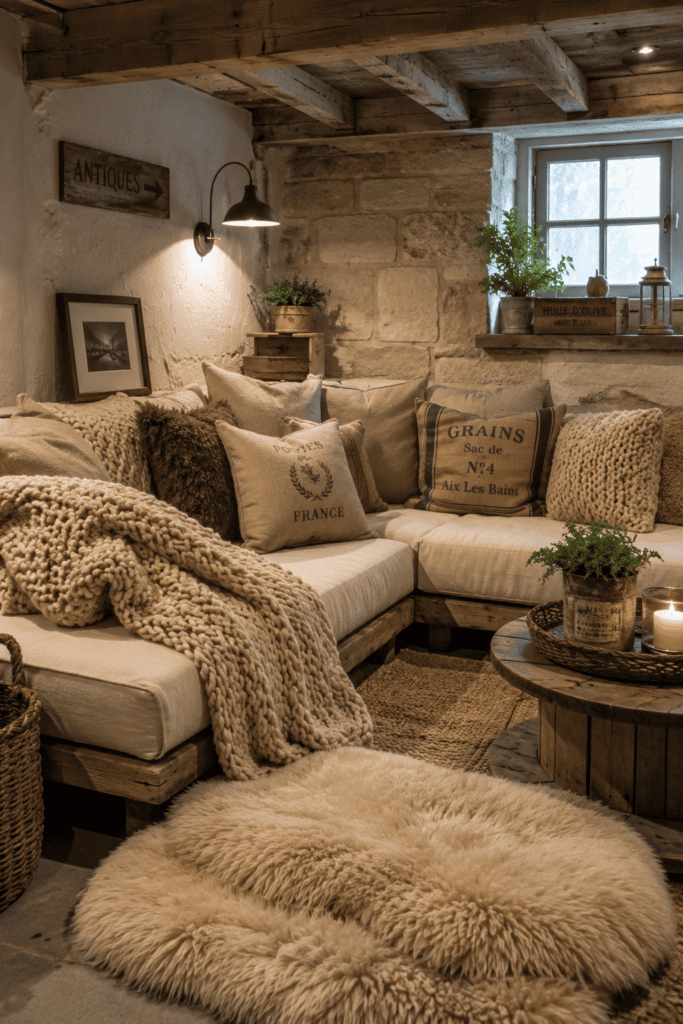
Rustic design lives and dies by its textures. Think chunky knit throws, sheepskin rugs, and burlap or canvas accents scattered throughout the room.
Don’t skimp here. A basement with concrete floors and drywall needs textiles to soften things up and make it feel lived-in rather than left over.
- Wool area rugs in warm, earthy tones
- Flannel or plaid throw pillows
- Woven baskets for storage that doubles as decor
6. A Stone or Brick Fireplace
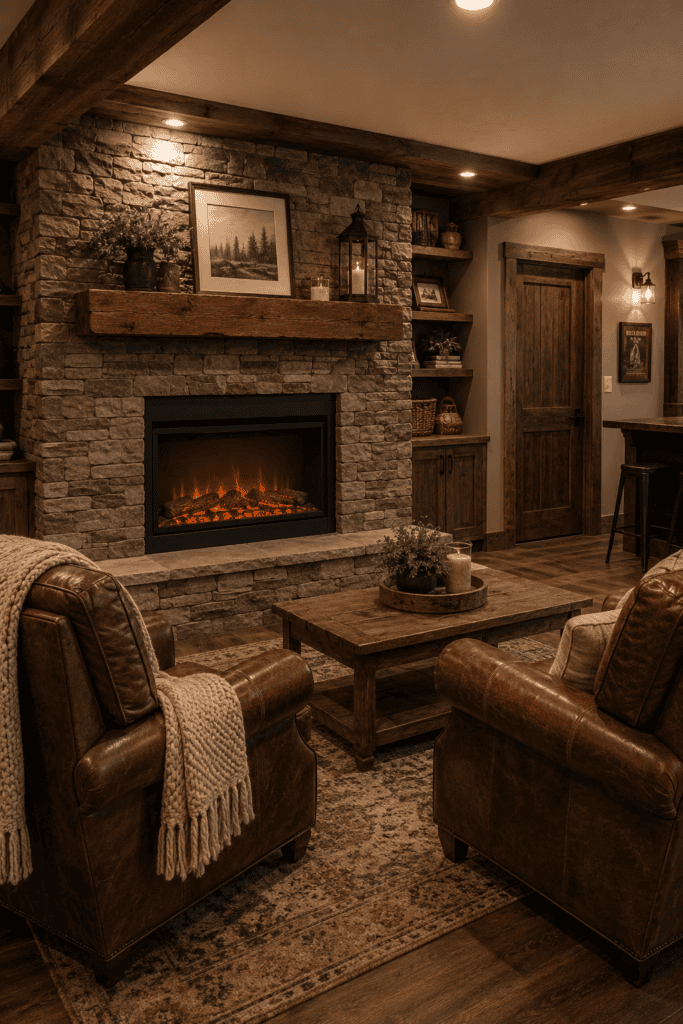
I know what you’re thinking—a fireplace in the basement sounds like a luxury reserved for HGTV dream homes. But electric fireplace inserts have gotten shockingly good, and they give you that rustic ambiance without the venting headaches of a wood-burning unit.
A fireplace becomes the natural focal point of any rustic basement, and it solves the “where do I arrange furniture” problem instantly. Everything just orbits around it.
7. Antler and Wildlife-Inspired Decor
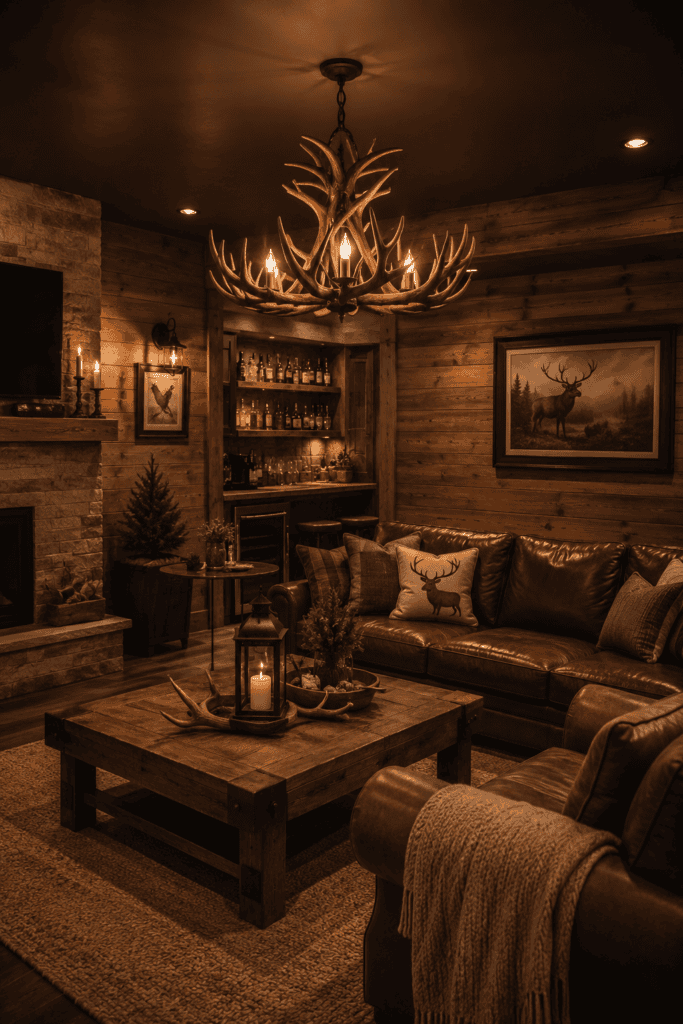
This one’s polarizing, and I get it :/ some people love the hunting-lodge vibe, others think it’s a bit much. But used sparingly, antler chandeliers, wildlife prints, or a mounted deer silhouette can tie a rustic theme together beautifully.
The key word there is sparingly. One statement piece works. Five statement pieces makes your basement look like a taxidermy showroom.
8. Distressed Leather Furniture
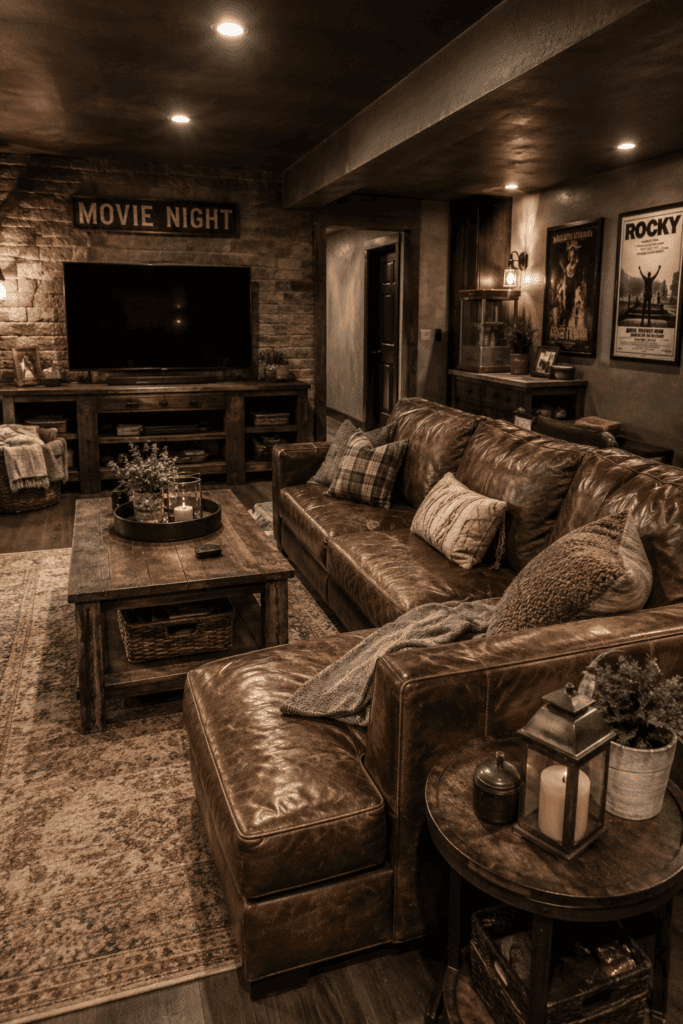
Leather furniture with a distressed, worn-in finish fits rustic design perfectly. It ages well, it’s durable (crucial for a basement that sees spilled drinks and muddy boots), and it looks better the more beat-up it gets.
I put a distressed leather sectional in my basement three years ago, and honestly, every scuff and scratch just adds character now. Try getting that kind of forgiveness out of a light-colored fabric couch.
9. Barn Door Room Dividers
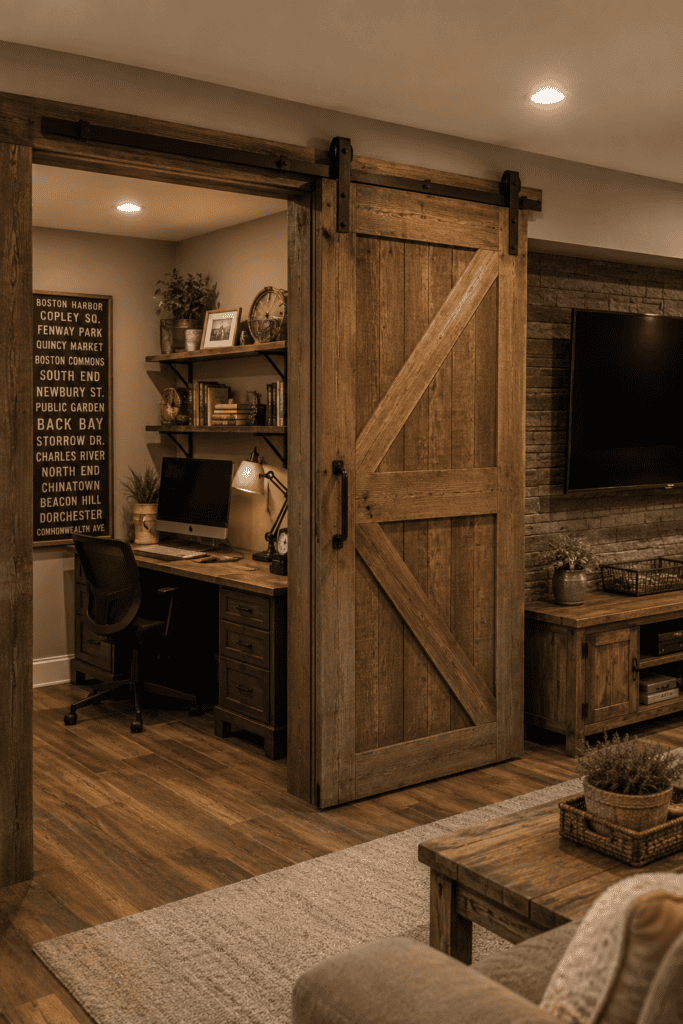
Got an open basement layout but still want to separate the media area from the home gym or office nook? Sliding barn doors are the answer, and they look infinitely cooler than a standard hollow-core door.
Benefits of barn doors in a basement:
- Save floor space since they don’t swing open
- Add instant rustic character
- Work great in low-clearance basement spaces
- Come in a huge range of finishes, from raw wood to painted styles
10. A Dedicated Reading or Whiskey Nook
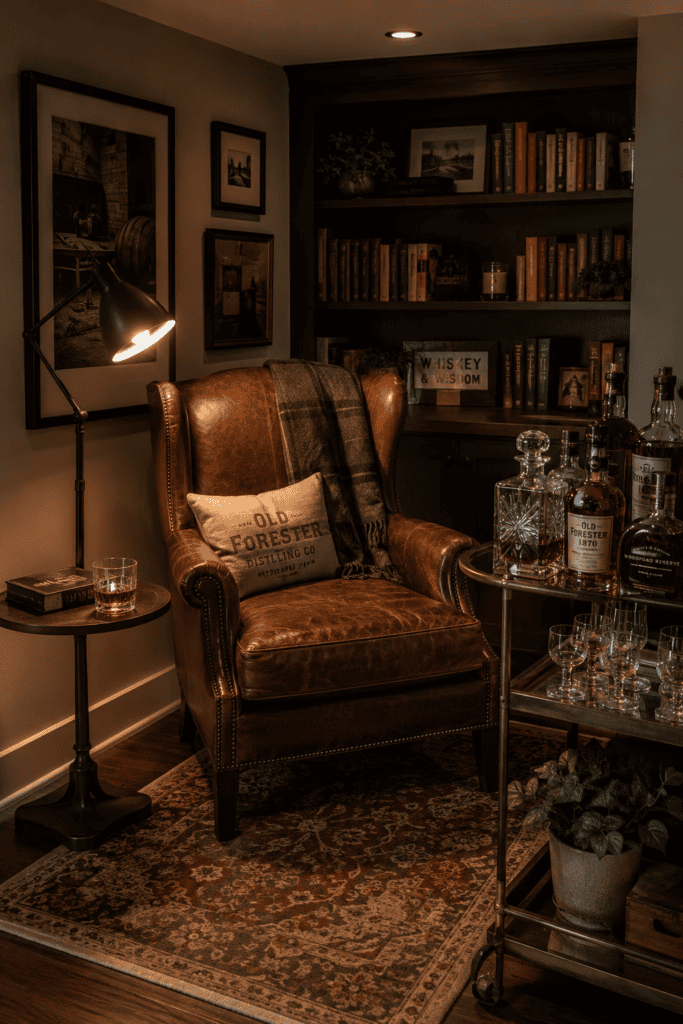
Every rustic basement needs a quiet corner. Mine has a leather wingback chair, a small side table, and a bookshelf stuffed with paperbacks nobody’s actually finished.
Add a small bar cart with a few bottles of bourbon, a reading lamp, and maybe a faux fur throw. It doesn’t need to be big—just intentional. Sometimes the smallest corner becomes the most-used spot in the whole house.
11. Wood-Paneled or Shiplap Walls
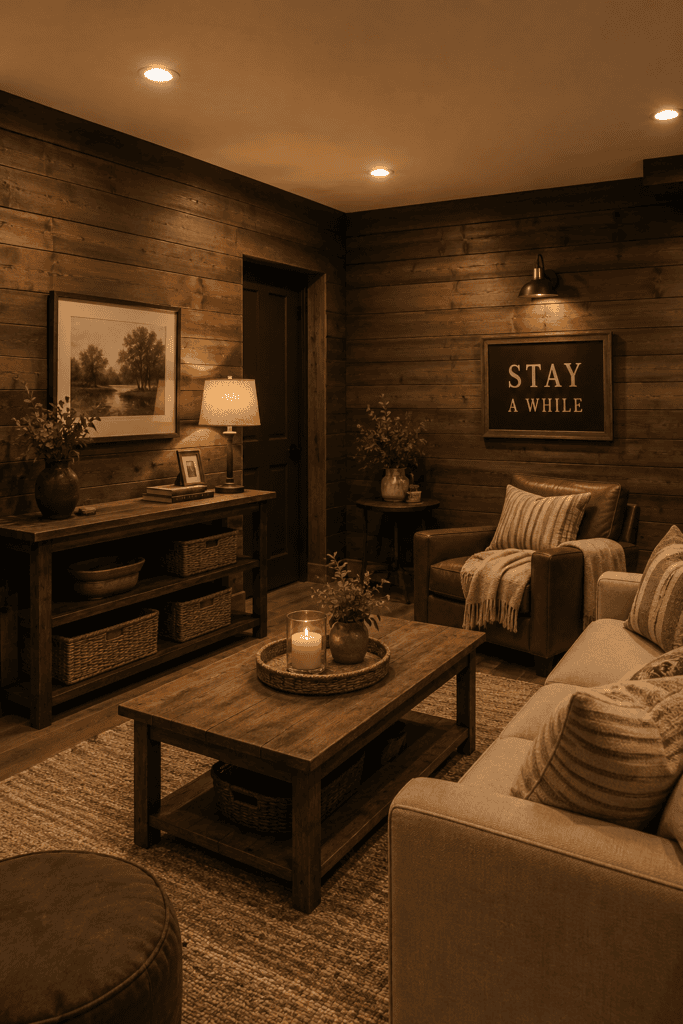
Shiplap isn’t just a farmhouse trend—it translates beautifully to rustic basements too. The horizontal lines add visual interest and warmth without overwhelming a smaller space.
- Stained wood paneling for a darker, moodier feel
- Whitewashed shiplap for a brighter, airier basement
- Mixed materials, like shiplap paired with a stone accent wall
FYI, if your basement deals with humidity, make sure you’re using moisture-resistant materials here. I learned that lesson the hard way after warped paneling turned my first basement project into a redo.
12. Vintage or Repurposed Furniture
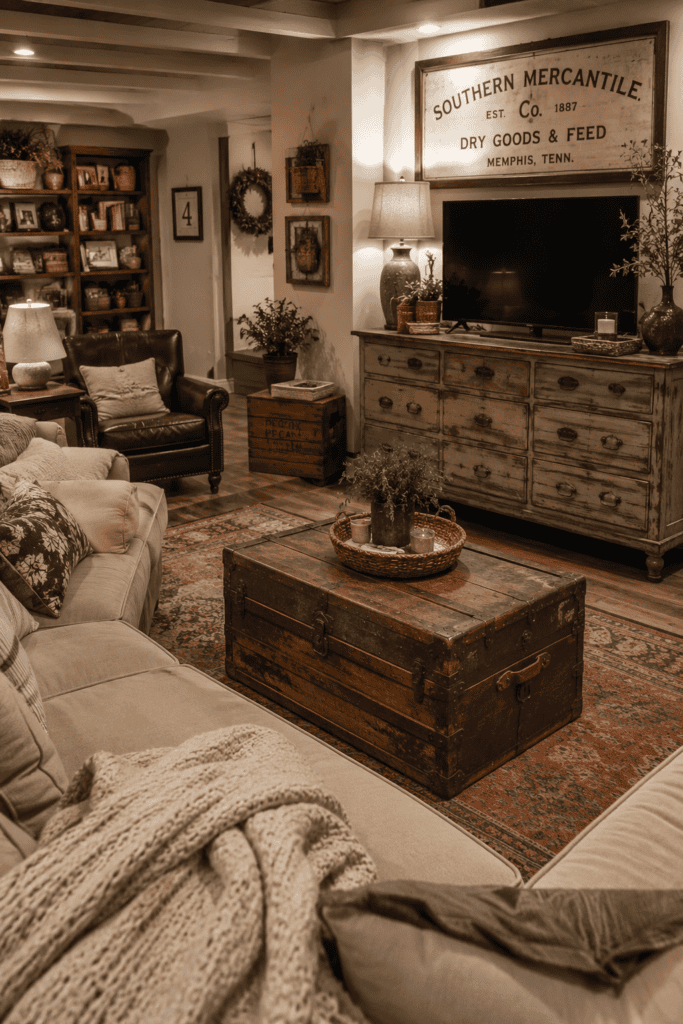
Hit up flea markets, estate sales, or your grandmother’s attic. Rustic design thrives on furniture that looks like it’s lived a life before it landed in your basement.
An old dresser becomes a media console. A weathered trunk becomes a coffee table. A ladder becomes a blanket rack. This approach saves money and gives your space a personality that catalog furniture just can’t replicate.
13. Warm, Earthy Color Palette
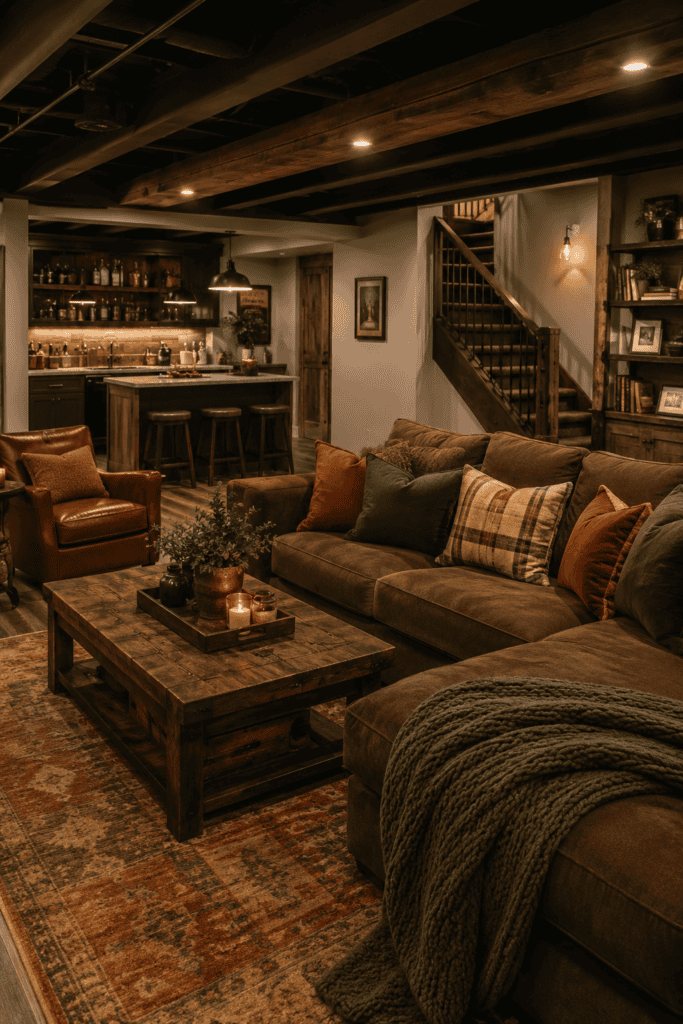
Skip the stark whites and grays—rustic basements call for warm, earthy tones instead. Think deep browns, forest greens, burnt oranges, and muted terracottas.
These colors make a windowless basement feel cozy rather than cave-like. Pair them with wood tones and natural textures, and the whole room starts to feel intentional rather than like an afterthought.
Final Thoughts
So there you have it: 13 rustic basement ideas that turn a forgotten storage space into the best room in the house. From exposed beams to a proper whiskey nook, each of these elements builds on the others to create something genuinely cohesive.
Start small if you need to. Pick two or three ideas that fit your budget and your space, then build from there. Trust me, once you get that first stone wall or reclaimed wood bar in place, you’ll be hooked on finishing the rest.
Now go rescue your basement from its cardboard-box fate. It deserves better, and so do you.