
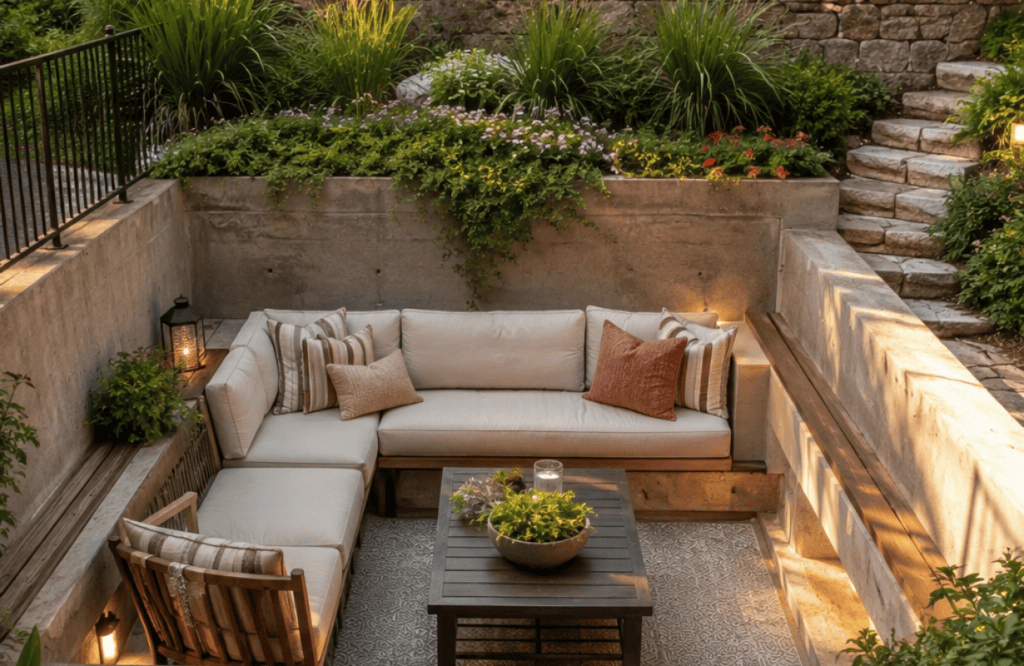
A sloped backyard has a reputation problem. Most homeowners see a hill and think “wasted space” or “too much work,” and honestly, it’s easy to see why. Mowing is harder, water runs where you don’t want it to, and furniture never quite sits level. But here’s what a lot of people miss: a slope isn’t a design flaw, it’s a design opportunity that flat yards simply don’t have.
Think about it this way elevation changes create natural zones. A slope can separate a dining area from a lounge space without a single wall. It can frame a fire pit, cascade a water feature, or turn a boring backyard into something that actually has depth and visual interest. The trick isn’t fighting the grade; it’s working with it.
That’s exactly what this list is about. Below are 14 sloped backyard ideas that turn awkward terrain into genuinely usable, good-looking outdoor space — whether you’re dealing with a gentle rise or a full-on hillside. Some options are quick weekend projects, others are bigger investments, but all of them are proven ways to stop treating your slope like a problem and start treating it like an asset.
1. Terraced Garden Beds
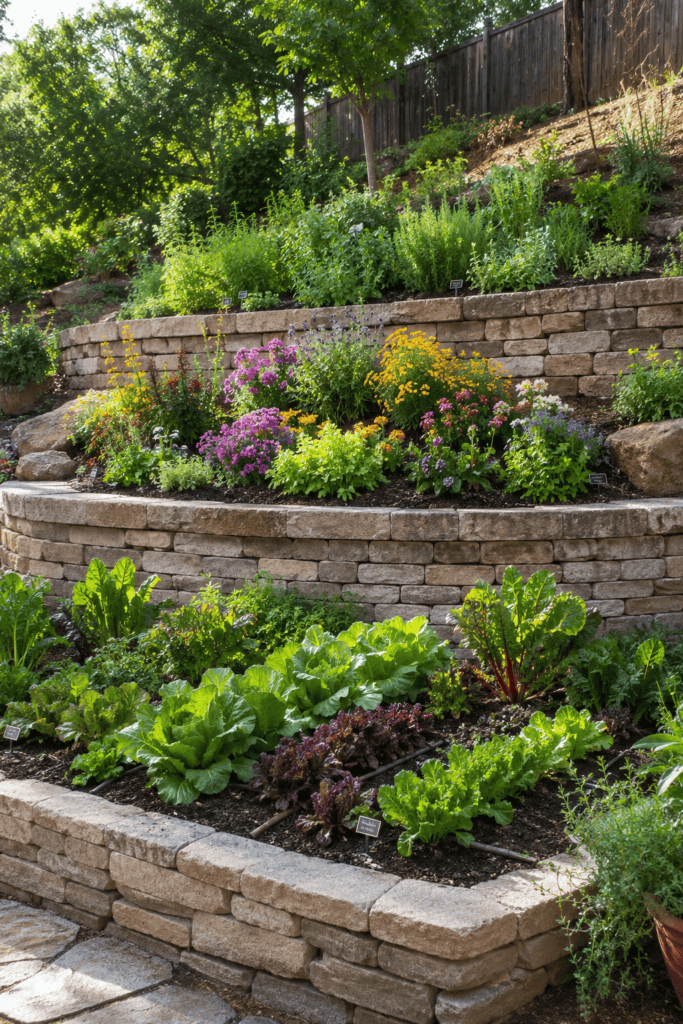
Terracing is the OG solution for slopes, and there’s a reason landscapers keep coming back to it. You basically carve your hill into a series of flat “steps,” each one held in place by a retaining wall. This stops soil erosion and gives you actual usable flat space instead of one long diagonal mess.
I built three terraces on my own slope using stacked concrete blocks, and honestly, it turned my “unusable hillside” into three separate mini-gardens. Each level can have its own theme—herbs on one, flowers on another, maybe a veggie patch up top. Ever wondered why terraced vineyards look so intentional instead of chaotic? This is why.
2. Retaining Wall Seating
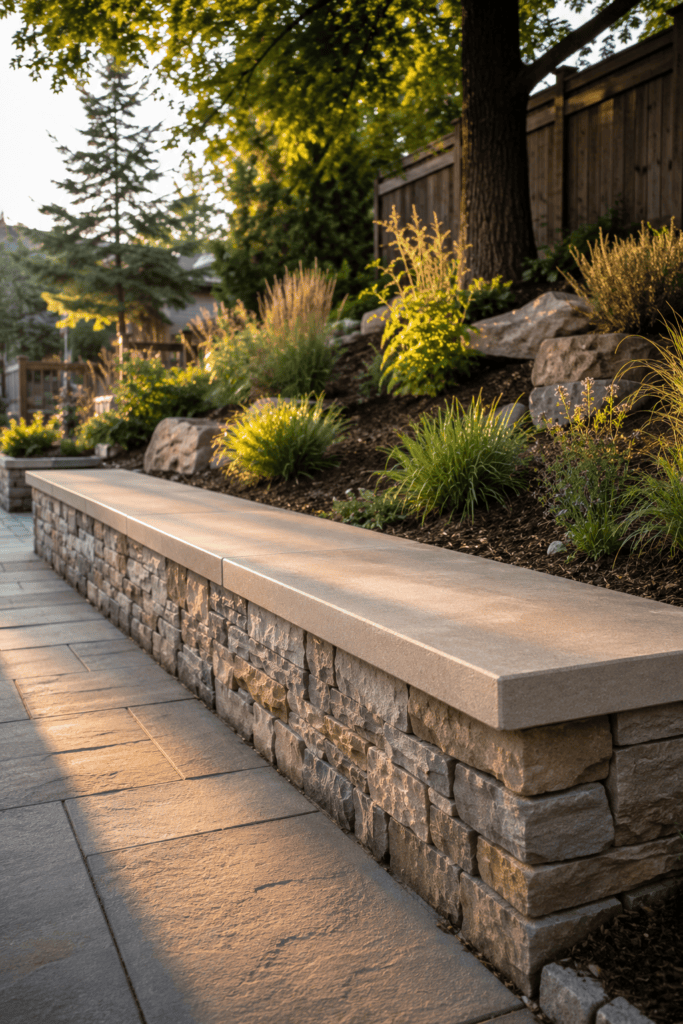
Why build a wall that just… sits there… when it could double as seating? Retaining walls with a flat cap on top (think 16-18 inches high) give you built-in benches without eating into your yard space. It’s a two-for-one deal that I wish someone had told me about before I built a wall AND bought separate patio chairs like a fool.
Key materials worth considering:
- Natural stone (pricier, but ages beautifully)
- Poured concrete (budget-friendly and modern-looking)
- Timber (warmer look, shorter lifespan)
IMO, stone wins long-term even though it costs more upfront. My timber wall started looking rough after about five years; my neighbor’s stone wall from the same era still looks brand new.
3. A Dry Creek Bed
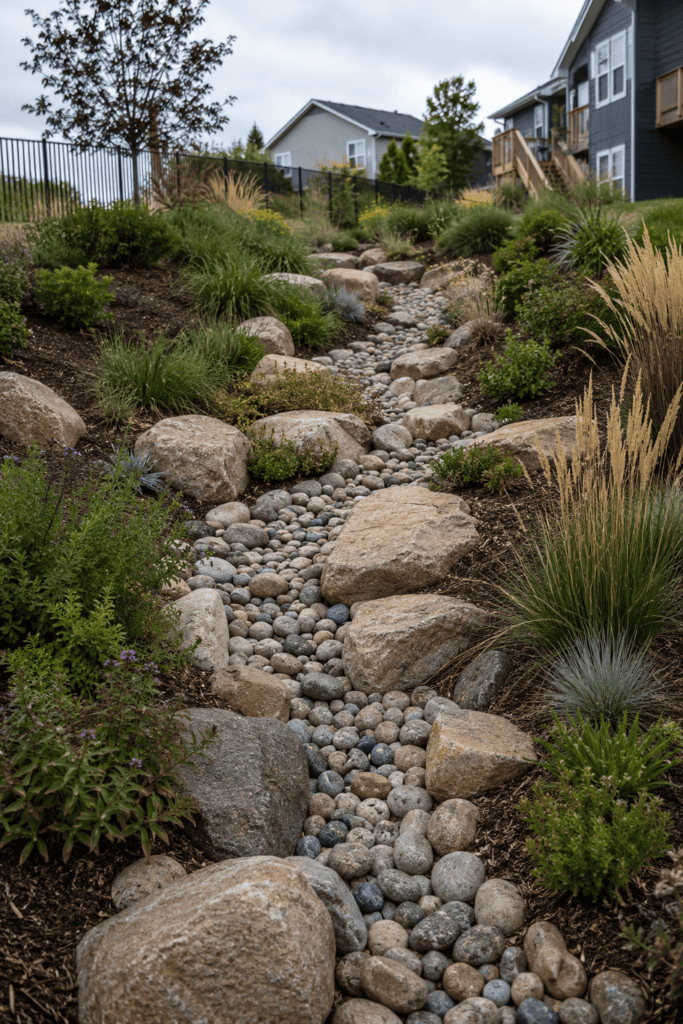
Slopes and water do NOT mix well without a plan—trust me, I learned this the expensive way during a spring storm that turned my backyard into a small river. A dry creek bed solves this by giving rainwater a designated path to follow instead of carving its own route through your lawn.
You line a shallow channel with river rock and larger stones, angle it to follow the natural slope, and let gravity do the rest. It looks intentional and rustic, not like erosion damage. Plus, it’s basically maintenance-free once it’s installed, which is more than I can say for my lawn.
4. Built-In Stairs With Landings
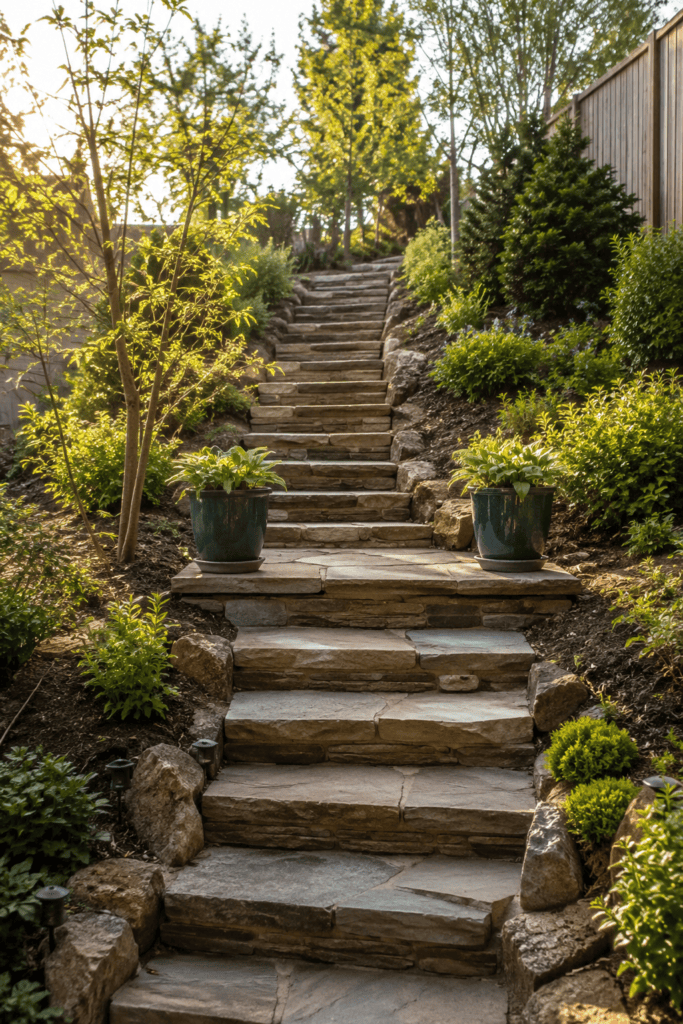
If your slope requires actual foot traffic between levels, don’t just throw down some stepping stones and call it a day. Proper built-in stairs with landings (flat resting spots every 4-6 steps) make the space feel designed rather than accidental.
Landings aren’t just for looks either—they give you a spot to pause, and they meet most building codes for steep grade changes. I added a small landing halfway up my stairs with room for two potted plants, and it instantly made the whole path feel more like a “journey” and less like a chore. Cheesy, I know, but it works.
5. A Multi-Level Deck
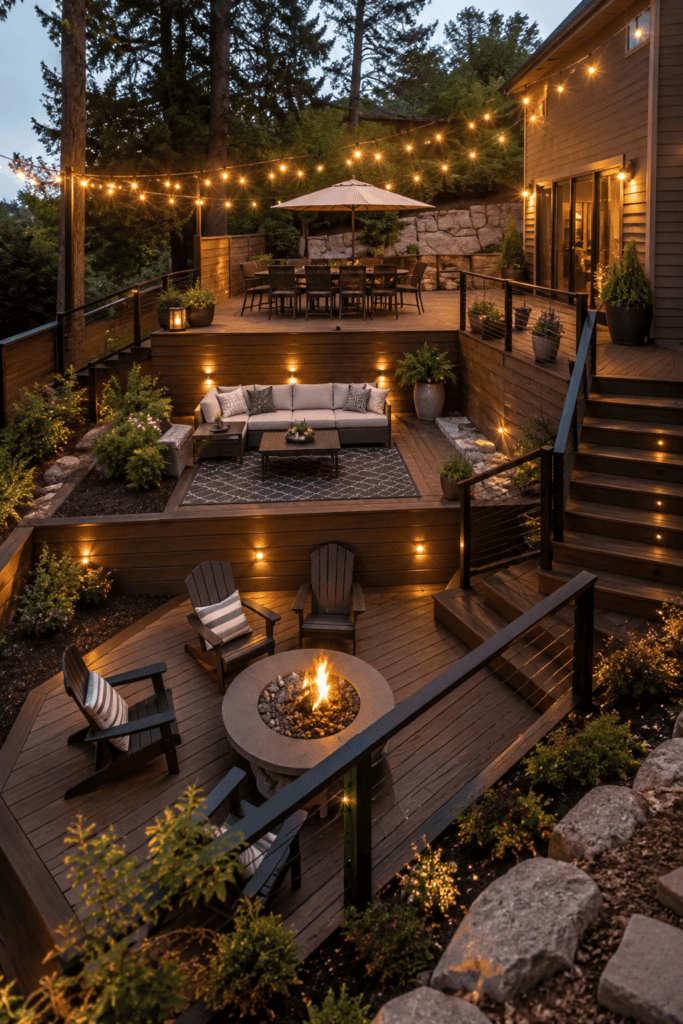
Sometimes the smartest move is to stop fighting the slope and just build over it. A multi-level deck follows the natural grade of your yard, giving you separate “rooms” outdoors—one level for dining, another for lounging, maybe a lower one for a fire pit.
Benefits of a tiered deck:
- Reduces the need for excessive grading or fill dirt
- Creates distinct zones without walls
- Adds real resale value (way more than a flat deck, in my experience)
I’ll be honest: this is not a weekend DIY project unless you’re genuinely experienced with construction. Hire a pro for the structural stuff. Your future self, and your homeowner’s insurance, will thank you.
6. Groundcover Instead of Grass
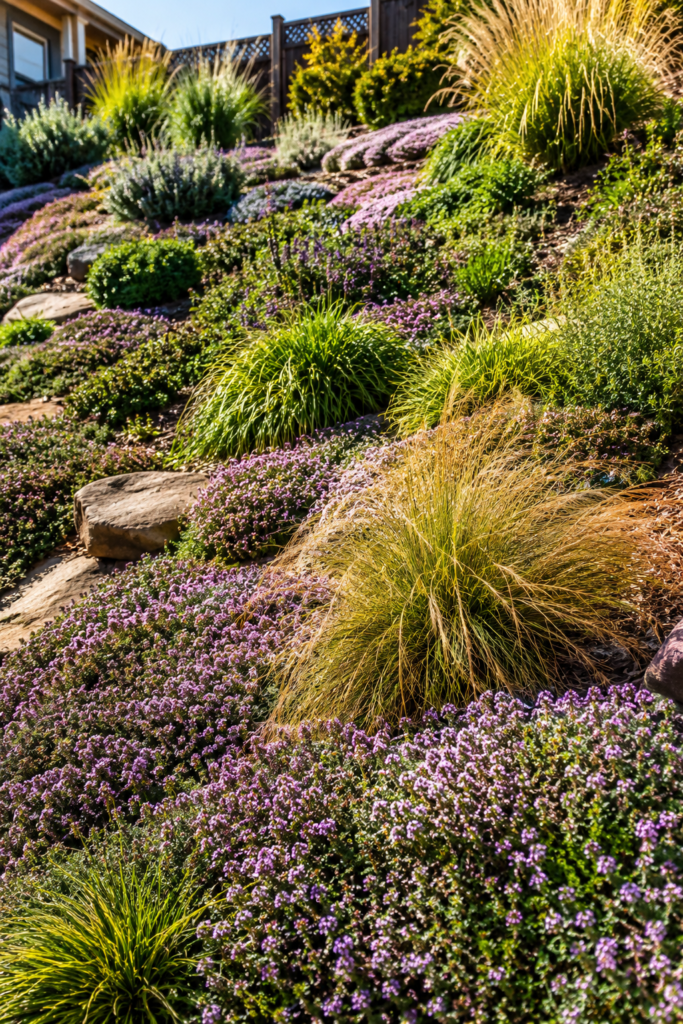
Grass on a steep slope is basically a mowing nightmare. Ever tried pushing a mower uphill while also trying not to slide down it yourself? Not fun, and honestly kind of dangerous.
Swap grass for low-maintenance groundcover instead. Options like creeping thyme, sedum, or ornamental grasses hold soil in place with their root systems and need zero mowing. I switched half my slope to creeping thyme and haven’t touched a mower on that section in three years—it just does its thing.
7. A Fire Pit Terrace
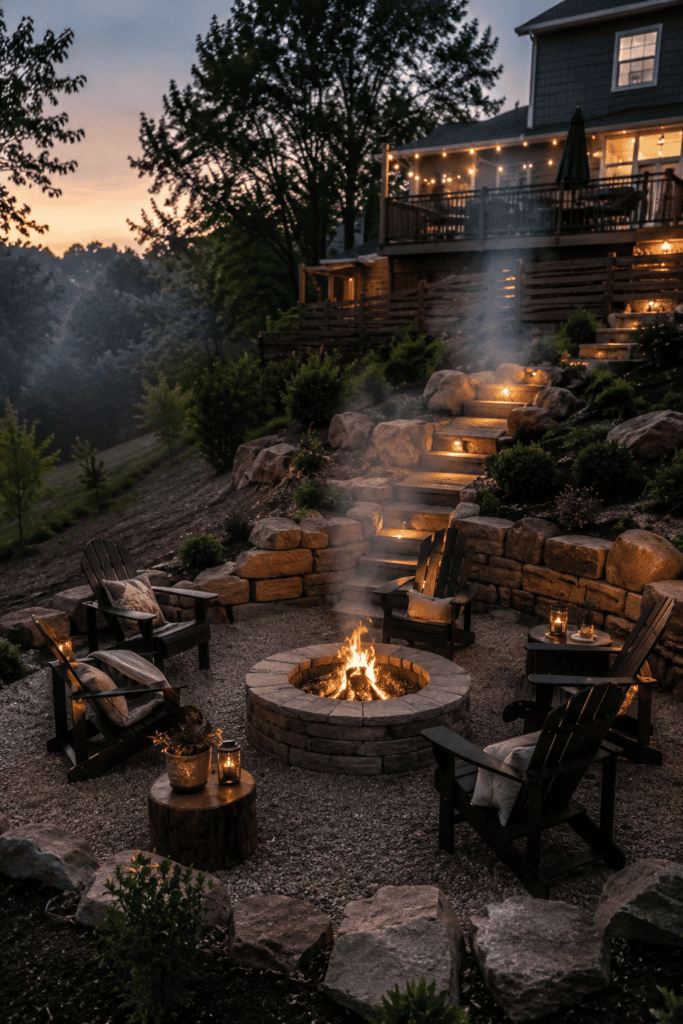
Carve out one flat terrace specifically for a fire pit and some seating, and suddenly your “problem slope” becomes the coolest hangout spot in the neighborhood. Position it lower on the slope so smoke drifts away from the house, and add a gravel or paver base so it’s not a fire hazard sitting on dry grass.
This was, hands down, my favorite addition to my own yard. Friends who used to avoid my backyard because of the hill now specifically ask to come over for fire pit nights. Funny how that works.
8. Rock Gardens on the Steepest Sections
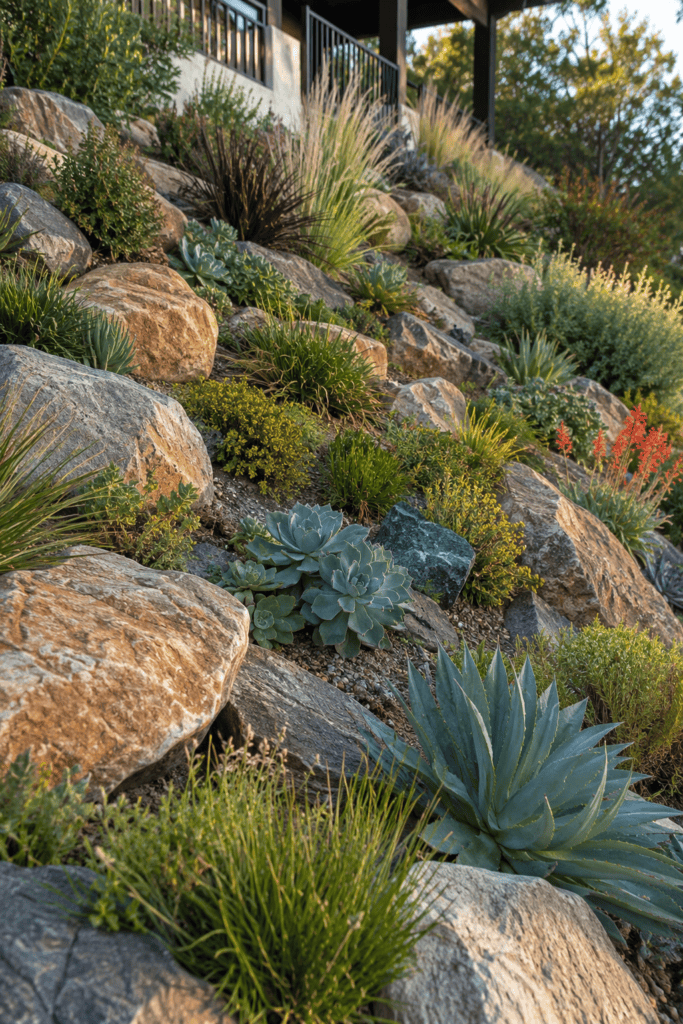
For the parts of your slope that are just too steep for anything else—stairs, decks, whatever—a rock garden is honestly the path of least resistance. Large boulders combined with drought-tolerant plants like succulents or ornamental grasses create texture and interest without requiring you to fight gravity.
Why this works so well on steep grades:
- Rocks naturally prevent erosion
- Drought-tolerant plants need minimal watering (which matters since watering uphill is annoying)
- Almost zero ongoing maintenance once established
I use this approach on the section of my yard that’s basically a 45-degree cliff. It looks intentional now instead of “the part of the yard we gave up on.”
9. A Zigzag Pathway
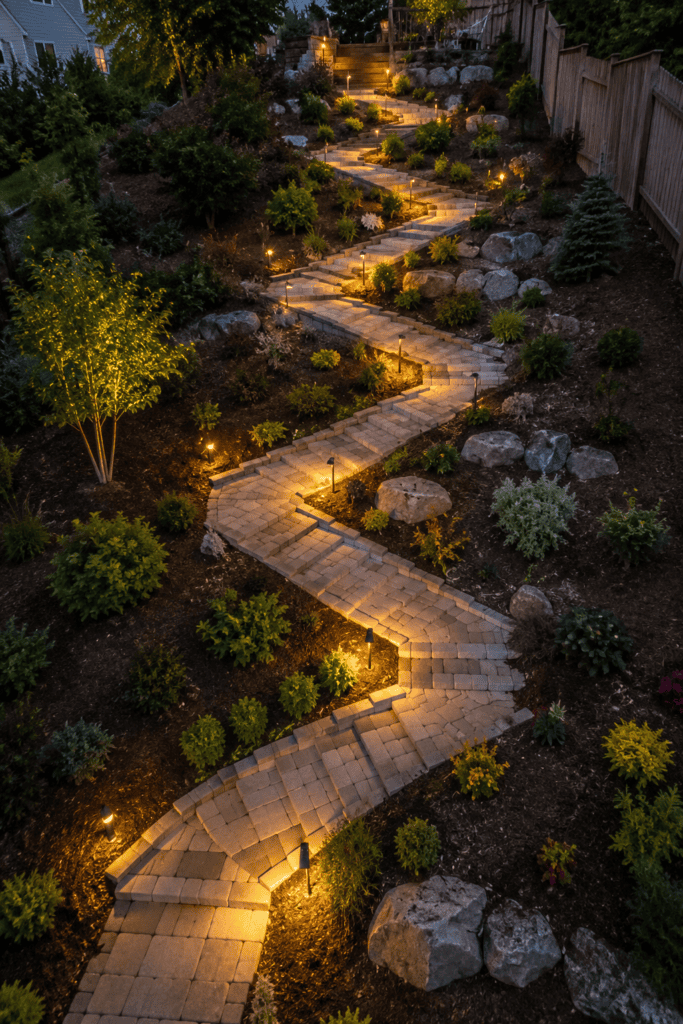
Straight paths up a steep slope are steep, period. A zigzag or switchback path—like the ones you see on mountain trails—reduces the grade you’re actually walking on at any given point, making the climb way less brutal.
Use pavers, gravel, or even mulch depending on your budget, and add lighting along the switchbacks so it’s safe at night. This is one of those sloped backyard ideas that’s more functional than flashy, but you’ll appreciate it every single time you’re not gasping for air halfway up your own yard.
10. A Hillside Water Feature
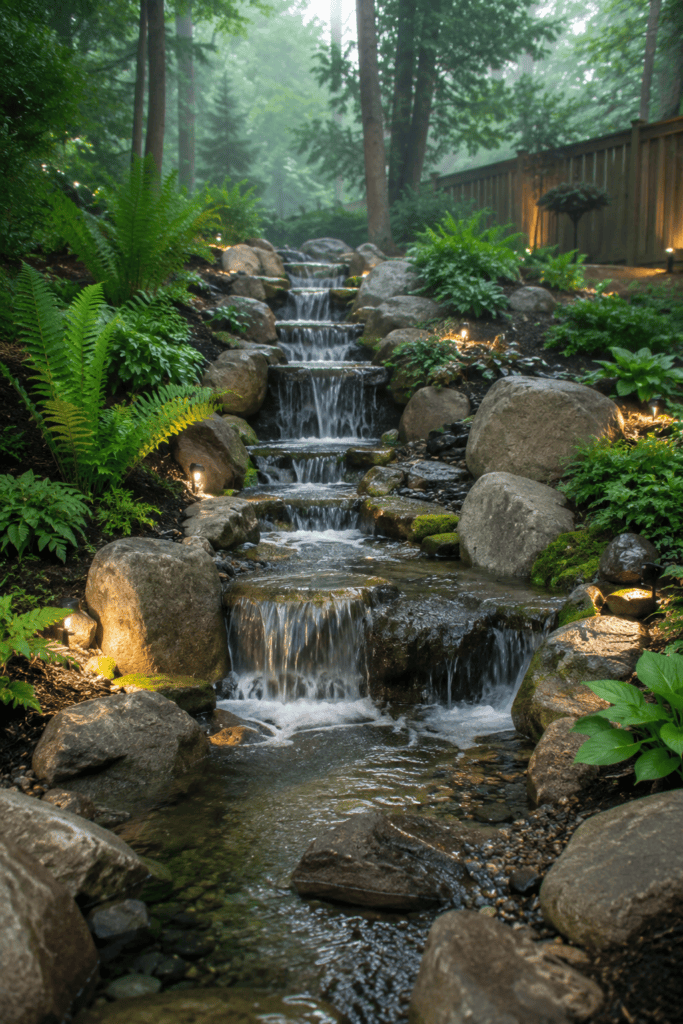
Water flows downhill anyway, so why not work with that instead of against it? A small waterfall or stream feature built into the slope uses gravity to your advantage instead of fighting it like everything else in a sloped yard tends to.
I’ll admit, this one’s more of a splurge (pun fully intended). But the sound of moving water genuinely changes the whole vibe of a backyard. It’s calming, it masks street noise, and IMO it’s worth the investment if your budget allows for it.
11. Retaining Wall Planters
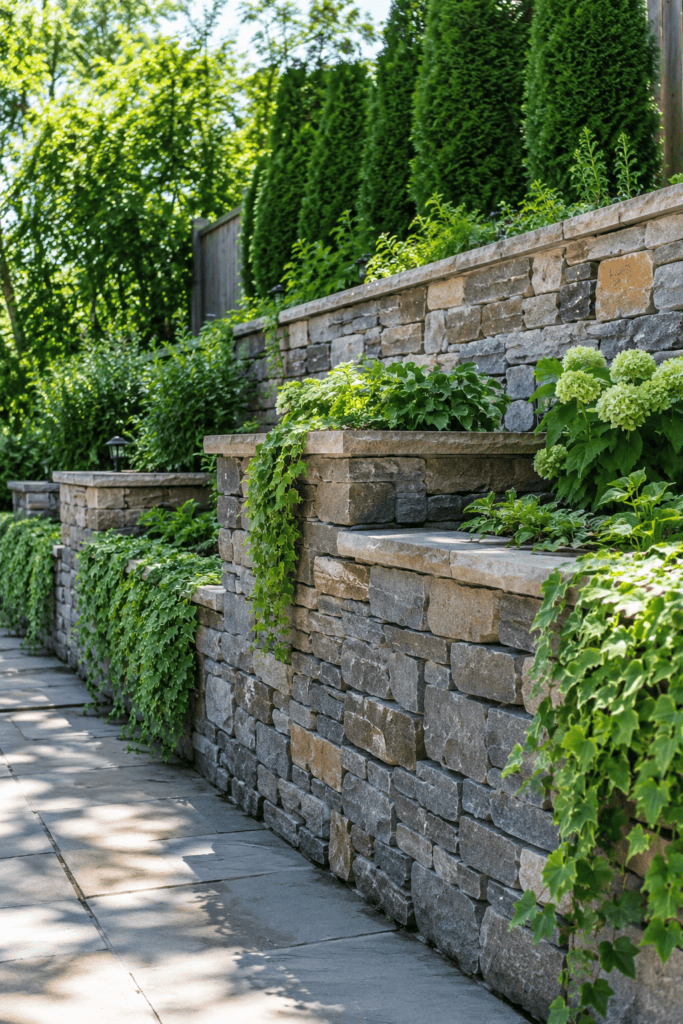
Not every retaining wall needs to be purely structural and boring. Build in planter boxes at varying heights along the wall, and suddenly you’ve got a vertical garden that also happens to hold your hillside together.
- Trailing plants (like ivy or lantana) soften the hard edges of the wall
- Herbs at a mid-level box mean easy kitchen access
- Taller shrubs at the top add privacy from neighbors
This is a solid option if you want greenery without dedicating a huge flat section of yard to a traditional garden bed.
12. A Sunken Patio
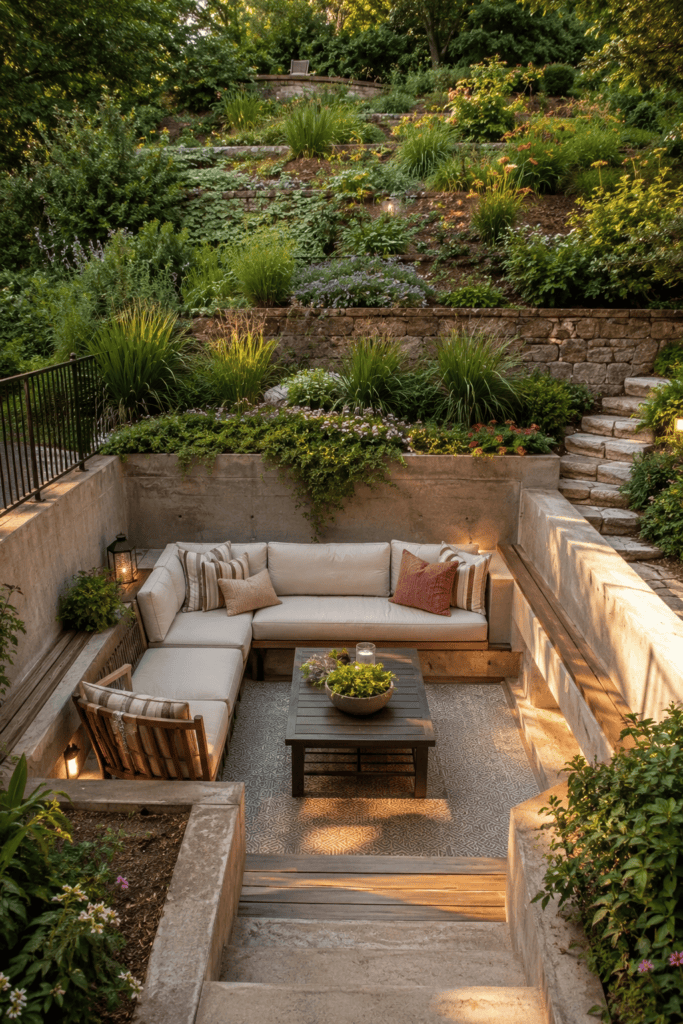
Instead of building up, sometimes it makes sense to dig in. A sunken patio carved into the slope creates a cozy, sheltered outdoor room that feels intimate rather than exposed—kind of like a natural amphitheater.
This works especially well midway up a slope, where you can have terraced areas above and below it. It’s also naturally sheltered from wind, which, if you live somewhere breezy, is a genuine perk and not just a nice-to-have.
13. Ornamental Grasses for Movement and Erosion Control
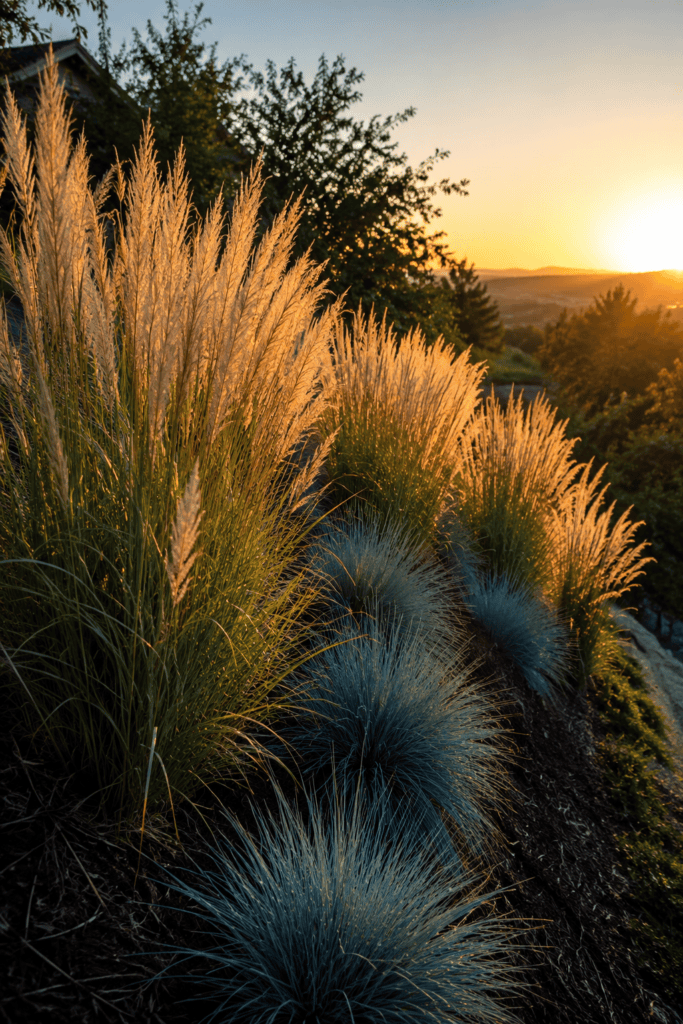
Ornamental grasses are honestly underrated for sloped yards. They’ve got deep root systems that hold soil in place, they need very little water once established, and they add movement to the yard as they sway—something a static flower bed just can’t replicate.
Good options to consider:
- Feather reed grass (tall, upright, great for privacy)
- Blue fescue (compact, works well in smaller clusters)
- Little bluestem (native to many US regions, low-maintenance)
I planted a row of feather reed grass along my steepest bank, and not only did it stop the erosion problem I was having, it looks genuinely striking when the wind picks up. Double win.
14. An Outdoor Kitchen on a Terraced Level
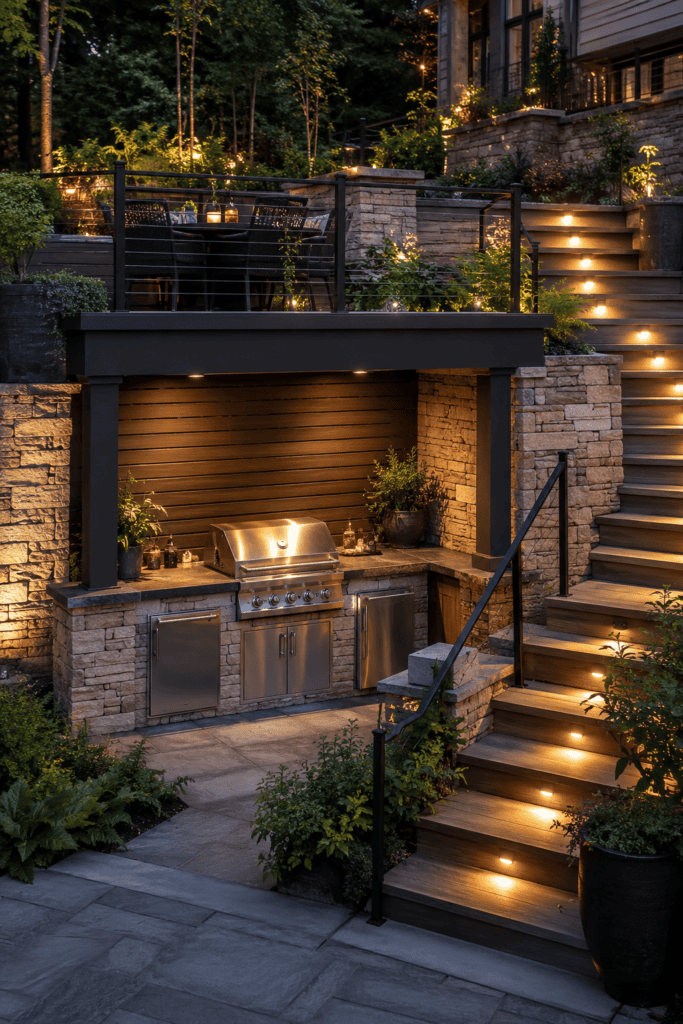
If you’re going to terrace your yard anyway, why not put one of those flat levels to serious use? An outdoor kitchen—even a simple one with a grill, small counter, and some storage—turns a formerly unusable slope into genuine entertaining space.
Position it on a middle or lower terrace so it’s sheltered and easy to access from the house. This is a bigger investment than most items on this list, sure, but if you love hosting, it might be the single best use of your sloped yard’s square footage.
Final Thoughts
A sloped backyard isn’t something you need to apologize for or hide behind a fence. IMO, some of the best-looking yards I’ve seen are sloped ones done right—flat yards can honestly feel a little one-note by comparison 🙂
Start small if your budget’s tight. Groundcover and ornamental grasses cost way less than a multi-level deck, and they solve the erosion problem immediately. Then work your way up to the bigger stuff—terraces, walls, maybe that fire pit terrace everyone will beg you to host at.