
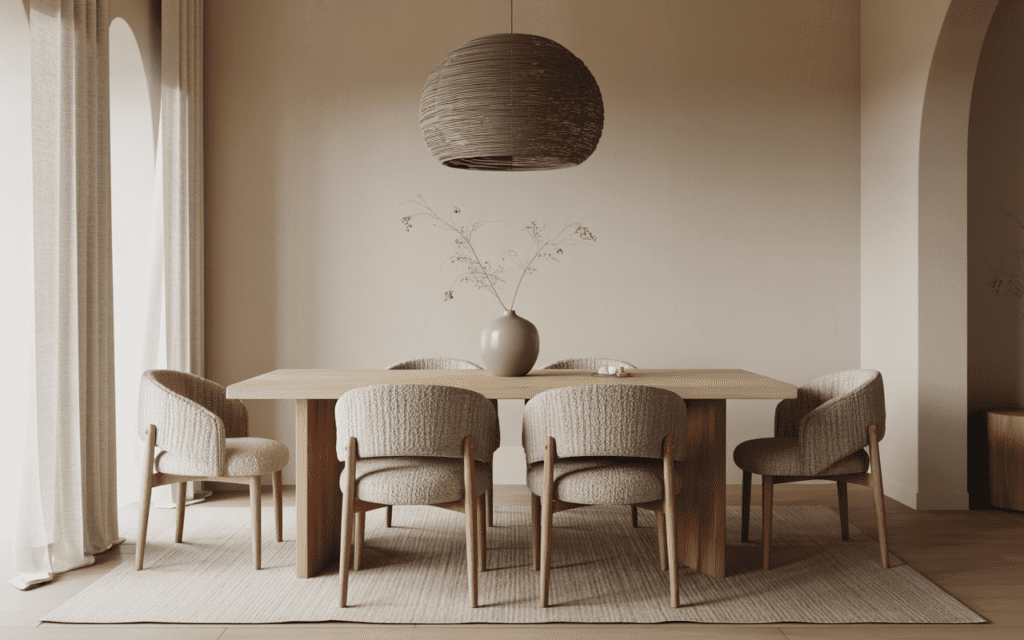
Your dining room doesn’t need a giant chandelier, twelve fussy chairs, and a table that looks like it belongs in a museum. Sometimes the most beautiful spaces feel calm, clean, and effortless. That’s exactly why I keep coming back to minimalist dining room ideas they make a room feel lighter, smarter, and way less chaotic.
I’ve always loved dining spaces that look polished without trying too hard. You know the kind: a simple table, a few thoughtful details, great lighting, and suddenly the whole room feels expensive. Funny how removing stuff often makes a room look better, right? Minimalist dining room design isn’t about making your home cold or boring. It’s about choosing the right pieces and letting them breathe.
If you want a space that feels modern, welcoming, and easy to live with, these ideas will help. Let’s get into the good stuff.
1. Start With a Simple Wooden Dining Table
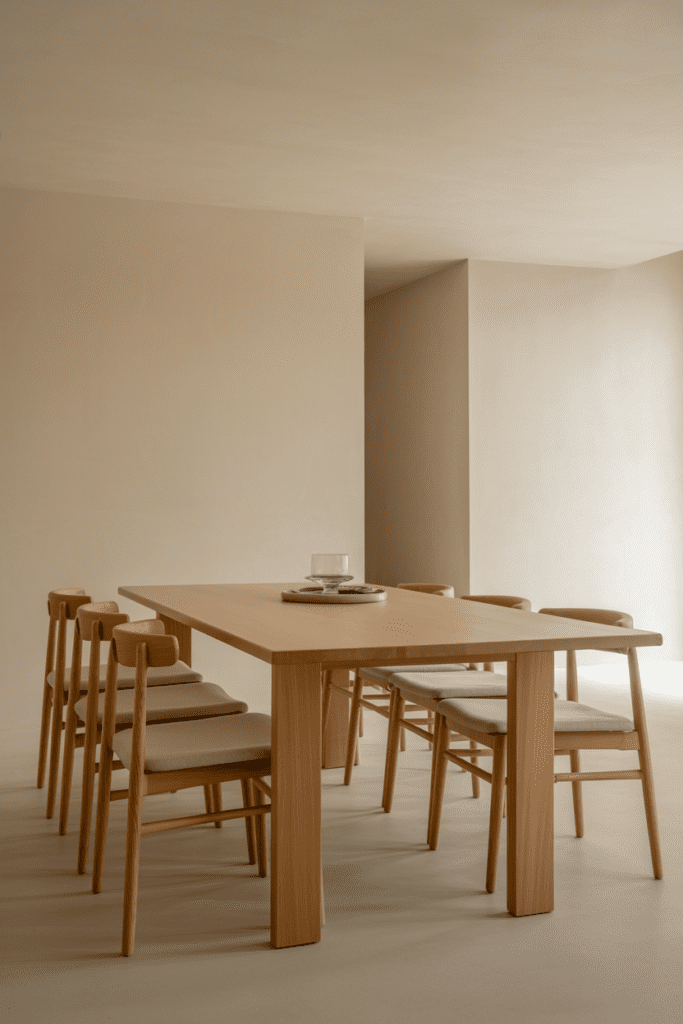
If you change only one thing, make it the table. A simple wooden dining table creates the foundation for a minimalist dining room without making the room feel sterile.
I usually lean toward light oak, ash, or walnut because natural wood brings warmth into a pared-back space. A table with clean lines and minimal detailing works best. No chunky carving, no dramatic pedestal base, no “look at me” energy. The table should anchor the room, not start an argument with everything around it.
A good minimalist table should have:
- Clean, straight lines
- A natural wood or matte finish
- Very little ornamentation
- A shape that suits your room layout
Rectangular tables fit most homes, but round tables work beautifully in smaller dining areas. Ever noticed how a round table makes a room feel more relaxed? It softens all those hard edges and keeps the flow easy.
2. Choose a Neutral Color Palette That Feels Calm
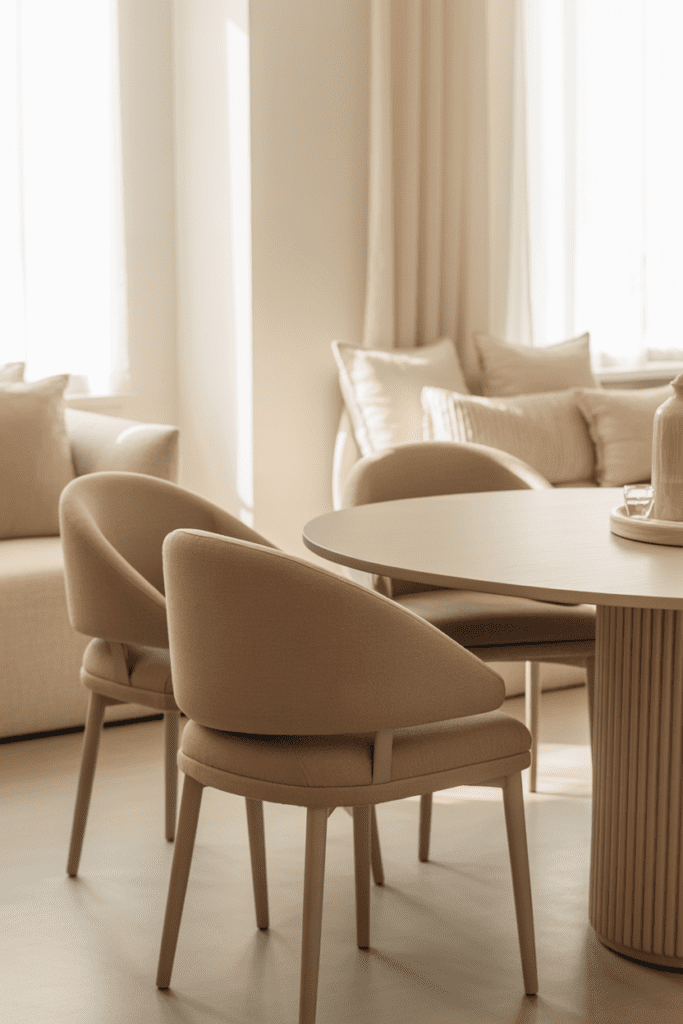
A minimalist dining room color palette usually starts with neutrals, and honestly, that’s not a bad thing. Beige, white, warm gray, taupe, soft greige—these shades create a peaceful backdrop that lets furniture and texture stand out.
I know some people hear “neutral” and immediately think “boring.” But boring isn’t the problem. Bad styling is the problem. A layered neutral room can feel rich, airy, and incredibly chic when you mix tones properly.
Try combining:
- Warm white walls
- Light wood furniture
- Cream or beige upholstery
- Black or charcoal accents for contrast
This approach keeps the room looking cohesive and timeless. Plus, neutral dining rooms age well. You won’t wake up six months later wondering why you painted the walls aggressive avocado.
3. Keep the Dining Chairs Sleek and Uncomplicated
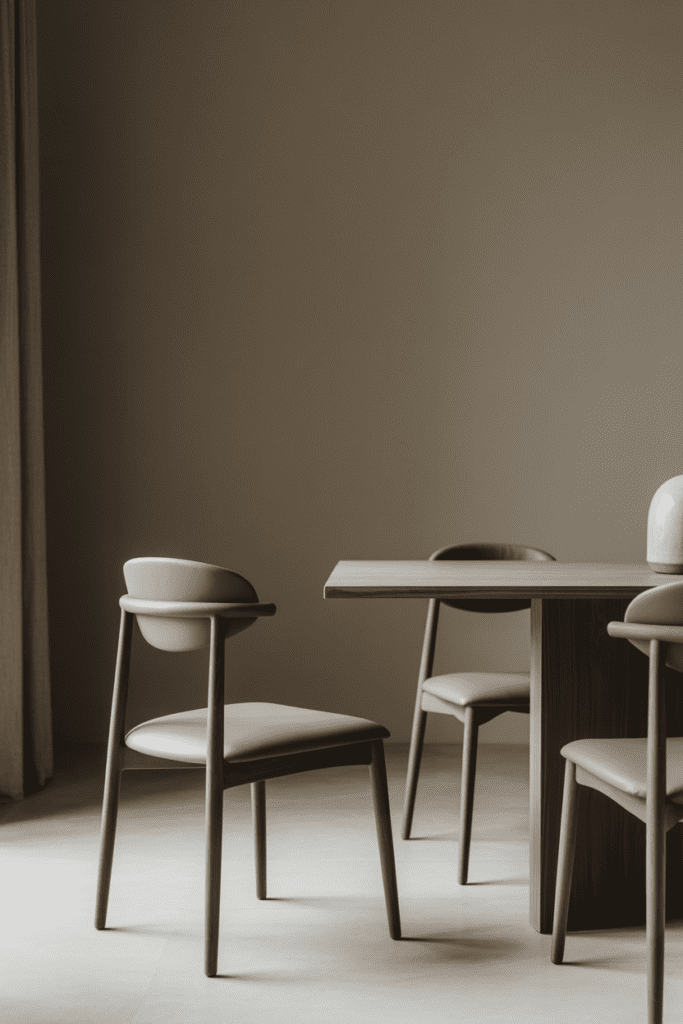
Chairs can make or break your minimalist look fast. If the table feels calm but the chairs look busy, the room loses that clean, edited vibe.
I love minimalist dining chairs with slim frames, curved silhouettes, and subtle texture. Upholstered seats work well if you want a softer look, while wood or molded chairs create a sharper, more modern feel. IMO, the best chairs look stylish but still let people sit through an actual meal without regretting every life choice.
When picking dining chairs, focus on:
- Simple silhouettes
- Low visual bulk
- Comfortable proportions
- Materials that complement the table
Matching chairs look tidy, but mixed seating can work too. Try two chair styles in the same color family if you want visual interest without clutter.
4. Use One Statement Light Fixture
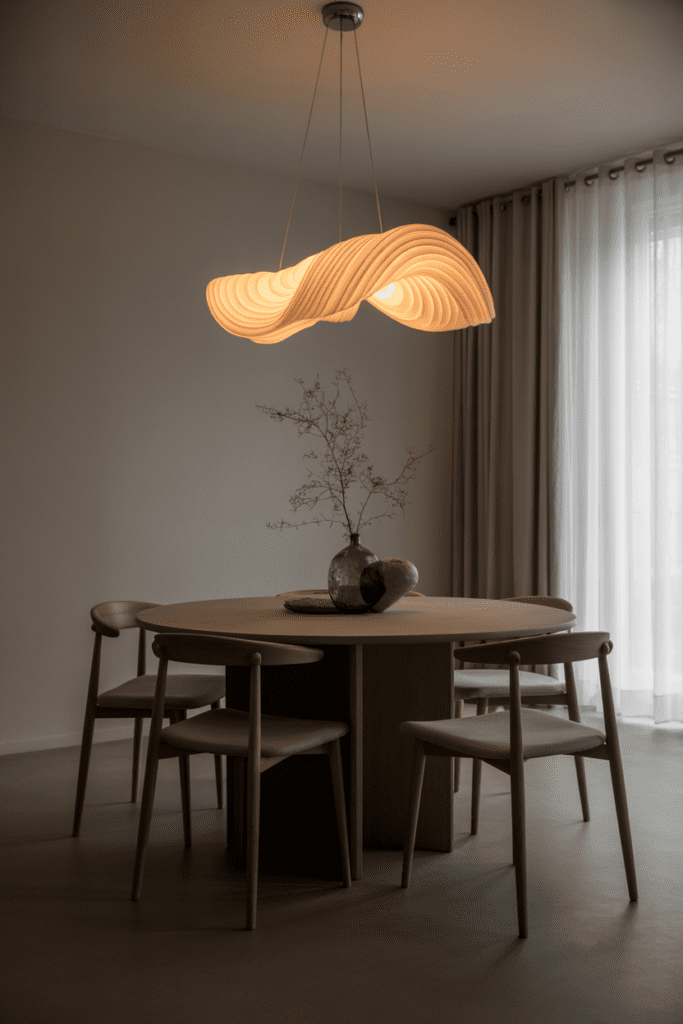
Minimalism doesn’t mean you skip personality. It means you place it carefully. A statement dining room light fixture draws the eye upward and gives the room a focal point without adding visual mess.
Pendant lights, linear chandeliers, and sculptural paper lanterns all work beautifully in minimalist spaces. I especially like oversized fixtures in simple forms because they create drama in a controlled way. It’s the design version of speaking softly but still owning the room.
Look for lighting that offers:
- Strong shape
- Simple materials
- Soft, flattering light
- A scale that fits your table
Hang the fixture low enough to feel connected to the dining table, but not so low that someone has to dodge it mid-conversation. That tends to ruin the mood.
5. Add Texture Instead of More Stuff
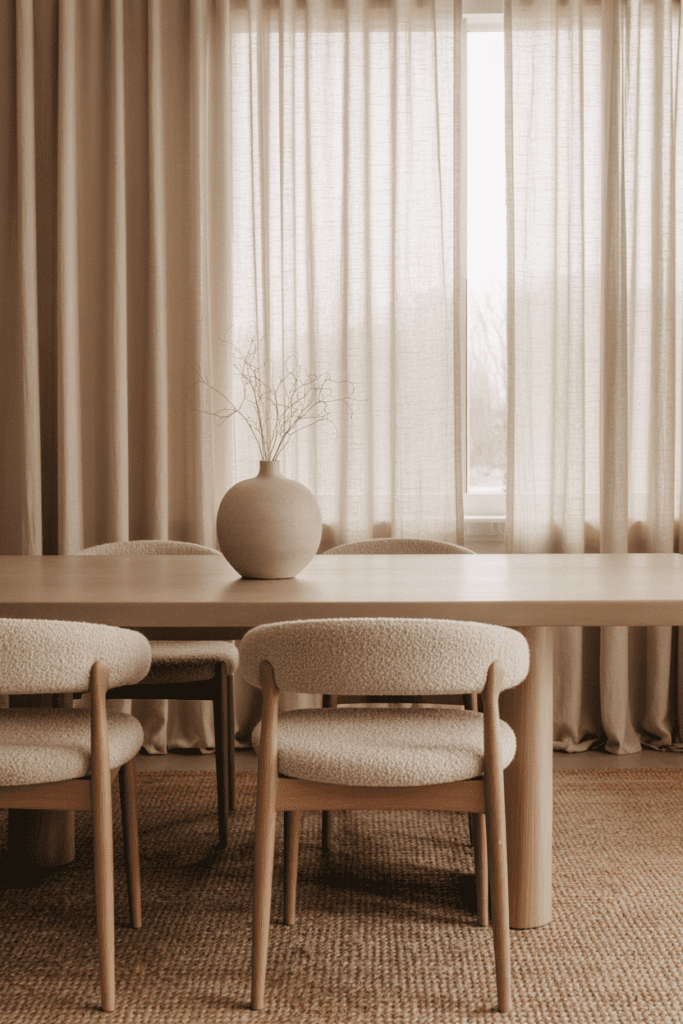
This is where a lot of people get stuck. They remove clutter, then the room feels flat, and suddenly they panic-buy random decor. Please don’t do that.
In a minimalist dining room, texture does the heavy lifting. Think linen curtains, boucle chair seats, woven rugs, matte ceramics, plaster walls, and natural wood grain. These elements add depth without crowding the space.
Texture ideas that work well:
- A woven area rug under the table
- Linen drapes in a soft neutral
- Ceramic vases with a handmade finish
- Wood, stone, or matte metal accents
Ever walked into a room that had almost nothing in it, yet it still felt complete? Texture usually explains that magic.
6. Let Negative Space Do Its Job
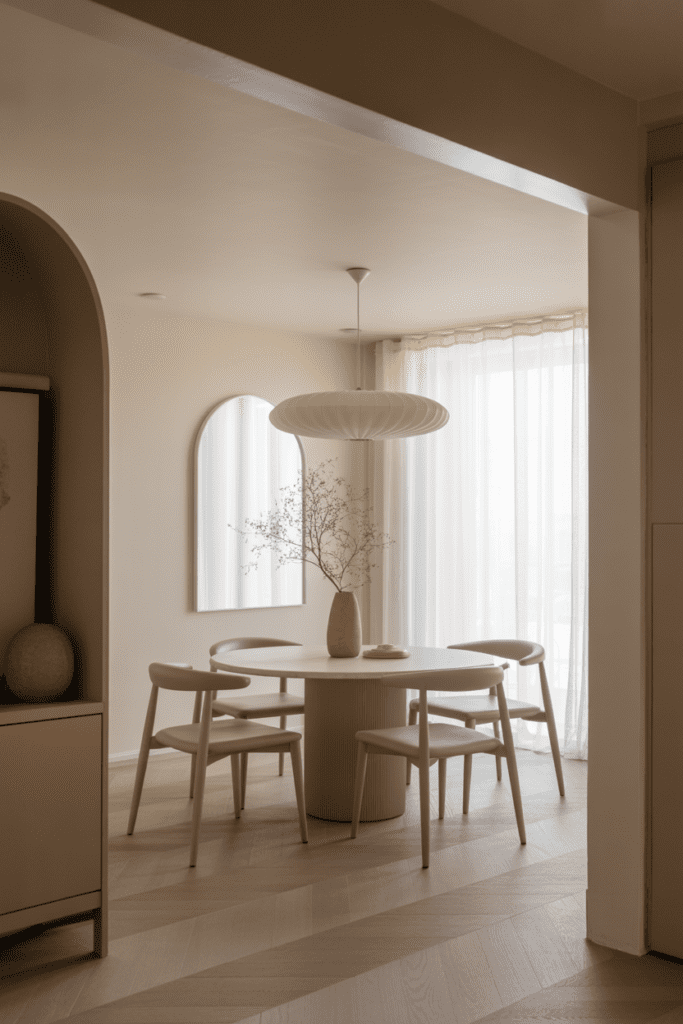
You don’t need to fill every corner. In fact, one of the best minimalist dining room decorating ideas is leaving some areas alone.
Negative space gives the eye room to rest. It makes the furniture look more intentional and the room feel more open. I’ve seen people style every surface within an inch of its life, and the result never feels calm. It feels like the room drank too much coffee.
Give your pieces breathing room by:
- Leaving space between furniture and walls when possible
- Keeping tabletops mostly clear
- Avoiding oversized storage pieces in small dining rooms
- Limiting decor to a few strong items
Minimalist spaces look better when every object feels chosen. That’s the whole game.
7. Bring in a Large Piece of Simple Wall Art
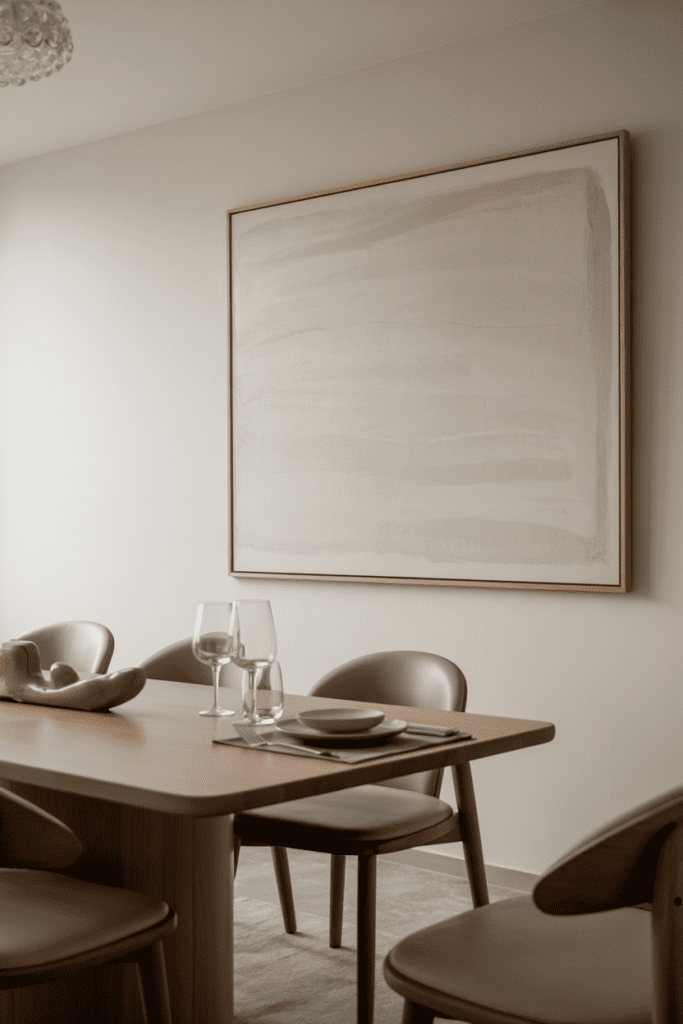
Blank walls can look elegant, but sometimes a dining room needs one visual anchor. A large minimalist wall art piece adds personality without making the room feel busy.
Go for abstract art, line drawings, black-and-white photography, or soft landscape prints. Bigger usually works better than lots of little frames. One oversized piece creates calm, while a dozen tiny prints often create visual chatter.
Here’s what I look for in wall art:
- Muted or earthy colors
- Clean composition
- Plenty of negative space
- A frame that feels understated
If you love art, this is where you can quietly show some taste. No need to turn your dining wall into a gallery maze.
8. Choose a Dining Rug That Grounds the Room
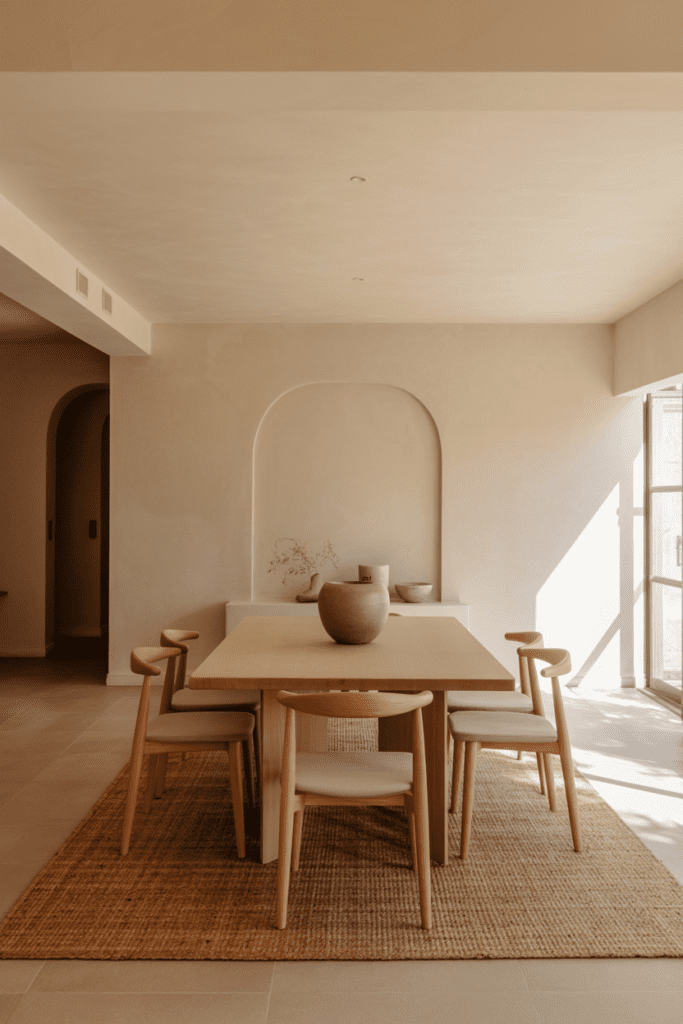
A rug can make your dining area feel finished, especially in open-plan homes. The trick involves choosing one that supports the space instead of shouting over it.
The best minimalist dining room rug ideas usually involve low-pile rugs in subtle patterns or solid tones. Flatweave rugs, wool blends, and natural fiber styles work particularly well. They add warmth and structure without stealing focus from the furniture.
A good dining room rug should:
- Extend beyond the chairs
- Feel easy to clean
- Use subtle color or pattern
- Coordinate with the room’s palette
If your chairs catch on the rug every time someone stands up, the rug isn’t helping. It’s plotting against you.
9. Try a Monochrome Look for Extra Elegance
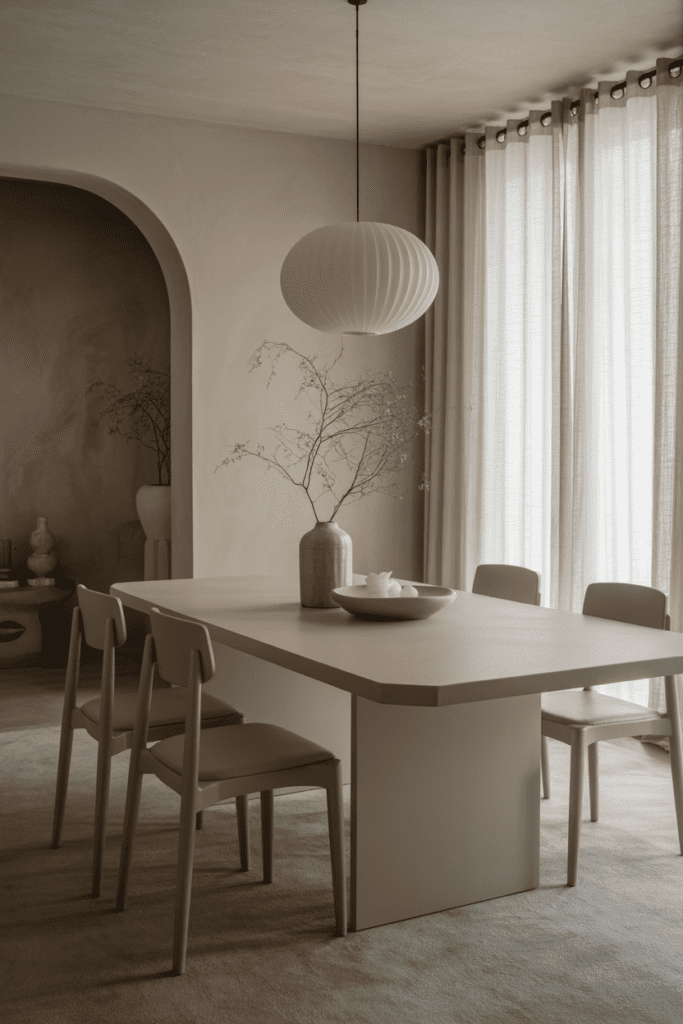
If you want your dining room to feel polished and modern, a monochrome palette can look stunning. This style works especially well in modern minimalist dining room ideas because it creates strong visual consistency.
You can use shades of white, beige, gray, or even black to create a refined layered look. The key is mixing materials so the room doesn’t feel flat. A white room with wood, linen, plaster, and stone feels warm. A white room with no variation feels like a rental waiting room :/
Monochrome dining room elements can include:
- Walls and chairs in similar tones
- Table decor in matching shades
- Layered textures for contrast
- Small black accents for definition
This look feels clean, expensive, and calm when you do it right.
10. Use Built-In Storage or Streamlined Furniture
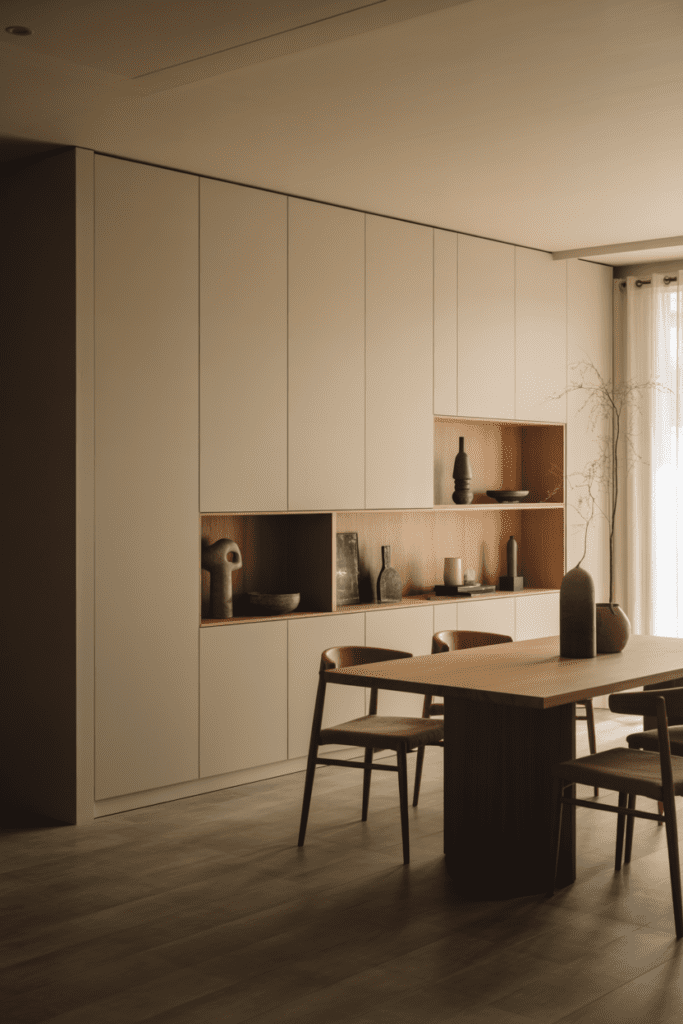
Storage matters, especially if your dining room has to work hard. Maybe it holds dinnerware, serving pieces, extra linens, candles, and those random hosting items you swear you’ll organize someday.
A minimalist dining room sideboard or built-in cabinet keeps the room functional without making it feel crowded. I prefer low-profile storage with flat fronts, push-latch doors, or simple hardware. Clean lines matter here because bulky furniture can weigh the whole room down fast.
Look for storage that offers:
- A low, horizontal shape
- Smooth fronts or discreet hardware
- Enough concealed space for essentials
- A finish that blends with the room
When storage disappears into the design, the whole room feels calmer. That’s always a win.
11. Decorate the Table With Restraint
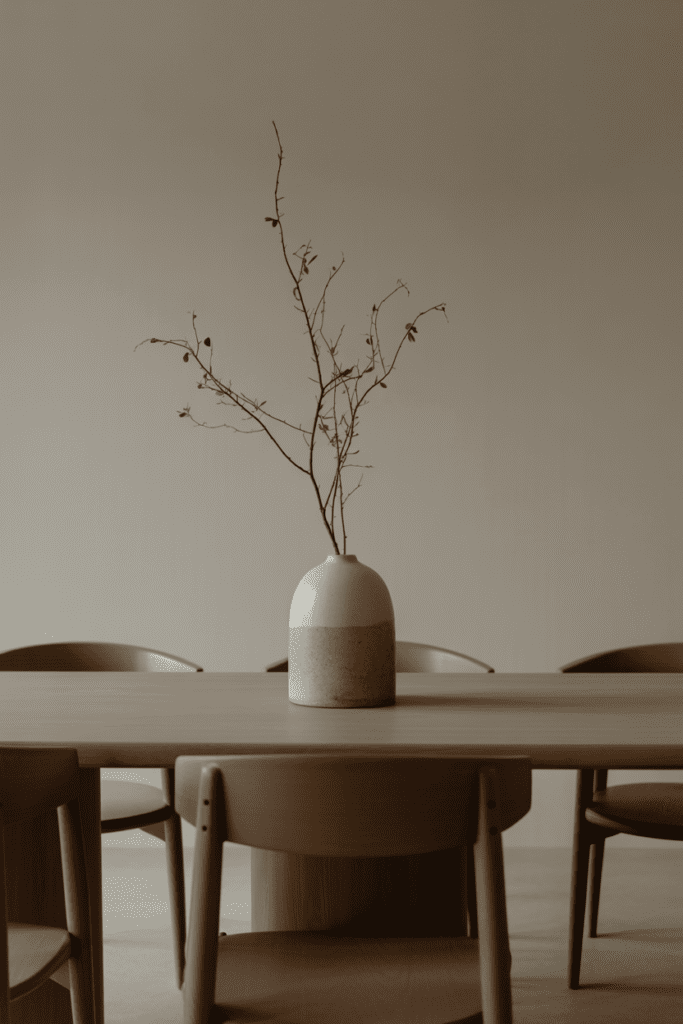
Minimalist table styling works best when you stop early. Seriously. The easiest way to ruin a beautiful dining setup involves adding “just one more thing” until the table looks like a home decor clearance aisle.
A simple centerpiece usually does the trick. I like a ceramic bowl, a few candlesticks, or a sculptural vase with branches. Minimalist dining table decor should feel intentional, not overproduced.
Easy centerpiece ideas include:
- A single oversized vase
- A bowl of pears or lemons
- Two or three taper candles
- A low arrangement of greenery
Ask yourself one question: does this table still look usable? If the answer is no, edit harder.
12. Mix Warm Minimalism With Natural Materials
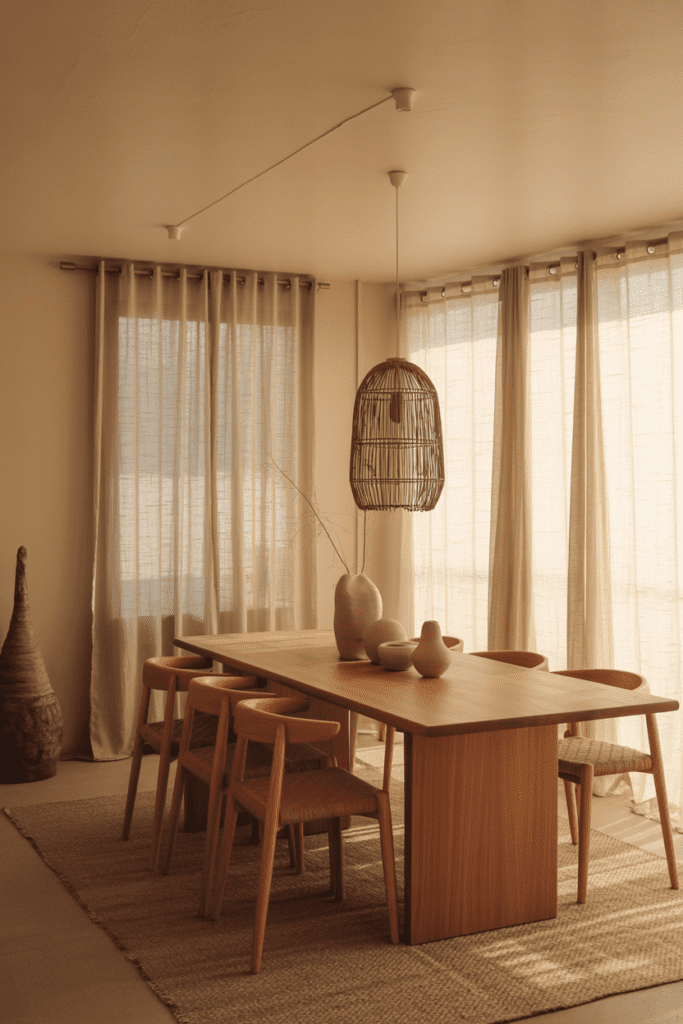
Some minimalist rooms feel icy. Others feel warm and inviting. The difference usually comes down to materials.
If you want a space that feels cozy, focus on warm minimalist dining room ideas with wood, linen, clay, rattan, and soft earthy tones. This version of minimalism feels lived-in and relaxed, which I personally prefer for family homes. Nobody wants a dining room that looks too precious to eat in.
Natural materials add warmth through:
- Visible grain and texture
- Soft, imperfect finishes
- Muted, earthy color variation
- A more relaxed, organic feel
This style works beautifully if you want a minimalist room that still feels human. Fancy that.
13. Use Black Accents for Definition
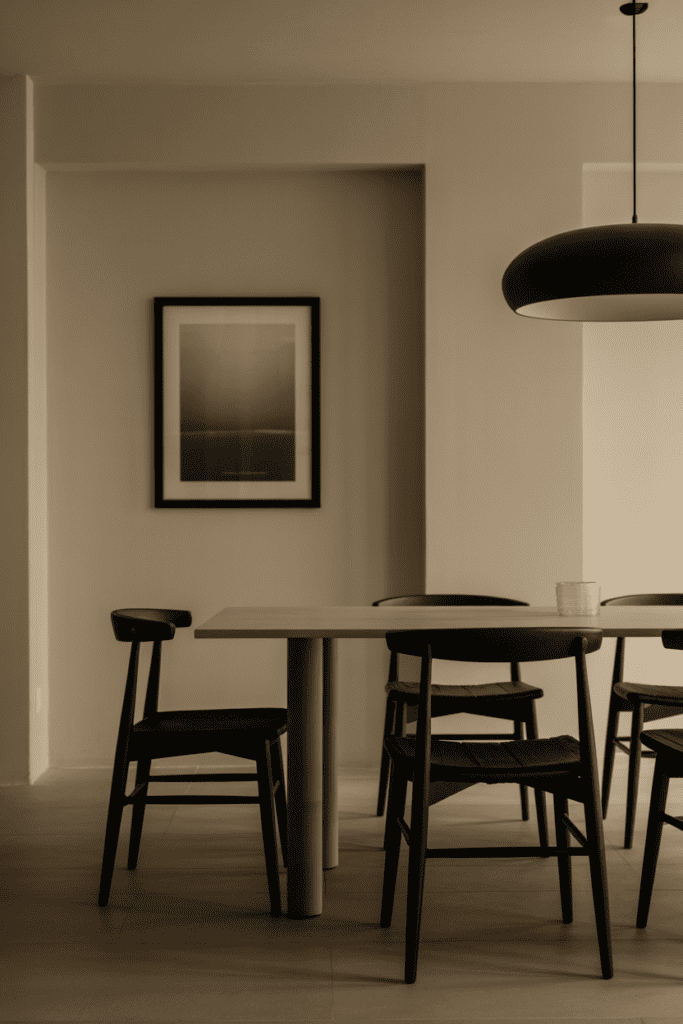
A minimalist room can sometimes blur together if everything sits in the same pale tone. That’s where black accents help. They sharpen the design and create contrast without adding clutter.
You don’t need much. A black pendant light, chair frame, artwork frame, or vase can define the whole space. I use black carefully because a few strong touches go a long way in a minimalist dining room interior.
Good black accent ideas include:
- Light fixtures
- Picture frames
- Chair legs
- Cabinet hardware
- Candlesticks or ceramic decor
Think of black as eyeliner for the room. Too much gets dramatic fast, but the right amount makes everything pop.
14. Make Small Dining Rooms Feel Bigger
Minimalism works especially well in small spaces because it cuts visual noise. If your dining room feels cramped, a few smart changes can make it feel much more open.
The best small minimalist dining room ideas focus on scale, light, and simplicity. Choose furniture with slim legs, keep the color palette light, and avoid oversized decor. Glass, pale wood, and soft neutrals help bounce light around the room.
For a small dining room, I recommend:
- A round or oval table
- Armless dining chairs
- A mirror to reflect light
- One statement light fixture
- Very limited tabletop decor
Ever noticed how some tiny dining nooks feel charming while others feel boxed in? The difference usually comes from editing, not square footage.
15. Add One Organic Element for Life
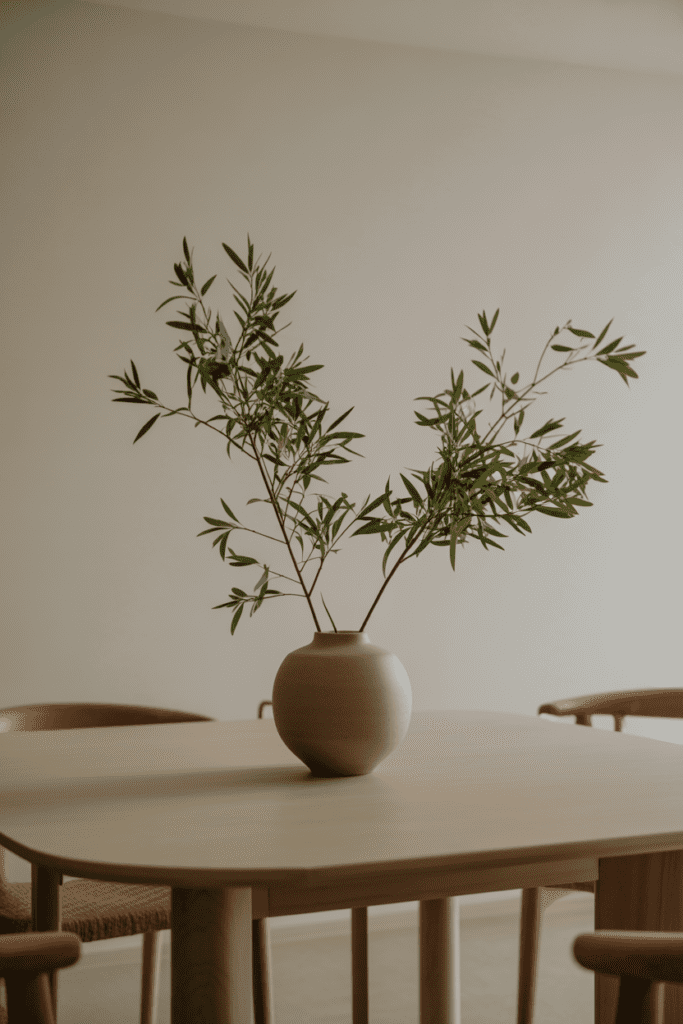
A minimalist space always benefits from something living or organic. Plants, branches, olives in a bowl, fresh flowers, or a simple arrangement of eucalyptus can soften the clean lines and make the room feel fresh.
I love adding one organic element because it keeps the room from feeling too controlled. Minimalism looks best when it still feels effortless. You want the room to say, “I have taste,” not “I alphabetized my napkins for fun.”
Great organic accents include:
- A leafy branch in a ceramic vase
- Fresh seasonal flowers
- A small olive tree nearby
- A wooden bowl with fruit
This final touch often pulls the whole room together. Small move, big payoff.
How to Pull the Look Together
If you want your dining room to look minimalist without feeling empty, keep the formula simple. Choose a clean table, pair it with streamlined chairs, use a calm palette, add texture, and stop decorating before things get weird. FYI, restraint usually looks more expensive than excess 🙂
Here’s a quick minimalist dining room checklist:
- Pick one simple, beautiful table
- Use a neutral or earthy color palette
- Choose chairs with clean lines
- Add one statement light fixture
- Layer texture through fabric and finishes
- Limit decor to a few intentional pieces
- Use storage that hides visual clutter
- Add one natural or organic element
That’s really it. You don’t need a hundred accessories or some impossible showroom setup. You just need a room that feels calm, useful, and visually clear.
Common Minimalist Dining Room Mistakes to Avoid
Even beautiful intentions can go off track. I’ve seen minimalist spaces turn cold, bland, or awkward because people strip out too much or choose pieces that don’t balance each other.
Avoid these common mistakes:
- Using only one texture, which makes the room feel flat
- Choosing furniture that feels too bulky, especially in small rooms
- Adding too many tiny decor items, which creates clutter
- Forgetting comfort, because pretty chairs still need to support actual humans
- Making everything white without contrast, which can feel sterile
A minimalist dining room should feel easy, not empty. That balance matters more than following every trend.
Let’s Conclude
The best minimalist dining room ideas don’t just look good in photos. They make everyday life feel calmer and more enjoyable. A clean table, comfortable chairs, warm textures, and thoughtful lighting can completely change how the room feels.
If I had to sum it up, I’d say this: keep less, choose better, and let each piece earn its place. That’s the real charm of minimalist design. It doesn’t beg for attention, but it always looks pulled together.
So if your dining room feels cluttered, dated, or a little too “trying very hard,” start small. Swap the bulky furniture, clear the surfaces, and add warmth where it counts. You might end up with a space that feels bigger, lighter, and way more beautiful without buying a truckload of decor you never needed in the first place.