

Most patios are forgettable. A concrete slab, some plastic furniture, maybe a string of lights if someone got ambitious. And that’s fine functional is functional. But every once in a while you come across an outdoor space that genuinely stops you in your tracks, and nine times out of ten, there’s something Moroccan about it.
There’s a reason this design tradition has captured the imagination of homeowners, architects, and interior designers worldwide. Moroccan outdoor spaces are built on centuries of craft hand-cut tile, carved cedar, woven textiles, mosaic fountains all layered together with an almost effortless sense of abundance. It’s warm without being heavy. Ornate without being chaotic. And somehow, it always manages to feel like the most inviting place in the room — or in this case, the garden.
The good news is you don’t need a Marrakech riad budget or a complete backyard overhaul to pull this off. Moroccan design is incredibly adaptable a few well-chosen elements can do the heavy lifting and transform even the most ordinary patio into something that feels intentional, beautiful, and deeply personal.
Here are 17 stunning Moroccan outdoor patio ideas to get you started whether you’re going all in or just dipping a toe in.
1. Start With Zellige Tile — The Crown Jewel of Moroccan Design
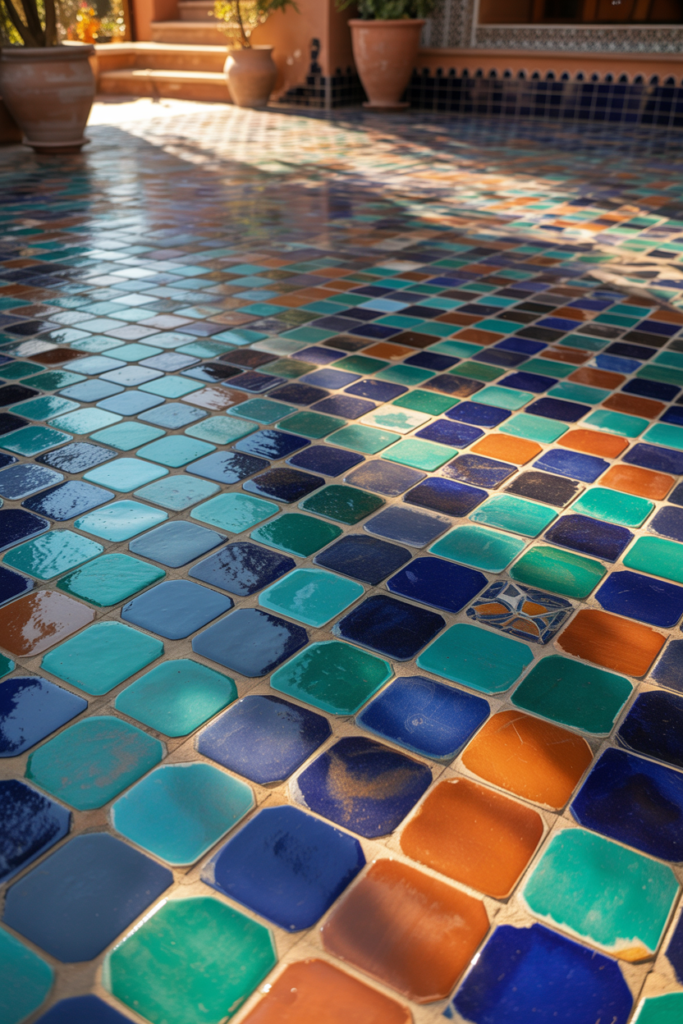
If there’s one element that screams Moroccan patio, it’s zellige tile. These hand-cut, glazed terracotta tiles have been made in Morocco for centuries, and each piece is slightly irregular — which is actually the whole point. That imperfection gives them soul.
Use them on your:
- Floor for a geometric statement
- Fountain surrounds for an artisan focal point
- Accent walls or planter bases
The colors range from cobalt blue and emerald green to burnt orange and ivory. Mix them boldly. Moroccan design isn’t shy, and neither should you be.
Where to Source Zellige Tile
You don’t have to fly to Fez to find it (though, tempting). Many specialty tile retailers import authentic zellige, and there are also high-quality ceramic reproductions that give you the look at a fraction of the cost. FYI — the reproductions are often more durable for outdoor use since they’re sealed against moisture.
2. Layer Textiles Like You Mean It
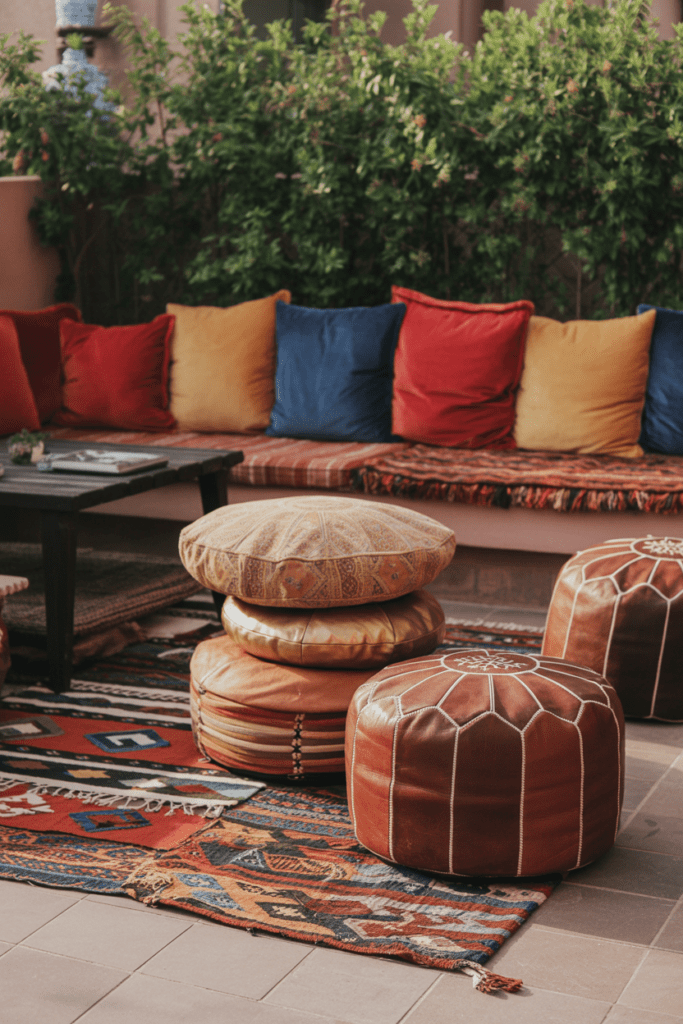
Here’s something most people get wrong about Moroccan-style patios: they stop at the hardscape. But the textiles are what make the space breathable and inviting. Think kilim-patterned outdoor rugs, poufs, and cushion covers in jewel tones.
Go for:
- Outdoor rugs in deep reds, golds, and indigo
- Floor cushions and poufs in leather or woven cotton
- Throw pillows with embroidered or tasseled details
Layer them. Stack them. Don’t be precious about it. Moroccan interiors thrive on abundance — the more texture, the better.
3. Hang Lanterns Everywhere (No, Seriously — Everywhere)
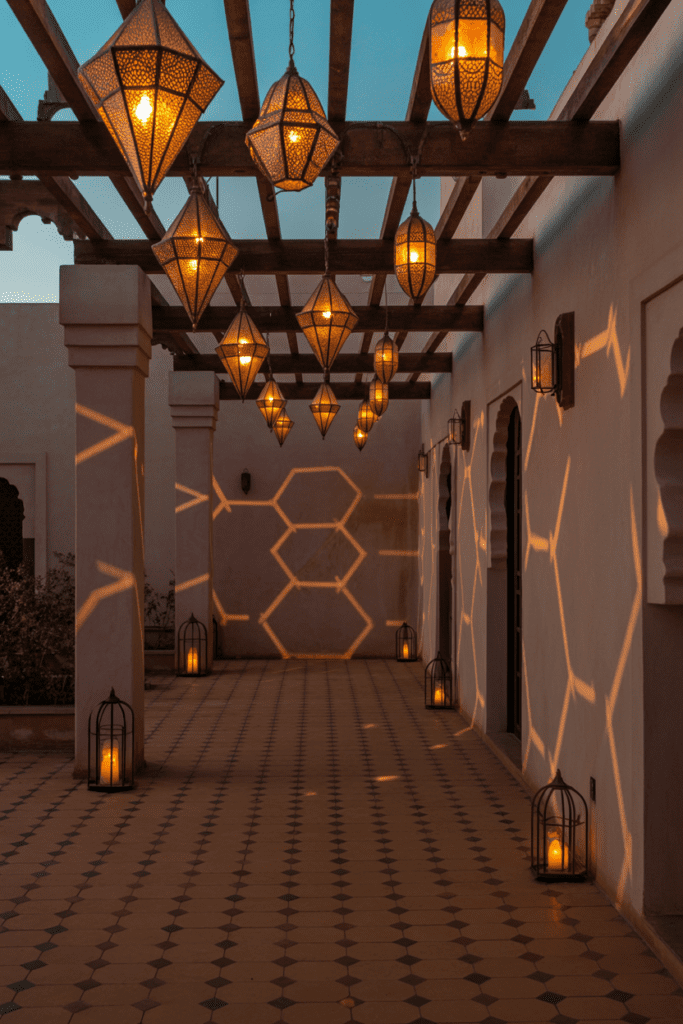
Moroccan lanterns are non-negotiable. Whether you go with traditional brass, hand-punched iron, or painted glass, these things transform the evening ambiance completely. When the sun goes down and those geometric patterns of light start dancing across your walls? Pure magic.
You can hang them from:
- Pergola beams
- Tree branches
- Shepherd’s hooks
- Wall-mounted brackets
Mix sizes. Cluster them in odd numbers. Go tall with a statement lantern and supplement with smaller ones. The goal is to create a moody, jewel-box glow — not a parking lot.
Solar vs. Candle Lanterns
Candle lanterns win on aesthetics, but solar-powered versions have gotten remarkably good. If you’re using them in areas that are hard to reach, solar is the practical call. For a dining area where you’ll be present anyway, go candle or plug-in electric for the real flicker effect.
4. Build (or Buy) a Carved Archway
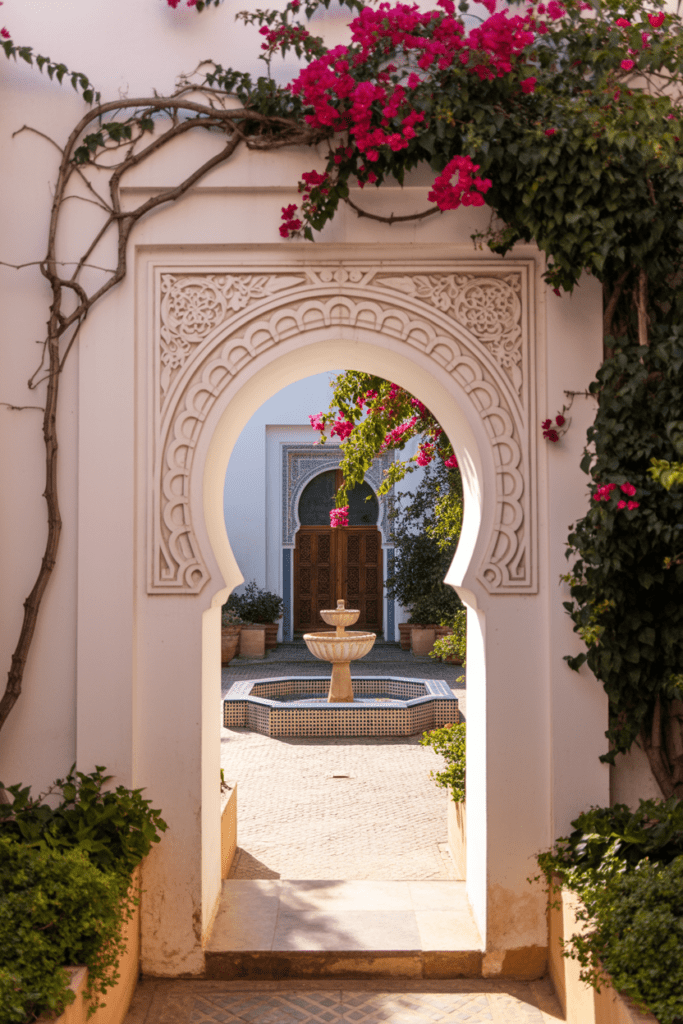
Nothing frames a Moroccan patio quite like a carved archway. The classic keyhole or horseshoe arch is instantly recognizable and adds serious architectural drama. You can achieve this with:
- Carved wood panels repurposed as a gate or trellis frame
- Plaster or stucco archway built into an existing wall
- Wrought iron arch draped with climbing plants
Even a simple painted arch on a fence or garden wall does the job beautifully if you’re working with a tighter budget. It’s all about the silhouette.
5. Add a Mosaic Fountain — Your Patio’s Beating Heart
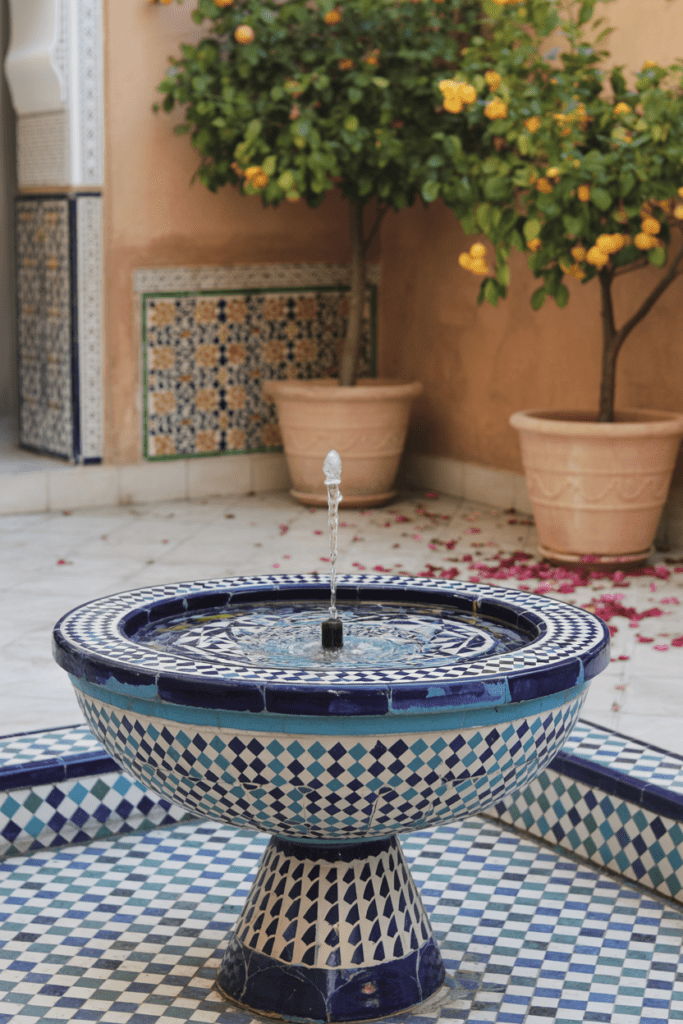
Water features are central to traditional Moroccan courtyard design, rooted in the Islamic concept of the garden as paradise. And honestly, even from a purely practical standpoint — the sound of water is everything on a hot afternoon.
A mosaic-tiled fountain with a central basin is the classic choice. Look for:
- Hand-painted ceramic tile in geometric patterns
- Tiered designs for more dramatic water movement
- Wall-mounted versions if floor space is limited
Even a small tabletop fountain with a Moroccan-style mosaic base gives you that sensory experience without taking up much real estate.
6. Embrace the Low-Seating Life
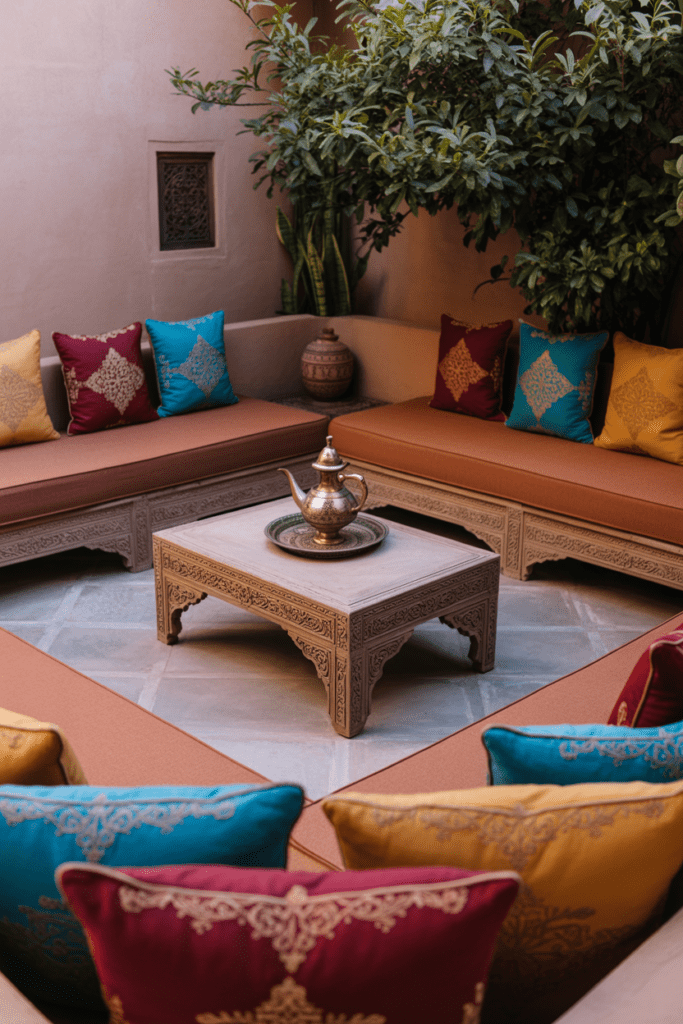
Moroccan living happens close to the ground. Low seating arrangements — think floor cushions, low wooden benches, and wide upholstered day beds — create an intimate, relaxed atmosphere that standard patio furniture just can’t match.
A Moroccan-style daybed or banquette is particularly stunning outdoors. Line the edges of your patio with them, pile on the cushions, and suddenly your backyard looks like a boutique riad. You’ll never sit in a regular chair again :/
7. Plant a Lush Courtyard Garden
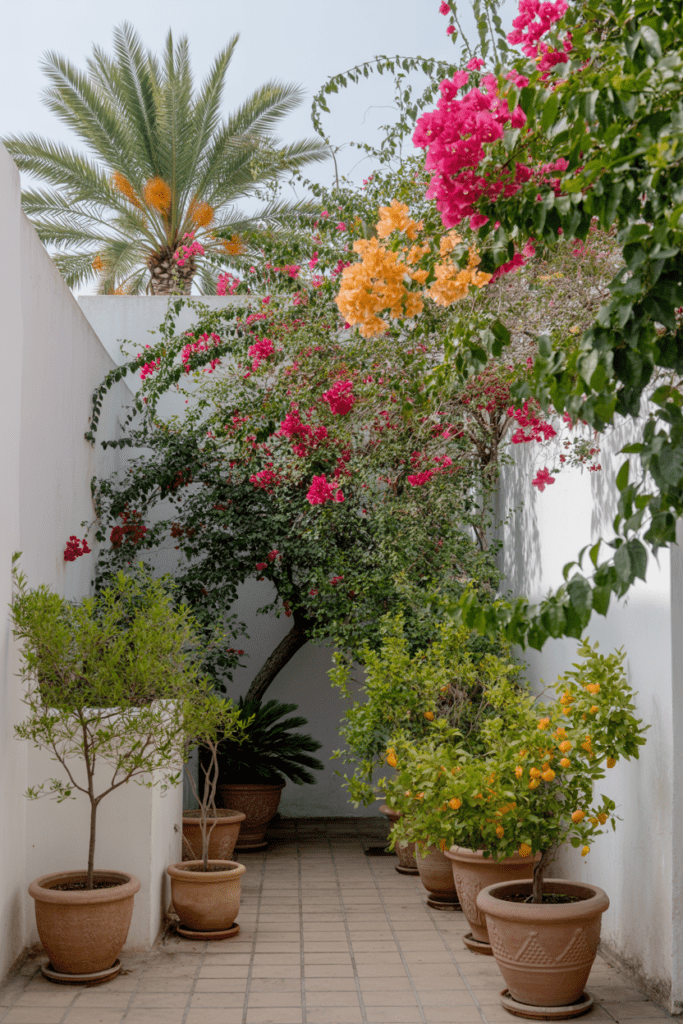
Moroccan patios traditionally feature dense, layered planting — roses, jasmine, citrus trees, bougainvillea. The contrast between architectural hardscape and lush greenery is fundamental to the aesthetic.
Great plants to incorporate:
- Bougainvillea for cascading color over walls and archways
- Jasmine for fragrance and climbing coverage
- Citrus trees in terracotta pots for authenticity
- Agave and succulents for structural contrast
- Date palms if your climate allows
Don’t be too tidy about it. Moroccan gardens are lush and abundant, not manicured. Let things spill over edges and climb walls freely.
8. Use Terracotta Pots — Big Ones
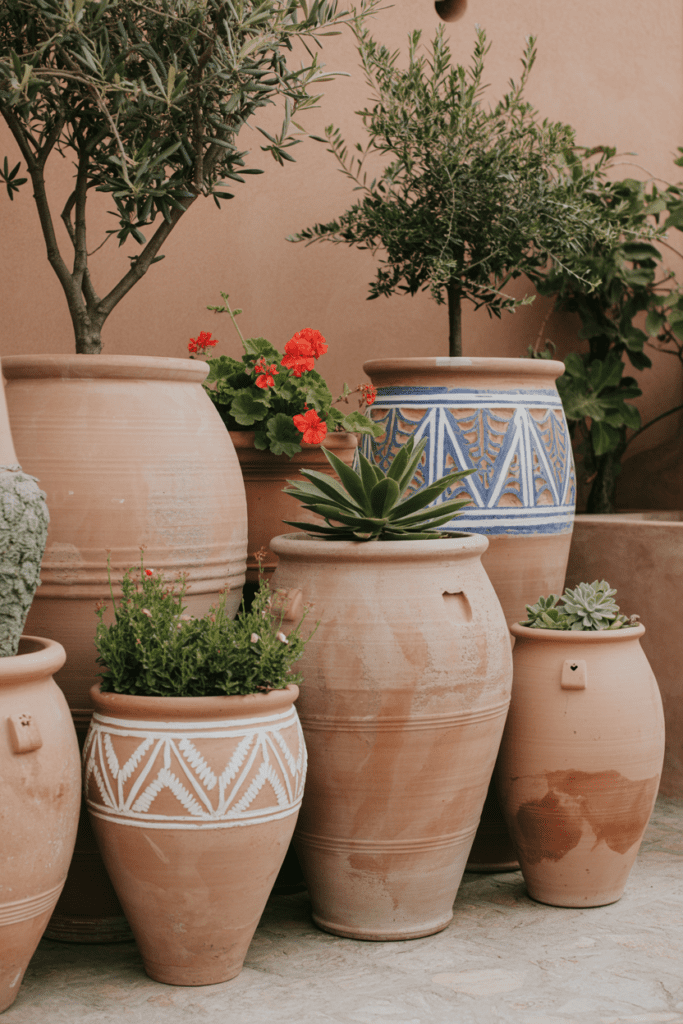
Oversized terracotta pots are a Moroccan patio staple. Group them asymmetrically, mix heights, and fill them with anything from olive trees to trailing geraniums. The warm, earthy tone of terracotta naturally complements zellige tile and carved wood — it all just works together.
Look for:
- Hand-thrown pots with textured surfaces
- Painted designs in blue and white for a more decorative touch
- Unglazed terracotta that weathers beautifully over time
A cluster of three large pots in a corner can anchor an entire patio design on its own.
9. Install a Pergola with Draped Fabric
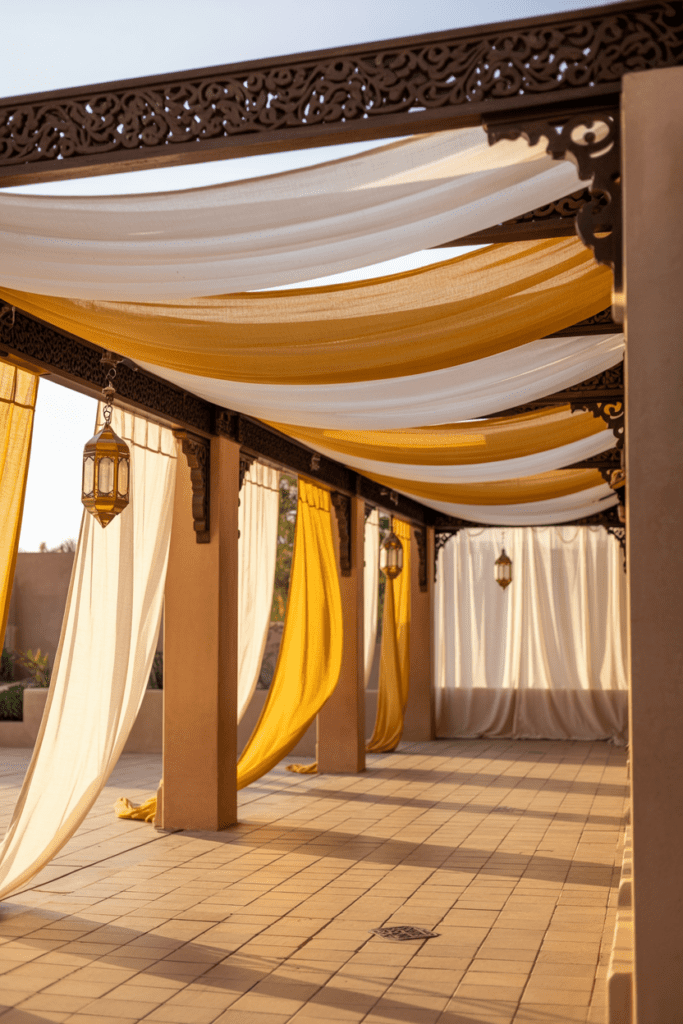
A pergola gives you overhead structure, and in Moroccan style, what you do with it matters. Rather than leaving exposed beams, drape them with flowing fabric — white linen, saffron yellow, or deep burgundy.
The draped fabric does two things: it softens the architecture and creates shade in the most beautiful way possible. When the breeze catches it, you basically have a permanent vacation feeling in your backyard. IMO, this single element does more for a Moroccan patio’s atmosphere than almost anything else on this list.
10. Choose a Rich, Intentional Color Palette
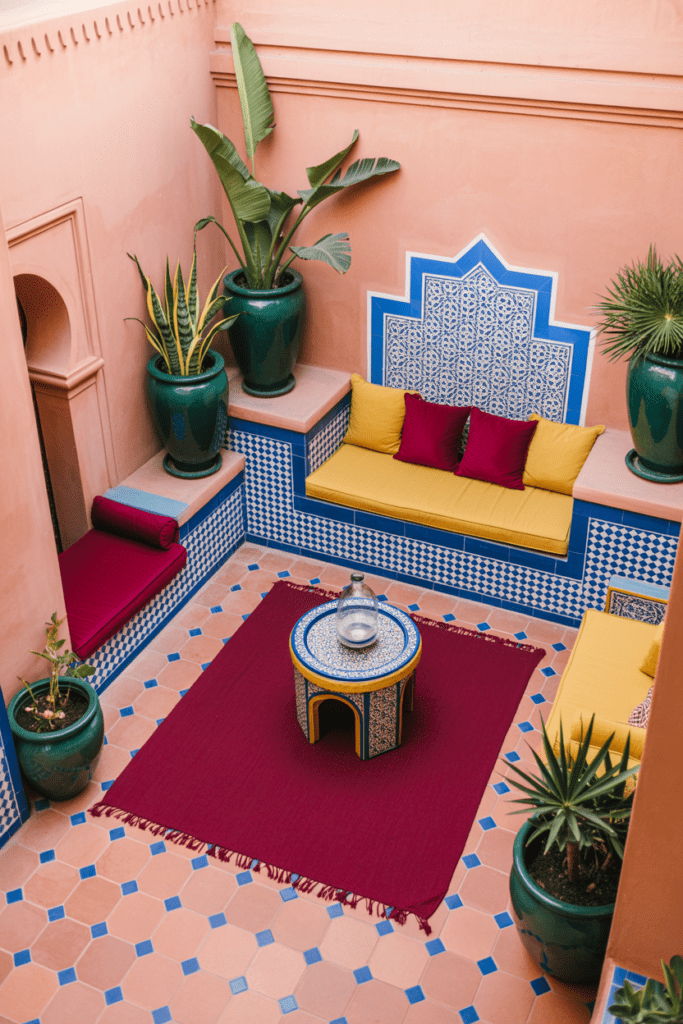
Moroccan design uses color boldly. The palette is typically built around:
- Terracotta and sand as warm neutrals
- Cobalt blue as a signature accent
- Emerald green for depth and richness
- Saffron yellow and burnt orange for warmth
- Deep burgundy and plum for drama
Pick two or three of these and use them consistently across your tiles, cushions, pots, and fabrics. The color palette is what pulls everything together and makes a patio look designed rather than assembled.
11. Add Carved Wood Elements
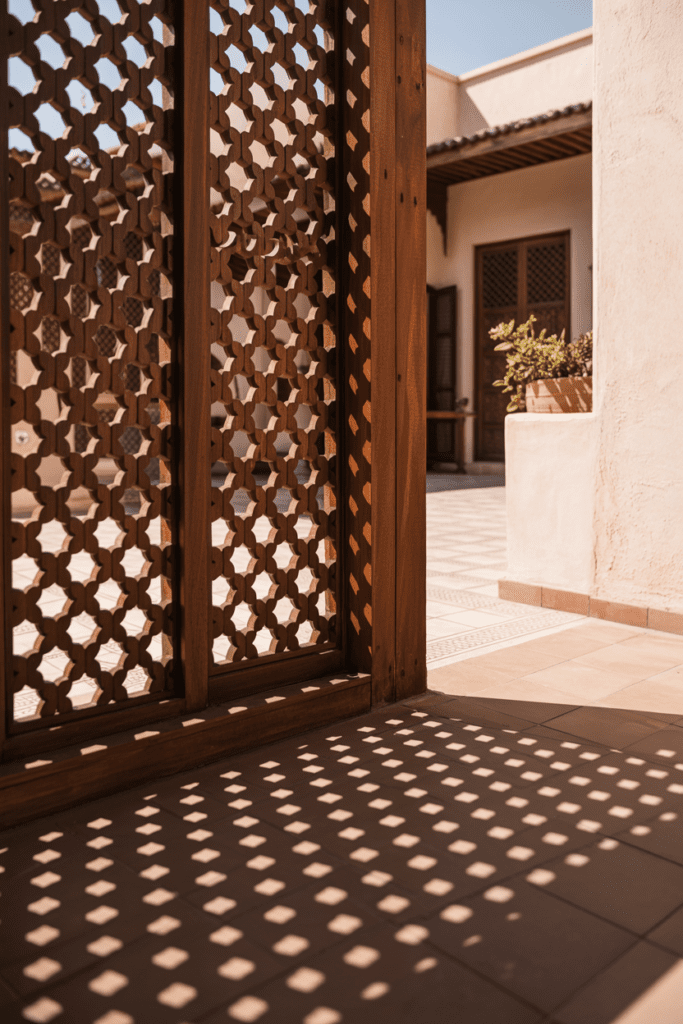
Carved wood — specifically the intricate geometric lattice work known as mashrabiya — is a cornerstone of Moroccan architecture. Outdoors, you can incorporate it through:
- Carved wooden screens as privacy dividers
- Decorative panels mounted on walls
- Cedar pergola beams with carved detailing
- Wooden shutters on an outdoor room or cabana
The lattice pattern casts beautiful shadows in sunlight and gives the space architectural richness that mass-produced furniture simply can’t replicate.
12. Create an Outdoor Dining Alcove
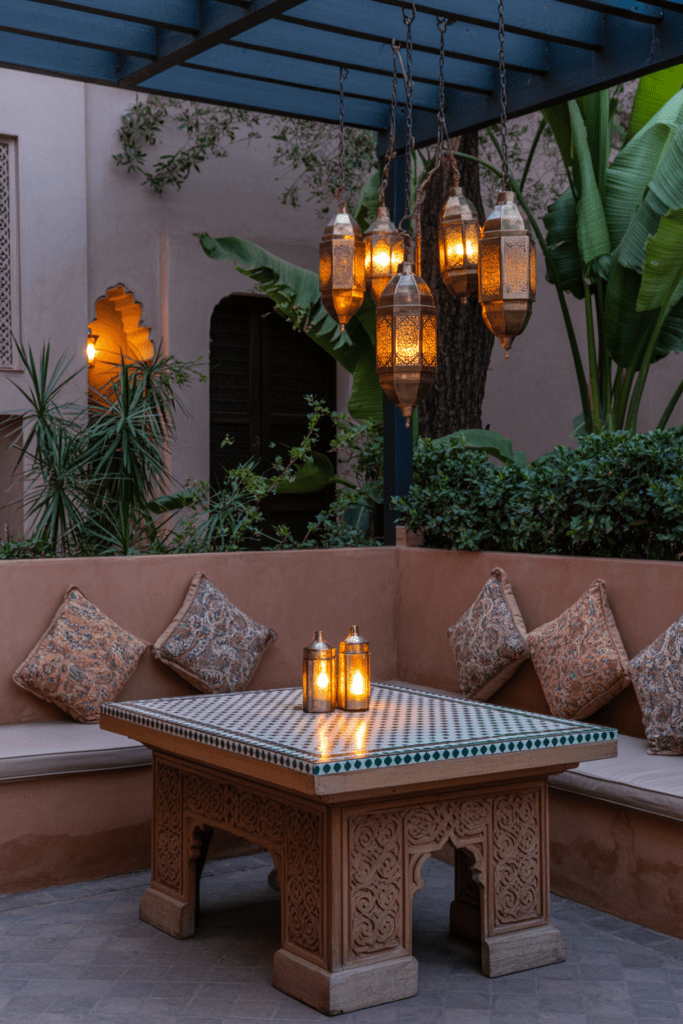
The Moroccan tradition of gathering around a table for long, leisurely meals translates perfectly to outdoor living. Design a dedicated outdoor dining alcove with:
- A low central table (or a standard height table with carved legs)
- Built-in banquette seating on two or three sides
- Overhead lanterns or a chandelier hung from the pergola
- A zellige or mosaic tabletop for authenticity
Surround it with potted plants, hang a lantern cluster above, and you’ve created a dining experience that makes every meal feel like an occasion.
13. Use Star and Geometric Pattern Stencils
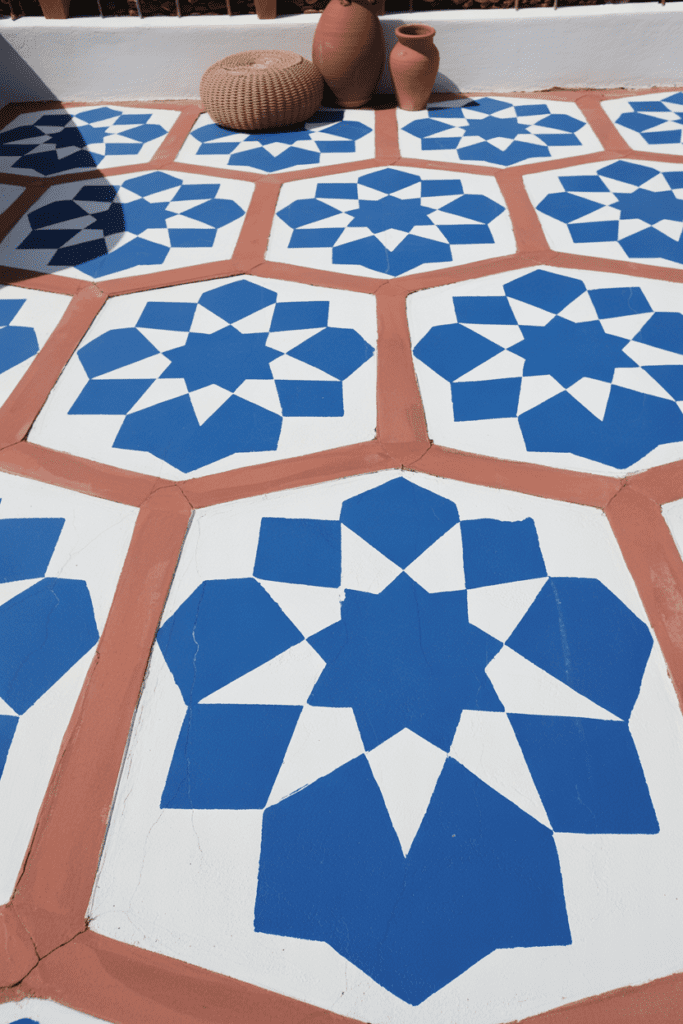
Not everyone can afford hand-cut zellige tile — and that’s completely okay. Stenciled geometric patterns can achieve a similar visual effect on concrete floors, plain walls, or even wooden furniture at a fraction of the cost.
Moroccan star patterns (the classic eight-pointed star is a great starting point) painted in contrasting colors on a plain concrete patio floor can be genuinely jaw-dropping. Use exterior-grade paint and seal it properly, and it’ll last for years.
14. Build an Outdoor Fireplace or Fire Pit
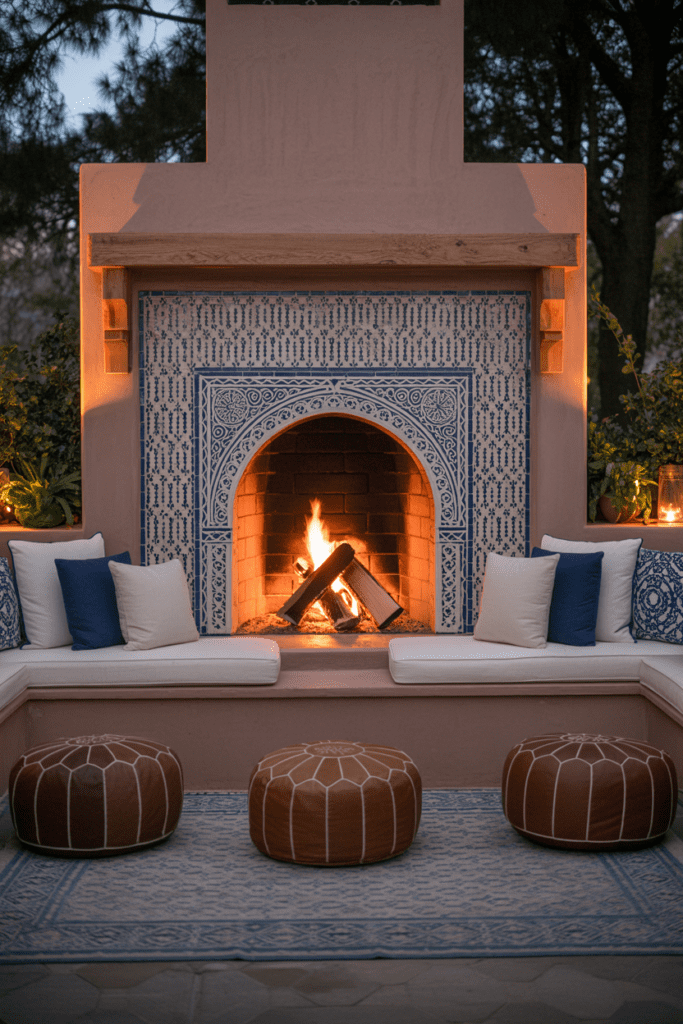
Moroccan evenings get cool — and even if yours don’t, a fire feature adds an elemental warmth that transforms any outdoor space. A low, wide fire pit surrounded by floor cushions is deeply Moroccan in spirit.
For a more dramatic statement, a built-in outdoor fireplace with a tiled surround and carved wood mantel creates an architectural centerpiece that anchors the entire space. Gather around it in the evening with mint tea and good company and you’ll wonder why you ever bothered with indoor entertaining.
15. Add a Tea Corner — Moroccan Mint Tea Is Non-Negotiable
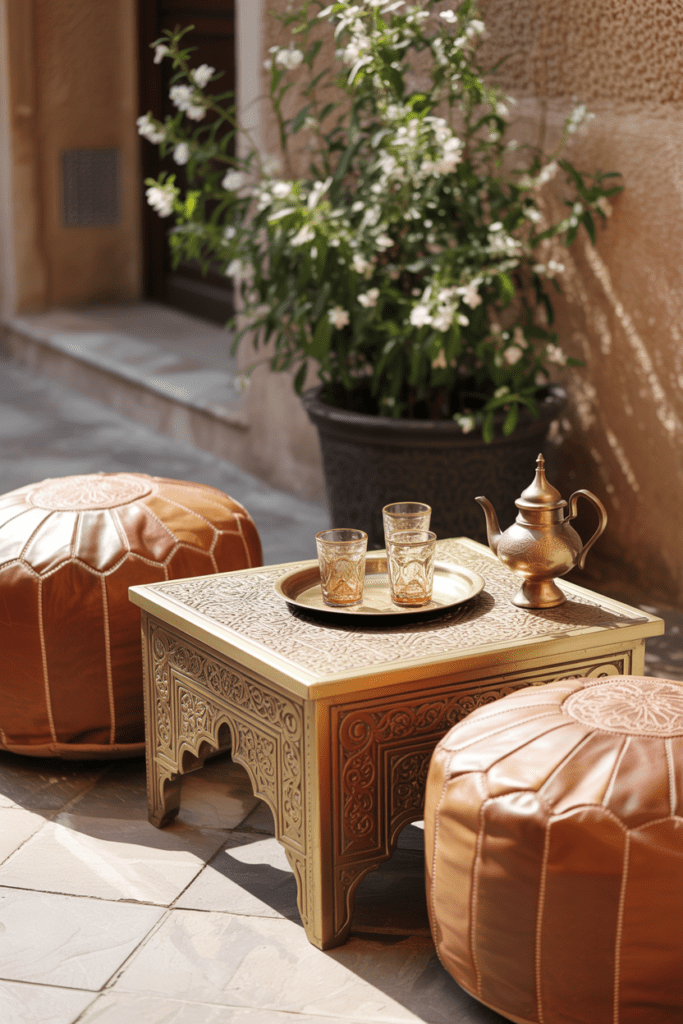
This one’s specific but hear me out: designate a tea corner. In Morocco, the preparation and serving of mint tea is a ritual, a gesture of hospitality, and an excuse to slow down. You should steal this practice entirely.
A small carved wooden table, two poufs, a decorative tray with a traditional teapot and glasses — it’s a tiny vignette that tells a story and invites people to sit and linger. It costs relatively little to set up but adds enormous personality to a patio.
16. Install Outdoor String Lights as a Secondary Layer
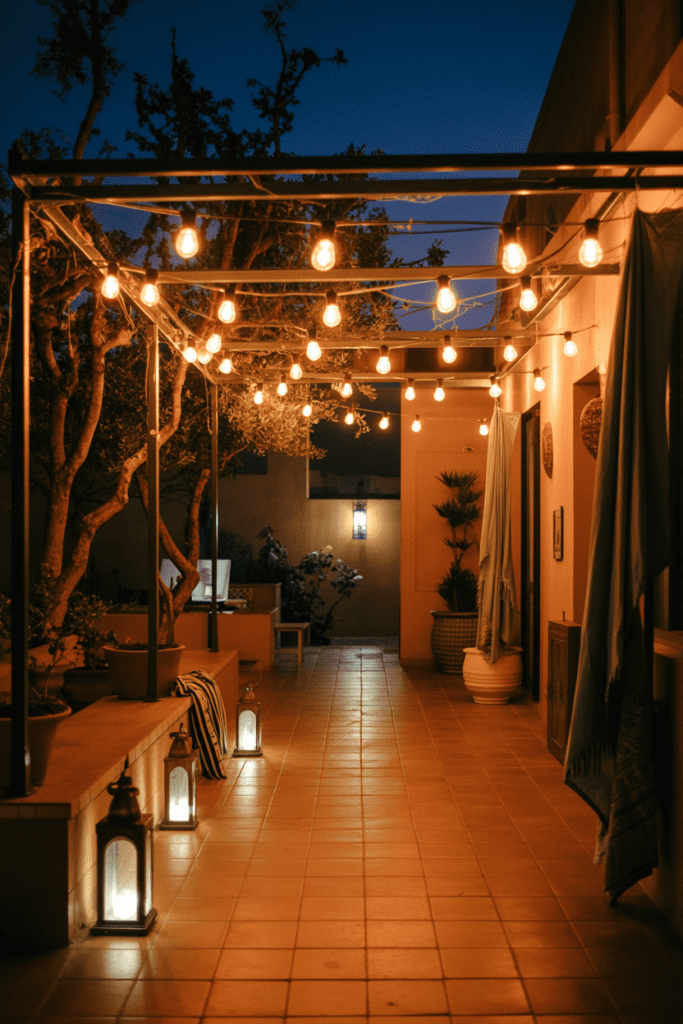
Lanterns set the mood. String lights fill the gaps. Warm Edison bulbs or globe lights strung between posts, trees, or pergola beams provide ambient fill light that keeps the space usable well into the night.
The key is choosing the right bulb temperature. Go for 2200K–2700K (warm white) — anything cooler looks clinical and kills the Moroccan vibe immediately. Warm amber light is your best friend here.
17. Finish With Fragrance — The Invisible Design Element
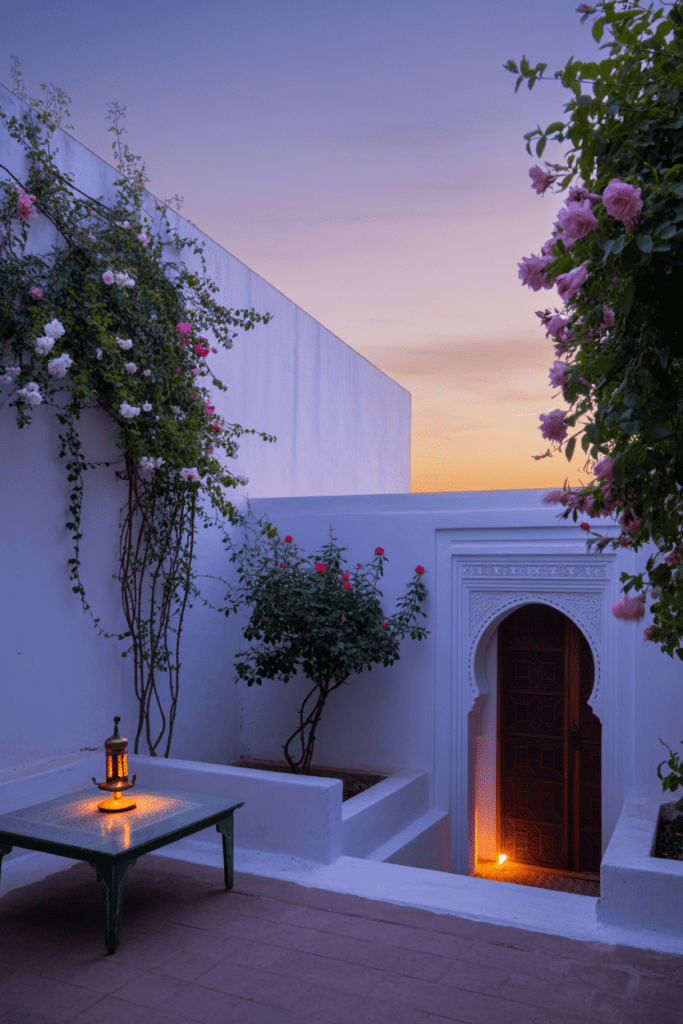
This might be the most underrated element on the entire list, but fragrance defines a Moroccan space as much as anything you can see. The scent of jasmine, rose, or citrus blossom in a courtyard garden is an experience that bypasses all rational thought and goes straight to the emotions.
Plant fragrant climbers like jasmine and honeysuckle near your seating areas. Place scented candles or incense burners (traditional Moroccan brass incense burners are gorgeous) in your lantern clusters. Add a rose bush near the entry.
Fragrance gives your patio a memory — it’s what guests will associate with the space long after they’ve gone home. And that, honestly, is the whole point of great design.
Wrapping Up: Your Own Slice of Marrakech
You don’t need to renovate your entire backyard to achieve a stunning Moroccan patio. Pick two or three of these ideas, execute them well, and let them build on each other. Start with the tile and the lanterns those two alone will do heavy lifting. Add textiles and plants, and suddenly you have something genuinely beautiful.
The Moroccan aesthetic is generous, layered, and unapologetically sensory. It invites you to slow down, sit closer to the ground, and enjoy the moment. In a world of minimal white patios and gray composite decking, that kind of warmth feels genuinely radical. 🙂
So go ahead hang the lanterns, order the zellige, brew the mint tea. Your backyard has been waiting for this.