
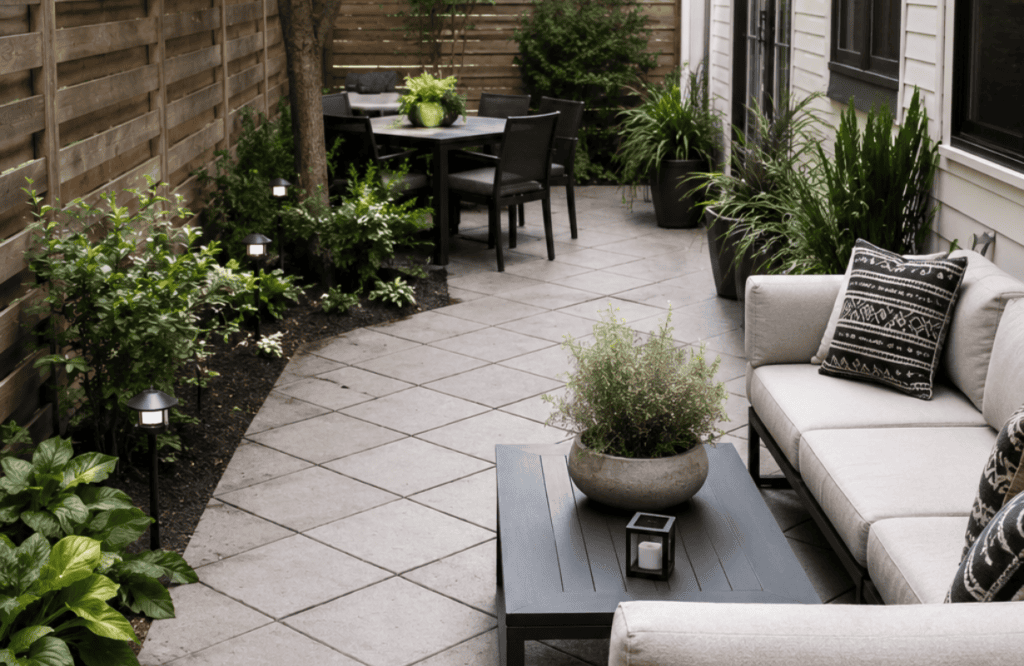
You measured your backyard again, didn’t you? And it’s still eight feet wide. I get it. I spent three years convinced my own sliver of a yard was basically a hallway with grass, and I treated it like a lost cause until I finally sat down and fixed it. Turns out a narrow backyard isn’t a problem to apologize for — it’s a design puzzle with a genuinely fun solution. Grab a coffee, because I’m walking you through every trick I used (and a bunch I stole from smarter people) to turn that skinny strip into a space you actually want to sit in.
Why Narrow Backyards Get Such a Bad Rap
Most people assume a narrow yard means limited options. That assumption is wrong, and I’ll die on this hill. The real issue isn’t width — it’s that most layouts are designed for square lots and just get awkwardly squished onto rectangles.
Ever wondered why your neighbor’s long, skinny yard looks like a magazine spread while yours looks like a bowling lane? It’s not luck. It’s intentional zoning, smart sightlines, and a few clever visual tricks I’m about to hand you for free.
Think about it this way: a narrow yard is basically a hallway that got lucky enough to see daylight. Hallways can be beautiful. Ever walked through a gorgeous gallery corridor lined with art and greenery? Same logic applies here, just with more dirt and fewer velvet ropes.
Before I redid mine, I made every rookie mistake in the book. I bought furniture sized for a yard twice as wide as mine. I planted a hedge that blocked the one sightline that actually made the space feel open. I even tried cramming a full-size dining set into a space better suited for a folding table and two chairs. Every fix on this list came from undoing one of those mistakes, so consider this your shortcut past the trial-and-error phase.
1. Break It Into Zones, Not One Long Strip
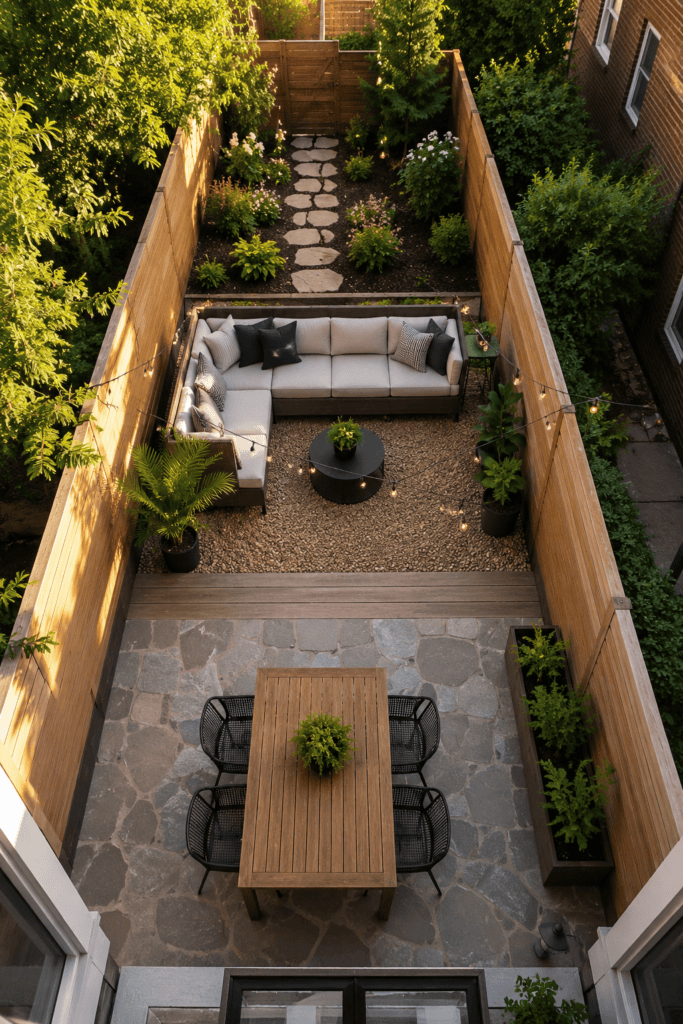
The single biggest mistake I made early on was treating my yard as one continuous space. Big mistake. Huge.
Instead, split a narrow yard into two or three distinct zones — say, a dining area, a lounge nook, and a small garden bed. Each zone should feel like its own little room, even without walls.
- Use a change in paving material to mark a new zone
- Add a low planter or bench as a soft divider
- Shift the furniture orientation slightly between sections
This trick alone makes a 10-foot-wide yard feel twice as generous.
Here’s the part nobody tells you: zoning doesn’t require permits, contractors, or a weekend of demolition. I marked my first zone break with nothing more than a row of potted grasses and a change from concrete to gravel. Total cost? Under fifty bucks. Total impact on how the yard felt? Enormous. Once you see the zones in your head, everything else on this list gets easier to place.
2. Run Everything on a Diagonal
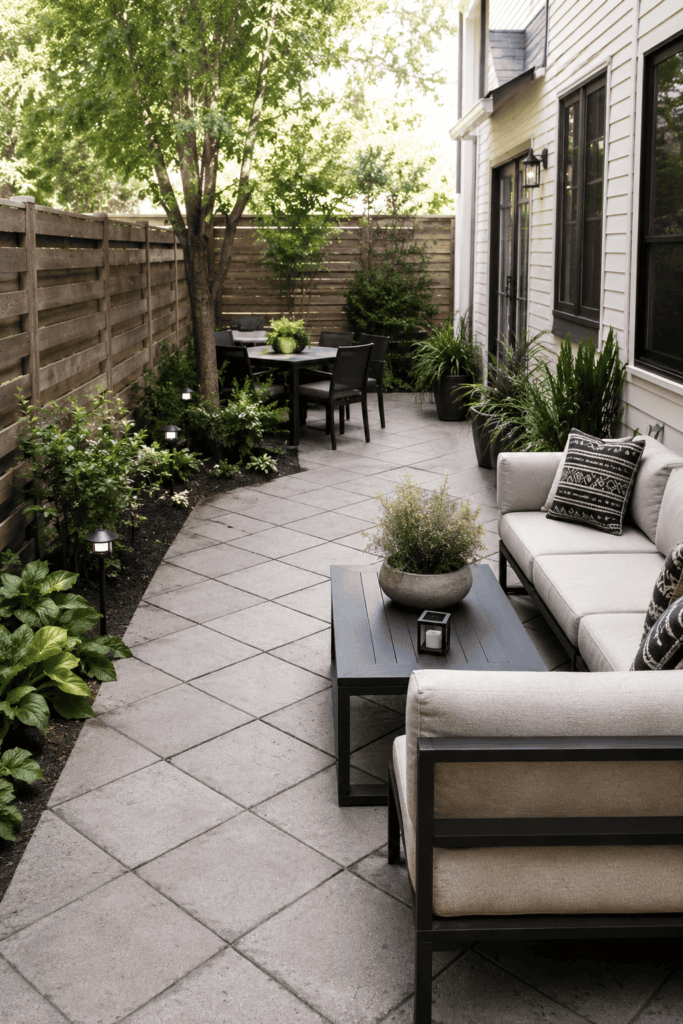
Straight lines emphasize how narrow your yard actually is. IMO, that’s the opposite of what you want.
Diagonal paving, diagonal decking, even diagonal planting rows trick the eye into perceiving more width than actually exists. I redid my patio pavers on a 45-degree angle and people genuinely ask if I extended the fence line. I didn’t. I just angled some bricks.
The science behind it is simple: a diagonal line forces your eye to travel a longer path than a straight one covering the same physical distance. Your brain reads that longer visual path as more space. Designers have used this trick in narrow hallways and galley kitchens for decades, and it translates perfectly to a skinny backyard. If a full re-pave feels like overkill, even a diagonal deck board pattern or an angled row of stepping stones delivers a chunk of the same benefit.
3. Go Vertical With Your Greenery
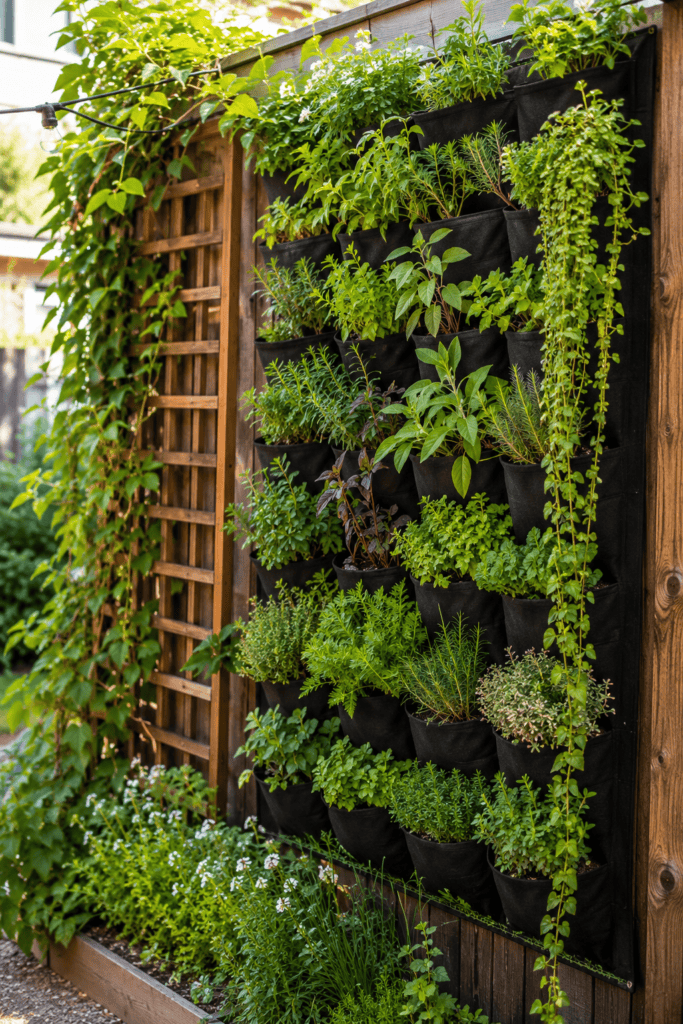
You can’t widen a narrow yard, but you can absolutely make it grow upward. Vertical gardens are the MVP here.
Living walls, hanging planters, and tiered plant stands add texture without eating into your already-limited floor space. Climbing vines on a trellis do double duty: privacy screen and green wall in one shot.
Quick Vertical Garden Wins
- Espaliered fruit trees against a fence
- Pocket planters mounted on vertical panels
- A ladder shelf stacked with potted herbs
My first attempt at vertical gardening was a cheap trellis and some string, and even that half-effort added noticeable green without touching an inch of walkway. Once I upgraded to a proper wall-mounted pocket planter system, the whole fence line turned into the highlight of the yard instead of the boring backdrop it used to be. Vertical space is free real estate — start using it.
4. Use a Single, Continuous Flooring Material
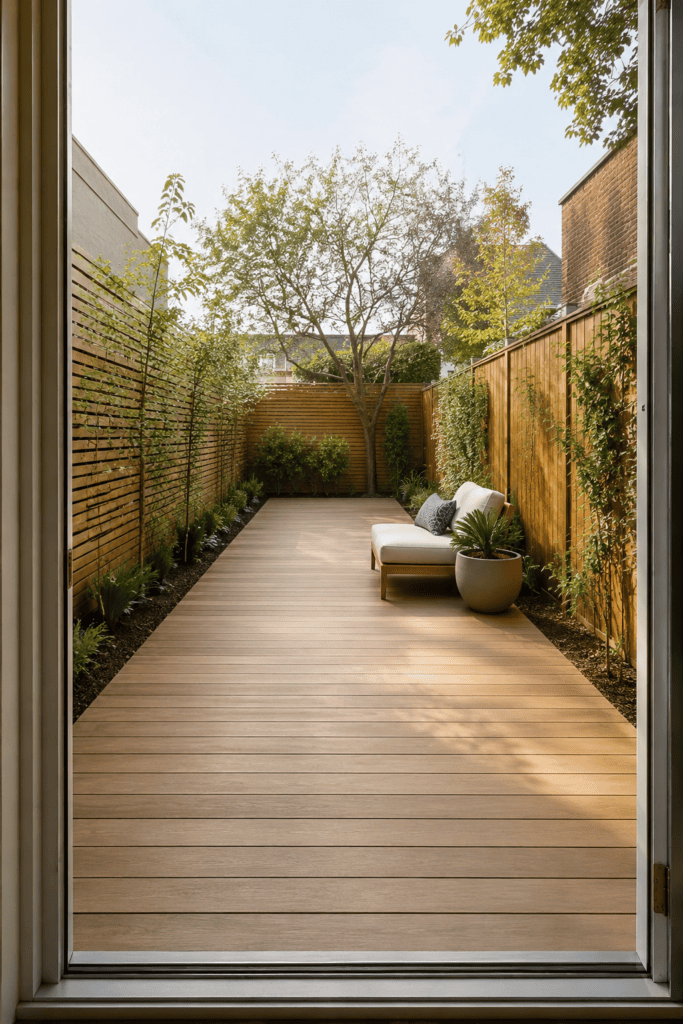
Mixing five different surfaces in a narrow yard chops the space into confusing little islands. Stick with one flooring material from patio door to back fence, and the whole yard reads as one flowing path rather than a chopped-up corridor.
I learned this one the hard way after mixing gravel, pavers, and mulch in a 12-foot-wide yard. It looked like a construction site had a garage sale.
5. Install a Narrow Water Feature
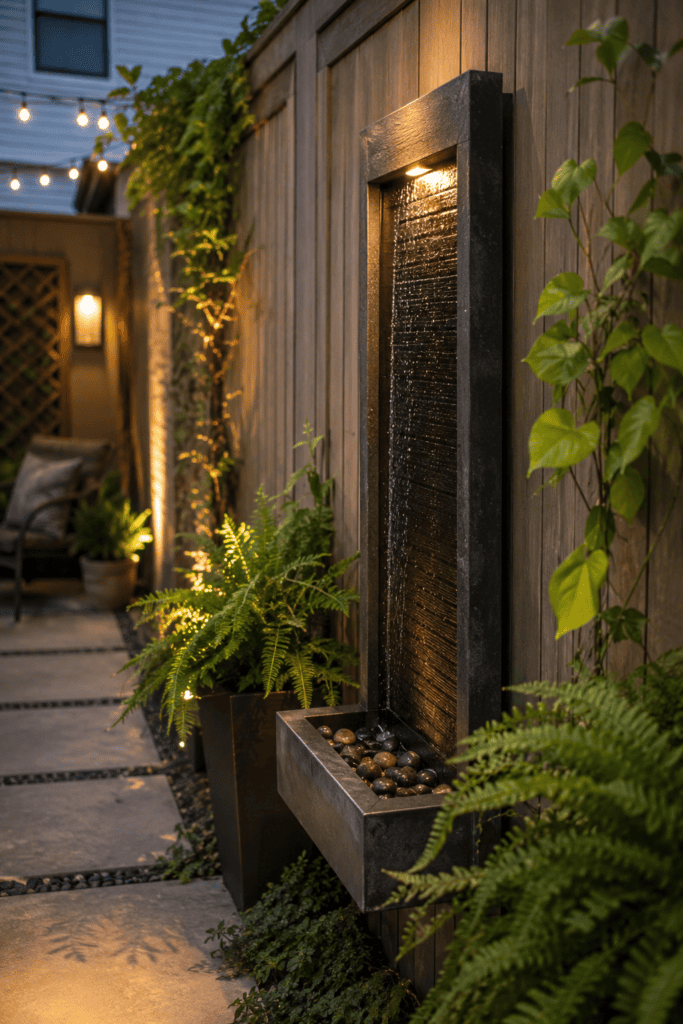
A slim water feature — think a wall-mounted fountain or a narrow rill running along one edge — adds sound and movement without hogging real estate. Sound genuinely changes how a space feels, and a trickling fountain distracts from the tight footprint better than almost anything else on this list.
I’ll admit I was skeptical of this one. A water feature in a tiny yard sounded like a gimmick to me, IMO the kind of thing HGTV pushes just for a dramatic camera shot. Then I installed a small wall fountain, and within a week I noticed I was tuning out the neighbor’s yappy dog and the distant traffic noise entirely. Turns out running water is basically nature’s white noise machine, and it works overtime in small spaces where every other sound feels amplified.
6. Build a Pergola to Anchor the Space
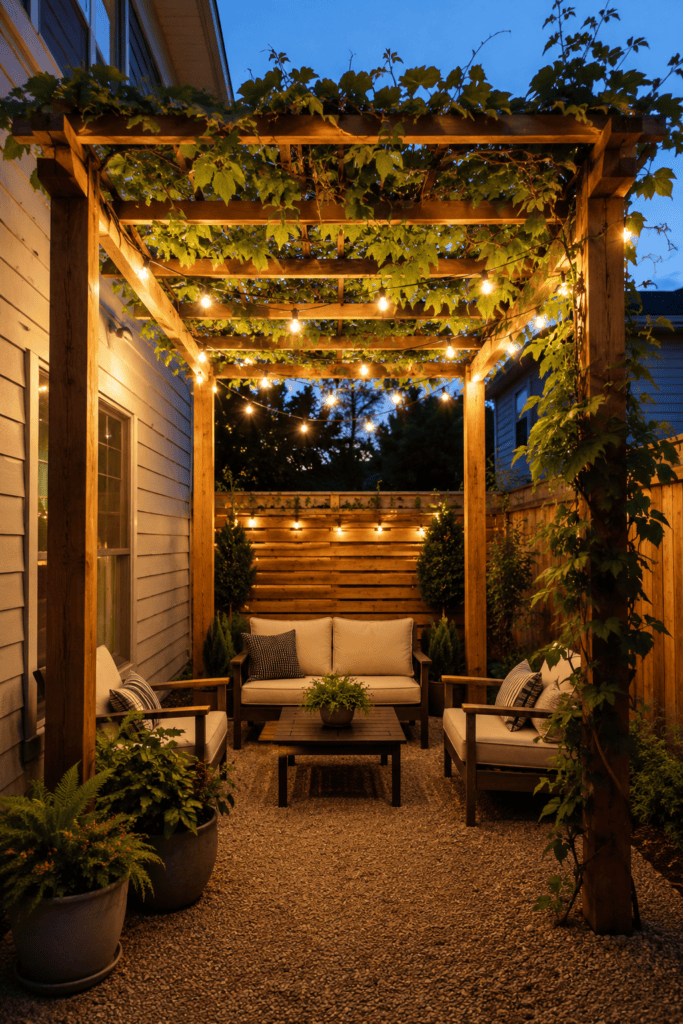
A narrow yard without any vertical anchor point tends to feel like an afterthought. A slim pergola over a seating area gives the eye somewhere to land and adds instant “this was designed on purpose” energy.
You don’t need a massive structure. Even a simple four-post pergola with a few crossbeams creates enough visual weight to balance a long, thin layout.
Add a climbing vine or a string of market lights across the top, and the pergola does triple duty: shade, ambiance, and a defined “room” within your yard. I put mine at the halfway point of my own narrow lot, and it split the space into a front lounge area and a back garden zone without a single wall or fence panel involved.
7. Play With Mirrors (Yes, Really)
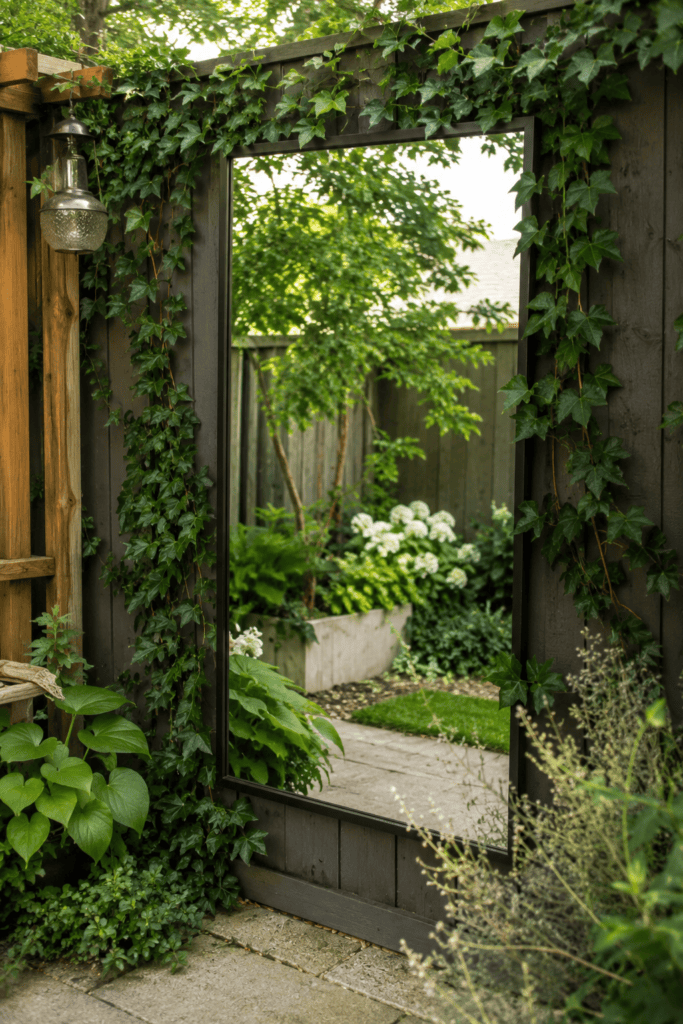
This one sounds like a design-blog cliché, but hear me out. A strategically placed outdoor mirror on a fence can visually double the depth of a narrow yard. It’s a cheap trick, and it works shockingly well.
Just angle it so it reflects greenery, not your neighbor’s window. Learned that one the awkward way.
Weatherproof acrylic mirrors are cheap, lightweight, and easy to mount on a fence panel. Frame it with climbing ivy or a simple wood border, and it stops looking like a mirror and starts looking like an actual window into more garden. Skip cheap glass mirrors outdoors, though — they fog, crack, and generally hate weather. Trust the acrylic.
8. Choose Furniture Built for Tight Spaces
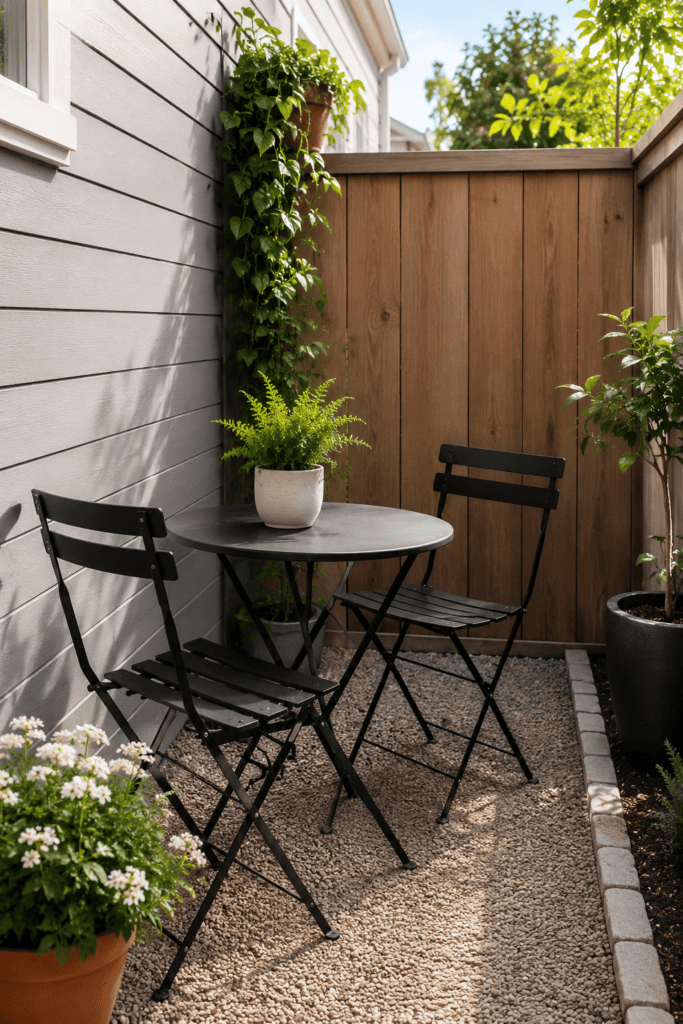
Bulky sectional sofas belong in a suburban McMansion backyard, not yours. Slim-profile furniture — bistro sets, narrow benches, foldable tables — keeps a tight yard functional instead of cluttered.
Furniture That Actually Fits
| Furniture Type | Why It Works in Narrow Yards |
|---|---|
| Bistro table + 2 chairs | Small footprint, still social |
| Wall-mounted drop-leaf table | Folds flat when not in use |
| Bench with hidden storage | Seating and storage combined |
| Stackable chairs | Easy to store, easy to rearrange |
I switched from a bulky loveseat to a folding bistro set two summers ago, and honestly? I use my yard three times more often now. Less furniture, more freedom.
Compare that to the sectional sofa I used to own — gorgeous in the showroom, absolutely miserable in a narrow yard. It blocked half my walkway and made the whole space feel like an obstacle course. Slim furniture isn’t a compromise; it’s genuinely the smarter choice for a space like this.
9. Add a Narrow Raised Garden Bed Along the Fence Line
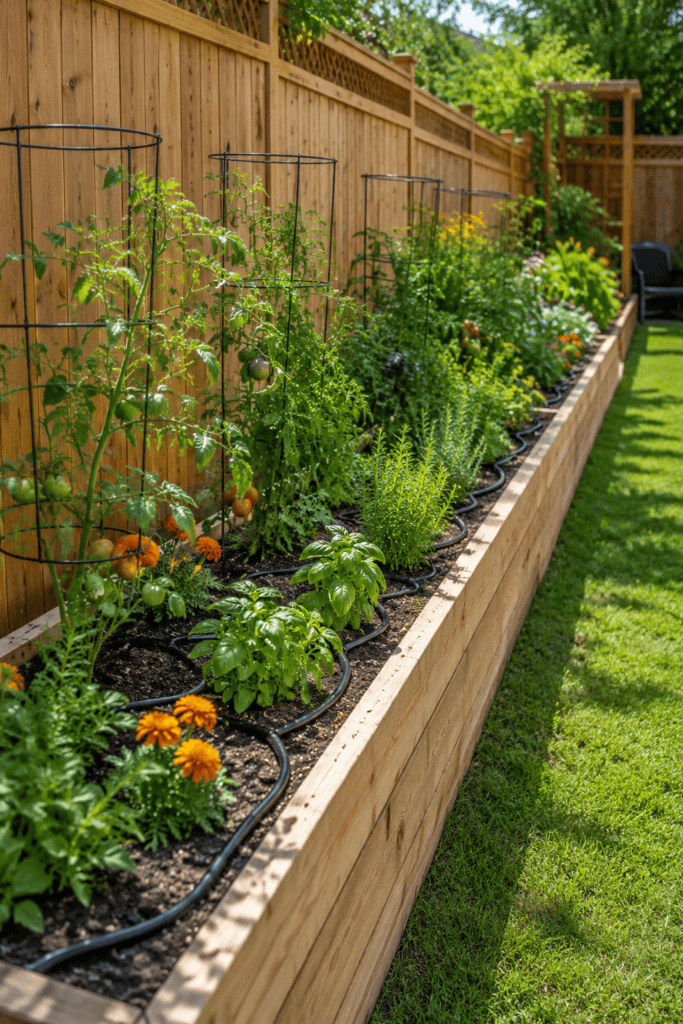
Raised beds don’t need to be wide to be productive. A narrow raised bed running along one fence grows herbs, tomatoes, or flowers without stealing walking space.
- Keep the bed to 18–24 inches deep
- Run it the full length of the fence for visual continuity
- Add drip irrigation so you’re not out there every evening with a hose
A narrow raised bed also solves a problem I didn’t expect: it hides an ugly fence line without blocking any usable floor space. Mine used to stare at a warped, sun-bleached fence panel every summer. Now I stare at basil and cherry tomatoes instead. That’s a straight upgrade in every sense.
10. Create a Winding (Not Straight) Path
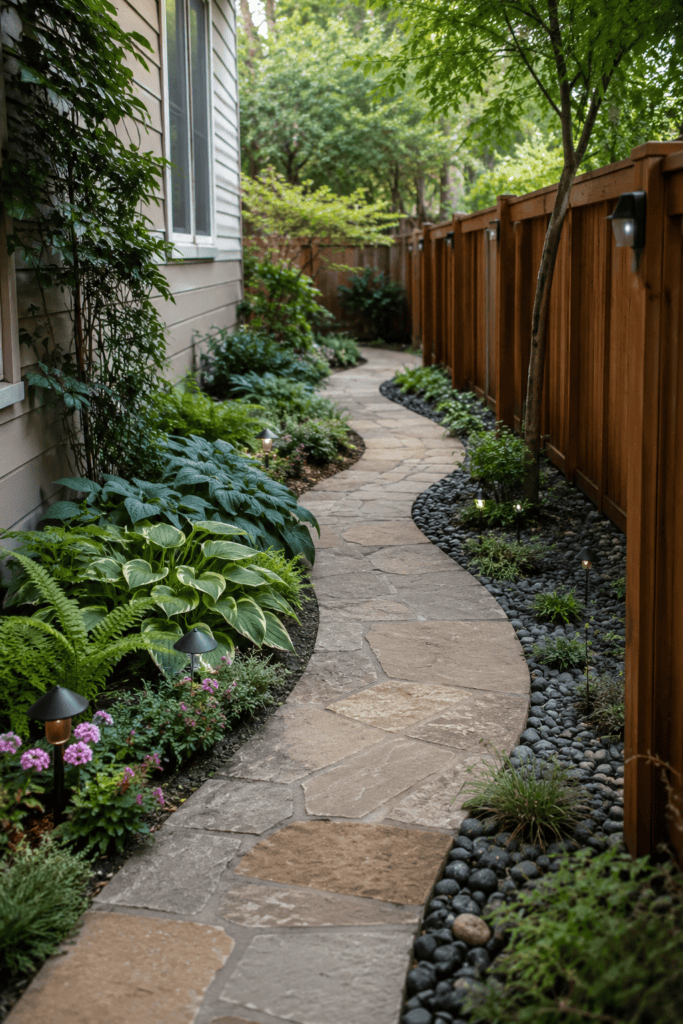
A dead-straight path draws the eye directly to the back fence, which only reminds everyone how short the yard is. A gently curved or winding path, even in a narrow space, makes the journey feel longer and more interesting.
This is basically the backyard version of a plot twist. Nobody expects it, and everyone appreciates it.
You don’t need a dramatic S-curve to pull this off. Even a subtle offset — where the path shifts a foot to the left halfway down — breaks up that straight-shot sightline to the back fence. Pair the curve with a planting bed on the outside edge, and you’ve hidden part of the yard from view until someone actually walks it. That little bit of mystery does more heavy lifting than people expect.
11. Use Uplighting to Add Depth at Night
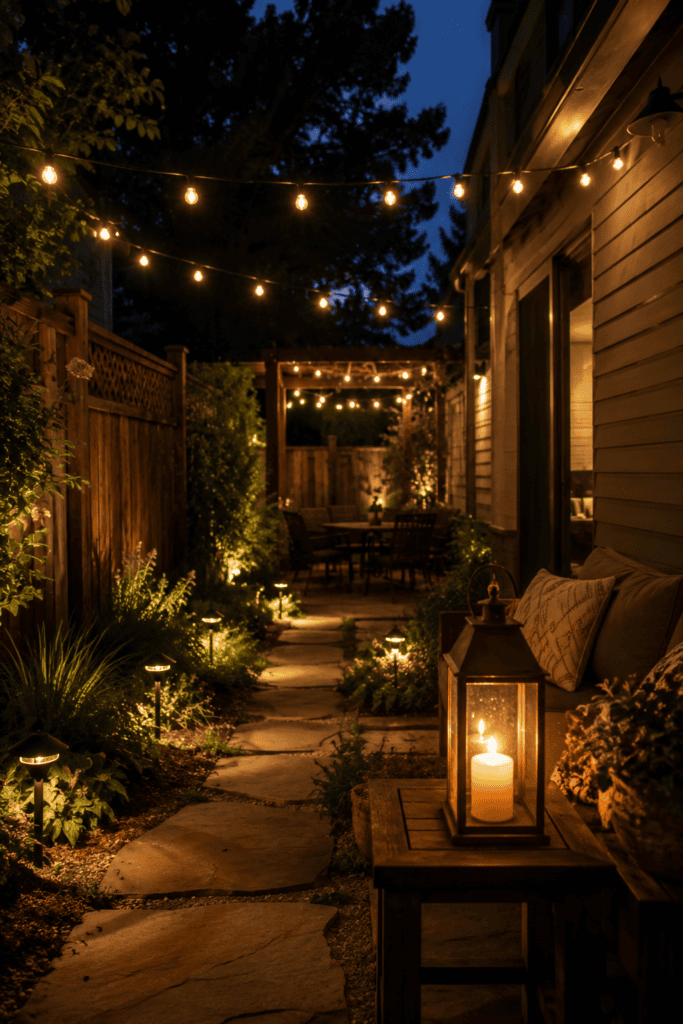
Daytime narrow yards have their tricks, but nighttime is where layered lighting really shines (pun absolutely intended). Uplighting a tree, a wall, or a piece of art at the far end of the yard draws the eye all the way back and makes the space feel deeper after dark.
String lights overhead add a cozy ceiling effect, which matters more in narrow yards where there’s rarely a natural “roof” to the space.
Layer your lighting instead of relying on one overhead bulb. Combine low path lights along the ground, mid-level lanterns on a shelf or table, and string lights up top, and the yard gains dimension it simply doesn’t have in daylight. It’s the cheapest, fastest upgrade on this entire list, and it’s the one guests comment on the most.
12. Install a Living Fence Instead of a Solid One
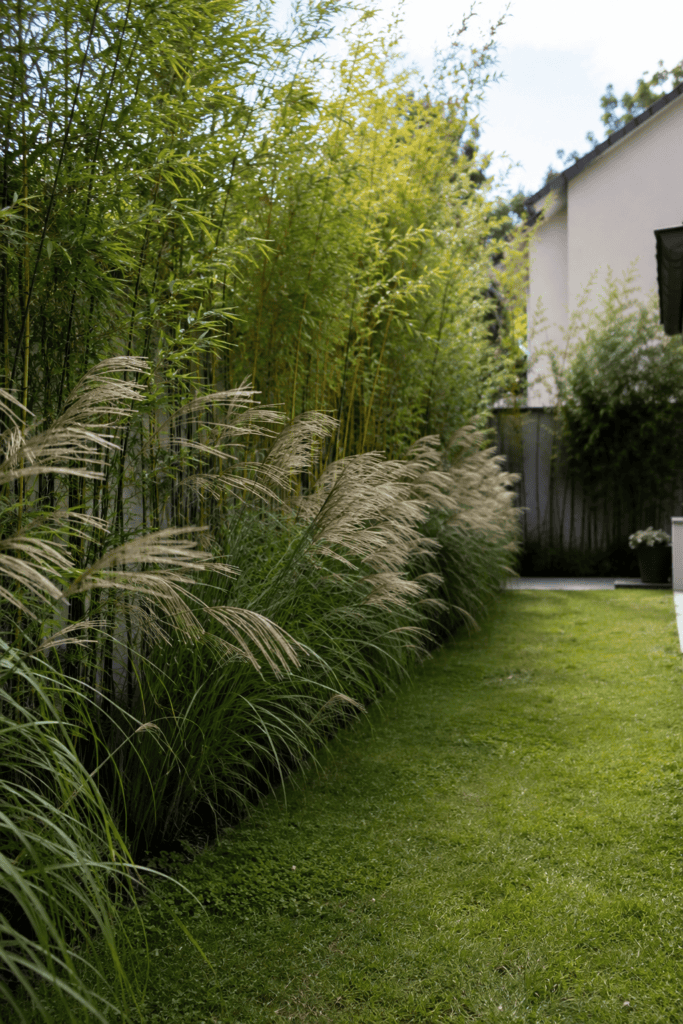
A solid privacy fence can feel like being boxed into a hallway. A living fence — bamboo, tall grasses, or a hedge — softens the boundary and adds texture instead of a flat wall.
- Bamboo grows fast but needs a root barrier (trust me on this one)
- Arborvitae works well for year-round privacy
- Ornamental grasses add movement without full opacity
I skipped the root barrier on my first bamboo planting because I figured I knew better. I did not know better. Two seasons later, shoots were popping up through the lawn ten feet away, and I spent an entire weekend digging out runners. Live and learn — or just read this paragraph and skip the mistake entirely.
13. Go With a Single Focal Point at the Far End
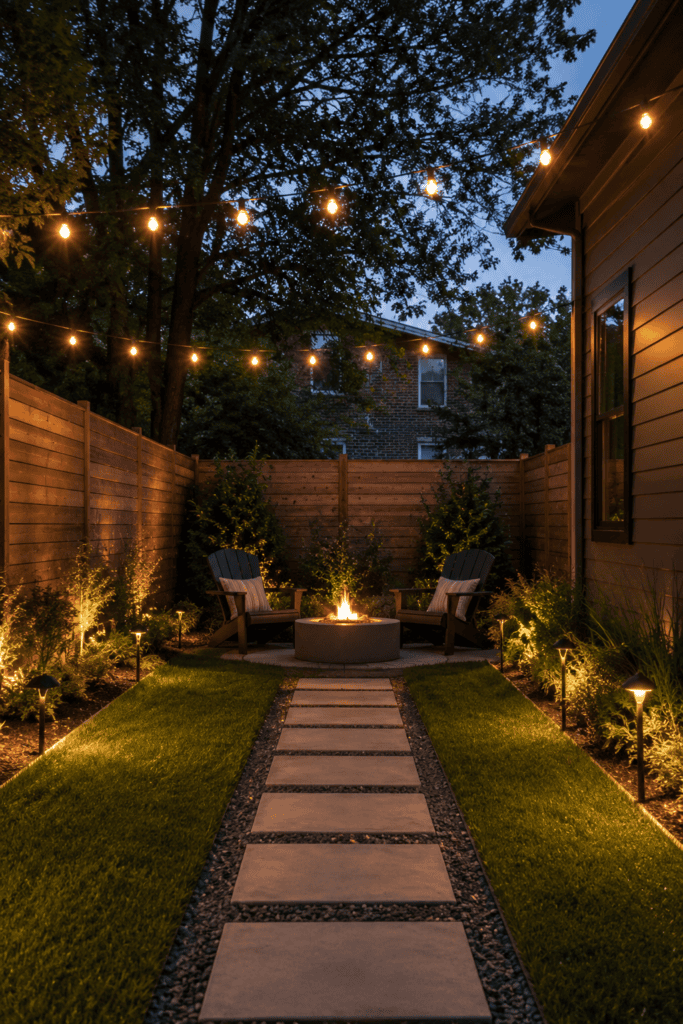
Every narrow yard needs one thing to walk toward. A fire pit, a sculpture, a single statement tree — pick one focal point and let everything else support it.
Without a focal point, a narrow yard just fizzles out at the back fence like an unfinished sentence.
A fire pit works especially well because it doubles as a destination and a gathering spot, which matters when your yard doesn’t have room for multiple activity centers. Position it at the far end, and suddenly the whole yard has a purpose: walk from the house, pass through the middle zones, arrive somewhere worth arriving at.
14. Use Built-In Bench Seating Along the Fence
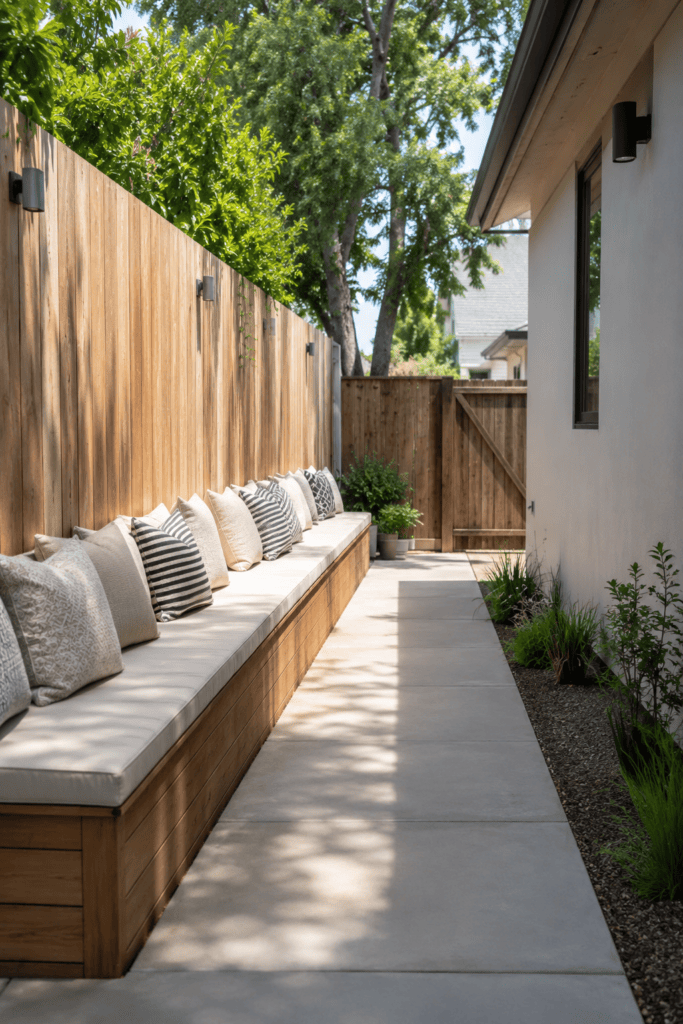
Freestanding chairs eat up floor space fast. Built-in bench seating along one fence line frees up the center of the yard for actual movement.
Add cushions and a couple of throw pillows, and it instantly reads as intentional rather than “we ran out of yard.”
Built-in seating also gives you hidden storage if you build it with a lift-top lid. Cushions, gardening tools, extra string lights — it all disappears under the bench instead of cluttering up a shed you probably don’t have room for anyway in a narrow lot.
15. Keep the Color Palette Simple
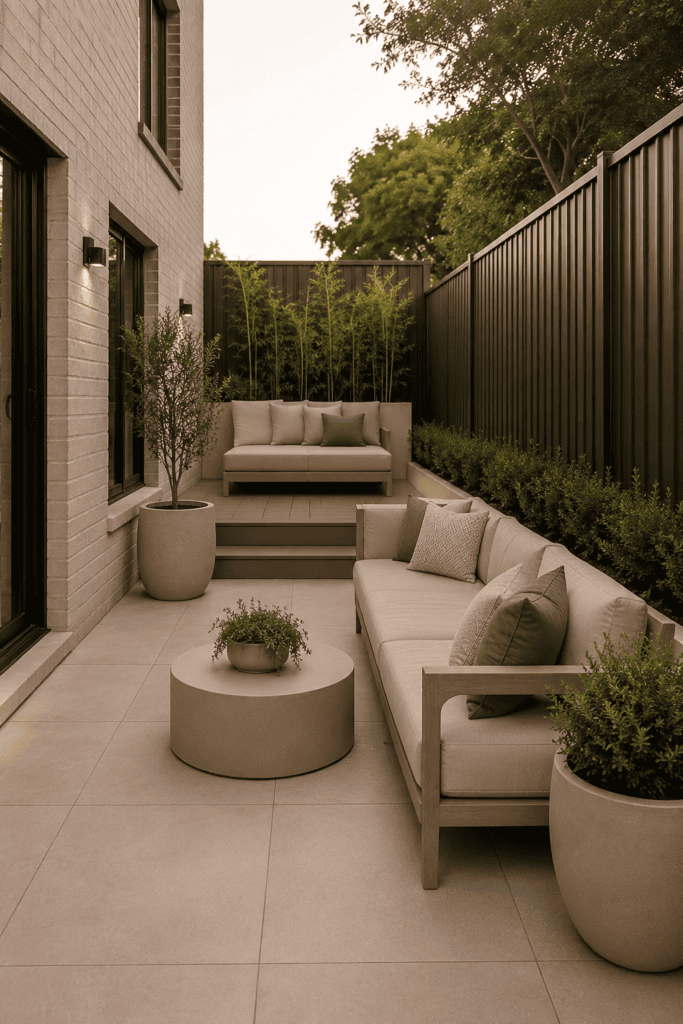
A chaotic mix of colors — furniture, planters, cushions, fencing — makes a narrow space feel busy and cluttered. Sticking to two or three coordinating colors throughout the yard keeps things visually calm and, weirdly, makes the space feel bigger.
I went with warm neutrals and one accent green, and it’s the single change that got the most compliments. Not the fire pit. Not the pergola. The color palette. Go figure.
16. Add a Narrow Dining Nook Near the House
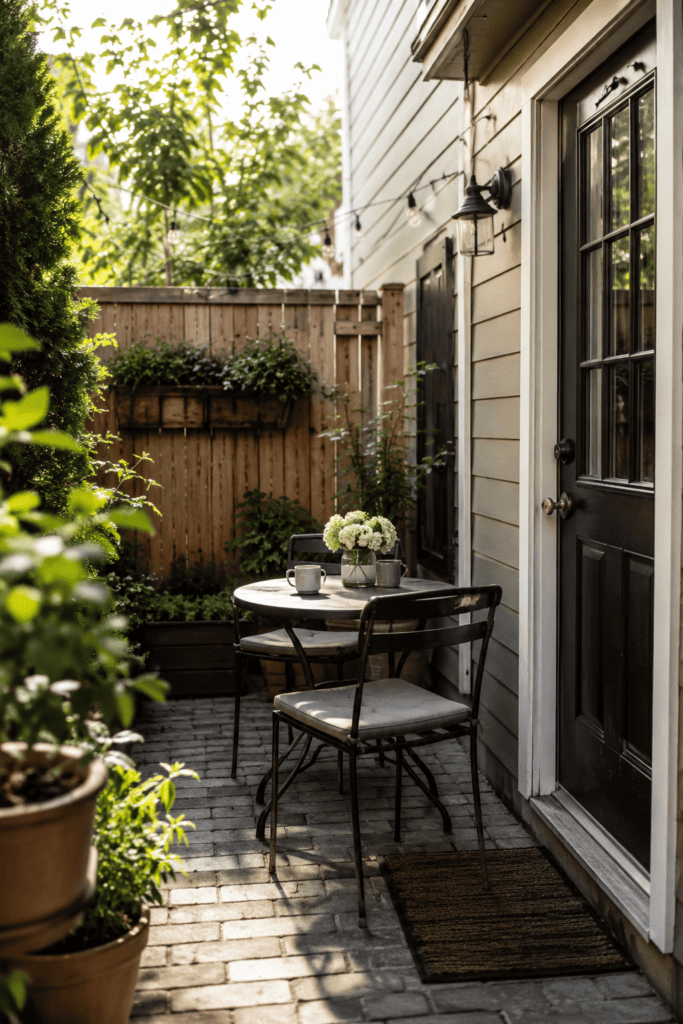
Skip the idea of a full outdoor dining set in the middle of the yard. Instead, build a compact dining nook right off the back door, so the rest of the narrow space stays open for lounging or gardening.
This keeps traffic flow logical: eat near the house, relax further back, garden at the far end.
A small dining nook near the back door also cuts down on how far you’re carrying plates and drinks, which matters more than people admit until they’ve hauled a hot casserole dish forty feet across a bumpy path. Function and design working together — that’s the whole goal here.
17. Don’t Fight the Shape — Design With It
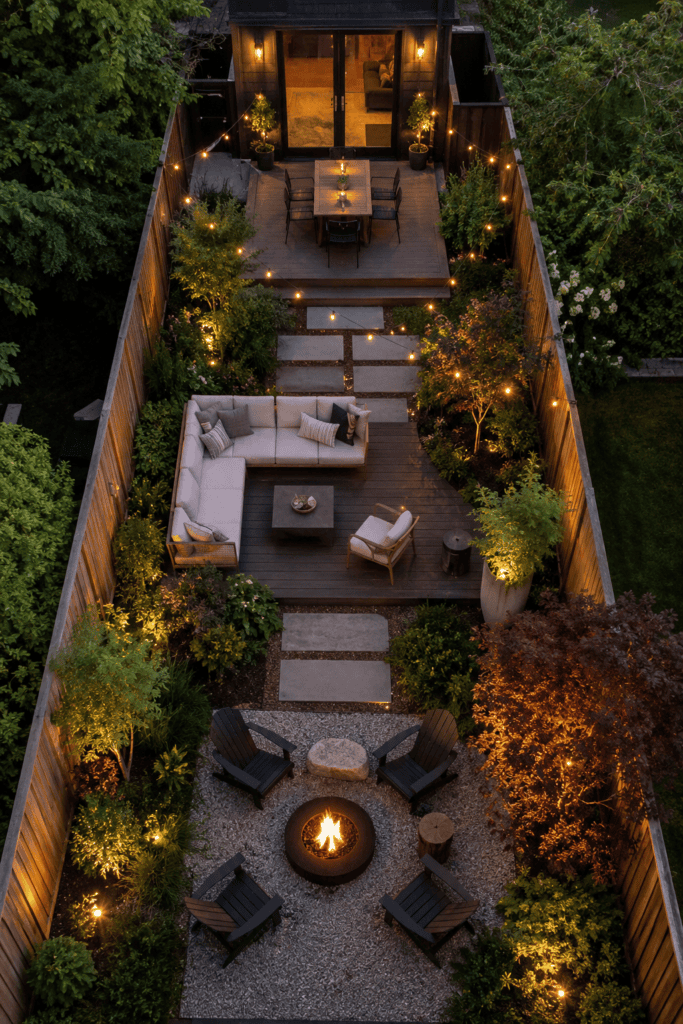
Here’s my final, slightly blunt piece of advice: stop trying to make your narrow yard pretend to be square. Lean into the shape. Long, narrow yards naturally suit a “journey” layout — entry, activity zone, destination — and that structure is genuinely more interesting than a boxy patio ever was.
🙂 Once I stopped fighting my yard’s shape and started designing with it, the whole project got easier and honestly more fun.
Quick FAQ on Narrow Backyard Design
How wide is considered a “narrow” backyard?
Anything under 15 feet wide typically qualifies as narrow, though the design principles here work just as well for yards up to 20 feet. Width matters less than how you use it.
What’s the single best first step?
Zoning. Before you buy a single plant or piece of furniture, decide where your two or three zones will live. Everything else on this list builds on that foundation.
Can I really fit a fire pit in a narrow yard?
Yes, as long as you size it appropriately. A 30-inch fire pit at the far end of the yard works as a focal point without eating the walkway, and local fire codes usually require clearance you’d want anyway in a tight space.
Final Thoughts
A narrow backyard isn’t a design failure waiting to happen — it’s a layout with its own rules, and now you know them. Zone the space, angle your lines, go vertical with plants, and pick one solid focal point, and that skinny strip of land turns into the part of the house everyone wants to hang out in.
FYI, you don’t need to tackle all 17 ideas at once. Pick two or three that fit your space and budget, and build from there. Your narrow yard has been waiting long enough — go give it the glow-up it deserves.