
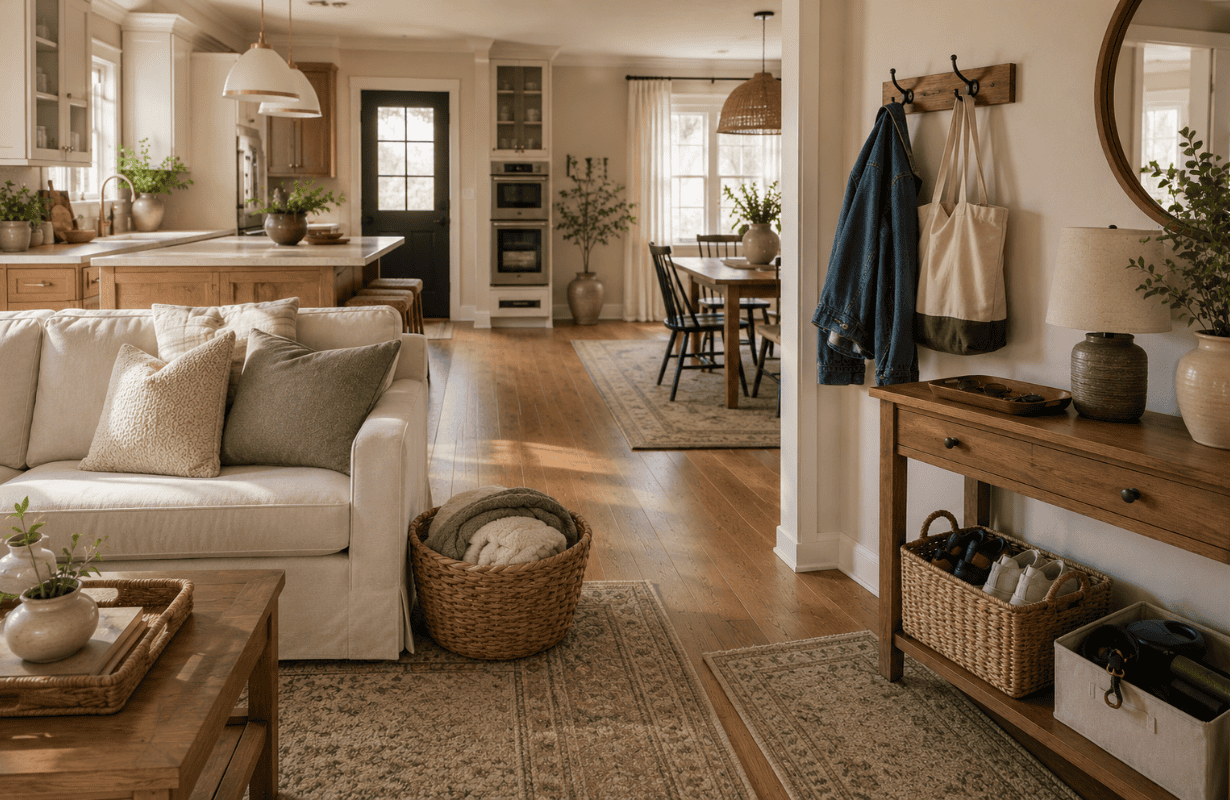
You know that frustrating cycle where you spend an entire Saturday organizing the house, everything looks amazing for about four days, and then somehow the clutter starts creeping back?
The mail lands on the kitchen counter. Shoes pile up by the door. Clean laundry lives in a basket for three days. And that beautifully organized bathroom drawer slowly becomes a collection of random hair ties, skincare samples, and things you don’t know where else to put.
Here’s the thing: the problem usually isn’t that you’re bad at organizing. Your system is just asking too much of you.
A home organization system shouldn’t require you to constantly “get organized.” It should quietly make everyday life easier.
If you’ve been wondering how to create a simple home organization system you can maintain, forget about perfectly labeled containers and magazine-worthy closets for a minute. What actually works is much less exciting—and much more useful.
Let’s build a system around how you really live.
Why Most Home Organization Systems Don’t Last
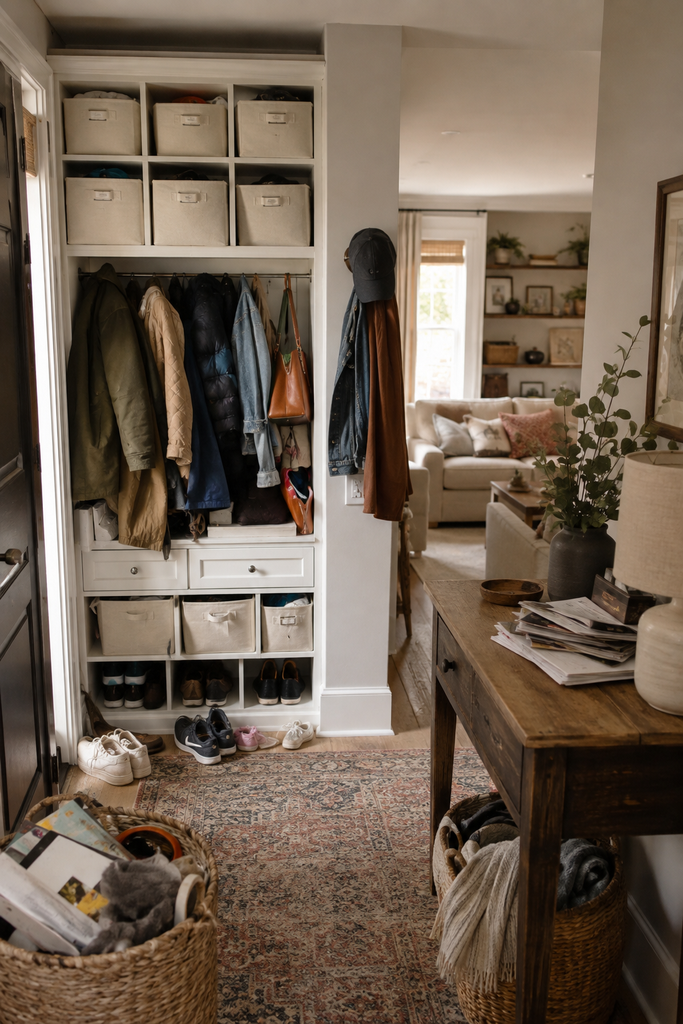
Before buying another basket, it’s worth figuring out why your previous attempts didn’t stick.
Most people get this wrong because they organize for the finished photo instead of everyday life.
You’re Making Things Too Complicated
If putting something away requires opening a closet, moving another item, pulling out a bin, removing a lid, and carefully arranging everything inside, you’re probably not going to do it consistently.
Neither is anyone else in your house.
The easier an action is, the more likely it becomes a habit.
For frequently used items, I prefer storage that takes one or two movements at most. Hang the jacket on a hook. Drop the keys in a tray. Put the blanket in a basket.
Save complicated storage for things you rarely use.
You’re Organizing Where Things “Should” Go
This sounds reasonable until you notice that your family keeps ignoring your carefully chosen storage locations.
Maybe shoes technically belong in the bedroom closet, but everyone takes them off beside the front door.
That’s useful information.
Instead of fighting the behavior, put shoe storage near the entrance.
Good organization follows your natural habits rather than constantly trying to correct them.
You’re Buying Storage Before Solving the Problem
Pretty containers can make clutter look more intentional, but they don’t necessarily make a home easier to maintain.
Before buying anything, ask:
What exactly keeps becoming messy here?
Maybe your bathroom isn’t short on storage. The problem is that you have ten products in the drawer that you never use.
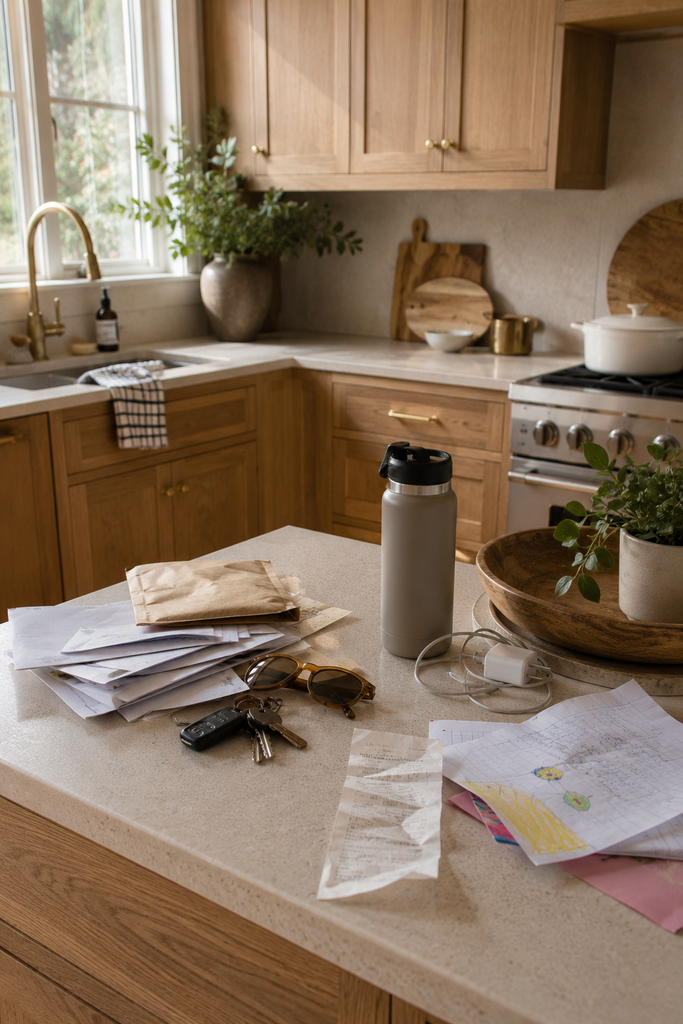
Maybe the kitchen counter isn’t too small. It has simply become the default landing spot for mail, keys, school papers, and packages.
Solve the actual problem first. Then decide whether you need a container.
Start by Finding Your Home’s Clutter Hotspots
Don’t try to organize the entire house at once.
Walk through your home and identify the places that repeatedly become messy.
These are usually surprisingly predictable:
- The kitchen counter
- Entryway
- Bathroom vanity
- Bedroom chair
- Nightstand
- Laundry area
- Coffee table
- Pantry shelves
Those areas tell you where your current organization system is failing.
Look at What’s Actually Accumulating
Take the kitchen counter as an example.
Don’t just think, “This counter is cluttered.”
Look closer.
If most of the clutter is mail and paperwork, you need a paper-management system.
If it’s reusable water bottles and lunch containers, you probably need better kitchen storage.
If everyone dumps keys, sunglasses, wallets, and chargers there, you need a dedicated drop zone.
Once you identify what is creating the mess, finding a practical solution becomes much easier.
Give Frequently Used Items an Obvious Home
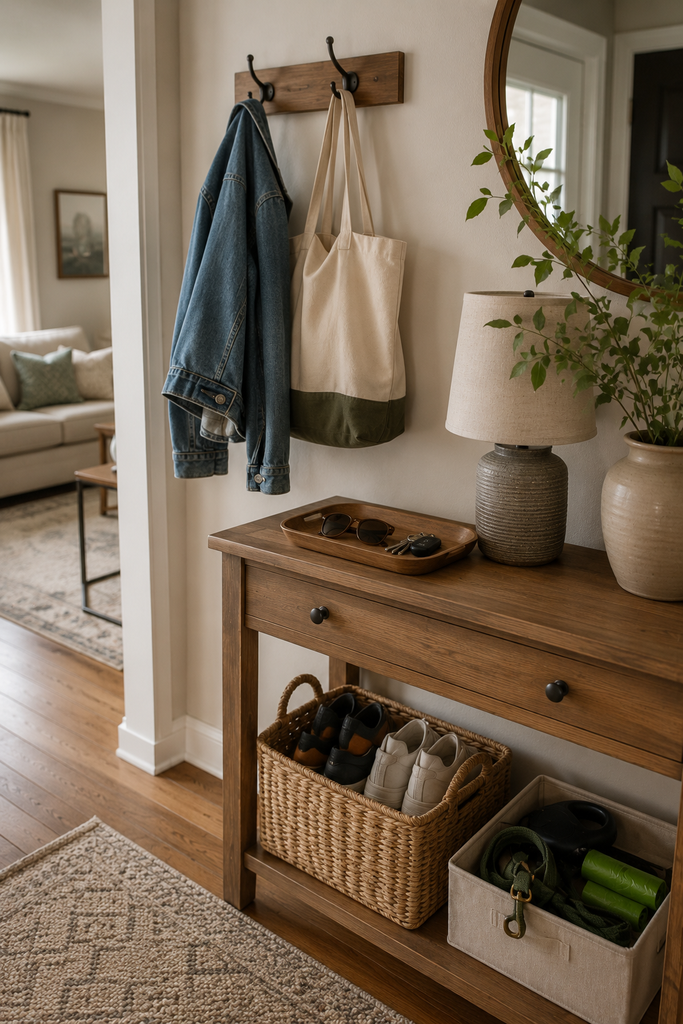
One of the biggest differences between a home that stays reasonably organized and one that constantly needs resetting is whether everyday items have clear homes.
And I mean obvious homes.
You shouldn’t have to stop and think about where something belongs.
Store Things Where You Use Them
This is probably my favorite organization rule because it’s incredibly practical.
Keep items close to the place where they’re actually used.
For example:
Keep reusable grocery bags near the door or in the car rather than buried in a pantry.
Store everyday coffee supplies beside the coffee maker.
Keep cleaning supplies for the bathroom in or near the bathroom if you have a safe place for them.
Put remote controls in a small tray beside the sofa instead of expecting everyone to return them to a cabinet across the room.
When storage matches the activity, putting things away becomes almost automatic.
Use the “Easy to Put Away” Rule
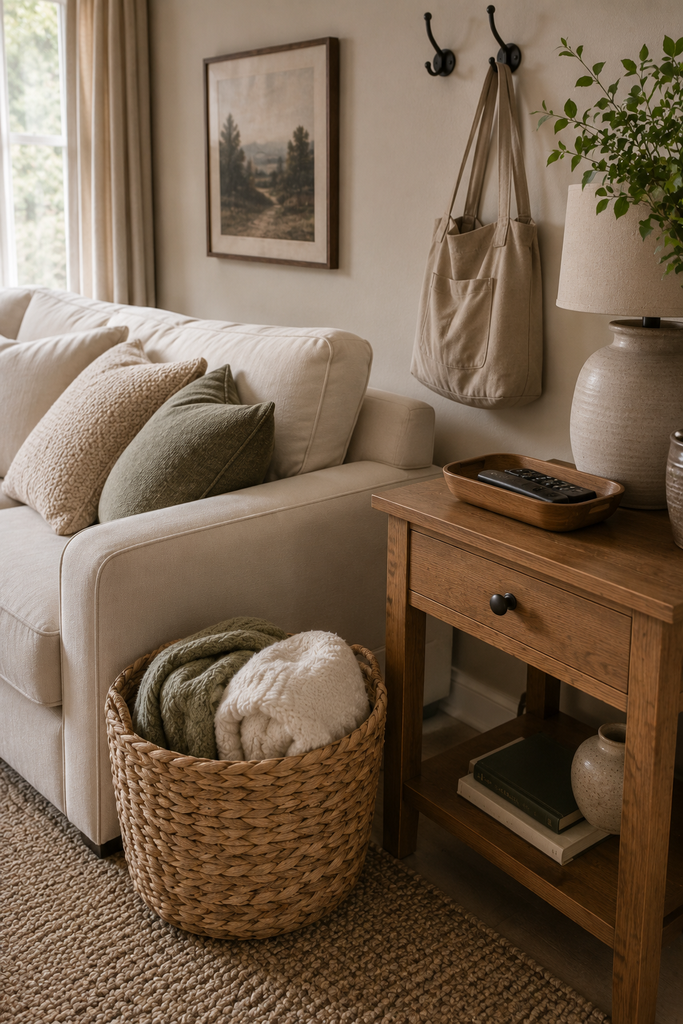
Here’s something I’ve learned: taking something out can be slightly inconvenient. Putting it away should be easy.
Why?
Because when you’re motivated to use something, you’ll make the effort to get it.
When you’re finished with it, you probably won’t.
That’s why open baskets, hooks, trays, shallow drawers, and simple shelf zones work so well for everyday organization.
Use Open Storage Strategically
Open storage isn’t appropriate everywhere. Too much of it can make a room look visually cluttered.
But for things you’re constantly grabbing, it can be incredibly useful.
A basket near the sofa can hold blankets.
Hooks in an entryway can catch jackets and bags.
A tray on a dresser can hold watches and everyday jewelry.
A small bin inside a cabinet can collect frequently used hair products.
The goal isn’t to display everything. It’s to remove unnecessary steps.
Organize by Frequency, Not Just Category
Traditional organizing advice often tells you to group similar things together.
That’s useful, but frequency matters just as much.
The items you use every day should get the easiest storage locations.
Create Three Levels of Storage
I like thinking about household belongings in three basic groups.
Daily-use items should be within easy reach.
Think everyday dishes, skincare, coffee supplies, shoes, chargers, and cleaning basics.
Occasionally used items can live higher, lower, or slightly farther away.
That might include serving platters, extra linens, specialty appliances, or backup toiletries.
Rarely used items can take the least convenient storage.
Holiday decorations, sentimental items, luggage, and seasonal equipment don’t need prime cabinet space.
This simple hierarchy prevents you from digging past a Thanksgiving roasting pan every morning to reach the pan you actually use.
Create Simple Zones Instead of Perfect Categories
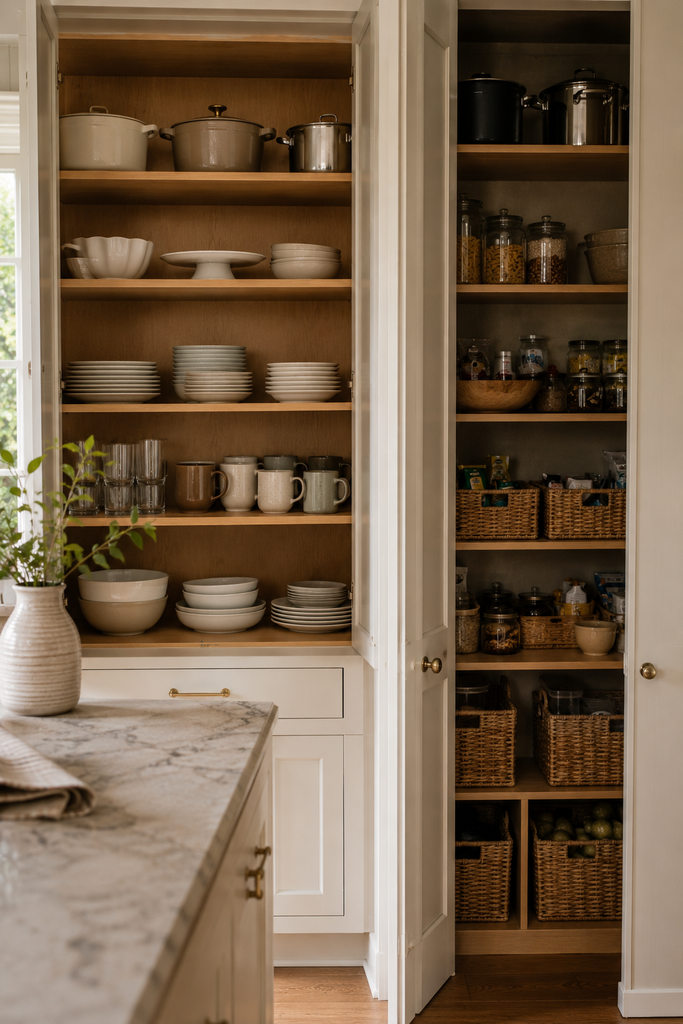
You don’t need 27 tiny organizing categories.
In fact, overly specific categories often make systems harder to maintain.
What actually works is creating broad, intuitive zones.
In a bathroom drawer, for example, you might have:
Everyday skincare | Hair | Dental | Extras
That’s probably enough.
You don’t necessarily need separate containers for moisturizers, serums, toners, face oils, masks, eye creams, and every other product category.
The same principle works in a pantry.
Instead of creating fifteen categories, start with broad zones such as breakfast, snacks, baking, canned foods, and dinner staples.
Someone should be able to look at the space and immediately understand where something belongs.
Build a Landing Zone for Things Entering the House
A surprising amount of household clutter isn’t actually storage clutter.
It’s transition clutter.
These are things that enter your home and haven’t reached their final destination yet: mail, packages, receipts, backpacks, keys, shopping bags, returns, and paperwork.
Without a system, all of that usually ends up on the nearest flat surface.
Give Temporary Clutter a Temporary Home
Create a small landing zone near the place where things naturally enter your house.
You might use a combination of:
- A tray for keys and wallets
- Hooks for bags
- A small basket for incoming papers
- Shoe storage
- One spot for items that need to leave the house
The important part is keeping it limited.
Don’t create a giant “deal with this later” basket. That’s basically clutter wearing a nicer outfit.
Don’t Fill Every Storage Space
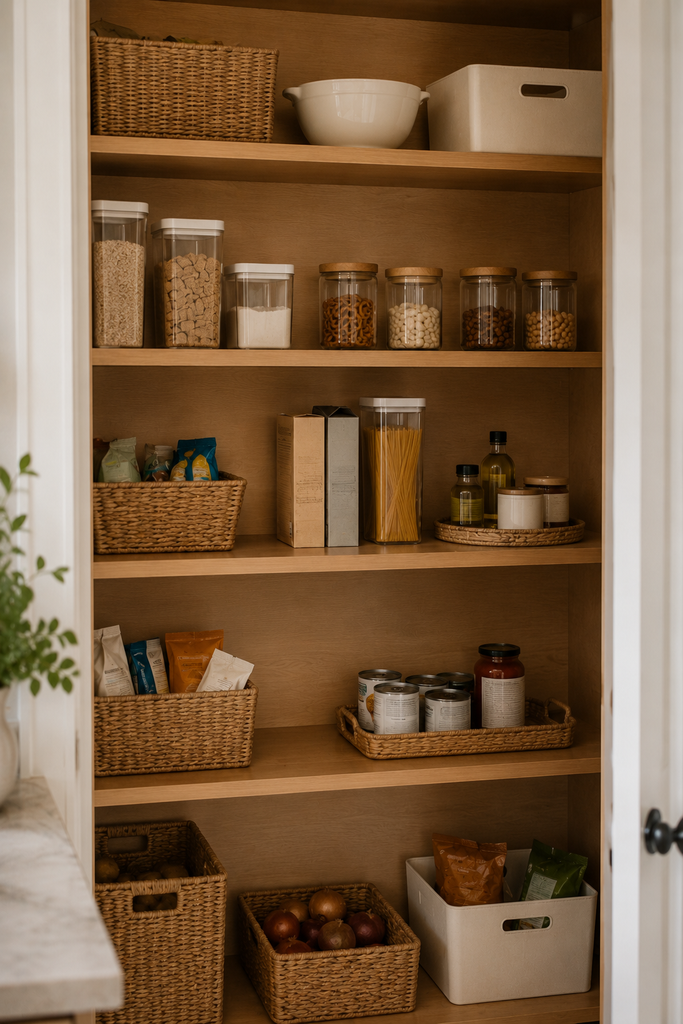
This one makes a huge difference.
If every drawer, cabinet, and closet is packed completely full, maintaining organization becomes difficult because putting one item away requires rearranging five others.
Try to leave some breathing room.
You don’t need a specific percentage. Just make sure you can remove and return items without playing a miniature game of Tetris.
This is especially important in frequently used areas such as kitchen cabinets, clothing drawers, bathroom storage, and the pantry.
A little unused space isn’t wasted storage.
It’s what makes the storage functional.
Create Tiny Reset Habits Instead of Cleaning Marathons
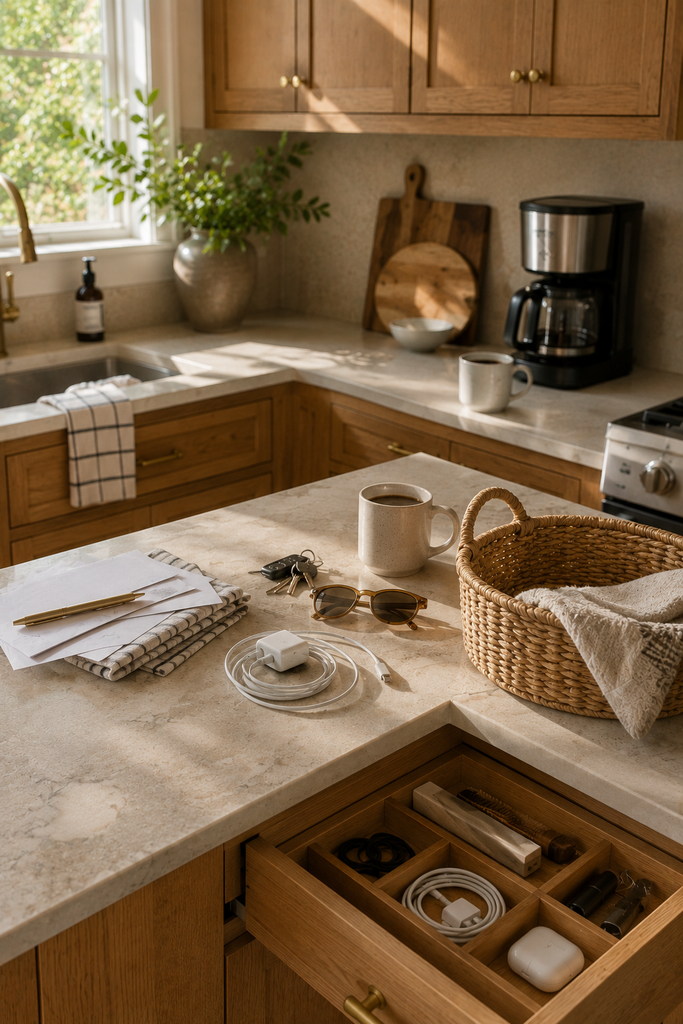
A maintainable home organization system still needs occasional attention.
The difference is that it shouldn’t require hours.
Instead of waiting until the house feels completely out of control, build small resets into routines you’re already doing.
Attach Resets to Existing Habits
For example, while you’re waiting for coffee to brew, clear anything that doesn’t belong on the kitchen counter.
Before going upstairs at night, take anything nearby that belongs upstairs with you.
When you put groceries away, quickly check whether something expired or an empty package was left in the pantry.
When you finish getting ready, return the few products sitting on the bathroom counter.
These aren’t separate “organization sessions.”
They’re tiny actions attached to things you’re already doing.
That’s much easier to maintain.
Test Your System Before Buying More Organizers
Once you’ve created a system, live with it for a couple of weeks.
Pay attention to where clutter still accumulates.
That’s your feedback.
If jackets keep landing on a chair instead of being hung in the closet, maybe the closet isn’t convenient enough.
If your carefully organized pantry bins constantly become mixed together, perhaps your categories are too specific.
If everyone ignores the mail organizer, maybe it’s positioned in the wrong place.
Don’t assume you’re failing the system.
Change the system.
Your home organization should adapt to your behavior—not the other way around.
The Best Organization System Is the One You Barely Notice
Learning how to create a simple home organization system you can maintain isn’t really about finding better containers. It’s about reducing the amount of effort required to keep your home functioning.
Start with the spots that repeatedly become cluttered. Figure out what’s actually collecting there. Give everyday items obvious homes close to where they’re used, keep your categories broad, and make putting things away ridiculously easy.
Most importantly, don’t try to fix your entire house this weekend.