
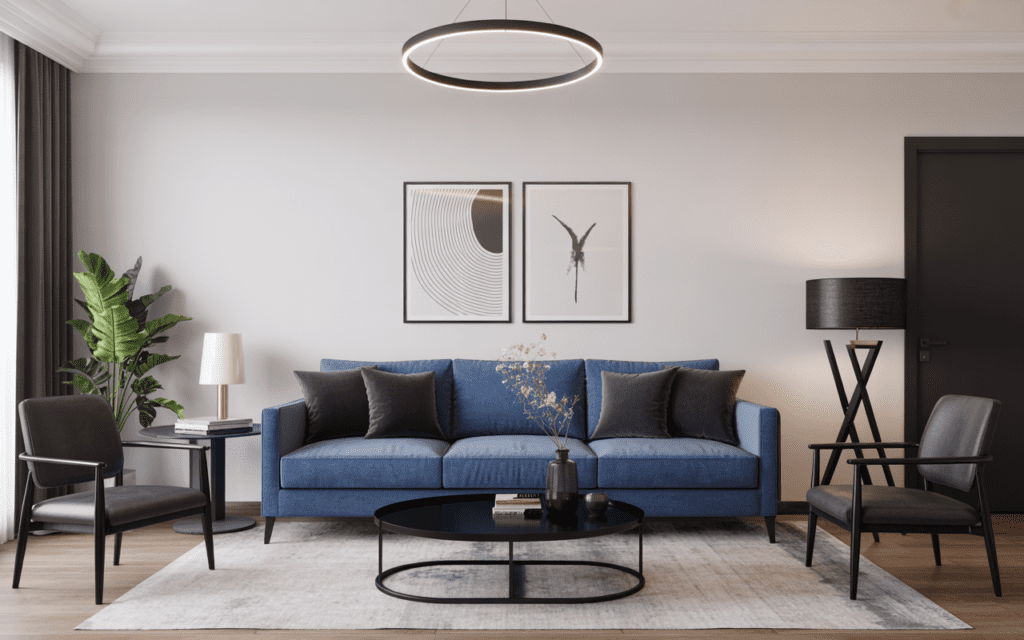
A blue sofa can completely change the mood of a living room. It can feel calm, classy, bold, coastal, moody, or surprisingly cozy, depending on how you style it. And honestly, why settle for a sofa that just sits there when you can have one that actually gives the room some personality?
I’ve always liked blue sofas because they do a lot without making the space feel chaotic. They work in modern homes, traditional homes, tiny apartments, and big family rooms. If you’re trying to figure out how to style one without making the room look random or overdone, you’re in the right place. Let’s look at 17 blue sofa living room ideas that actually make sense in real homes.
1. Start with a Navy Blue Sofa
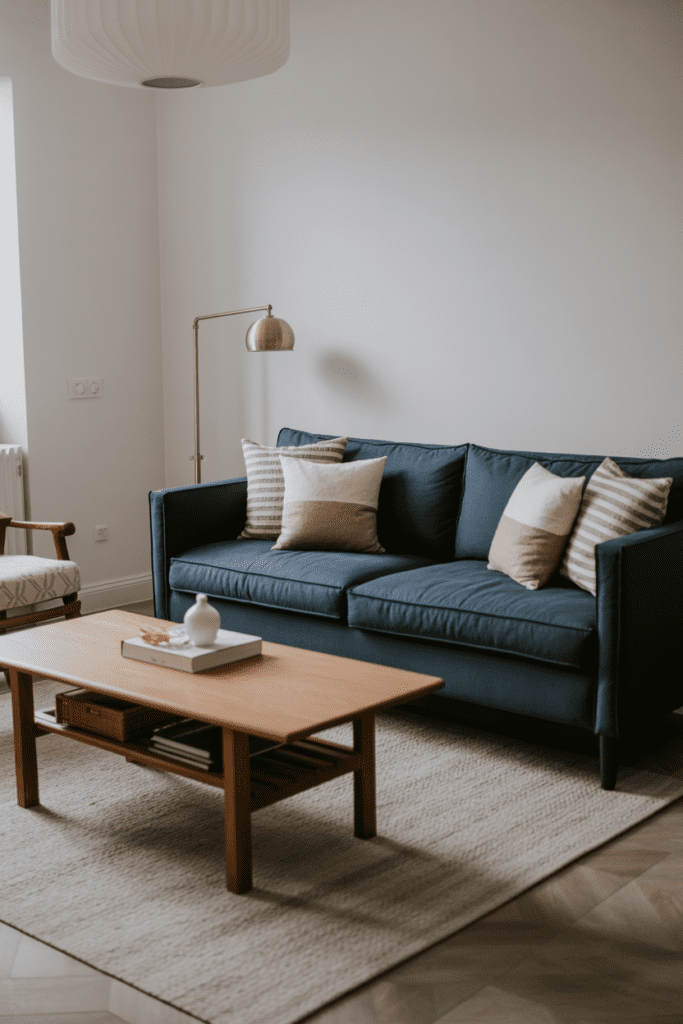
A navy blue sofa living room setup gives you instant sophistication. Navy feels rich, timeless, and easy to live with, which makes it one of the best choices if you want something stylish but not too loud. It has enough color to stand out, but it still behaves nicely with most decor styles. That’s rare, right?
What I love about navy is how well it works with both warm and cool tones. You can pair it with white walls for a crisp look, wood furniture for warmth, or metallic accents for a slightly dressier feel. It also hides everyday wear better than lighter shades, which matters more than people like to admit. A sofa can look beautiful in a showroom and then betray you the second someone drops a snack on it. Navy keeps things a little more forgiving.
2. Keep the Walls White
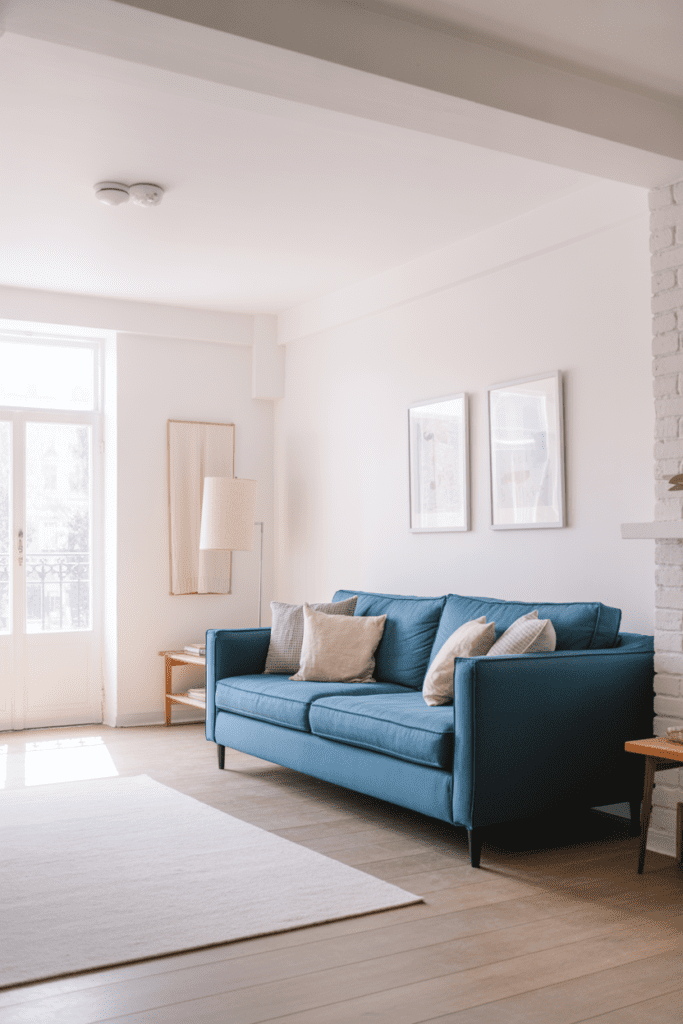
If you want your blue sofa to be the star of the room, white walls are your best friend. They create a clean backdrop and make the sofa pop without forcing the room to work too hard. This combination feels fresh, bright, and easy to decorate around.
I especially like this look in smaller living rooms because the white walls help the space feel open, while the blue sofa adds character. You get contrast without heaviness, which is a pretty great trade. Add a few framed prints, a simple rug, and maybe a plant or two, and the whole room suddenly feels more intentional. No need to overcomplicate it. Sometimes the simplest combo really does the job.
3. Bring in Warm Wood Tones
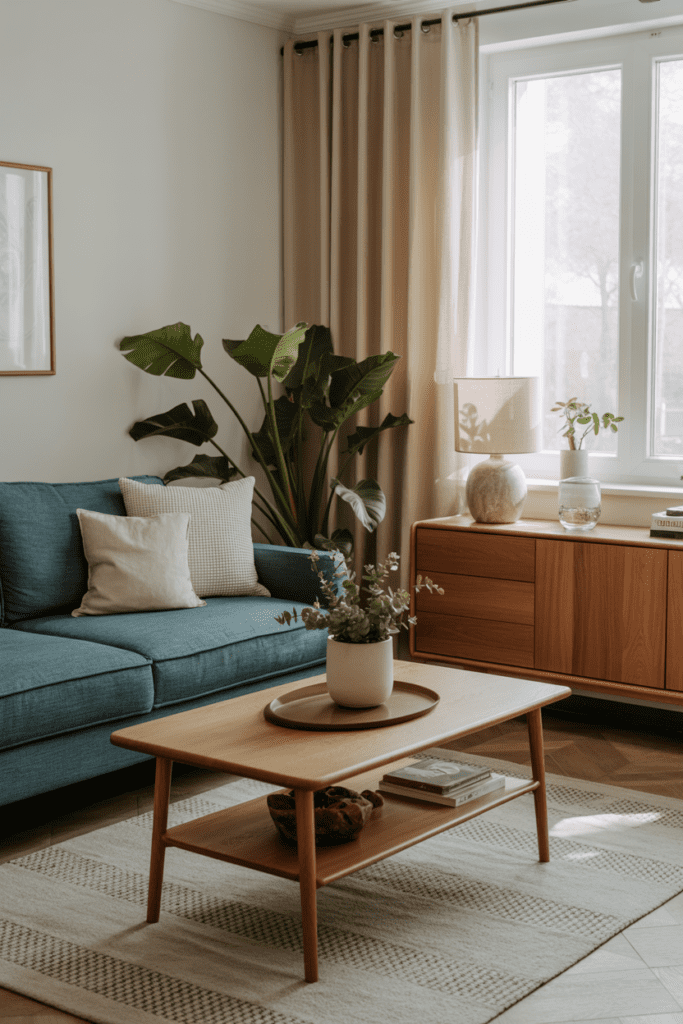
Blue and wood work beautifully together because they balance each other out. Blue brings coolness, while wood adds warmth and texture. That contrast makes the room feel grounded and inviting instead of too polished or cold. Ever noticed how some rooms feel beautiful but a little stiff? Wood usually fixes that.
Try a wooden coffee table, side tables, open shelves, or a media unit with natural grain. Light oak gives you a softer, more casual feel, while walnut adds richness and depth. If your sofa leans toward navy or teal, wood helps soften the intensity. If your sofa is a lighter blue, wood makes the space feel cozy and natural. It’s one of those combinations that just works without needing a long explanation.
4. Choose Velvet for a Luxe Feel
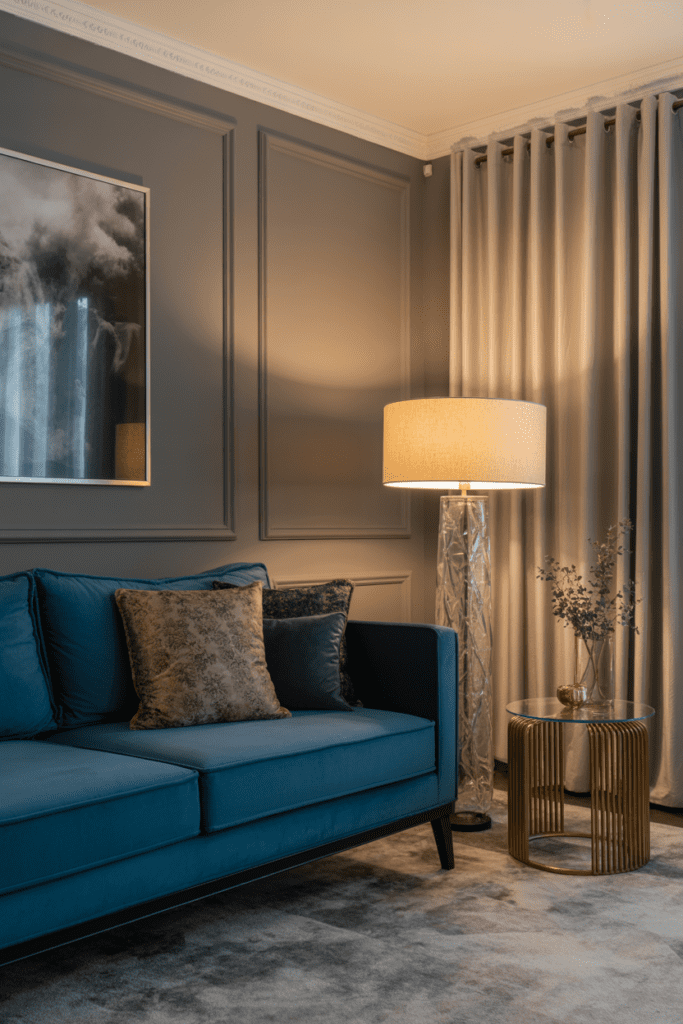
A velvet blue sofa adds instant drama in the best way. Velvet catches the light beautifully, so even a simple sofa looks more elegant and layered. If you want your living room to feel a little more luxurious, this is a smart choice.
I’m a big fan of velvet in deeper shades like sapphire, royal blue, or midnight blue. Those tones feel rich and moody without becoming too heavy. Pair the sofa with soft lighting, a textured rug, and some metallic accents, and suddenly your room looks like you actually planned it. Funny how one fabric can do so much, isn’t it?
Just keep the rest of the room from getting too busy. Velvet already has presence, so you don’t need ten more statement pieces fighting for attention. Let the sofa lead and keep the surrounding decor a little calmer.
5. Mix Blue and Gray
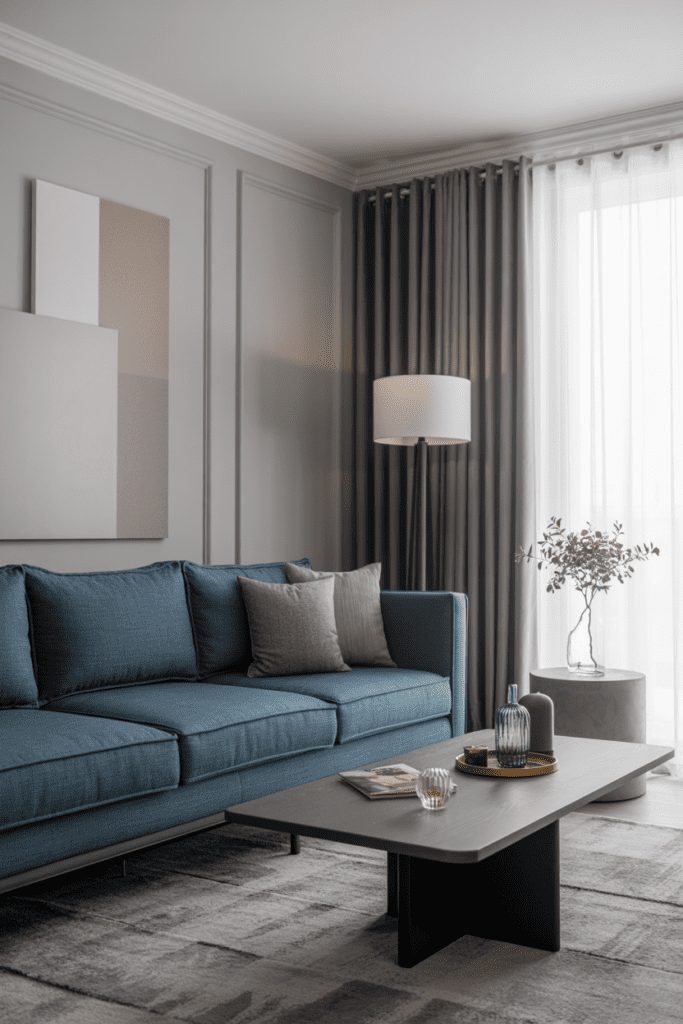
Blue and gray make a lovely, balanced pairing. The result feels modern, calm, and slightly understated in a good way. This is a great option if you want your living room to look stylish without becoming too colorful or flashy.
You can add gray through curtains, rugs, throw pillows, or a secondary chair. I like this combo best when the textures vary a bit. A soft gray rug, a smooth blue sofa, and some woven or linen accents create more visual interest than a room full of matching shades. The goal here isn’t perfection; it’s harmony. That’s a much friendlier look for everyday life.
6. Add Gold or Brass Details
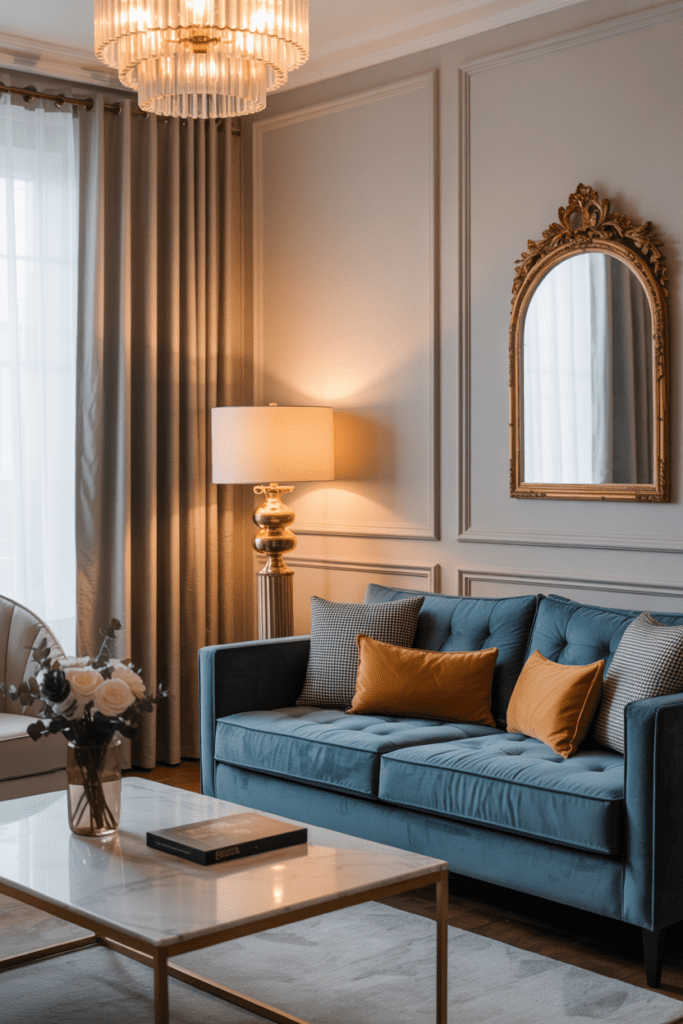
If you want to make a blue sofa feel more polished, gold and brass accents do wonders. They add warmth, shine, and a little bit of glam without making the room feel overdone. Blue and gold have always looked good together because the contrast feels rich and balanced.
You don’t need much. A brass lamp, a gold mirror frame, a metallic side table, or even a few decorative objects can shift the whole mood of the room. The key is to use these details like seasoning, not like the main dish. A little goes a long way. If you add too much, the room starts looking like it’s auditioning for a palace.
7. Try a Light Blue Sofa
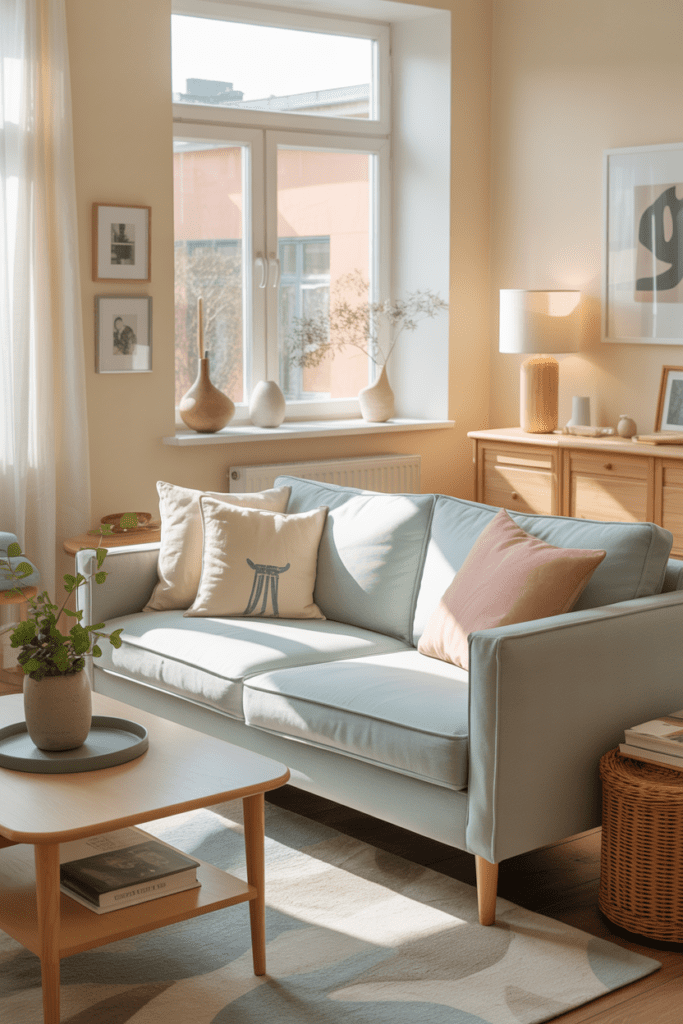
A light blue sofa creates a softer and breezier mood. It feels cheerful, relaxed, and a little more playful than darker shades. This is a fantastic choice if you want your living room to feel airy and casual.
Light blue works especially well with beige, cream, pale wood, and soft neutral textiles. You can also lean into pastel tones if you want the room to feel more gentle and inviting. I think this shade works best in rooms with plenty of natural light because it really shows off that fresh, open feeling. It’s a nice option if you want color without intensity.
8. Style with Patterned Cushions
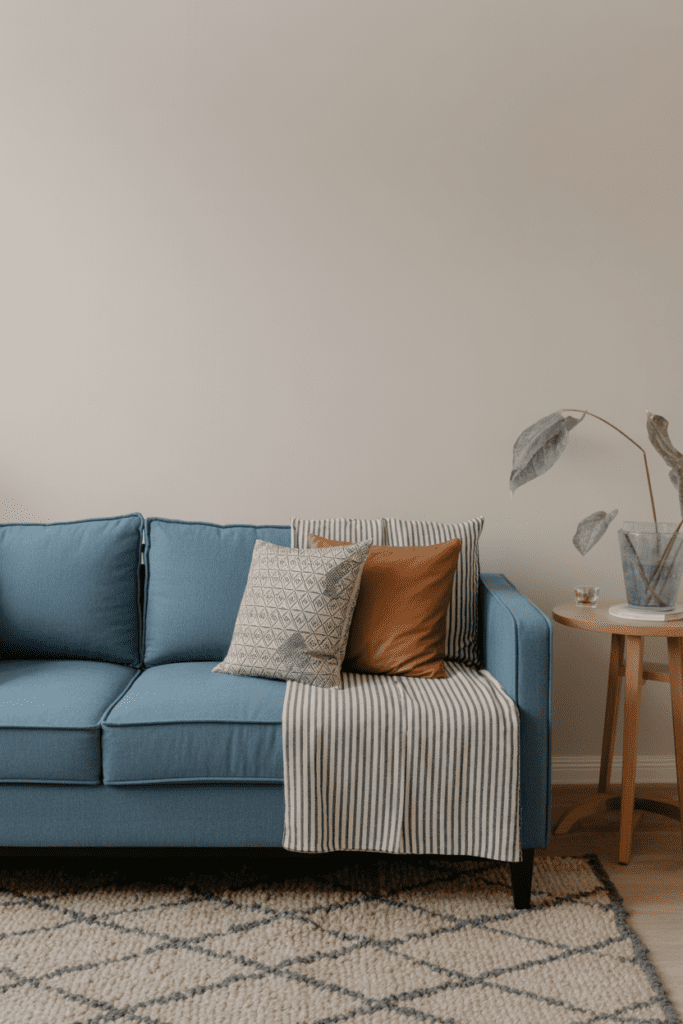
Patterned cushions are an easy way to add personality to a blue sofa. They keep the room from feeling flat and give you a chance to bring in a few more colors or textures. Why let the sofa carry the whole visual load when cushions can help out?
Stripes, geometric prints, subtle florals, or classic woven patterns all work well. Just make sure the patterns connect to the rest of your decor. If your room already has a lot going on, keep the cushions simple. If the space feels plain, use the pillows to introduce some energy. This kind of styling is low effort, which makes it especially appealing. IMO, that’s always a win.
9. Ground the Room with a Rug
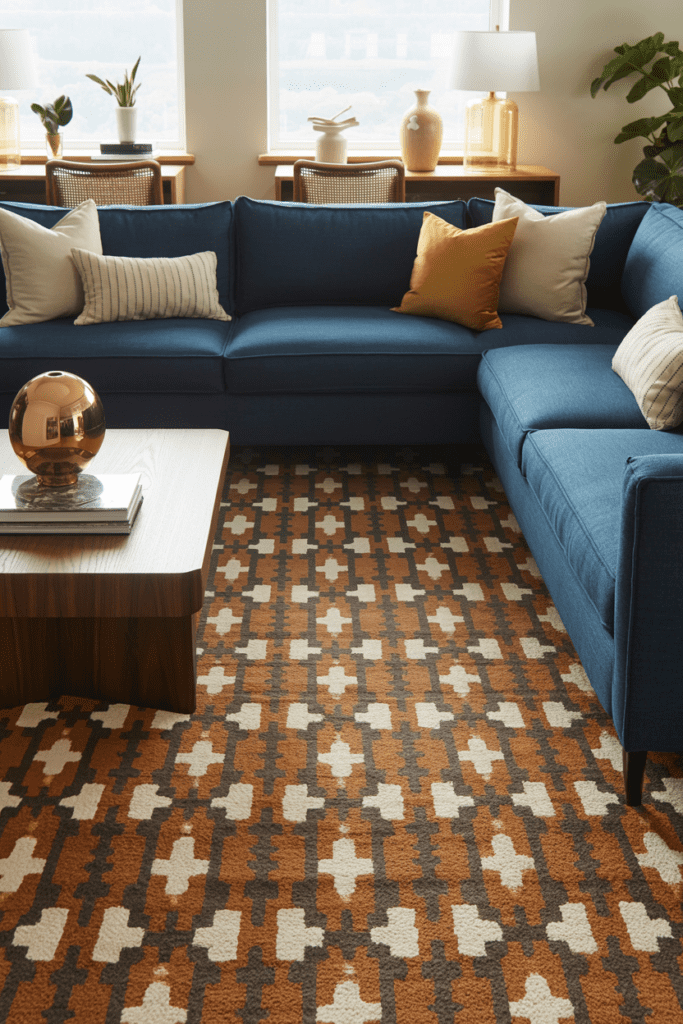
A good rug can pull a blue sofa living room together in a way that feels almost unfair to the other furniture. It anchors the seating area and helps the whole space feel complete. Without a rug, the room can sometimes feel like it forgot to finish dressing.
If your sofa is bold, choose a rug that softens the look with neutral tones. If your sofa is simple, you can go for a patterned or colorful rug to create more interest. I usually like rugs with a mix of blue, cream, and warm beige because they tie everything together without making the room feel too coordinated. You want the room to feel styled, not staged for a catalog.
10. Go for a Coastal Mood
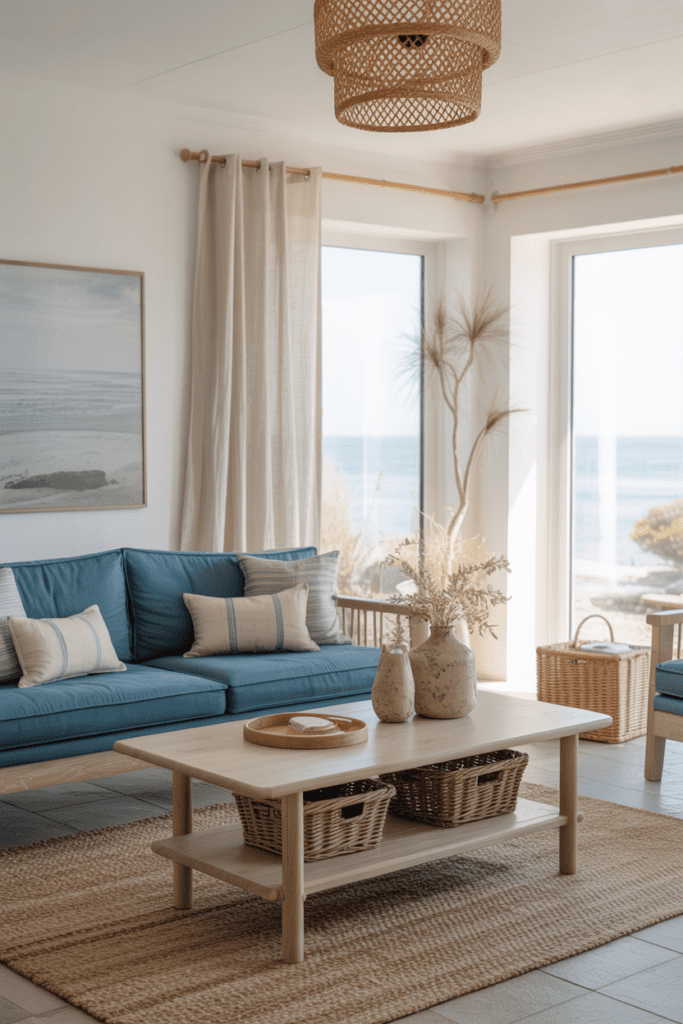
Blue sofas naturally suit coastal living room ideas. The color reminds people of the sea and sky, so it already carries that relaxed, beachy feeling. You don’t need to go full nautical unless that’s your thing. A coastal room can stay refined and still feel easygoing.
Use soft white walls, natural textures, light wood, and linen fabrics to build the look. Woven baskets, simple ceramics, and a few airy accessories work well too. I’d avoid overloading the room with seashell decor unless you really want to commit to the theme. A subtle coastal style usually feels more timeless. Less theme park, more calm weekend by the water.
11. Pair Blue with Black Accents
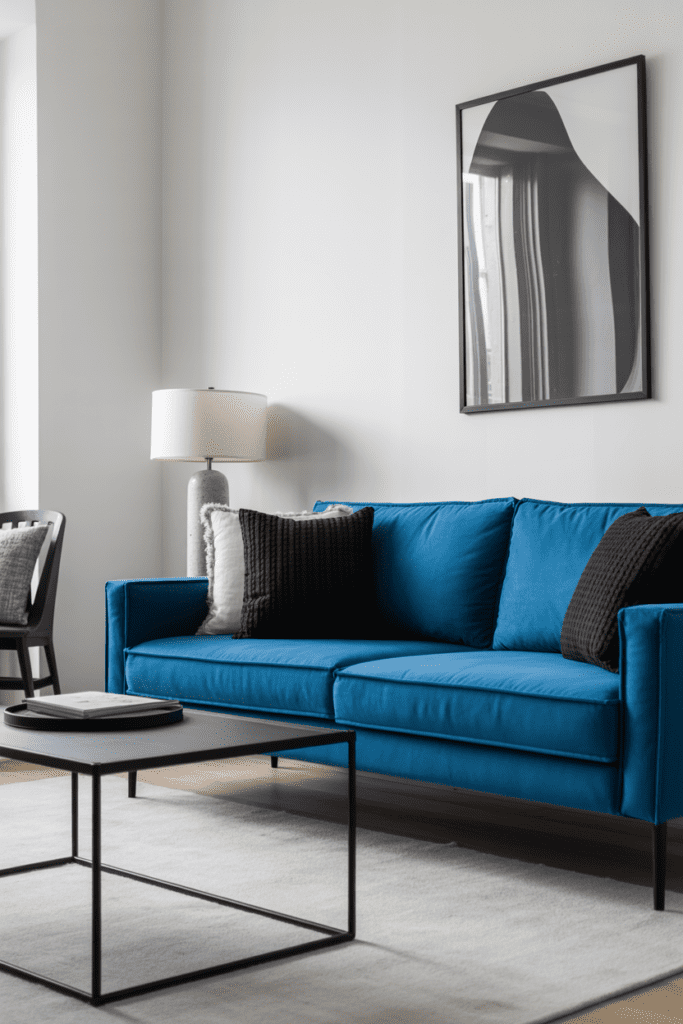
Blue and black can create a sharp, modern living room when you use them with care. This combination feels bold and sophisticated, especially with darker shades of blue. It works well if you want a room that feels a little dramatic without becoming gloomy.
Black can show up in picture frames, lamp bases, coffee tables, or even a floor lamp with a slim metal frame. I like this look best when it includes some lighter elements too, like white walls or a pale rug. That keeps the room from feeling too heavy. A little contrast keeps everything alive, and that matters more than people think.
12. Add Plants for Freshness
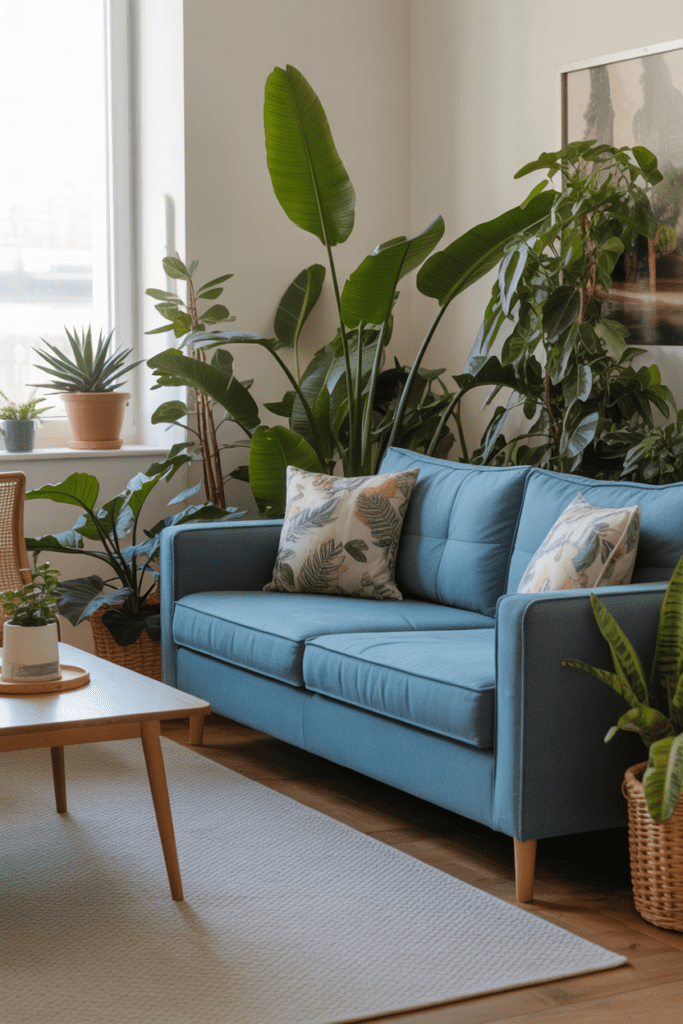
Plants make a blue sofa look even better because they bring life and movement into the room. The green against blue looks natural and fresh, which helps the space feel more relaxed. Ever notice how a room instantly feels less stiff once you add a plant or two? Nature always knows what it’s doing.
Large leafy plants work especially well next to a blue sofa. A fiddle leaf fig, rubber plant, or monstera can soften the edges of the room. Smaller plants on shelves or side tables help too. If you’re not exactly known for your plant care skills, go for low-maintenance options. No need to introduce a dramatic relationship into your living room.
13. Keep It Minimal
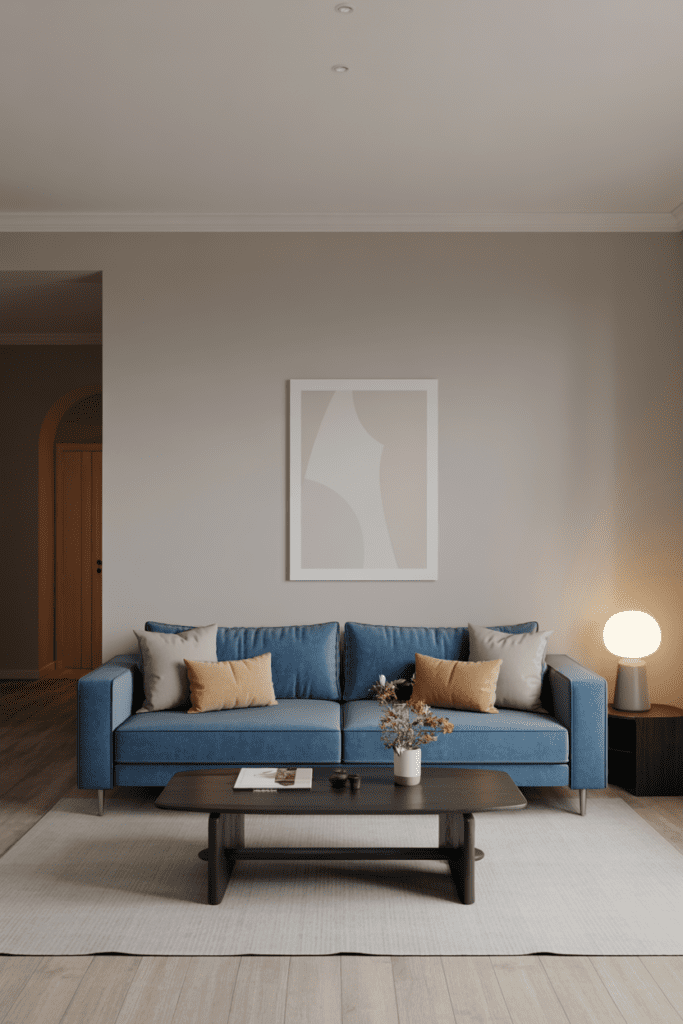
A minimal blue sofa living room can feel clean, calm, and very modern. The sofa brings in enough color on its own, so you don’t need to crowd the space with too many extras. Minimal design works best when every item has a reason to be there.
Stick to a simple layout, a neutral rug, and just a few well-chosen accessories. A sleek coffee table, a lamp with clean lines, and one or two pieces of wall art can be enough. This approach works especially well in smaller rooms because it keeps the space from feeling crowded. Simple doesn’t mean boring. It just means you let the important pieces breathe.
14. Use Earthy Neutrals Around It
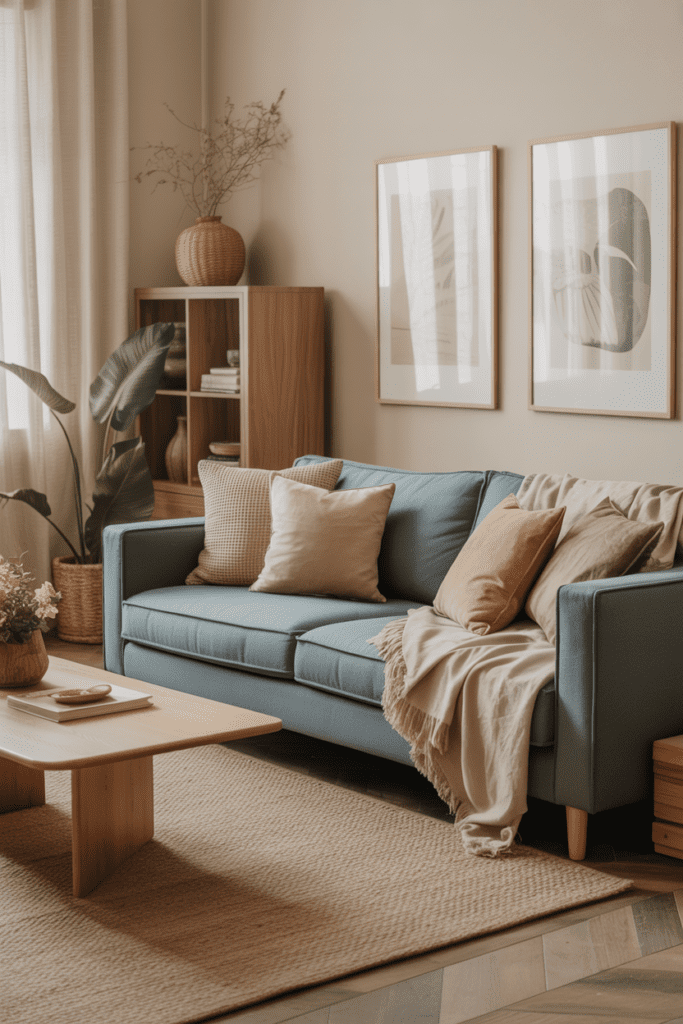
If you want your blue sofa to feel warm and grounded, pair it with earthy neutrals. Think beige, taupe, sand, camel, and soft brown. These tones create balance and keep the room from leaning too cold. Blue can sometimes feel crisp on its own, so warm neutrals help soften the mood.
This look is especially nice if you want a cozy but stylish room. Add a textured throw, a natural-fiber rug, and some wooden or rattan accents. The result feels easy to live with and very relaxed. It’s one of those palettes that looks effortless, even though it clearly wasn’t accidental. That’s the magic trick, really.
15. Choose a Blue Sofa with Bold Artwork
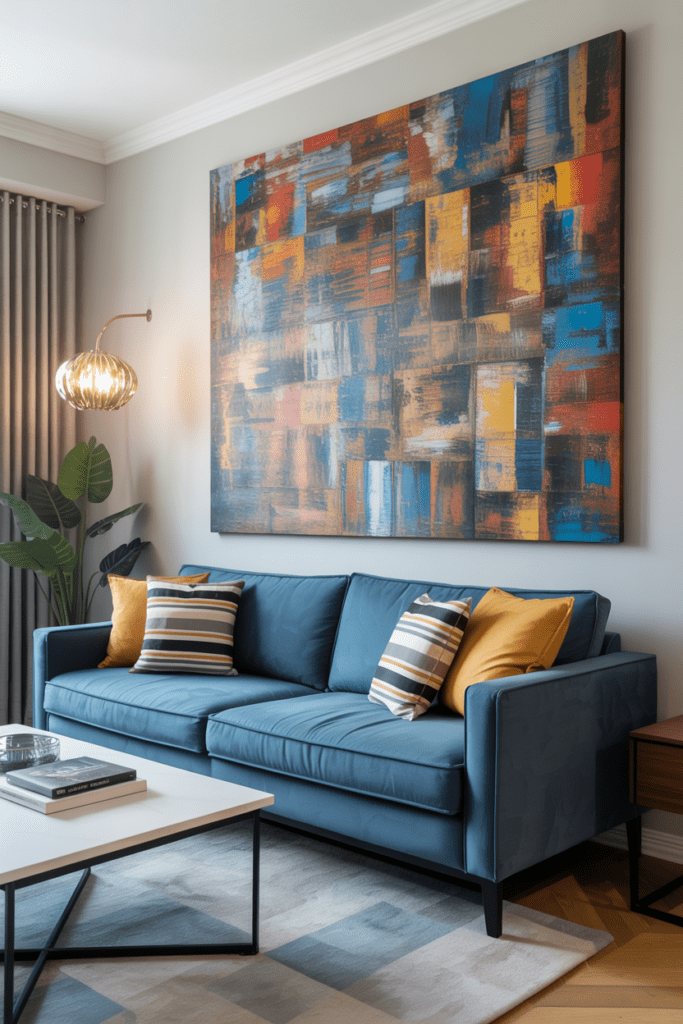
A blue sofa gives you the perfect base for bold wall art. Because the sofa already holds attention, you can play with color, scale, and style without making the room feel chaotic. Why settle for blank walls when they can actually help define the room?
Large abstract art, graphic prints, or colorful framed pieces all work well here. If your sofa is dark blue, brighter artwork can create a strong focal point. If your sofa is lighter blue, you can choose art with deeper tones for balance. The key is to let the colors talk to each other instead of screaming over one another.
16. Mix Textures for Depth
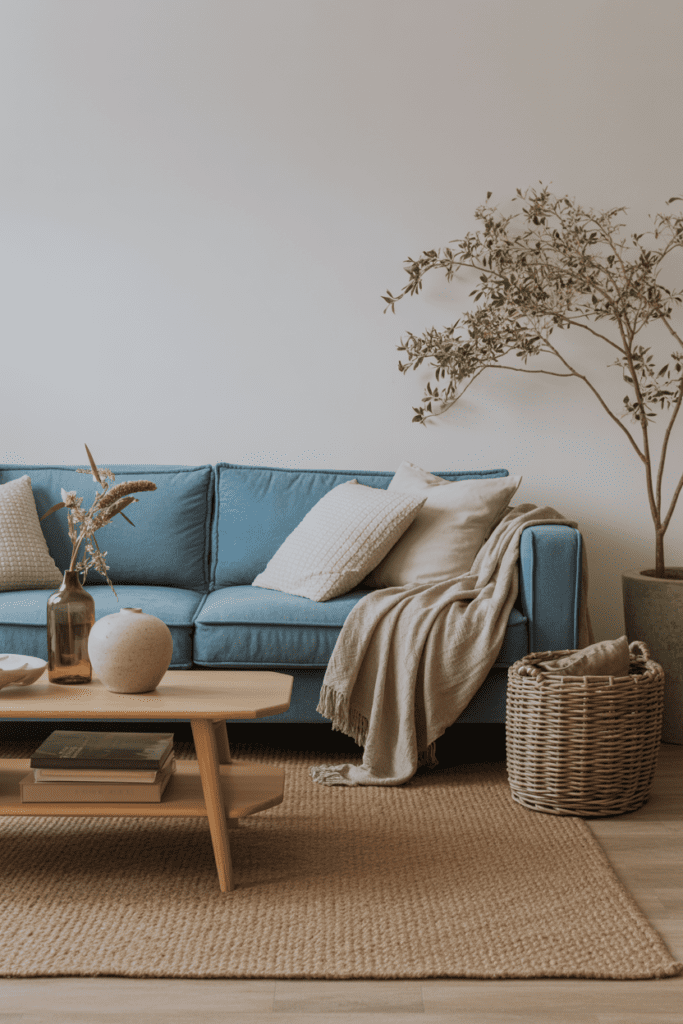
Texture matters a lot when you style a blue sofa. If everything in the room feels smooth and flat, the space can look a little one-note. But when you combine different materials, the room feels more layered and interesting. That’s what makes a room feel finished instead of simply furnished.
Try mixing:
- A soft wool rug.
- Linen or cotton cushions.
- A wooden coffee table.
- A woven basket.
- A ceramic lamp or vase.
You don’t need to use all of them at once. Just aim for a mix of soft, rough, smooth, and natural finishes. That little bit of contrast makes a huge difference. It’s the interior-design version of seasoning your food properly.
17. Make the Blue Sofa the Hero
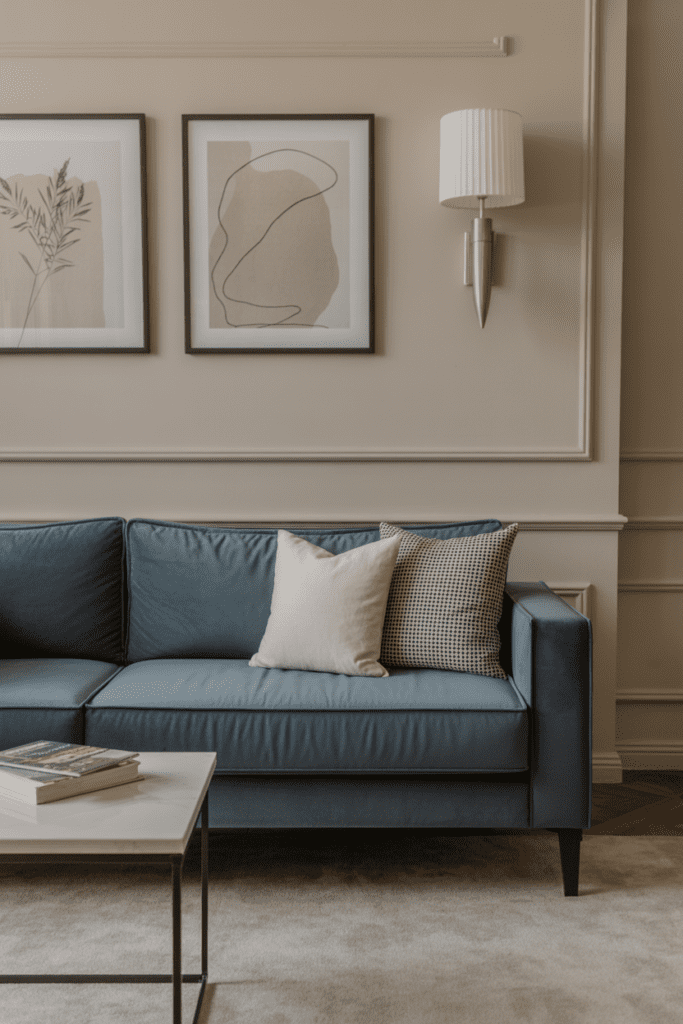
Sometimes the best idea is to let the blue sofa be the main event. Don’t fight it with too many strong colors or oversized decor pieces. Instead, build the room around it and let it carry the visual interest. That approach often gives you the most balanced result.
Use quiet supporting pieces like neutral walls, simple artwork, and understated furniture. Then let the sofa’s color and shape do the talking. This works especially well if you’ve chosen a bold shade like cobalt, royal blue, or deep teal. When a sofa already has presence, the rest of the room should know its role. No need for everyone to shout at once.
How to Style a Blue Sofa Room Well
If you’re trying to get the room right, focus on balance. A blue sofa already adds strong visual weight, so the rest of the space should support it instead of competing with it. That doesn’t mean everything has to be neutral, but it does mean you should think carefully about color, texture, and scale.
A good blue sofa living room usually includes:
- One or two supporting colors.
- A mix of soft and structured textures.
- A rug that ties the room together.
- Lighting that makes the blue look rich rather than dull.
You also want to pay attention to the size of the sofa and the room. A large, dark blue sofa can feel heavy in a tiny space if you surround it with equally dark pieces. On the other hand, a light blue sofa can disappear if the room lacks contrast. The trick is to create enough balance that the sofa feels deliberate, not accidental.
Final Thoughts
A blue sofa living room gives you a lot of room to play with style, mood, and personality. You can go elegant with navy, soft with light blue, dramatic with velvet, or relaxed with coastal accents. The best part is that blue works with so many materials and colors, which makes it easy to build a room that feels like you.
If you remember nothing else, remember this: let the sofa guide the room. Choose your walls, rug, accents, and textures around that main piece, and you’ll get a space that feels thoughtful instead of random.