
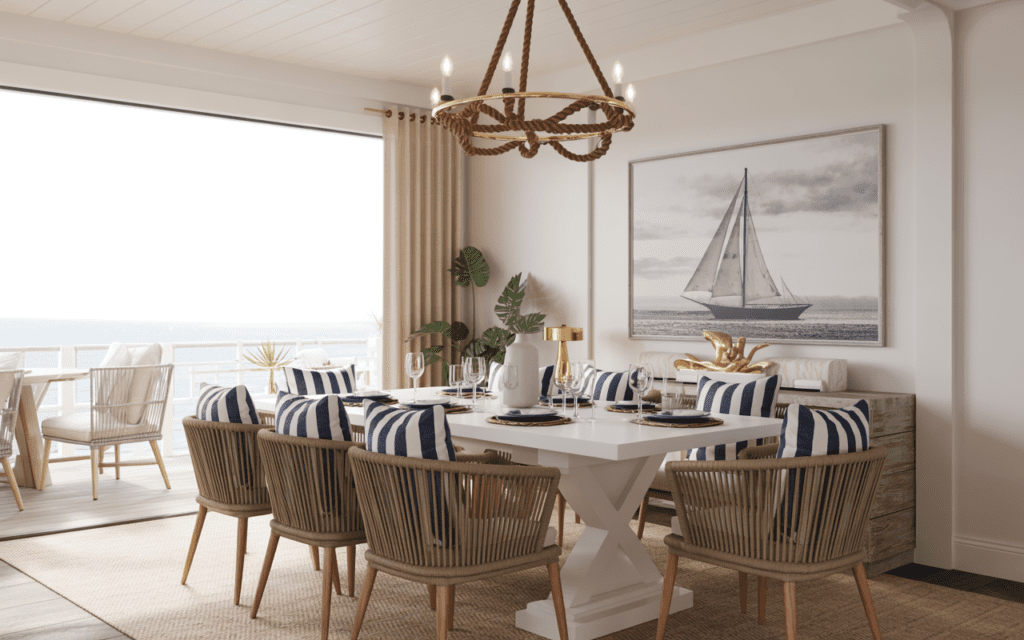
Ever walk into a room and instantly feel like you should be barefoot with a glass of iced something in your hand? That’s the magic of a coastal dining room. It feels relaxed, bright, and a little bit breezy, without turning your home into a literal beach souvenir shop.
I’ve always loved coastal spaces because they make everyday meals feel calmer. And honestly, who doesn’t want dinner to feel like a mini vacation sometimes?
What Makes A Coastal Dining Room Work?
A great coastal dining room does not scream “I bought five anchor pillows and called it a day.” The best ones feel fresh, comfortable, and naturally light. They borrow from the beach in a subtle way, using soft colors, natural textures, and open, airy layouts.
The Core Coastal Look
If you want the style to feel right, focus on these basics:
- Light colors, like white, sand, pale blue, and soft gray.
- Natural materials, such as wood, rattan, linen, and jute.
- Simple shapes, because heavy furniture kills the relaxed vibe fast.
- Plenty of light, natural or artificial.
- A calm, uncluttered feel, because coastal style loves breathing room.
IMO, the biggest mistake people make is overloading the space with themed decor. You do not need a fish statue watching over your dinner. Unless that’s your thing, of course 🙂
1. Go All In On Soft Whites
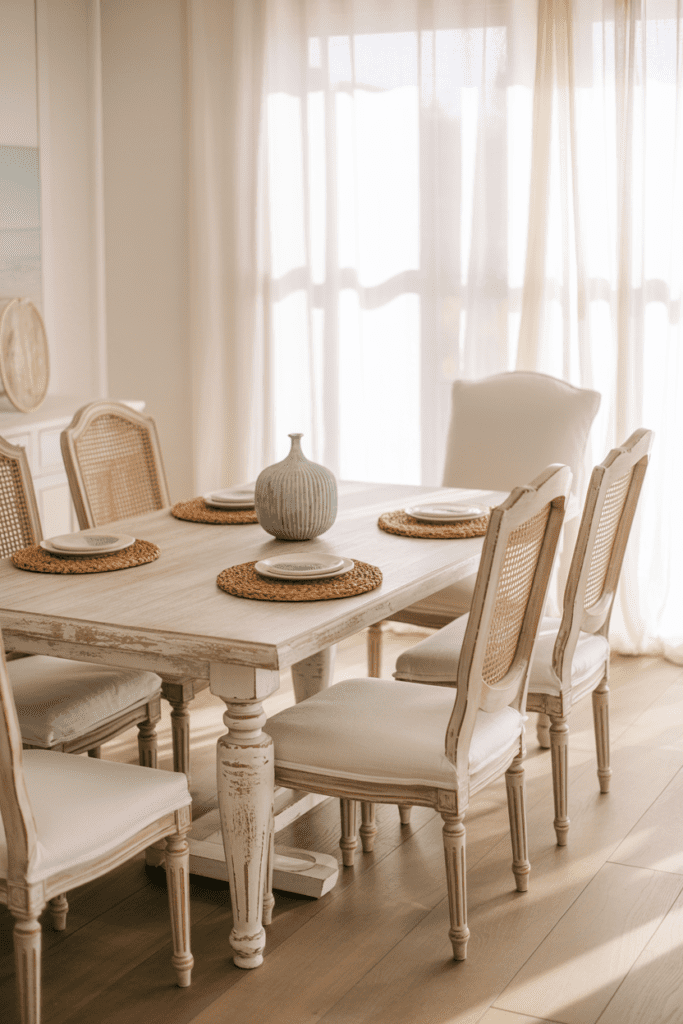
A white coastal dining room never really goes out of style. White makes the room feel bigger, cleaner, and brighter, which fits the beachy mood perfectly. It also gives you a flexible base, so you can add texture without making the room feel busy.
Why It Works
White reflects light beautifully. That matters a lot if your dining room does not get much sun. It also lets your furniture and decor stand out without fighting for attention.
How To Style It
Try these ideas:
- Paint the walls in a warm white, not a cold hospital white.
- Choose a whitewashed dining table or painted chairs.
- Add woven placemats, linen napkins, or a jute rug for texture.
- Bring in one or two soft blue accents so the room does not feel flat.
Ever noticed how white rooms can feel both simple and fancy at the same time? That’s the trick.
2. Mix In Weathered Wood
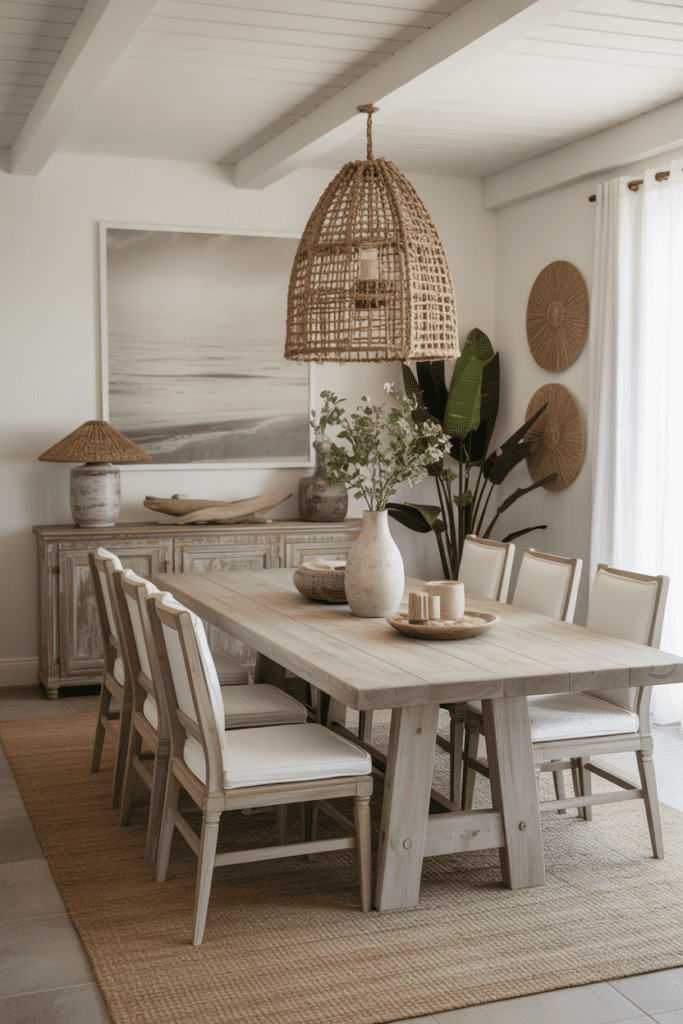
Nothing says coastal like weathered wood dining room furniture. It brings in that lived-in, sun-kissed look without trying too hard. You want the room to feel natural, like it belongs near the sea, even if the closest thing you have to an ocean is a playlist.
Best Wood Finishes
Look for finishes like:
- White oak.
- Driftwood gray.
- Sanded pine.
- Bleached walnut.
- Reclaimed wood with visible grain.
Weathered wood works especially well for tables, buffets, and ceiling beams. It adds warmth, which keeps the room from feeling too sterile.
Pair It With
- Upholstered chairs in light fabric.
- A ceramic vase with greenery.
- Glass pendant lights.
- Soft-toned artwork.
The contrast between rough wood and soft fabrics gives the room that easy, coastal balance.
3. Add A Statement Chandelier
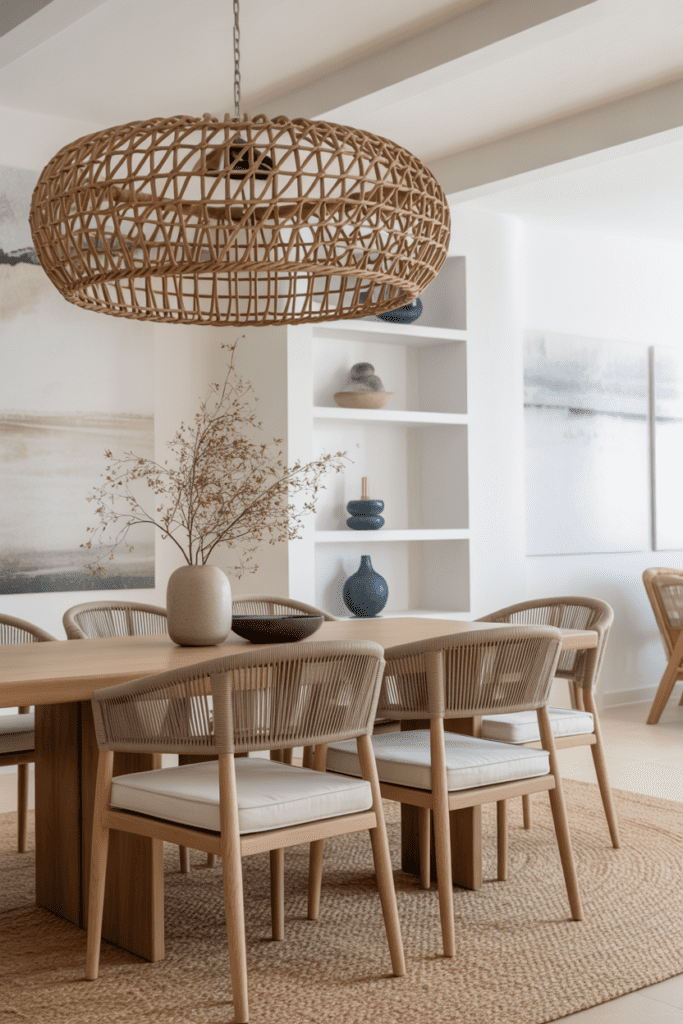
A coastal dining room chandelier can totally change the mood of the space. You do not need anything flashy or over-designed. You want something that feels elegant but relaxed, like it could live in a breezy beach house without making a scene.
Best Coastal Styles
Some great options include:
- Rattan or woven pendants, for texture.
- Drum chandeliers with linen shades.
- Glass chandeliers, for an airy look.
- Capiz shell fixtures, if you want a little shine.
- Wood bead chandeliers, for a more casual touch.
A good light fixture acts like jewelry for the room. Too much sparkle feels try-hard, and too little makes the space feel unfinished.
Placement Tips
Hang the chandelier about 30 to 36 inches above the table. That keeps it functional and visually balanced. No one wants a light fixture blocking their view of the salad, right?
4. Bring In Blue Accents
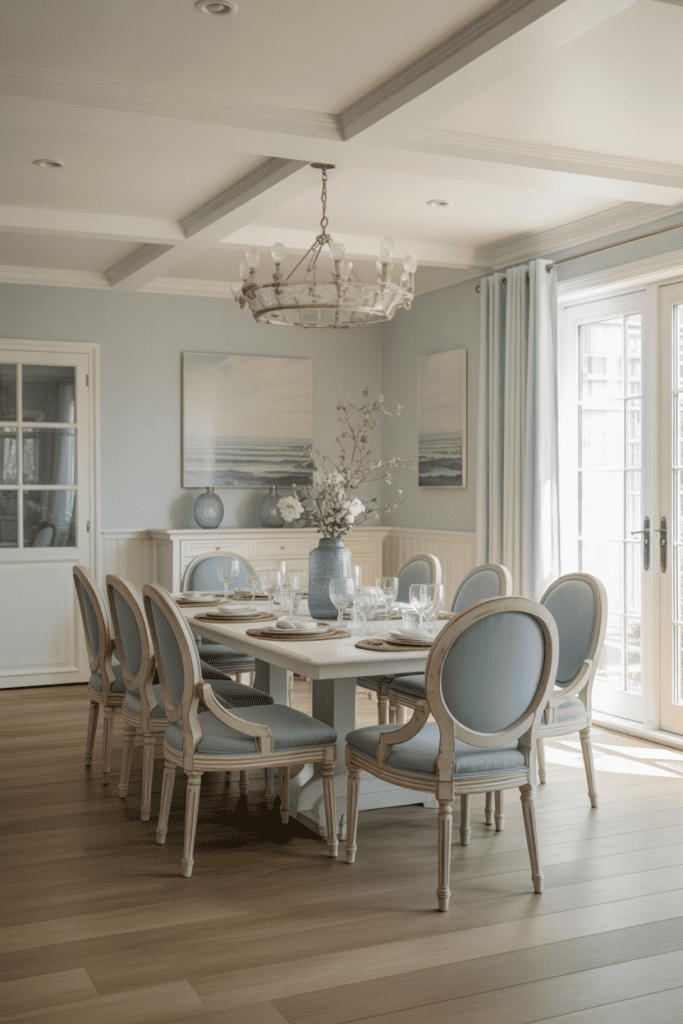
Blue and coastal style go together like summer and sunscreen. But the key is to use blue in a way that feels calm, not cartoonish. Think muted navy, misty blue, sea glass, or dusty aqua.
Easy Ways To Use Blue
- Blue upholstered dining chairs.
- A patterned rug with navy details.
- Tableware in soft blue tones.
- Abstract art with ocean-inspired colors.
- Throw pillows on nearby benches or banquettes.
Blue works best when you treat it like an accent, not the whole personality of the room. You want a coastal dining room, not a marina gift shop.
Best Color Pairings
- Blue and white.
- Blue and beige.
- Blue and natural wood.
- Blue and brass.
Those combos keep the room feeling polished but still relaxed.
5. Use A Natural Fiber Rug
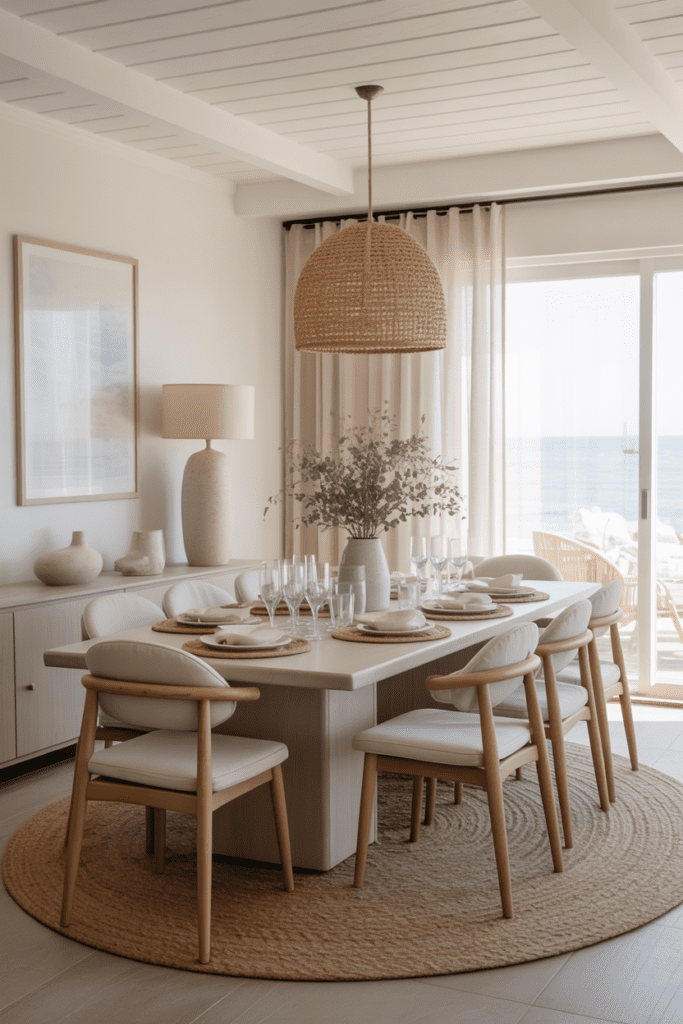
A natural fiber rug gives your coastal dining room instant texture. Jute, sisal, and seagrass all work well because they feel organic and laid-back. They also help ground the furniture, which keeps the layout from looking a little floaty.
Why I Like This Look
Natural rugs add warmth without stealing the spotlight. They support the room instead of shouting for attention, which is exactly what coastal design needs. Seriously, who invited the rug to be the main character?
What To Know Before Buying
- Jute feels soft and casual.
- Sisal offers a firmer texture and more durability.
- Seagrass handles spills better than some other natural fibers.
- Darker blends hide stains more easily.
If your dining room sees a lot of action, pick a rug with a tighter weave. Your future self will thank you.
6. Choose Slipcovered Chairs
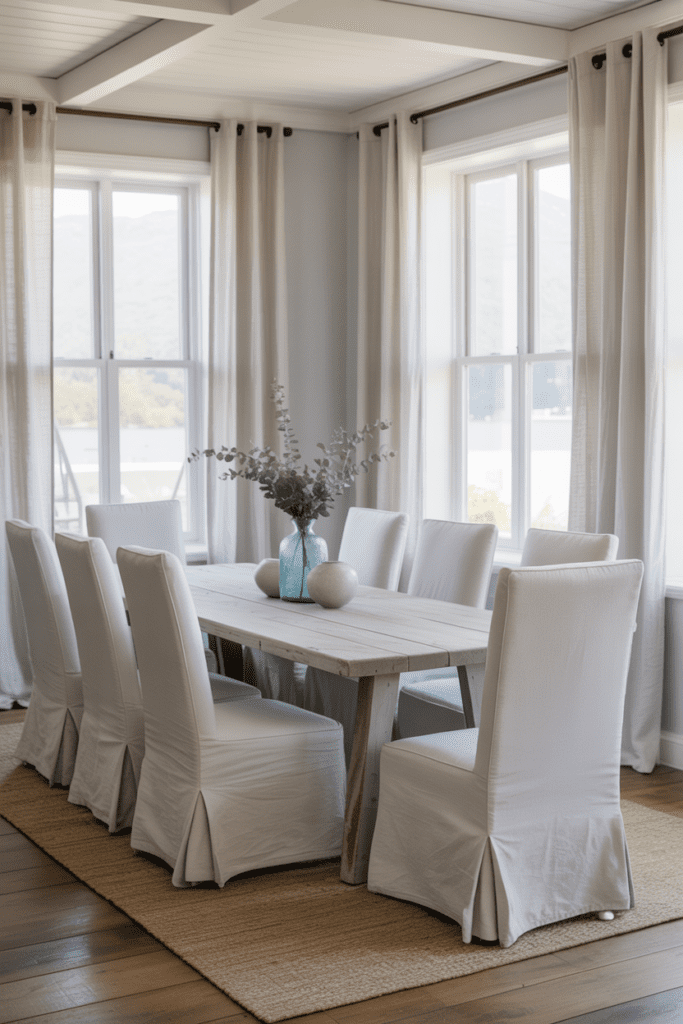
Slipcovered dining chairs give off that easy, beach-house comfort everyone secretly wants. They look relaxed, and they make the room feel less formal. Plus, they often wash better than you’d expect, which matters if your household treats dinner like a contact sport.
Why Slipcovers Fit Coastal Style
Slipcovers soften the furniture visually. They also create that casual, unfussy look that coastal interiors do so well. You get comfort without sacrificing style.
Best Colors For Slipcovers
- White.
- Ivory.
- Sand.
- Pale gray.
- Washed blue.
If you want a more tailored look, choose a tighter slipcover with clean seams. If you want a casual family-friendly feel, go a little looser and softer.
7. Layer Textures Like A Pro
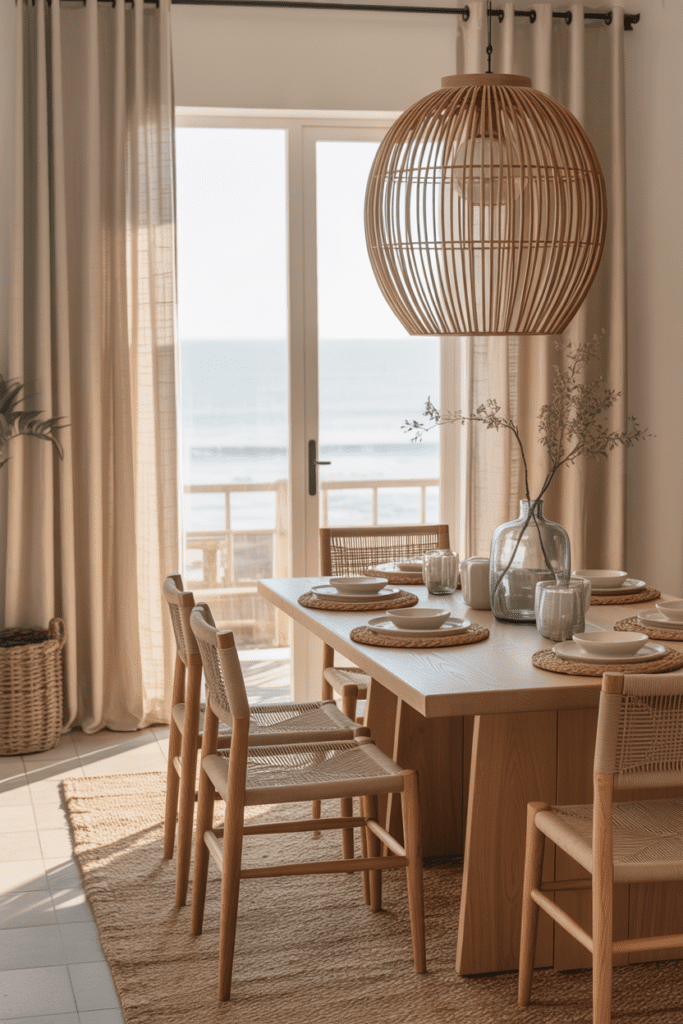
A coastal dining room needs texture the way a good smoothie needs fruit. Without it, the room can feel flat and a bit too plain. Texture keeps everything interesting while still staying calm.
Easy Texture Ideas
Try combining:
- Linen curtains.
- Woven chairs.
- A wooden table.
- Ceramic decor.
- A glass vase.
- A jute rug.
The key is contrast. Pair smooth with rough, soft with structured, and matte with a little shine.
My Favorite Rule
If everything looks too polished, add something handmade or natural. That one move usually fixes the whole room. FYI, this works better than buying more decor you do not actually need.
8. Hang Coastal Artwork
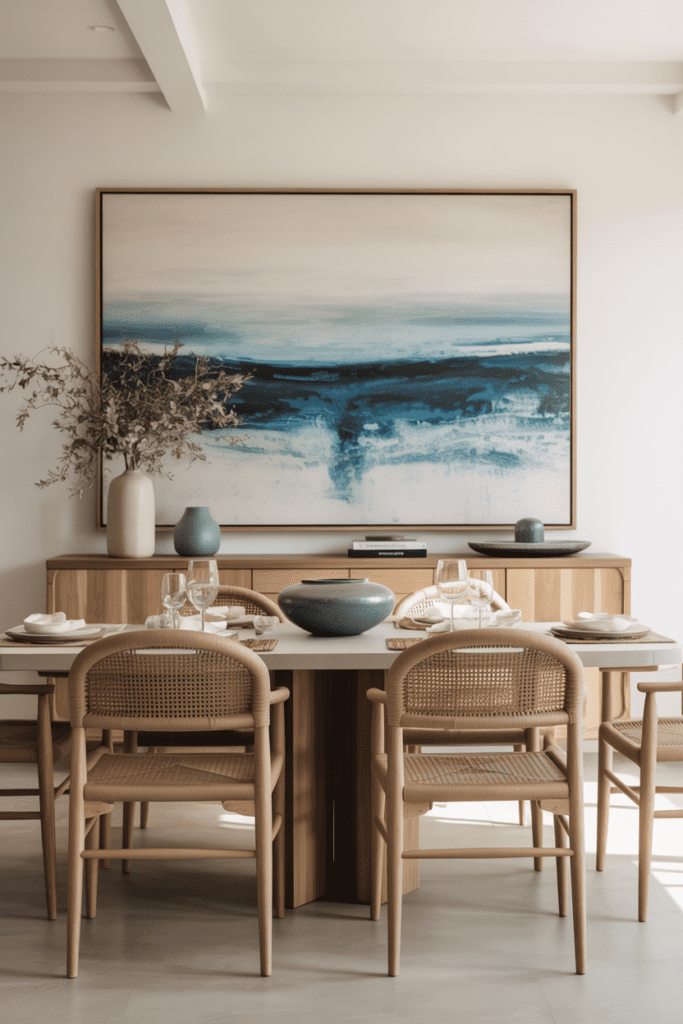
Coastal dining room wall decor can make the whole space feel complete. You do not need literal seashell prints everywhere. Instead, choose art that captures the mood of the coast through color, movement, or subject matter.
Great Art Ideas
- Abstract ocean-inspired paintings.
- Black-and-white beach photography.
- Framed sketches of shells or boats.
- Soft landscape prints.
- Oversized canvases in muted blues and greens.
How To Arrange It
One large piece above a buffet can make a big impact. A gallery wall can work too, but keep it simple and cohesive. Stick to similar frames or a similar color palette so the wall feels intentional.
Do you want the room to feel serene? Then avoid super busy art. Let the walls breathe a little.
9. Try A Coastal Banquette
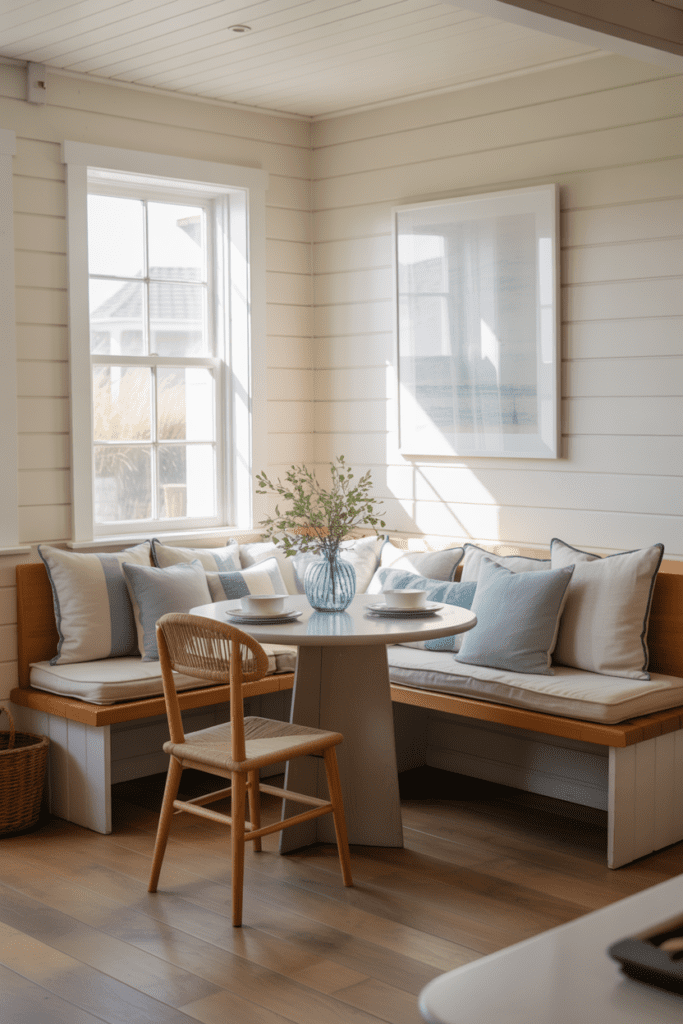
A banquette dining nook adds charm and comfort in one shot. It works especially well in smaller dining rooms or open-plan spaces where you want a casual, built-in feel. I’ve always liked banquettes because they make a room feel more inviting, like people should stay for dessert.
Why Banquettes Work So Well
- They save space.
- They create a cozy corner.
- They add a custom look.
- They give you bonus seating.
Style It Right
Use cushions in light linen or performance fabric. Add one or two throw pillows in muted blue or beige. Keep the base simple so the seating feels fresh and not bulky.
Banquettes also help create that “let’s linger over lunch” vibe, which coastal style loves.
10. Use Glass And Acrylic Sparingly
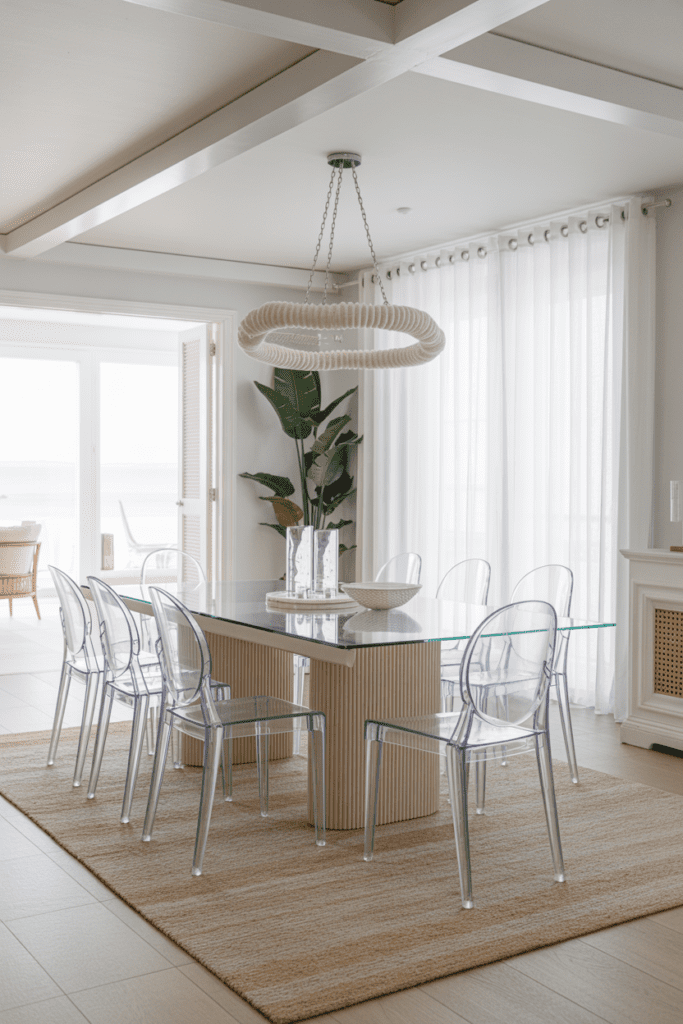
Glass and acrylic furniture can make a coastal dining room feel airy and open. They visually disappear a bit, which helps small rooms feel less crowded. But the trick is not to overdo it, because too much clear furniture can make the room feel cold.
Where It Works Best
- Glass-top dining tables.
- Acrylic side chairs.
- Clear decorative vases.
- Glass pendant lights.
Best Pairings
Combine clear pieces with warm wood, textured fabrics, or woven accents. That contrast keeps the room from feeling too stark. A little sparkle goes a long way.
11. Add A Touch Of Nautical Style, Carefully
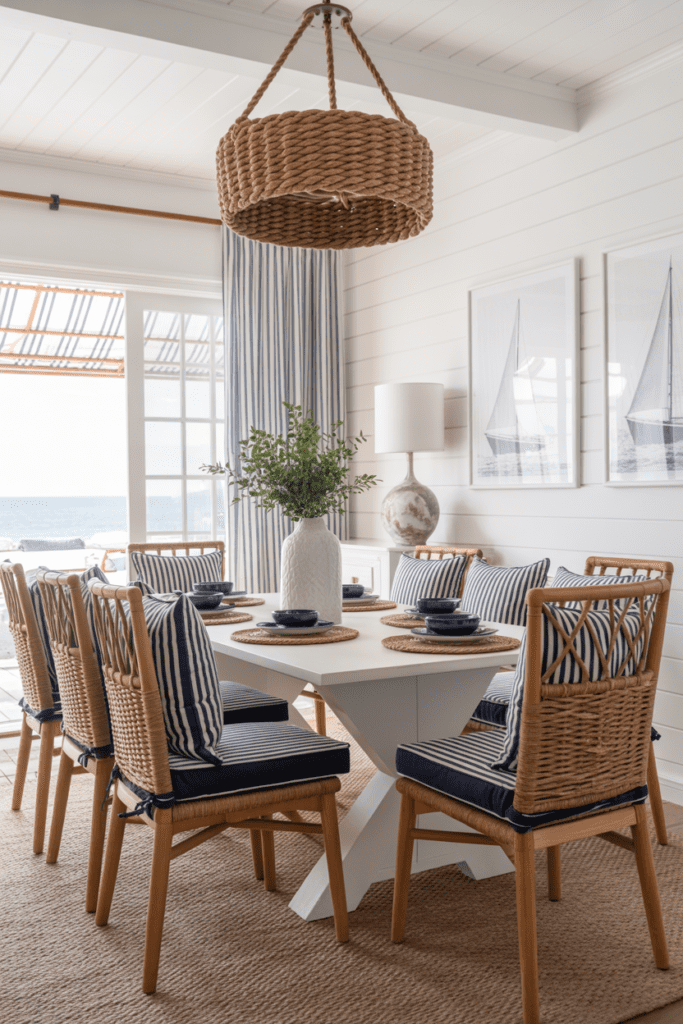
A nautical coastal dining room can look amazing if you keep it subtle. The problem starts when every object in the room looks like it sailed in from a themed restaurant. You want hints of the sea, not a full costume change.
Subtle Nautical Details
- Rope details on lighting or decor.
- Striped cushions or curtains.
- Brass hardware.
- Navy accents.
- Simple sailboat artwork.
What To Avoid
- Too many anchors.
- Overly literal shell decor.
- Bright red, white, and blue overload.
- Anything that looks like a souvenir shelf exploded.
A few nautical touches can add personality. Too many, and the room starts telling jokes you didn’t ask for.
12. Let In Natural Light
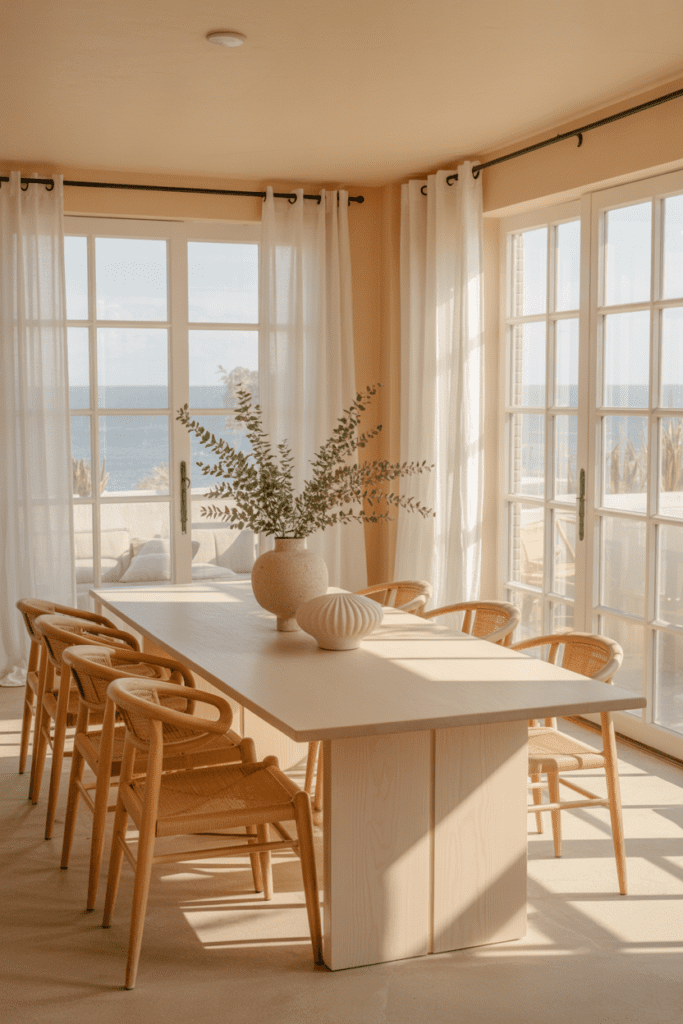
Natural light makes coastal design shine. It brings out soft colors, highlights texture, and keeps the room feeling open. If your dining room gets good sunlight, use it as one of your biggest design assets.
Ways To Maximize Light
- Use sheer or light-filtering curtains.
- Keep window treatments simple.
- Choose reflective surfaces like glass or polished metal.
- Avoid heavy, dark furniture near windows.
If You Lack Windows
No problem. Use warm lighting, mirrors, and pale wall colors to fake the effect. You can still build a bright, breezy room even if your space does not face the sea. Or even a parking lot, which feels a little less romantic, IMO.
13. Pick A Soft, Coastal Palette
Color does a lot of the heavy lifting in a coastal dining room. The right palette can instantly make the space feel calm and pulled together. You want shades that remind people of sand, sky, water, and stone.
Great Coastal Colors
- White.
- Cream.
- Pale blue.
- Mist gray.
- Seafoam green.
- Beige.
- Soft taupe.
How To Use Them
Start with a neutral base, then layer in one or two accent colors. Keep the palette consistent across furniture, fabrics, and decor. That way, the room feels soothing instead of chaotic.
Color should whisper, not yell. Beach houses know this better than anyone.
14. Add A Coastal Sideboard
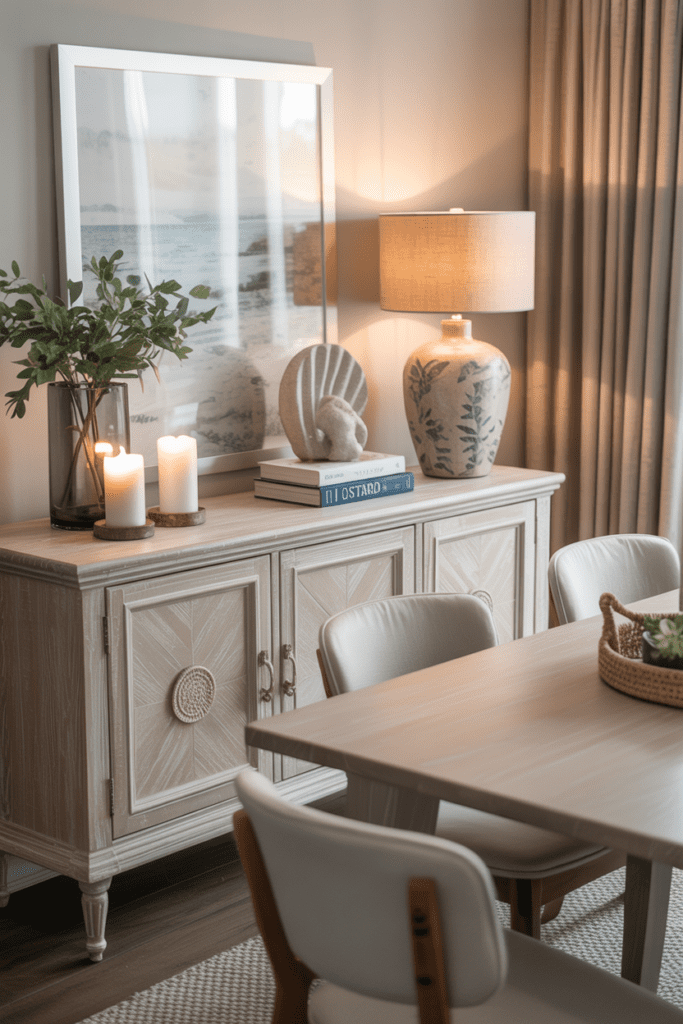
A coastal sideboard gives you storage and style in one piece. It also creates a perfect spot for decor, serving dishes, or a little styling moment. And let’s be honest, every dining room needs at least one surface where you can pretend you have your life together.
What To Put On It
- A ceramic lamp.
- A vase with greenery.
- Stack of coastal books.
- Candles in glass holders.
- A tray for entertaining essentials.
Best Materials
- Whitewashed wood.
- Cane-front cabinets.
- Light oak.
- Painted finish in soft gray or cream.
Choose a sideboard that matches the room’s relaxed tone. You want useful furniture that still looks good standing there and minding its business.
15. Keep The Decor Simple
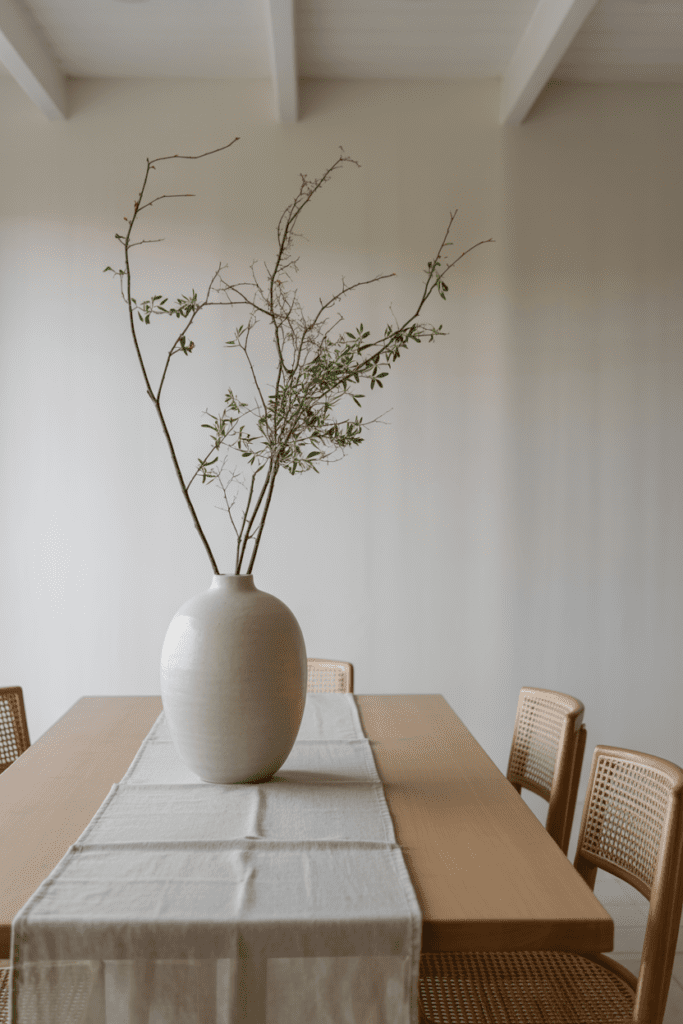
The best coastal dining rooms usually feel effortless. They do not cram every corner with decor. They choose a few meaningful pieces and let the design breathe.
Simple Decor Ideas
- One large vase with branches.
- A bowl of shells or beach stones.
- Linen table runner.
- A couple of candles.
- One statement art piece.
Why Less Works Better
Simple decor keeps the room peaceful. It also helps the furniture and textures stand out more. If everything demands attention, nothing wins.
A good coastal dining room should feel like a calm exhale after a long day. That feeling matters more than piling on extra stuff just because the shelf looked empty.
Styling Tips To Make It All Work
You do not need to copy one exact look to create a beautiful coastal dining room. The best spaces feel personal. They borrow the coastal mood and then make it fit the home.
A Few Easy Rules
- Start with a light base.
- Add texture before color.
- Use natural materials wherever you can.
- Keep patterns subtle.
- Leave space for the room to feel airy.
If You Want A Quick Upgrade
Focus on these three things first:
- A new light fixture.
- A natural fiber rug.
- Soft, coastal-colored chairs or cushions.
Those changes can shift the whole vibe fast, without requiring a giant renovation. Who has time for that anyway?
Final Thoughts
A great coastal dining room blends comfort, texture, and light in a way that feels easy and inviting. Whether you go for white walls, weathered wood, soft blue accents, or woven details, the goal stays the same: create a space that feels calm and welcoming. You do not need to live by the ocean to enjoy the look. You just need the right mix of materials, color, and restraint.
So if your dining room needs a refresh, start small and build from there. Pick one idea, try it, and see how the room changes.