
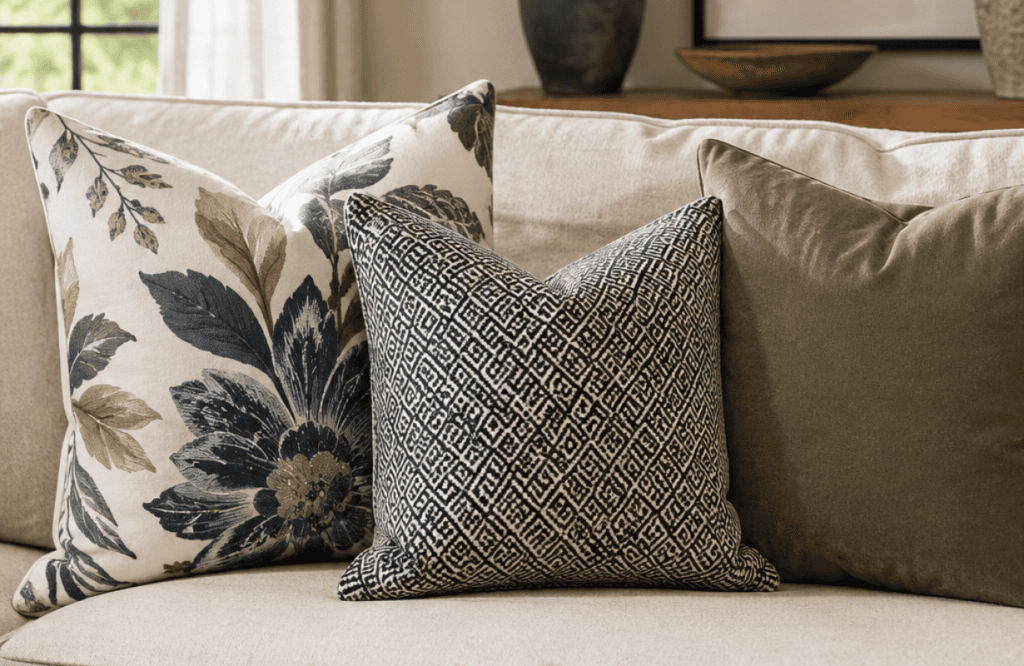
I used to think a great sofa did all the work by itself. Buy the right color, the right shape, plunk it down in the living room, and boom instant magazine cover, right? Wrong. So wrong. I learned this lesson after dropping serious cash on a gorgeous linen sofa that still somehow looked like it belonged in a waiting room.
Turns out, the sofa itself is only half the story. The other half? How you style it. And no, I don’t mean tossing a random pillow on there and calling it a day—I mean the kind of intentional, layered styling that designers do without even seeming to try.
Here’s the thing nobody tells you: you don’t need a new sofa to get a new-sofa look. You need better pillows, smarter texture choices, and a few tricks that make everything feel pulled-together instead of thrown-together. I’ve tested more combinations than I’d like to admit (RIP to the four matching pillows I once thought were a genius idea), and I’m sharing everything that actually worked.
1. Master the Pillow Rule of Odd Numbers

Ever notice how designer spaces never have perfectly matched, symmetrical pillow pairs? That’s not an accident. Odd numbers—three or five—create visual interest instead of that stiff, showroom feel.
I learned this the hard way after buying four identical pillows and wondering why my sofa still looked flat. Mix textures and sizes, but keep your color story tight. Two large pillows, one medium, and a small lumbar pillow is basically foolproof.
2. Layer Textures Like You Mean It
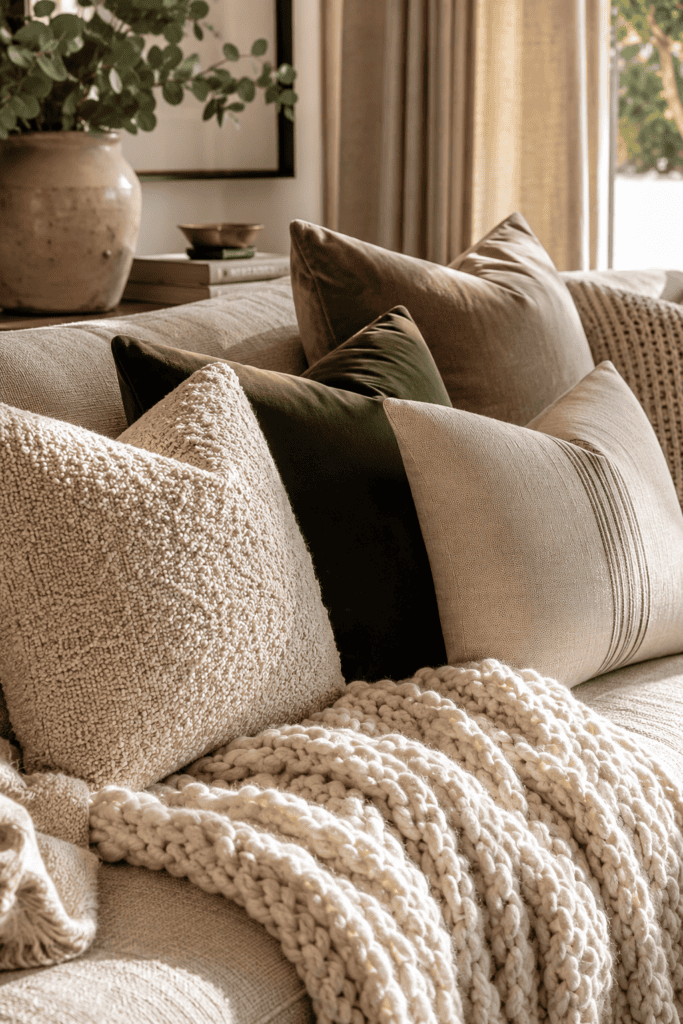
A sofa dressed in only one fabric type looks like it’s trying too hard to match itself. IMO, texture is the real MVP of sofa styling—more than color, more than pattern.
Think about combining:
- Bouclé or nubby wool for warmth and depth
- Velvet for a touch of drama
- Linen or cotton for everyday ease
- Leather accents for contrast
Grab pillows and a throw in different materials, and suddenly your sofa has dimension instead of looking like one flat block of color.
3. Anchor It With a Statement Throw
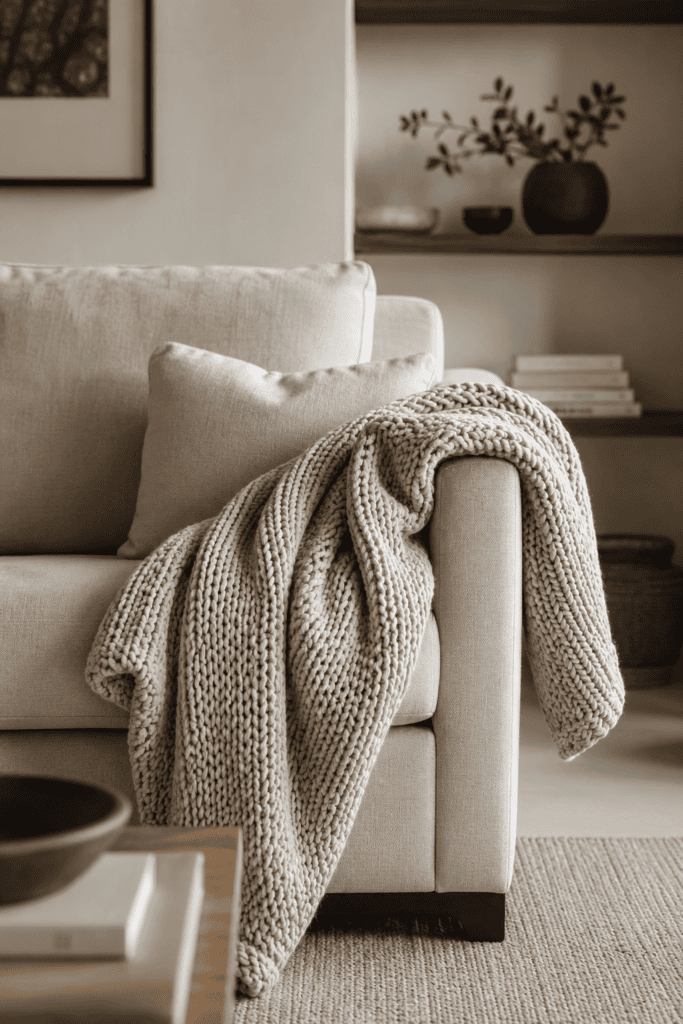
A throw blanket isn’t just for chilly movie nights—it’s a styling tool. Drape it asymmetrically over one arm or fold it into thirds along the back for that effortless-yet-intentional look.
I used to just chuck mine over the whole back cushion like a security blanket. Big mistake. A casually draped throw signals “I curated this” way more than one that’s spread flat and tidy.
4. Play With Scale, Not Just Color
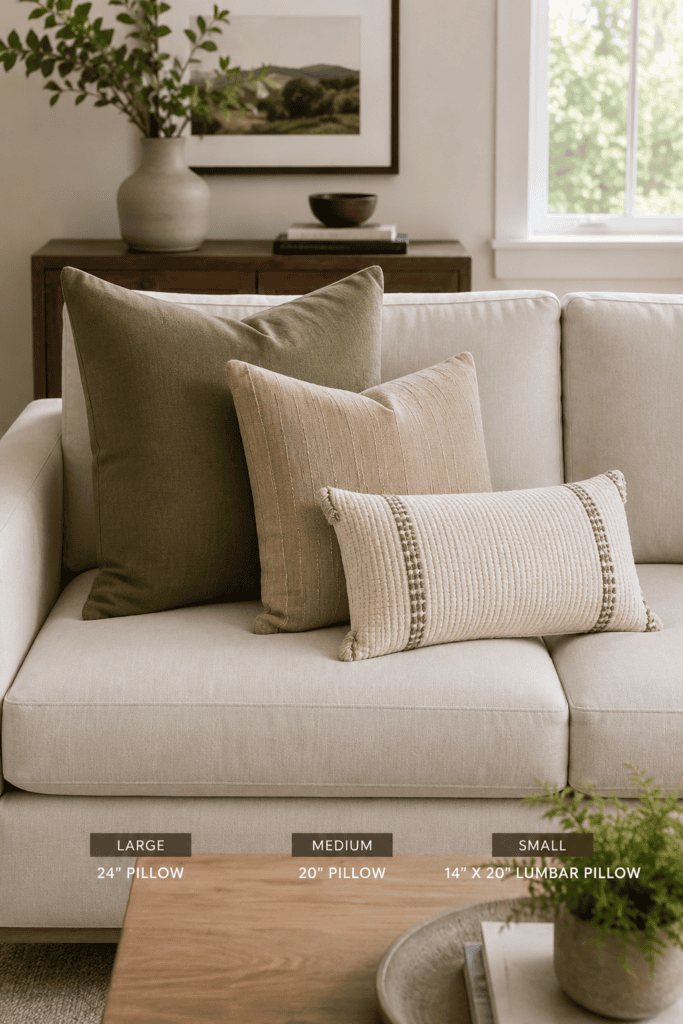
Designers obsess over scale, and honestly, so should you. A tiny 12-inch pillow next to a giant 24-inch one creates a rhythm your eye actually wants to follow.
Ask yourself: does everything on this sofa look the exact same size? If yes, you’ve got a scale problem, not a color problem. Varying dimensions is what separates a curated sofa from a cluttered one.
5. Commit to a Color Story (Not Just “Colors You Like”)
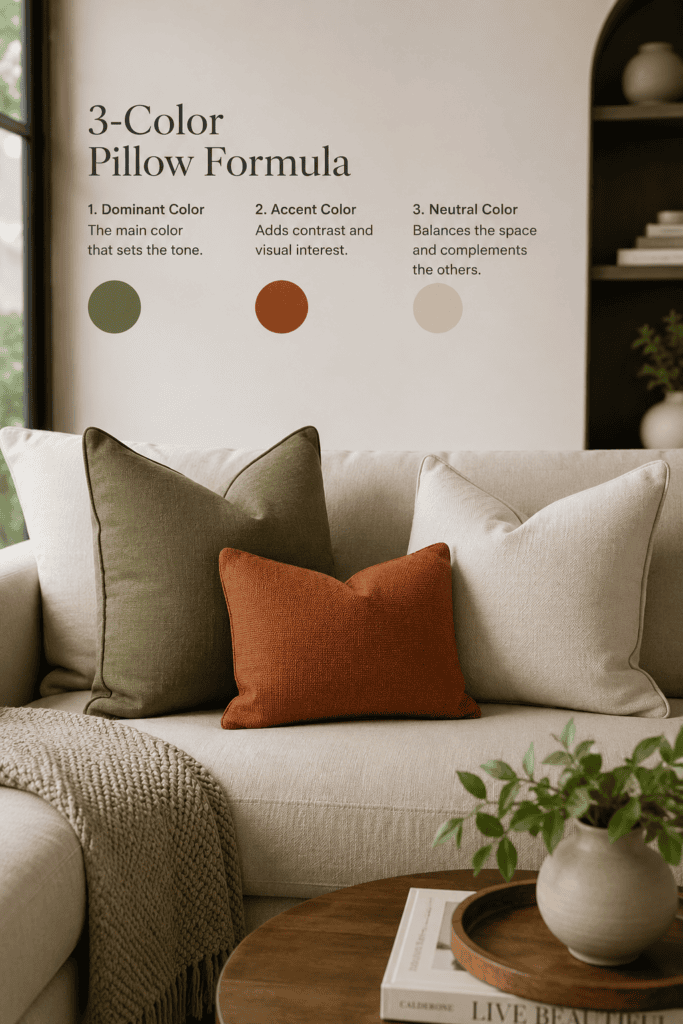
Random colors thrown together isn’t styling—it’s chaos with good intentions. Pick a palette of two to three main colors, then let everything else riff off that.
Here’s my go-to formula:
- One dominant color (usually your sofa’s base or a large pillow)
- One accent color (bold pillow or throw)
- One neutral (to keep things grounded)
This keeps your sofa looking pulled-together instead of like a lost-and-found bin for throw pillows.
6. Don’t Skip the Coffee Table Connection
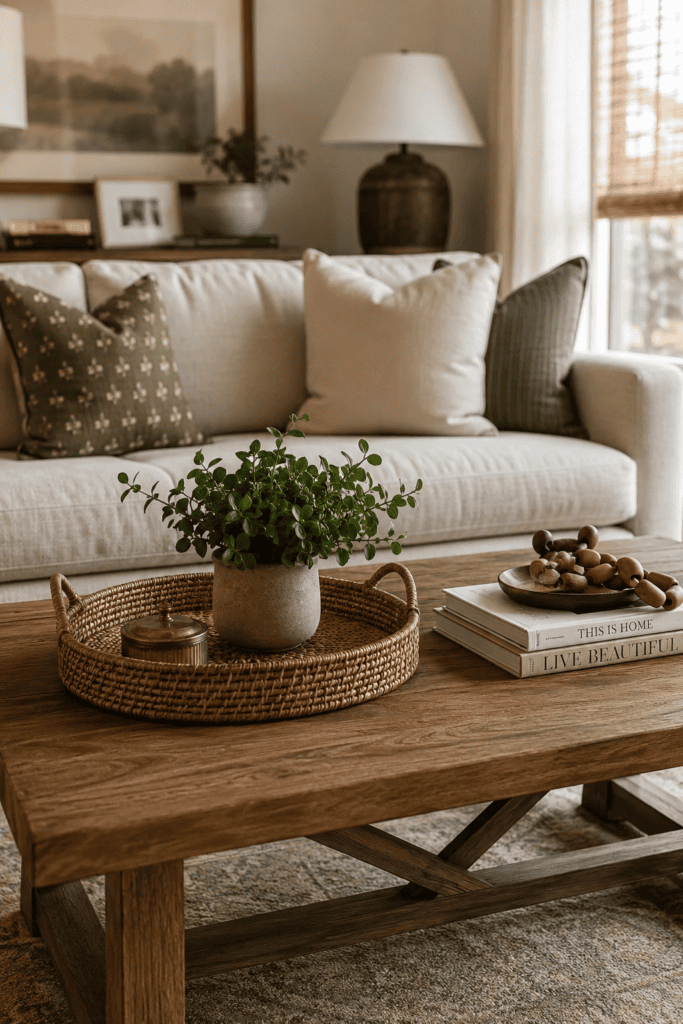
Your sofa doesn’t exist in a vacuum—it’s in conversation with everything around it. IMO, the biggest mistake people make is styling the couch and totally ignoring the coffee table in front of it.
A great coffee table styled with a tray, a stack of books, and a small plant pulls the whole seating area together. Skip this step, and your gorgeous sofa just looks like it’s floating alone.
7. Add an Accent Chair for Visual Balance
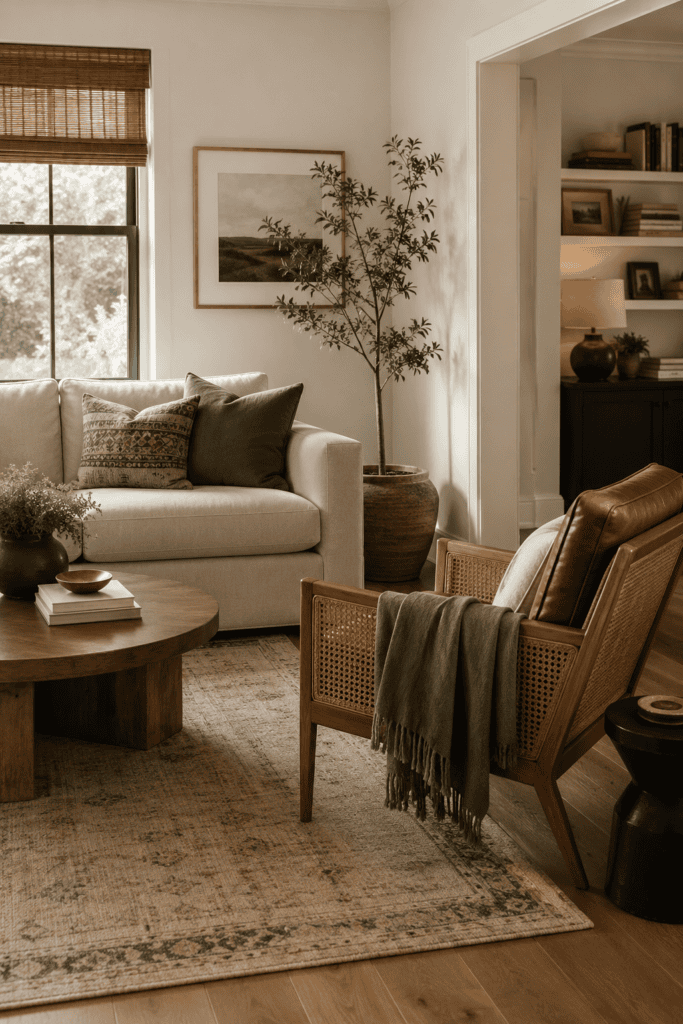
A single sofa against a wall can look a little lonely, if we’re being honest. Adding an accent chair at an angle creates a natural conversation nook and gives the whole room better flow.
Pick a chair that doesn’t match your sofa exactly—contrast is your friend here. A boucle sofa paired with a leather or rattan accent chair? Chef’s kiss.
8. Use a Rug to Ground the Whole Setup
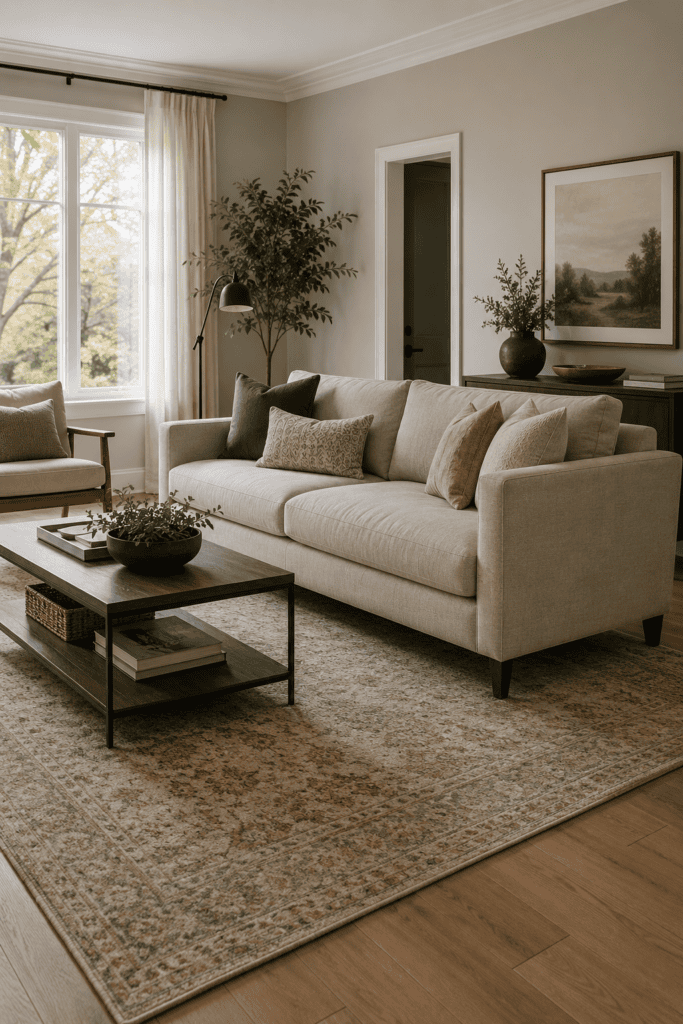
Ever walked into a room where the sofa just seems to be “floating” in space? That’s usually a rug problem, not a sofa problem. A properly sized rug anchors your seating area and makes everything feel intentional.
The front legs of your sofa should sit on the rug, not hover awkwardly off the edge. This one tip alone fixes about 80% of amateur living room layouts.
9. Style With Books (But Actually Read Them)
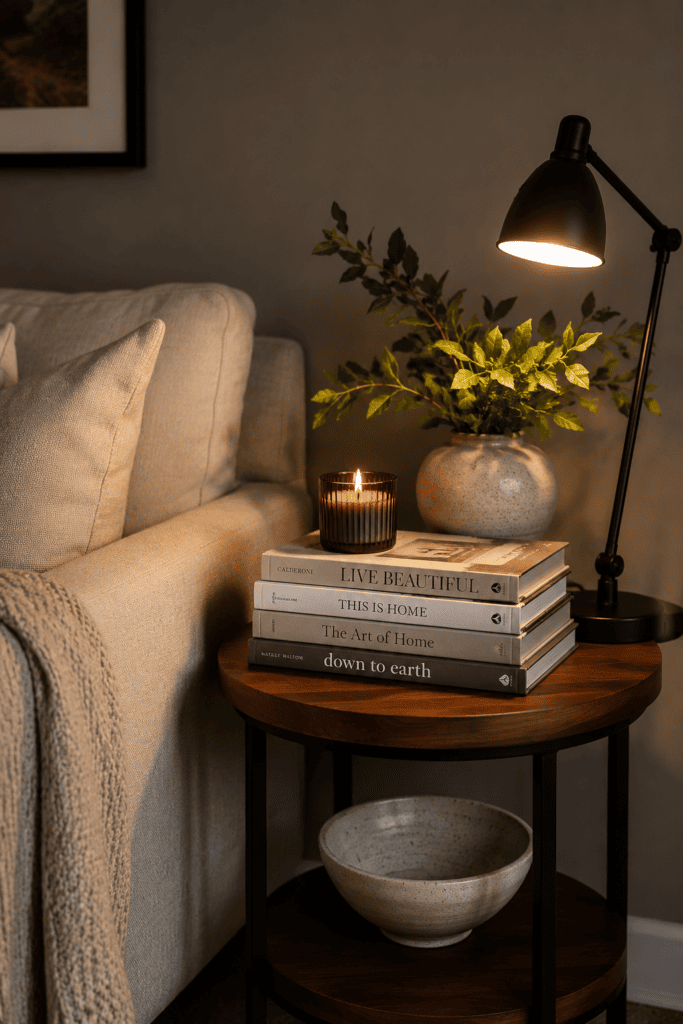
Books aren’t just decor—well, okay, sometimes they are, but let’s pretend otherwise. Stacking a few hardcovers on your side table or ottoman next to the sofa adds height variation and a lived-in intellectual vibe.
I keep a rotating stack of design books and a couple of novels I’m actually reading. It’s a small detail, but it makes the whole setup feel personal instead of staged. FYI, nobody’s judging your book choices—unless it’s still shrink-wrapped.
10. Introduce Greenery for Softness
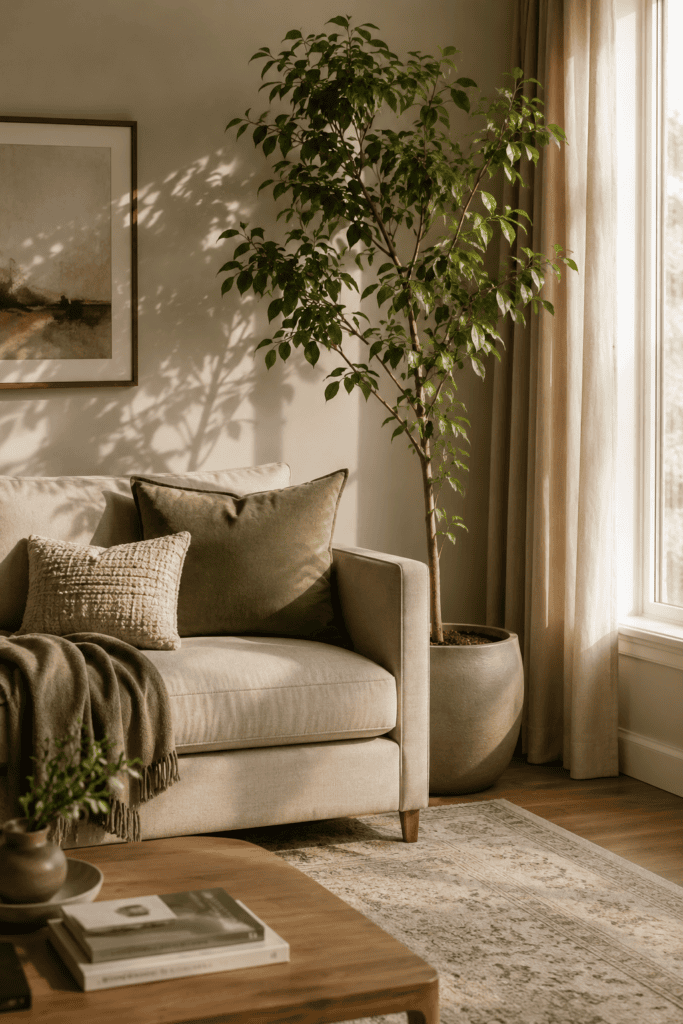
A sofa surrounded by hard surfaces—wood floors, metal lamps, glass tables—needs something soft and alive to balance it out. Enter: plants.
A tall floor plant next to the sofa or a small potted plant on the side table breaks up the rigidity of furniture lines. Even a faux plant works if, like me, you’ve killed one too many pothos plants to count.
11. Layer Lighting Instead of Relying on One Source
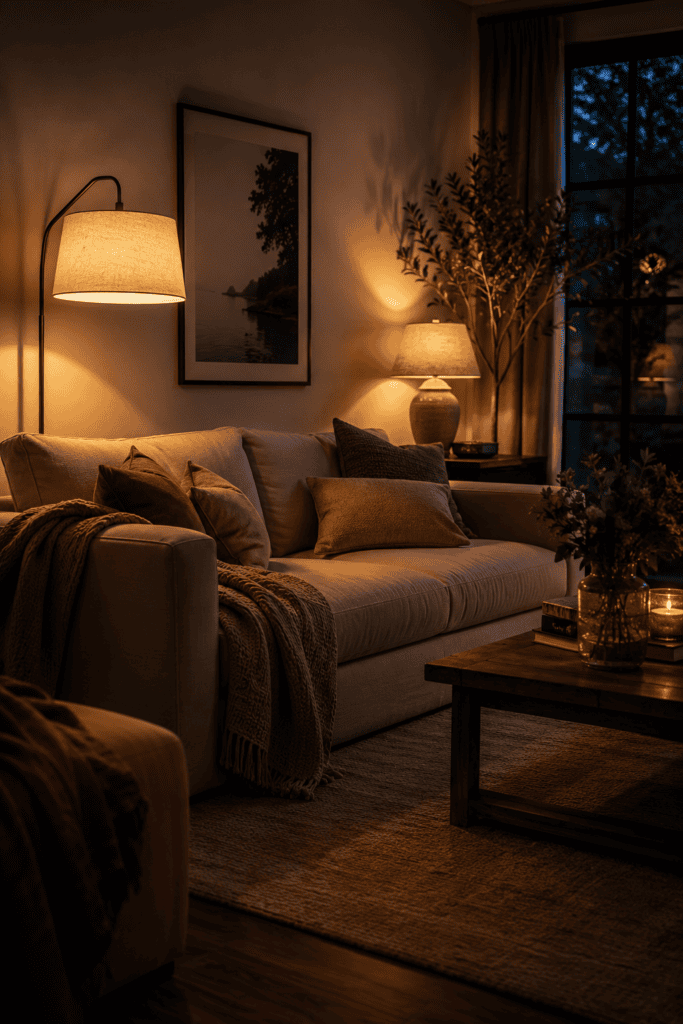
Overhead lighting alone makes any sofa setup look flat and clinical. Designers layer light sources—a floor lamp, a table lamp, maybe even string lights if you’re feeling cozy—to create warmth and depth around the seating area.
Ask yourself: would this space feel inviting with just the lamps on? If the answer’s no, you need more light sources, not more pillows.
12. Mix Patterns With Intention (Not Randomly)
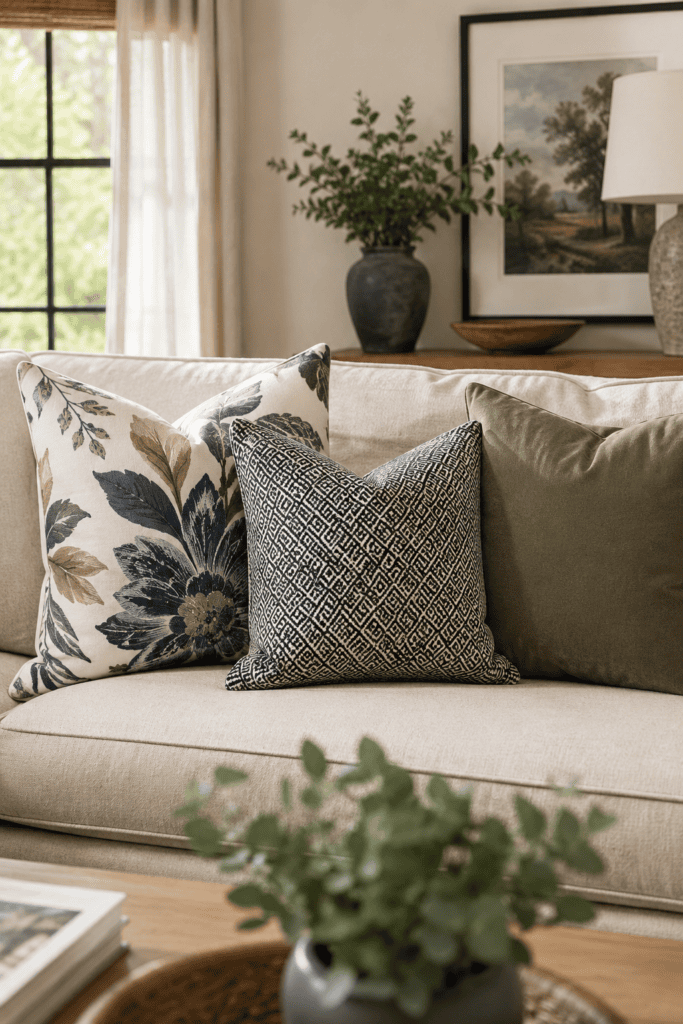
Pattern mixing intimidates a lot of people, and I get it—it can go wrong fast. But designers do it constantly, and there’s a simple trick: vary the scale of your patterns.
Pair a large-scale print with a small geometric pattern and a solid. Three patterns max, one scale each—large, medium, and none (solid). Go beyond that, and your sofa starts looking like it lost a fight with a fabric store.
Final Thoughts
Styling a sofa isn’t about spending more money it’s about being intentional with what you’ve already got. From odd-numbered pillow arrangements to layered lighting and asymmetrical side tables, these small, deliberate choices add up to a space that actually looks designed instead of just decorated.
So go ahead, rearrange those cushions one more time 🙂 Pick two or three ideas from this list, try them out this weekend, and watch your sofa finally earn its spot as the star of the room.