

Your bedroom shouldn’t feel like a storage unit with a bed shoved in the corner. If you’re staring at piles of clothes, random receipts, and that one drawer you’re scared to open, you’re in the right place. I’ve decluttered my own bedroom more times than I’d like to admit, and I’ve learned exactly what makes the process feel manageable instead of miserable.
This isn’t another generic “just throw everything away” article. IMO, that advice ignores the real reason most of us freeze up: decluttering feels overwhelming because we try to do too much at once. So let’s fix that, one small step at a time.
Why Bedroom Clutter Feels So Hard to Tackle

Ever wondered why your bedroom always seems to accumulate more stuff than any other room? It’s simple: your bedroom absorbs everything you don’t know what to do with. Clean laundry, dirty laundry, mail, chargers, that jacket you wore once—it all lands here first.
The problem isn’t the amount of stuff. The problem is that your brain sees the whole room as one giant task, and that’s exhausting before you even start. Break it into smaller pieces, and suddenly it stops feeling like a mountain.
The Real Reason You Keep Procrastinating
You’re not lazy. You’re overwhelmed by decision fatigue. Every item you touch requires a choice: keep it, toss it, donate it, or shove it back where it came from and pretend you didn’t see it :/
Once you understand that decluttering is really just decision-making in disguise, you can start setting up systems that make those decisions easier. That’s what the rest of this guide is about.
Start With a 15-Minute Timer, Not a Full Weekend
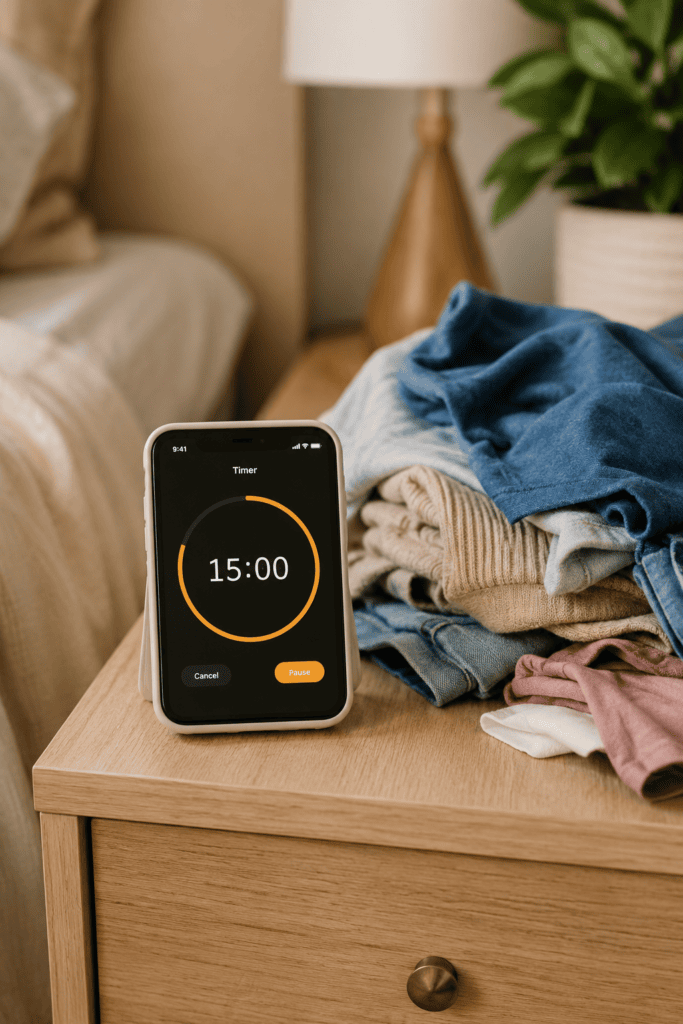
I used to block out entire Saturdays for “decluttering the bedroom.” Guess what happened? I’d get halfway through, hit decision fatigue, and leave everything in a bigger mess than before. Rookie mistake.
Instead, set a timer for 15 minutes and commit to working only within that window. This trick works because it removes the fear of an endless task. You know exactly when you get to stop, so your brain doesn’t panic and shut down.
- Pick one small zone (a nightstand, one drawer, the top of your dresser)
- Set a timer for 15 minutes
- Work until it goes off, then stop—even if you’re not finished
Repeat this daily, and you’ll be shocked at how much progress adds up. Small, consistent effort beats one exhausting binge every time.
Why Short Bursts Beat Marathon Sessions
Long decluttering sessions burn you out fast, and burnout kills momentum. A 15-minute session, on the other hand, feels doable even on your laziest day. You’re building a habit, not white-knuckling your way through a single chaotic afternoon.
Plus, short sessions make it way easier to actually finish something. There’s real satisfaction in completing a task, even a tiny one, and that feeling fuels the next session.
Sort Everything Into Four Simple Categories
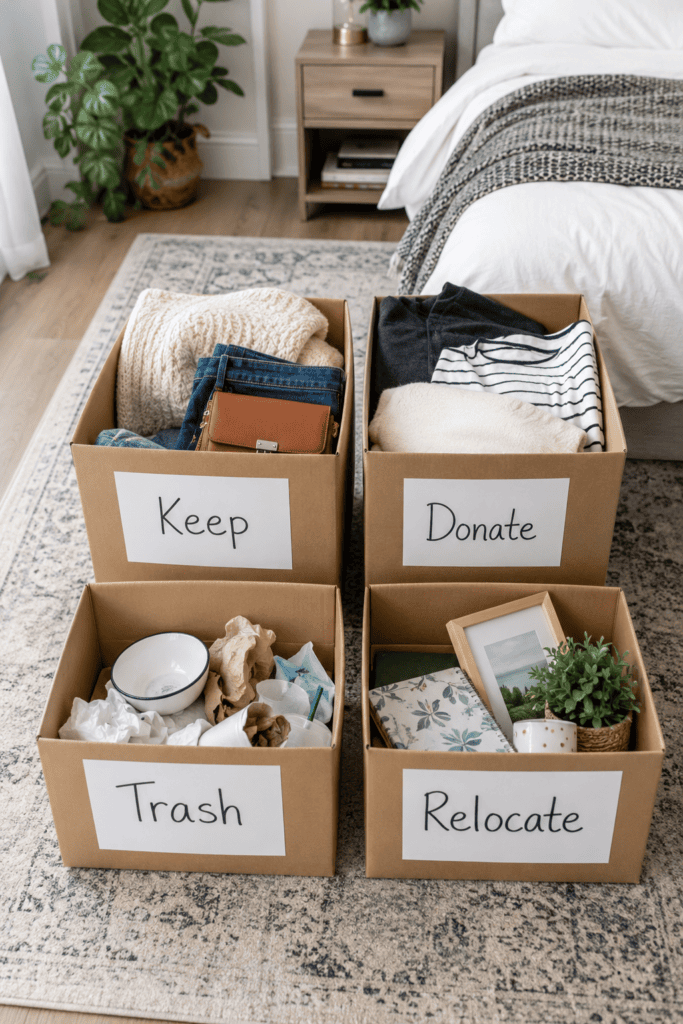
Once you’ve got your timer strategy down, you need a system for actually processing the stuff you find. I swear by the classic four-box method because it removes the guesswork.
Here’s how it works:
- Keep – items you use regularly or genuinely love
- Donate – things in good condition you no longer need
- Trash – broken, expired, or beyond saving
- Relocate – items that belong in a different room entirely
Label four boxes, bags, or even laundry baskets, and sort as you go. Don’t overthink each item—if you’re hesitating for more than ten seconds, put it in Donate. Trust me, you probably don’t need it.
The “One-Touch Rule” That Saves You Time
Here’s a personal favorite trick: only touch each item once. Pick it up, decide its fate, and move on. Don’t set it down “to think about it later,” because later never comes, and you’ll just end up with five new piles instead of zero.
This one-touch rule alone cuts my decluttering time in half. It forces a decision instead of allowing procrastination to creep back in.
Tackle Your Closet Without Losing Your Mind
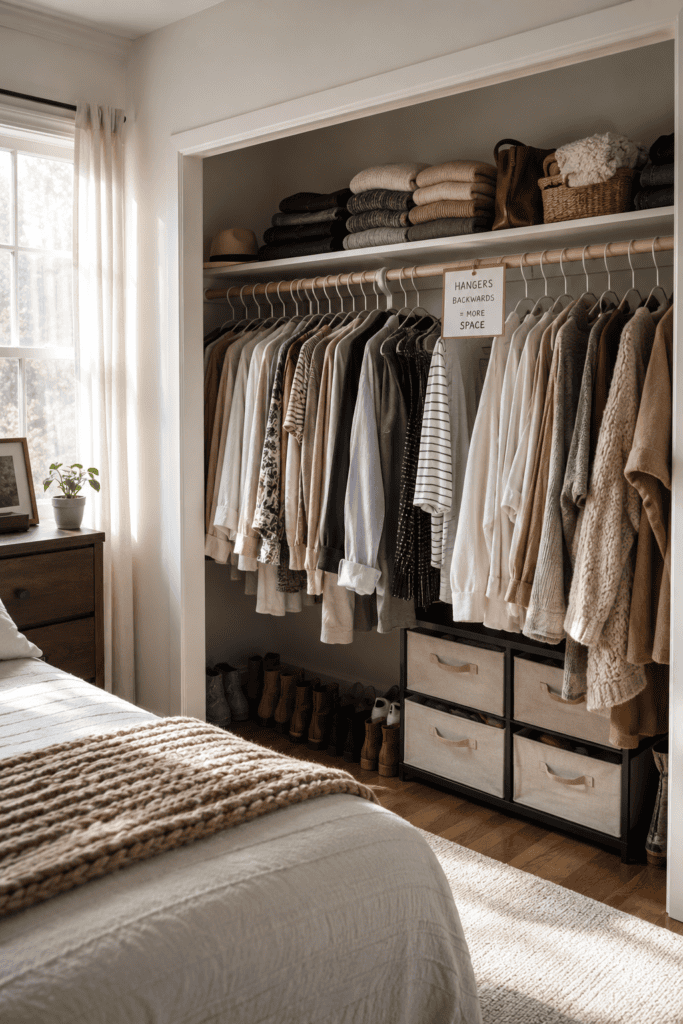
Closets are where clutter goes to hide. FYI, if you haven’t worn something in over a year, there’s a good chance you never will again—no matter how much you tell yourself “I’ll wear it eventually.”
The Hanger Trick That Actually Works
Turn every hanger in your closet backward. Every time you wear something, turn the hanger the right way after washing it. After three or six months, check which hangers are still backward—those are your donate pile candidates.
This method removes emotional guesswork completely. It’s data, not feelings, telling you what to keep.
Fold, Don’t Pile
Piled clothes create visual clutter even when the room is technically “clean.” Switch to vertical folding (think file-folder style in drawers) so you can see every item at a glance. You’ll be amazed how much more space you free up, and you’ll stop losing that one shirt at the bottom of the pile.
- Fold clothes vertically instead of stacking horizontally
- Group by category (shirts, pants, workout gear)
- Use drawer dividers if your drawers turn into chaos easily
Deal With Sentimental Items Without the Guilt Trip
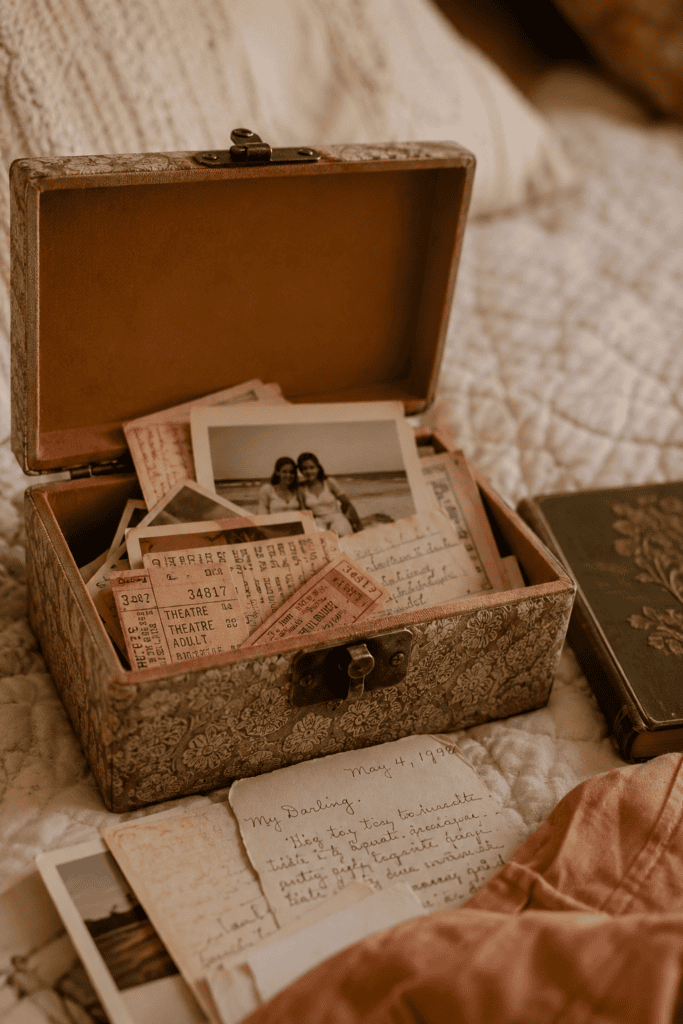
This is the part that trips up almost everyone, myself included. Sentimental clutter hits differently because it’s tied to memories, not just physical space.
Ask yourself this: does keeping this item honor the memory, or is it just taking up space while gathering dust? Big difference. A box of concert ticket stubs sitting in a drawer isn’t “honoring” anything—it’s just clutter with a backstory.
A Simple Fix: The Memory Box Limit
Give yourself one designated box for sentimental items—nothing more. When it’s full, you have to decide what stays and what goes before adding anything new. This forces intentional choices instead of endless accumulation.
I promise, your memories live in your head, not in a shoebox full of old birthday cards. Keep the ones that truly matter and let the rest go.
Create Systems So Clutter Doesn’t Come Back
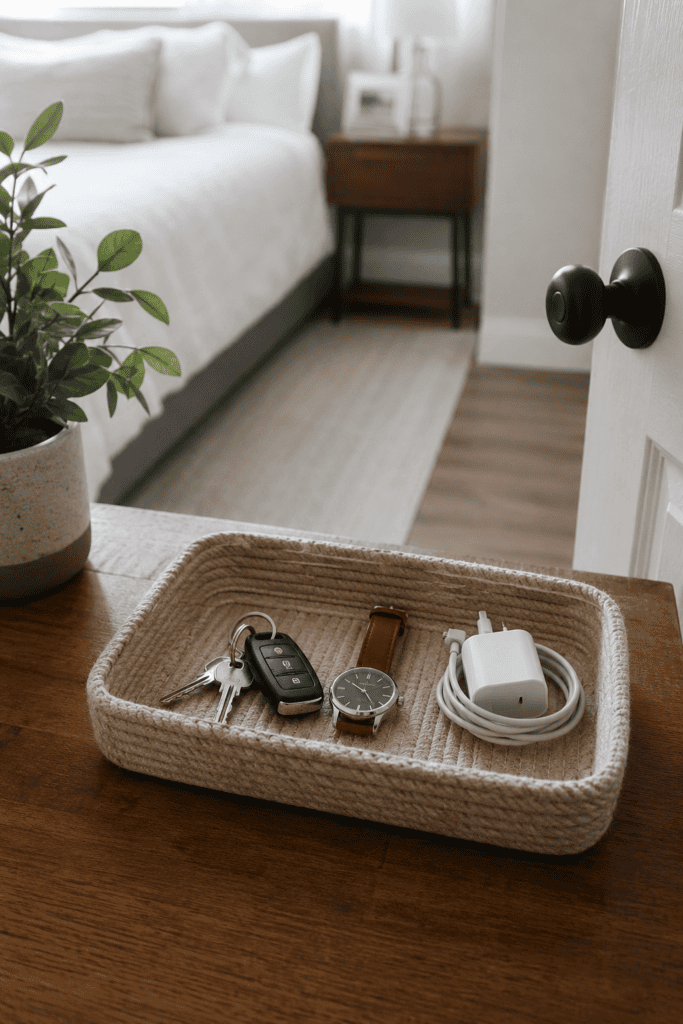
Decluttering once feels great, but maintaining that clean bedroom is the real challenge. Without a system, clutter creeps back within weeks. IMO, this is the step most people skip, and it’s exactly why they end up decluttering the same room over and over.
The “Landing Zone” Strategy
Designate one small spot—a tray, basket, or shelf—for daily drop-off items like keys, jewelry, or your phone charger. This single habit prevents random items from spreading across every surface in your room.
- Choose one landing zone near your door or nightstand
- Empty it weekly so it doesn’t become a new clutter pile
- Keep it small so it can’t turn into a dumping ground
The One-In, One-Out Rule
Every time you bring something new into your bedroom, something else has to leave. New shirt? Donate an old one. New book? Pass along one you’ve already read. This rule keeps clutter from creeping back in gradually.
Quick Wins for When You’re Really Overwhelmed

Sometimes you need results fast, and that’s completely fine. Here are a few quick wins that create visible progress without requiring hours of effort:
- Clear off your nightstand completely, then only add back what you actually use
- Make your bed—it instantly makes the whole room look 50% less chaotic
- Empty one drawer using the one-touch rule
- Remove anything that doesn’t belong in a bedroom (dishes, work files, gym equipment)
These small wins build momentum. Once you see visible progress, tackling the bigger stuff feels a lot less intimidating.
Final Thoughts: Progress Over Perfection
Decluttering your bedroom doesn’t have to mean a dramatic weekend overhaul followed by immediate burnout. Small, consistent steps beat big, exhausting ones every single time. Set a timer, sort with the four-category method, tackle your closet with the hanger trick, and build systems that keep clutter from creeping back.
Your bedroom should feel like a place you actually want to relax in, not a space you avoid because it stresses you out. Start with just 15 minutes today.