

If you live in a small home, seasonal clothing can start to feel like it’s taking over surprisingly fast. Winter coats are bulky, sweaters eat up entire drawers, and boots somehow occupy twice as much floor space as you remember. Then summer arrives, and you’re still moving heavy jackets out of the way every time you want a T-shirt.
The problem usually isn’t that you own an outrageous amount of clothing. It’s that you’re asking one small closet to hold four seasons at the same time.
Learning how to store off-season clothing in a small home is really about separating what you need now from what you won’t touch for several months. Once you do that, your everyday closet becomes much easier to use.
Here’s the thing, though: simply stuffing winter clothes into the nearest plastic tote isn’t a great system either. You need storage that’s compact, protective, and realistic for the space you actually have.
Here’s how I would approach it.
Start by Deciding What Actually Deserves Storage
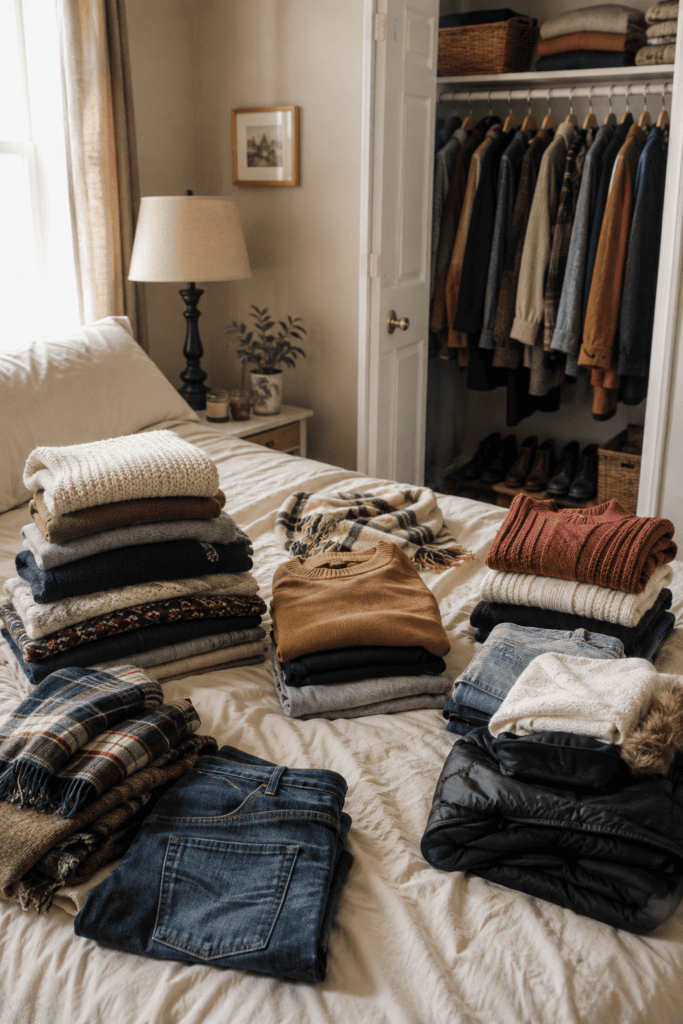
Before buying bins, vacuum bags, or another closet organizer, go through the clothes themselves.
Most people get this wrong because they treat seasonal storage as a moving project: everything gets transferred from the closet into containers without being questioned.
Instead, use the seasonal changeover as a natural editing point.
Don’t Store Clothes You Already Avoid Wearing
Take everything you’re planning to store and divide it mentally into three groups:
- Definitely wearing next season
- Unsure
- Haven’t worn in a long time
Be particularly critical of the last two groups.
If a sweater was uncomfortable all winter, storing it carefully for eight months probably won’t make you like it next December. The same goes for shorts that don’t fit, damaged coats you’ve been meaning to repair for three years, and duplicate basics you consistently skip over.
In a small home, storage space is valuable. Don’t give your best hidden storage spots to clothes you don’t actually want.
Clean Everything Before You Pack It Away
It can be tempting to throw clothes directly into storage at the end of the season, especially when you’re excited to finally get that bulky winter wardrobe out of your closet.
Don’t.
Clothing should be clean and completely dry before long-term storage.
Body oils, deodorant, food residue, and seemingly insignificant stains can become much harder to remove after sitting for months. Dirty clothing can also attract pests.
Wash or dry-clean pieces according to their care labels and make sure they’re thoroughly dry before packing.
Pay Extra Attention to Coats, Shoes, and Accessories
These are easy to forget because they aren’t sitting in your laundry basket.
Empty coat pockets. Clean dirt from boots. Wash scarves, hats, and gloves where appropriate. Let footwear dry completely before storing it.
This little bit of work makes the next seasonal changeover much nicer. Instead of opening a container six months later and discovering a cleaning project, you’re pulling out clothes that are basically ready to wear.
Choose Storage Based on the Space You Already Have
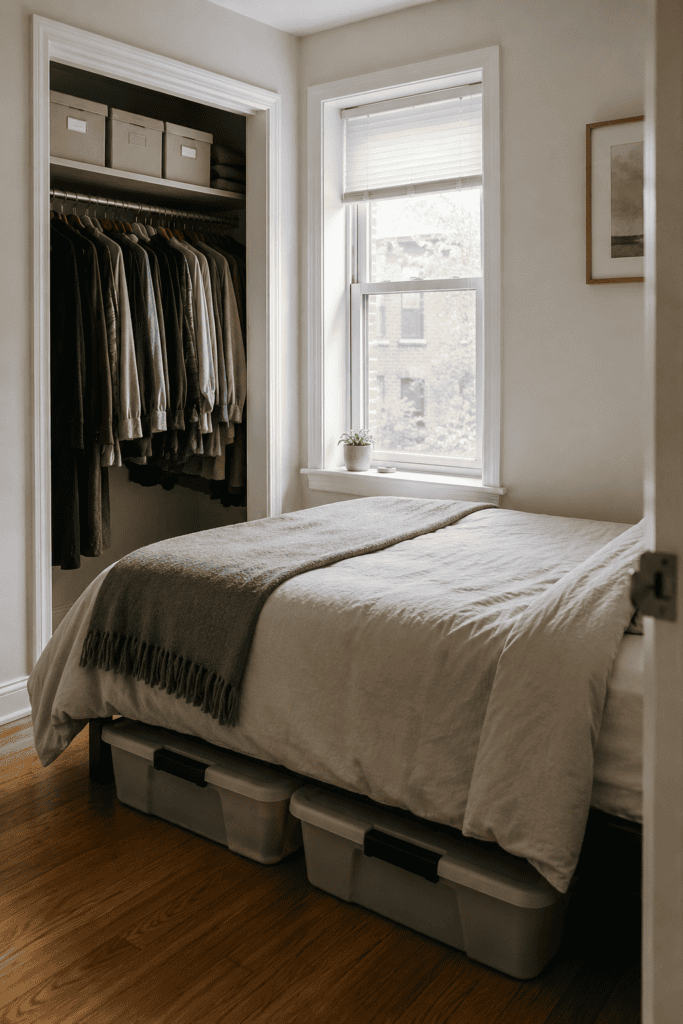
When you’re figuring out how to store seasonal clothes in a small space, don’t start by shopping for containers.
Start by finding unused space.
Look under beds, above closets, on high shelving, inside rarely used luggage, and at the back of deeper storage areas.
Then choose containers that fit those exact spaces.
Under-Bed Storage Is Usually the Best Starting Point
The area beneath a bed is one of the most useful storage zones in a small bedroom because it gives you a large footprint without taking away everyday living space.
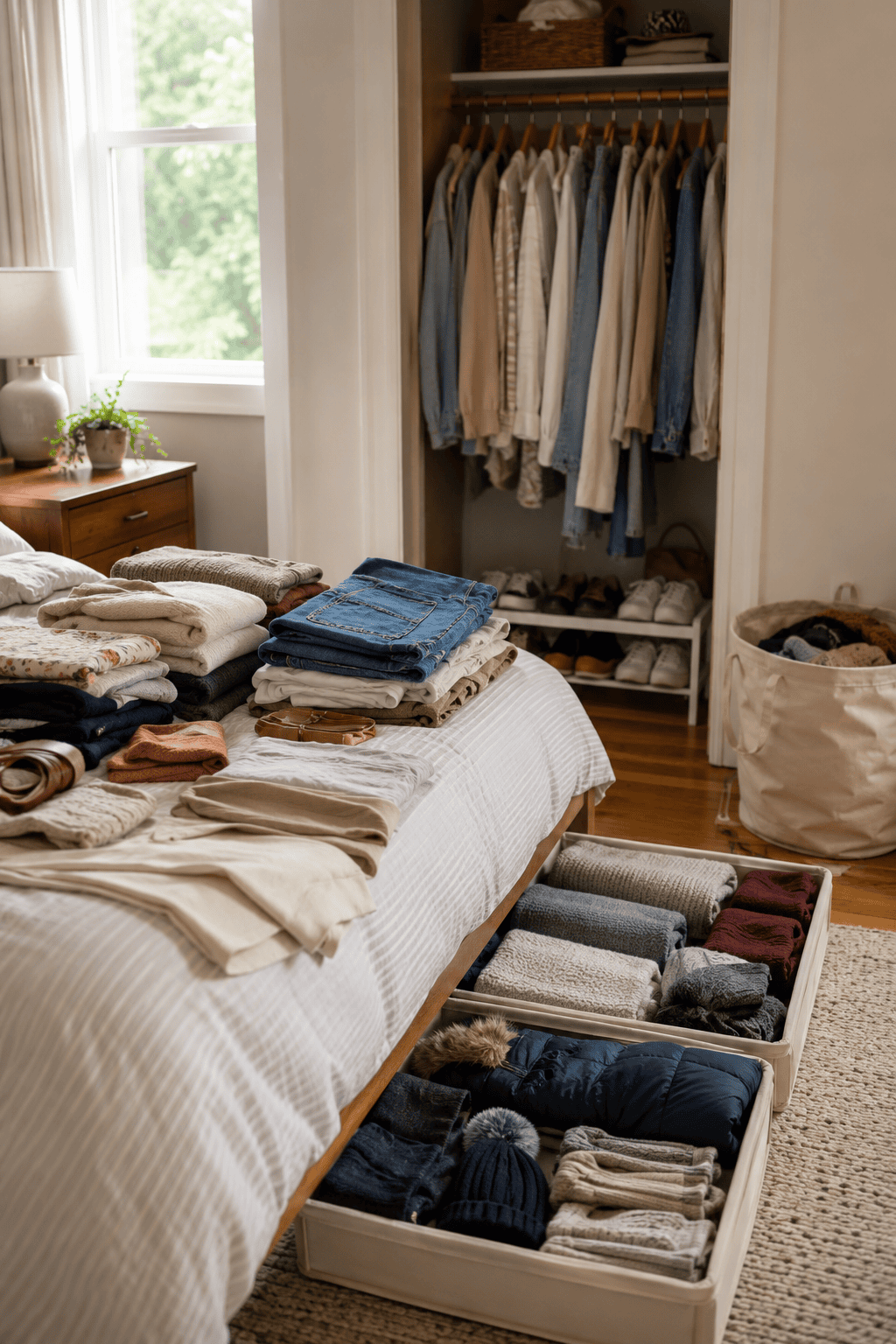
Low-profile, lidded containers work especially well for folded sweaters, jeans, sweatshirts, scarves, and seasonal basics.
Measure the clearance under your bed before buying anything. A bin that’s half an inch too tall is useless no matter how pretty the product photo looked.
If your bed is extremely low, inexpensive bed risers may create enough extra height to make under-bed storage practical.
Use High Shelves for Things You Rarely Need
The highest shelf in a closet shouldn’t necessarily hold something you use three times a week.
That’s prime territory for off-season clothes.
Use lightweight, enclosed bins for clothing and clearly label the outward-facing side. You shouldn’t have to pull down four mystery boxes just to remember which one contains your swimsuits.
I also prefer smaller or medium containers over one enormous tote in small homes. They’re easier to lift, easier to fit around existing storage, and easier to reorganize later.
Use Vacuum Bags Selectively, Not for Everything
Vacuum storage bags seem like the perfect small-space solution. Put in a mountain of sweaters, remove the air, and suddenly the pile is half the size.
And yes, they can be incredibly useful.
But they aren’t the answer for every item.
What Actually Works Well in Vacuum Bags
Vacuum bags are particularly practical for bulky, soft items such as:
- Puffer jackets
- Synthetic sweaters
- Sweatshirts
- Ski clothing
- Seasonal bedding
Compressing these pieces can free up a surprising amount of space.
I wouldn’t automatically vacuum-pack delicate natural fibers, structured clothing, or anything that could be damaged by being tightly compressed for months.
Use regular containers or breathable garment storage for those pieces instead.
The goal isn’t maximum compression at all costs. It’s saving space without shortening the life of your clothes.
Fold Most Clothes Instead of Hanging Them
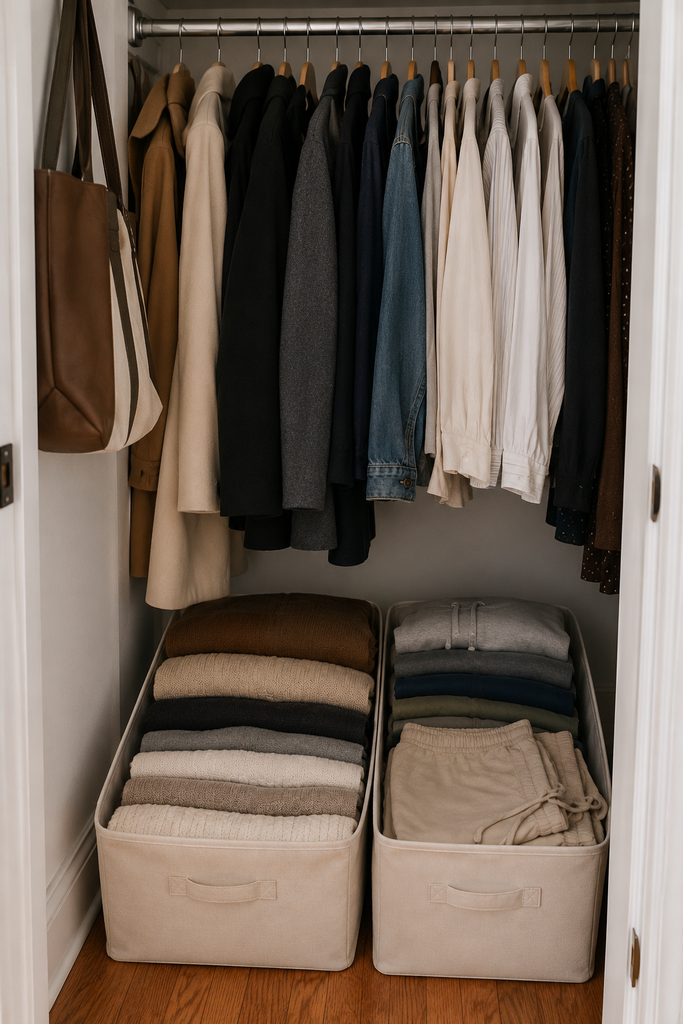
Hanging storage is expensive in a small home because closet rod space is usually limited.
Reserve it for clothing that genuinely benefits from hanging.
Structured coats, dresses, suits, and easily wrinkled pieces may deserve that space. Sweaters, sweatshirts, casual pants, T-shirts, and similar items usually don’t.
Fold Bulky Items Into Consistent Categories
Rather than creating random piles, group stored clothing by type.
For example, one under-bed container might hold winter sweaters and thermals while another holds scarves, gloves, and cold-weather accessories.
This matters because you may need something before the official seasonal switch.
If an unusually cold weekend arrives in October, you can retrieve one container instead of opening every box you own.
Make Your Existing Furniture Work Harder
Small-home storage gets much easier when furniture performs more than one job.
A storage bed, upholstered bench with a hidden compartment, dresser, or storage ottoman can hold seasonal clothing without adding another obvious storage unit to the room.
But even without buying new furniture, you may have usable capacity you’re overlooking.
Don’t Forget Your Suitcases
Empty luggage is essentially a collection of storage containers that you’re already storing somewhere.
Use it.
A suitcase can hold off-season clothing, especially pieces you won’t need until well after your next planned trip.
Packing cubes inside larger luggage can separate categories and make everything easier to retrieve.
Just leave yourself a note or label somewhere visible. Otherwise there’s a very good chance you’ll completely forget what’s inside.
Protect Clothes Without Creating a Complicated System
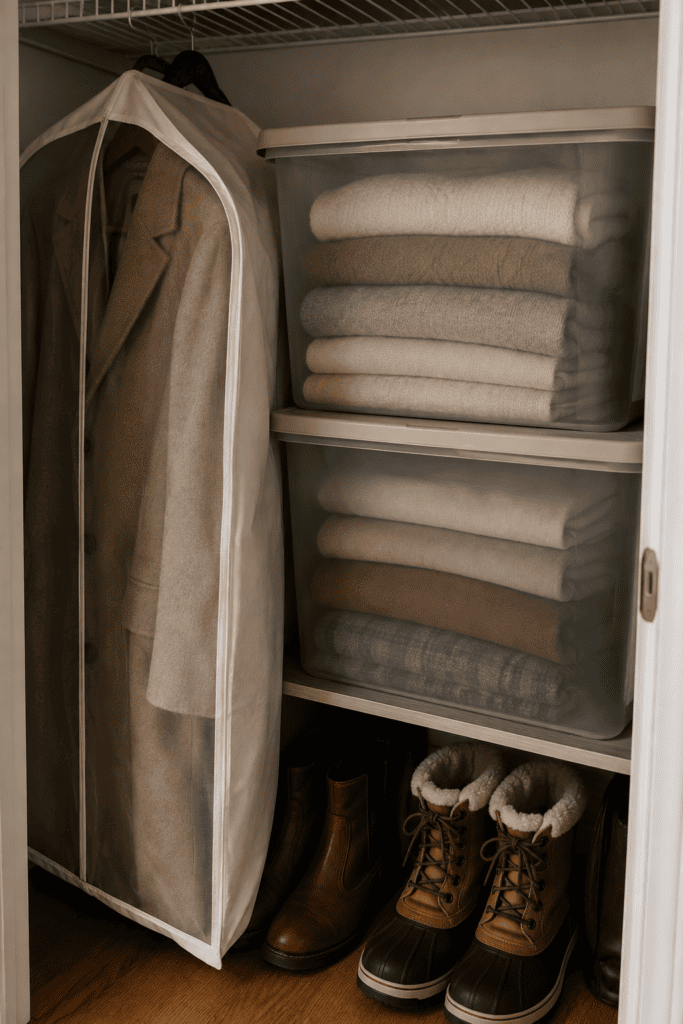
You don’t need an elaborate preservation setup for an ordinary seasonal wardrobe.
You do need protection from moisture, dust, pests, and extreme temperature changes.
For most clothing, clean, dry, enclosed storage in a climate-controlled part of your home is enough.
Avoid damp basements, humid garages, or extremely hot attics when possible. Temperature and moisture swings aren’t ideal for fabric, leather, or shoes.
Don’t Pack Containers Too Tightly
A container technically being able to close doesn’t mean you’ve packed it well.
If you’re sitting on the lid to force it shut, you’ve probably gone too far.
Leave enough room that clothing isn’t being aggressively crushed unless you’re intentionally using compression storage for appropriate items.
This also makes your seasonal changeover easier because you’re not wrestling with an overfilled box every six months.
Label Everything More Specifically Than You Think You Need To
“Clothes” is a terrible label.
So is “Winter.”
Try something like:
Winter — Sweaters + Thermals
or
Summer — Swimwear + Shorts
Specific labels prevent the classic small-home problem where you know an item is stored somewhere but have absolutely no idea where.
If you have several containers, numbering them can make the system even easier. Keep a simple note on your phone:
Bin 1: Winter sweaters
Bin 2: Hats, gloves, scarves
Bin 3: Summer dresses and swimwear
It takes two minutes and saves a lot of digging later.
Keep a Small Transitional Zone Between Seasons
One mistake I see with seasonal storage is treating the calendar too literally.
Real weather doesn’t cooperate.
You might pack every sweater away after one warm April weekend and need one again five days later.
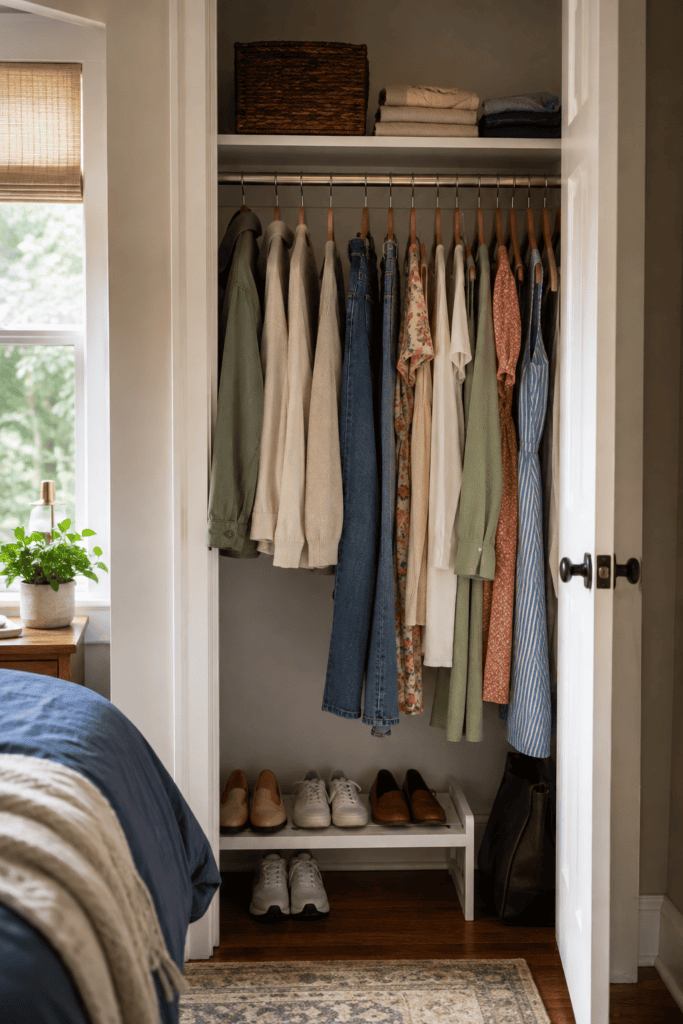
Instead, keep a small transitional section in your everyday closet.
During spring, that might mean leaving out one lightweight jacket, two sweaters, and a pair of closed-toe shoes. In fall, keep a few warm-weather pieces accessible until temperatures genuinely change.
Everything else can go into deeper storage.
This gives you the space-saving benefit of rotating your wardrobe without constantly reopening storage containers.
Common Off-Season Clothing Storage Mistakes
The biggest mistake is trying to solve a lack of space by purchasing more organizers.
More containers don’t automatically equal more organization. Sometimes they just give clutter nicer packaging.
Measure first. Declutter second. Buy storage last.
Another mistake is scattering seasonal clothing everywhere: three sweaters under the bed, coats in a hall closet, gloves in an ottoman, boots in another room, and swimwear in a suitcase.
What actually works is creating as few seasonal storage zones as your home allows.
For example, you might keep almost all folded off-season clothing beneath the bed and reserve one high closet shelf for coats and accessories.
The simpler the geography of your system, the easier it is to maintain.
Create a Seasonal Clothing Swap You Can Repeat
A good organization system isn’t the one that looks perfect immediately after you finish it. It’s the one you’re willing to repeat next season.
When the weather changes, follow the same basic routine:
1. Pull Out the Incoming Season
Take out the clothes you’ll need over the next few months.
Before putting them into your closet, quickly check whether anything needs washing, steaming, repairing, or donating.
2. Edit the Season You’re Finishing
Don’t automatically store everything you just wore.
This is actually the best time to declutter because you remember exactly what you did and didn’t use.
3. Clean and Pack the Keepers
Wash everything, allow it to dry, and group similar pieces together.
Use your existing labeled storage rather than reinventing the system every season.
4. Reset Your Everyday Closet
Put the upcoming season’s clothes into your easiest-to-reach locations.
Frequently worn pieces should get prime storage space. Occasional items can go higher, lower, or farther back.
That’s the real advantage of seasonal clothing storage: your closet finally reflects the life you’re living right now.
Final Thoughts
Figuring out how to store off-season clothing in a small home doesn’t require turning your bedroom into a storage-unit showroom. In fact, I think the best systems are almost invisible.
Start by keeping fewer things that you don’t wear. Clean everything before storing it, then use overlooked areas like under the bed, high closet shelves, storage furniture, and even empty luggage. Compress bulky clothing when it makes sense, label containers clearly, and keep only a small transitional wardrobe accessible between seasons.