
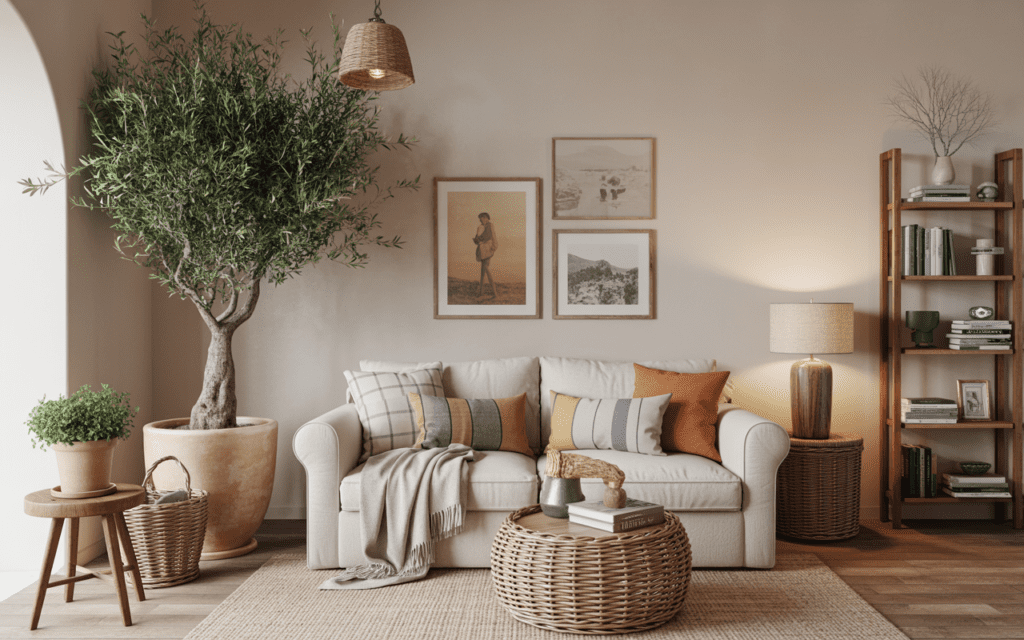
Want a living room that feels sunny, relaxed, and just a little bit dreamy? Mediterranean style nails that vibe without trying too hard, which honestly makes it even cooler. I’ve always loved how this look feels warm, lived-in, and elegant at the same time—like your space took a vacation to the coast and came back with better taste.
Why Mediterranean Style Works So Well
Mediterranean living room ideas work because they balance comfort, texture, and natural beauty. You get that easygoing coastal feel without turning your home into a beach-themed souvenir shop. And no, you do not need a villa in Spain or Italy to make it happen.
What makes this style so appealing?
- Natural materials like wood, stone, linen, and clay.
- Warm, earthy colors that feel calm and inviting.
- Open, airy layouts that make rooms feel bigger.
- Handcrafted details that add personality.
Ever noticed how some rooms instantly feel peaceful the second you walk in? That’s the Mediterranean trick. It whispers instead of shouting, which is refreshing in a world full of loud decor choices.
1. Start With a Soft, Neutral Base
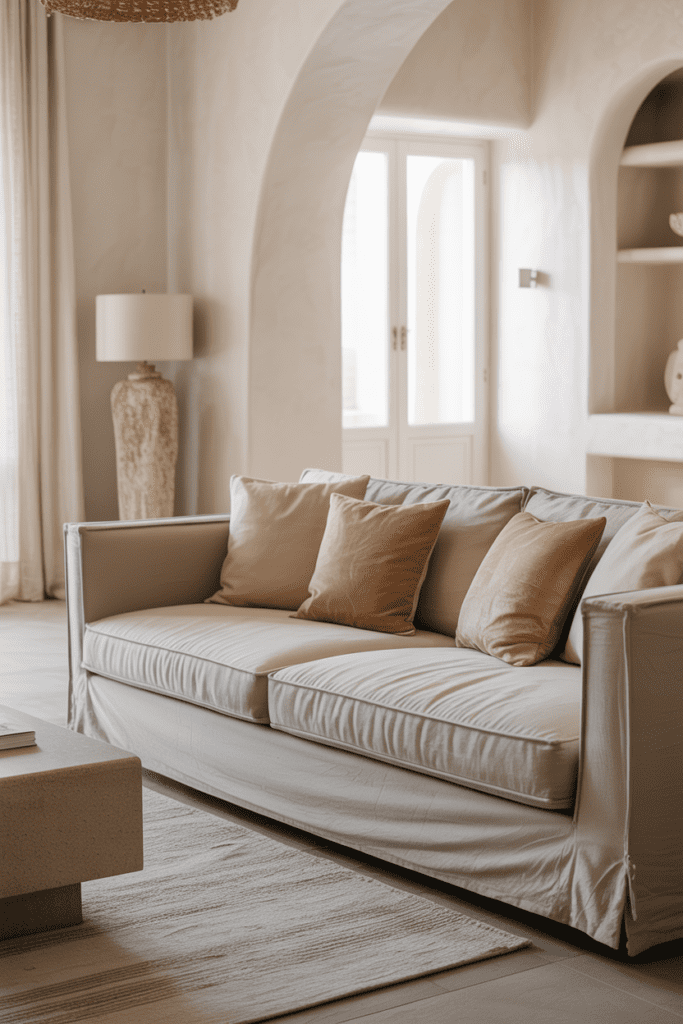
The easiest way to bring Mediterranean living room ideas to life is to begin with a neutral foundation. Think cream, warm white, beige, sand, and soft taupe. These shades reflect light beautifully and create that sun-washed look everyone secretly wants.
I’d choose this route first because it gives you flexibility. You can layer in color later with pillows, rugs, pottery, and art without making the room feel chaotic.
Best neutral tones to use
- Warm white for walls and ceilings.
- Sand beige for sofas and curtains.
- Soft gray-beige for subtle contrast.
- Ivory for a clean, airy backdrop.
If you want a room that feels calm instead of sterile, skip the icy whites. Those can make a Mediterranean room look like it’s waiting for a dentist appointment :/
2. Use Warm Earthy Colors
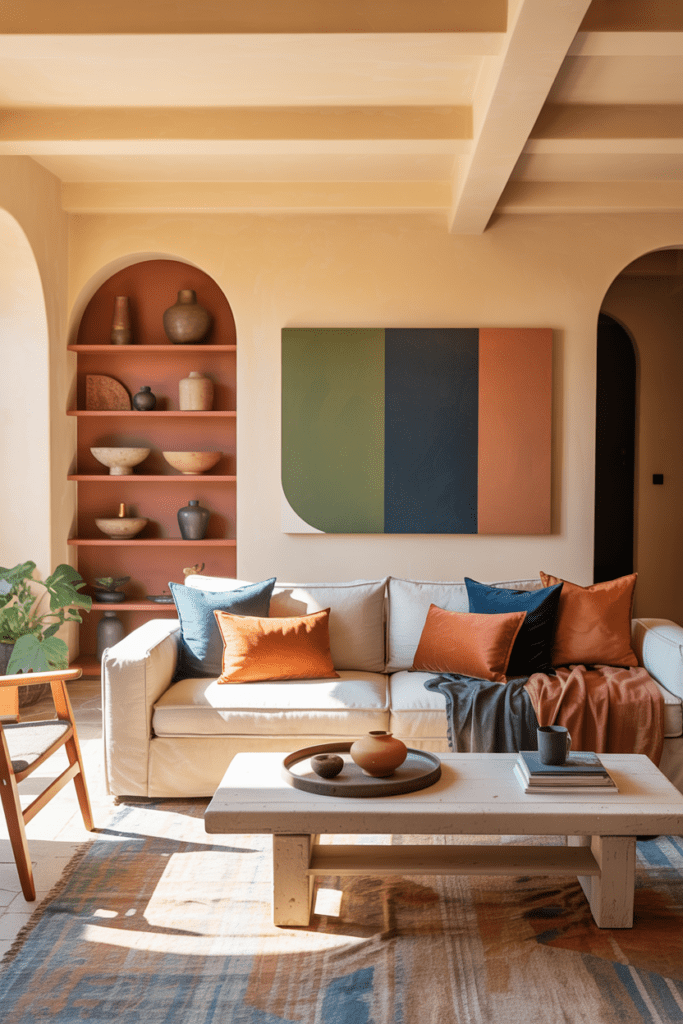
Mediterranean style loves color, but not in a loud, neon, “look at me” way. It leans into terracotta, olive green, deep blue, mustard, and clay red. These shades feel grounded and rich, and they echo the landscapes of the Mediterranean coast.
A few smart color combos work especially well:
- Terracotta + cream + olive green.
- Deep navy + beige + wood tones.
- Rust + white + black iron accents.
- Muted blue + sand + natural linen.
IMO, terracotta might be the MVP here. It adds instant warmth and makes a living room feel lived-in without looking messy. Who doesn’t want that?
3. Bring In Textured Walls
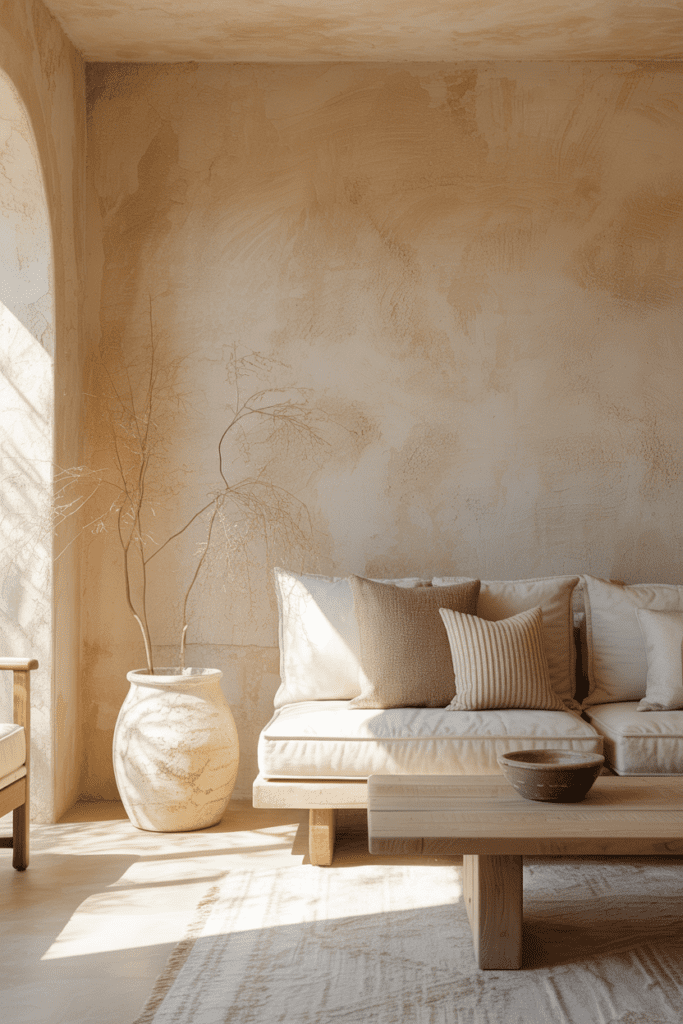
Mediterranean interiors rarely rely on perfectly flat, plain walls. They love texture, and that’s what gives the style its charm. You can use plaster finishes, limewash paint, stone accents, or even textured wallpaper if you want a lighter solution.
Texture ideas that work
- Limewashed walls for a soft, weathered look.
- Plaster finishes for old-world charm.
- Stone accent walls for a rustic, grounded feel.
- Textured paint for subtle depth.
I’m a big fan of limewash because it adds movement without screaming for attention. It makes a room feel like it has history, even if you moved in last Tuesday.
4. Choose a Low, Comfortable Sofa
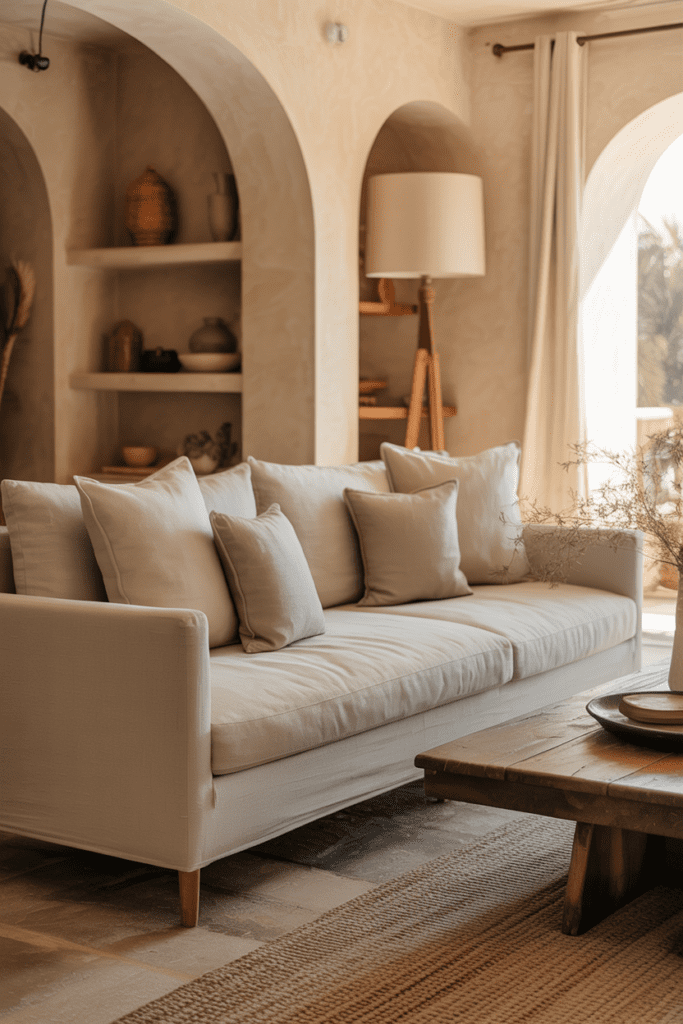
A Mediterranean living room should feel relaxed, not stiff. That’s why a low-profile, comfy sofa works so well. Look for soft cushions, natural fabrics, and relaxed lines rather than ultra-sleek, dramatic shapes.
Good sofa choices
- Linen sofas in cream or beige.
- Slipcovered sectionals for an easy, casual feel.
- Curved sofas if you want a softer look.
- Wood-framed sofas for more structure.
I’d avoid anything too shiny or overly modern if you want the Mediterranean vibe to feel authentic. That said, mixing modern comfort with old-world style can work beautifully if you keep the palette soft.
5. Add Wooden Beams or Ceiling Detail
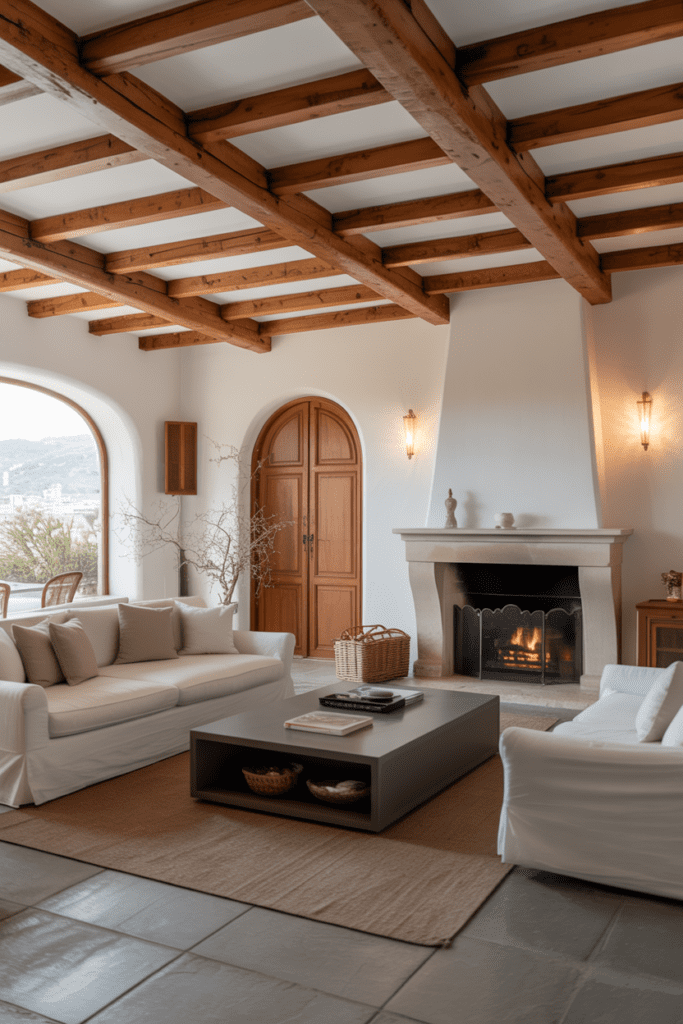
If you want instant Mediterranean character, look up. Wooden ceiling beams or even faux beams can completely change the mood of a room. They add warmth, depth, and a rustic architectural touch that feels timeless.
You don’t need a full renovation to get the look. Even subtle ceiling detail can help create that classic European feeling.
Ceiling details to consider
- Dark wood beams for contrast.
- Whitewashed beams for a lighter look.
- Exposed rafters for rustic charm.
- Coffered ceiling accents if you want a polished version.
Ever wondered why beams make a room feel so inviting? They add structure without making the space feel rigid. It’s a nice little design magic trick.
6. Layer Natural Fabrics
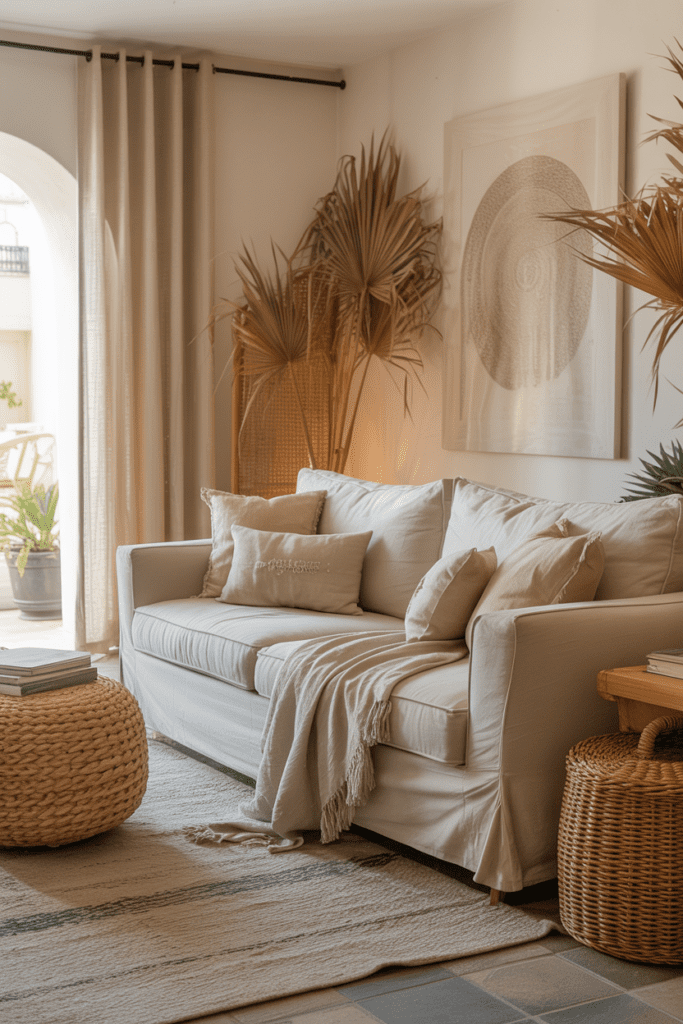
Mediterranean living room ideas always lean on natural textiles. Linen, cotton, wool, jute, and even raw silk can all work well. These materials feel breathable and casual, which fits the style perfectly.
You want your fabrics to feel soft, touchable, and a little imperfect. That’s part of the charm. Perfectly crisp and glossy materials can look a bit out of place here, like they got lost on the way to a modern office.
Fabrics to use
- Linen curtains for softness and light filtering.
- Cotton throws for everyday comfort.
- Wool rugs for warmth and texture.
- Jute accents for an earthy layer.
FYI, mixing textures matters more than matching everything perfectly. A room with linen, wood, and woven details will always feel more interesting than one with a single repeated material.
7. Use Statement Lighting
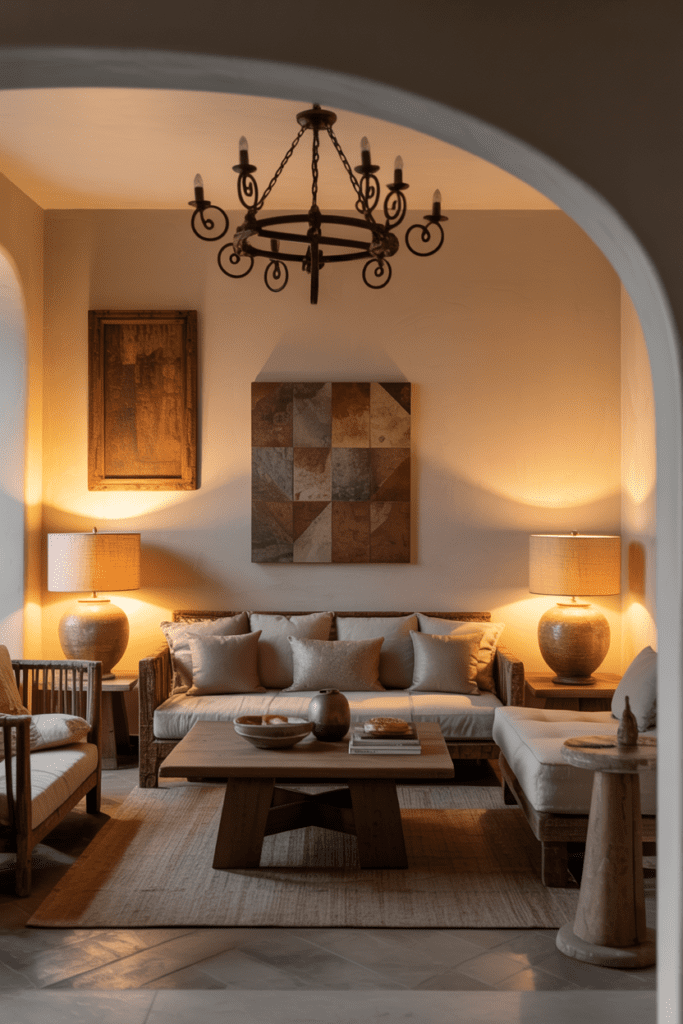
Lighting can make or break the Mediterranean feel. Choose warm, sculptural, and organic-looking fixtures instead of cold, overly polished ones. Iron chandeliers, pendant lights, ceramic table lamps, and lantern-style pieces work especially well.
Great lighting choices
- Wrought iron chandeliers for classic Mediterranean drama.
- Ceramic table lamps for a handcrafted look.
- Rattan pendants for a lighter coastal vibe.
- Lantern sconces for old-world charm.
I love a good statement chandelier in this style because it adds personality without feeling fussy. The trick is to keep the finish warm and the shape simple.
8. Mix in Handcrafted Decor
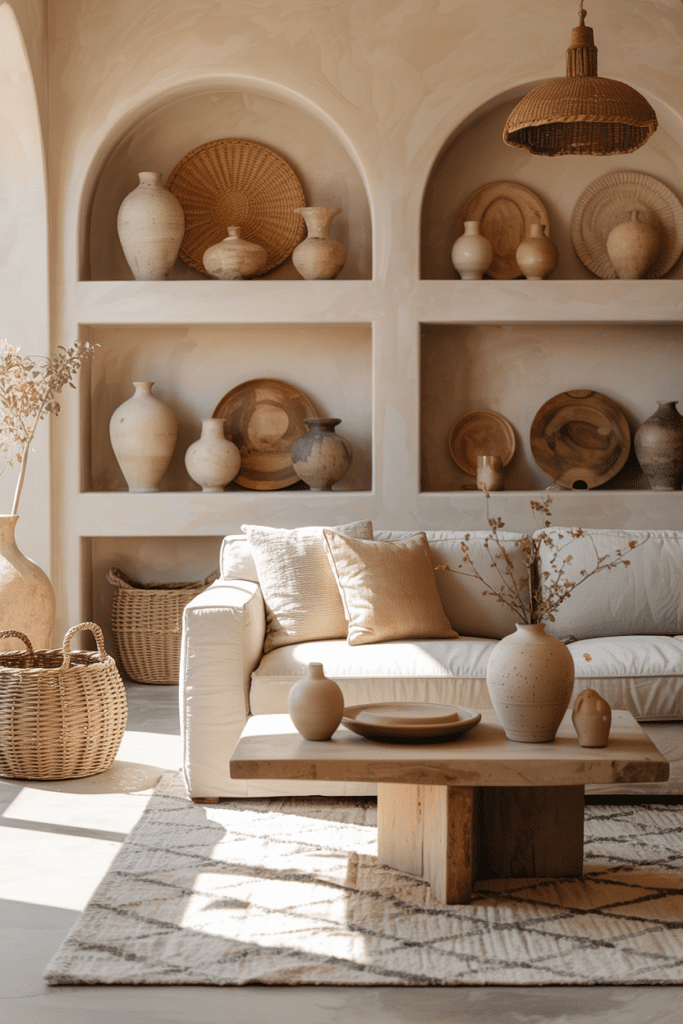
Mediterranean interiors celebrate handmade objects. That means you should lean into ceramic vases, carved wood bowls, handmade pottery, and woven baskets. These pieces add soul, and they keep the room from looking too polished.
Here’s the thing: mass-produced decor can work, but a few handmade-looking pieces always make the room feel richer. They tell a story, even if that story is just “I found this vase and immediately became emotionally attached.”
Easy handcrafted accents
- Clay vases in soft, earthy tones.
- Hand-thrown pottery on shelves or tables.
- Woven baskets for storage and texture.
- Carved trays for coffee tables.
A room without handcrafted details can feel a little flat. Add even two or three, and the whole space changes.
9. Bring In Arches and Curves
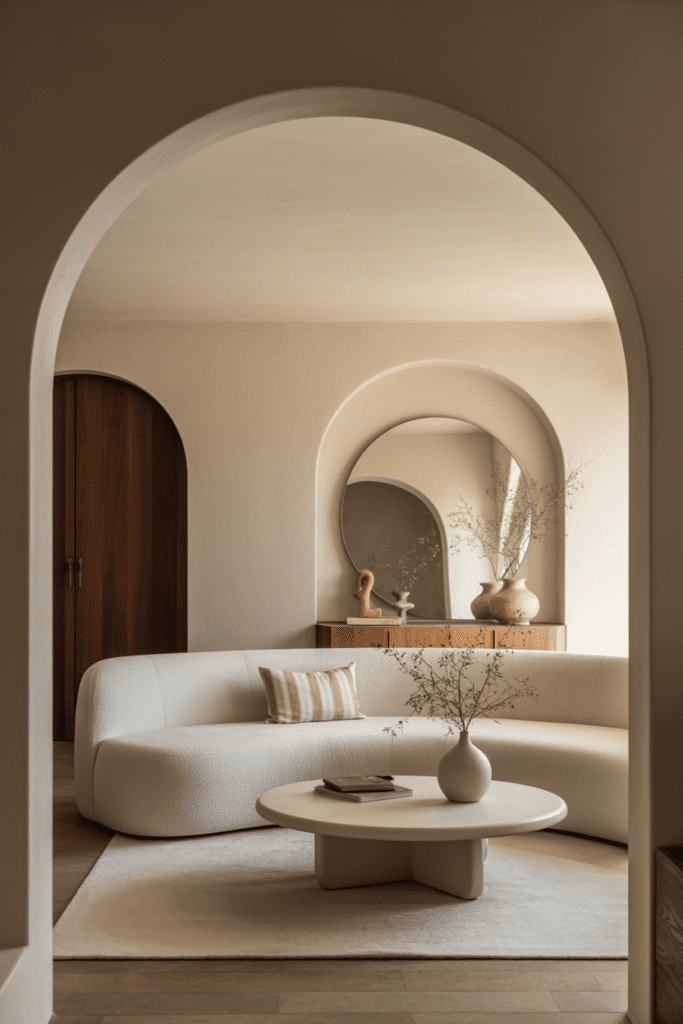
Mediterranean architecture loves arches, curves, and soft lines. You can work this into your living room through mirrors, furniture, niches, or even doorway shapes if you’re renovating. Curves soften the space and make it feel more inviting.
Ways to use curves
- Arched mirrors above a console or fireplace.
- Round coffee tables to soften straight lines.
- Curved sofas for a more elegant feel.
- Rounded alcoves or niches for display.
Why does this matter so much? Because hard angles can feel a little severe, and Mediterranean design prefers ease over tension. It’s basically the design version of taking a deep breath.
10. Add a Rustic Coffee Table
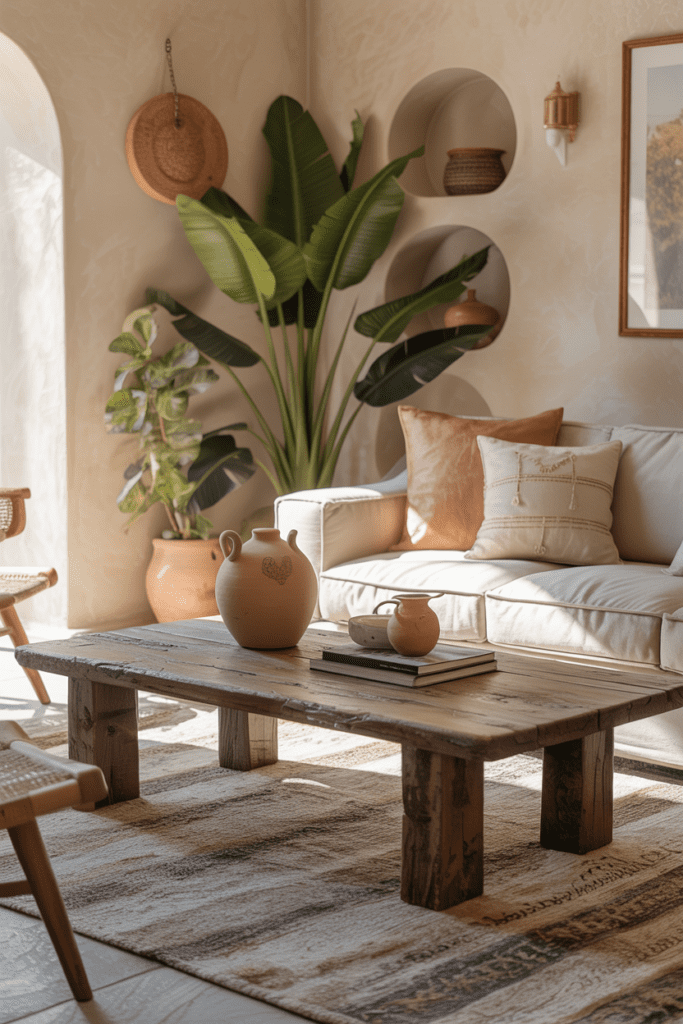
A rustic coffee table acts like the anchor of the room. Look for reclaimed wood, stone, travertine, or distressed finishes. The goal is to make the table feel solid and natural, not overly sleek.
Good materials for coffee tables
- Reclaimed wood for warmth and character.
- Travertine for a classic Mediterranean feel.
- Natural stone for a grounded, luxurious touch.
- Distressed oak for a softer rustic look.
I personally think the coffee table sets the mood more than people realize. Put the wrong one in, and the room starts drifting in another direction. Put the right one in, and everything clicks.
11. Use Woven and Organic Accents
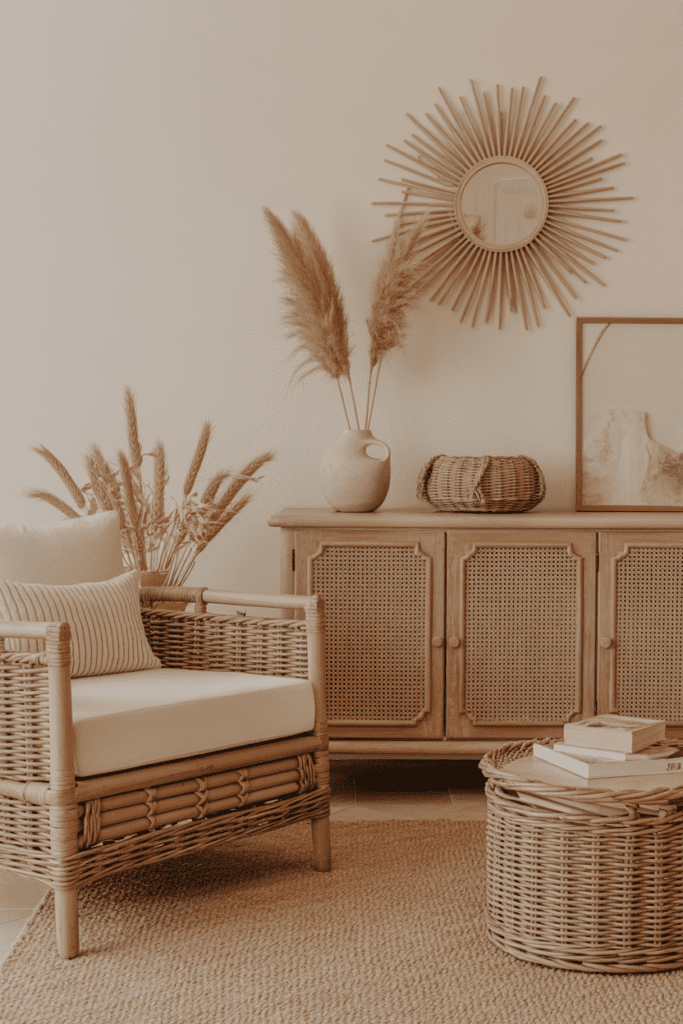
Mediterranean design loves things that look like they came from the earth rather than a showroom. That’s where woven, rattan, cane, wicker, and seagrass accents come in. They add warmth and stop the room from feeling too heavy.
Organic accents that work well
- Rattan chairs for casual seating.
- Wicker baskets for storage.
- Seagrass rugs for layering.
- Cane-front cabinets for subtle texture.
These accents also help break up stone, wood, and plaster surfaces. Without them, the room can feel a little too serious. And honestly, who wants a room that takes itself too seriously?
12. Style the Fireplace as a Focal Point
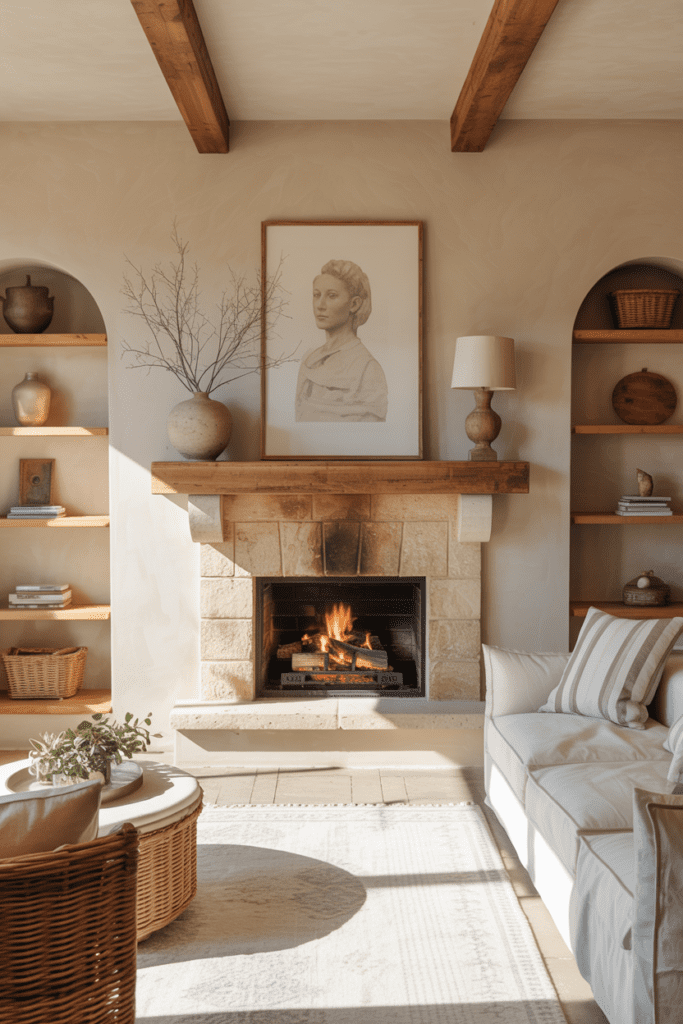
If your living room has a fireplace, you’ve already got a built-in Mediterranean feature. Make it the star. Use stone, plaster, or hand-finished tile to give it presence.
Fireplace styling tips
- Keep the mantel simple with a few meaningful objects.
- Use a large mirror or art piece above the fireplace.
- Add candles or pottery for a warm, layered look.
- Choose natural finishes instead of shiny materials.
A fireplace in this style should feel like part of the architecture, not a random add-on. The more natural and grounded it looks, the better.
13. Incorporate Blue the Smart Way
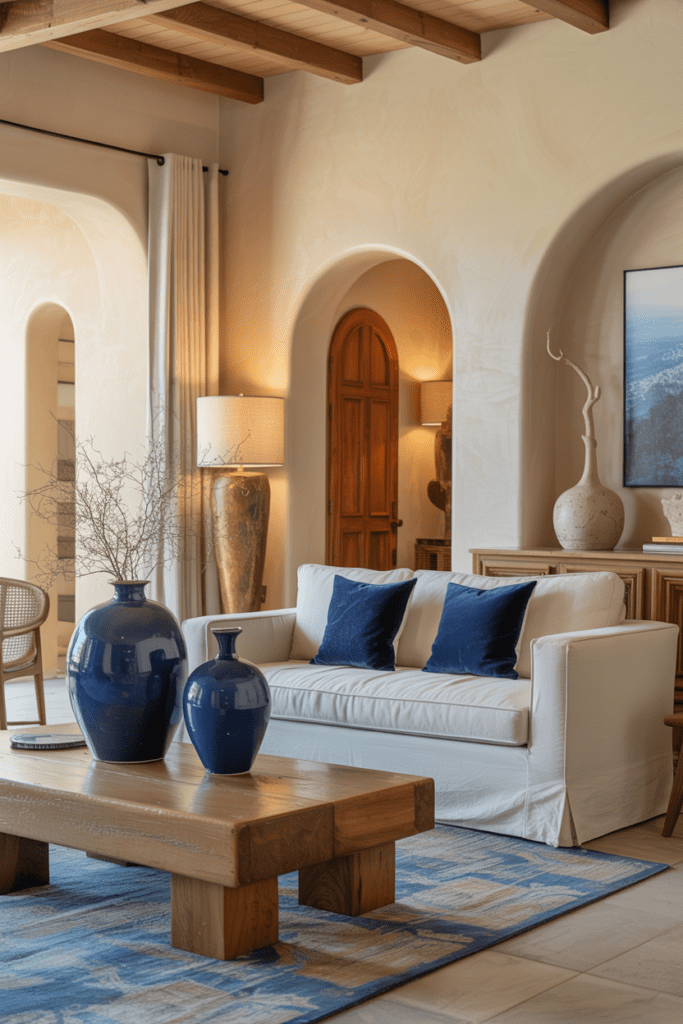
Blue plays a big role in Mediterranean interiors, but you want the right shades. Think cobalt, indigo, dusty sky blue, or sea-inspired tones. These colors bring in the coastal influence without making the room feel nautical in a cheesy way.
Where to use blue
- Accent pillows.
- Patterned ceramic pieces.
- Artwork.
- Rugs or throws.
I’d keep blue as an accent rather than the main event unless you want a bolder look. It works best when it feels intentional, not like you just raided a beach house clearance sale.
14. Display Bold Artwork
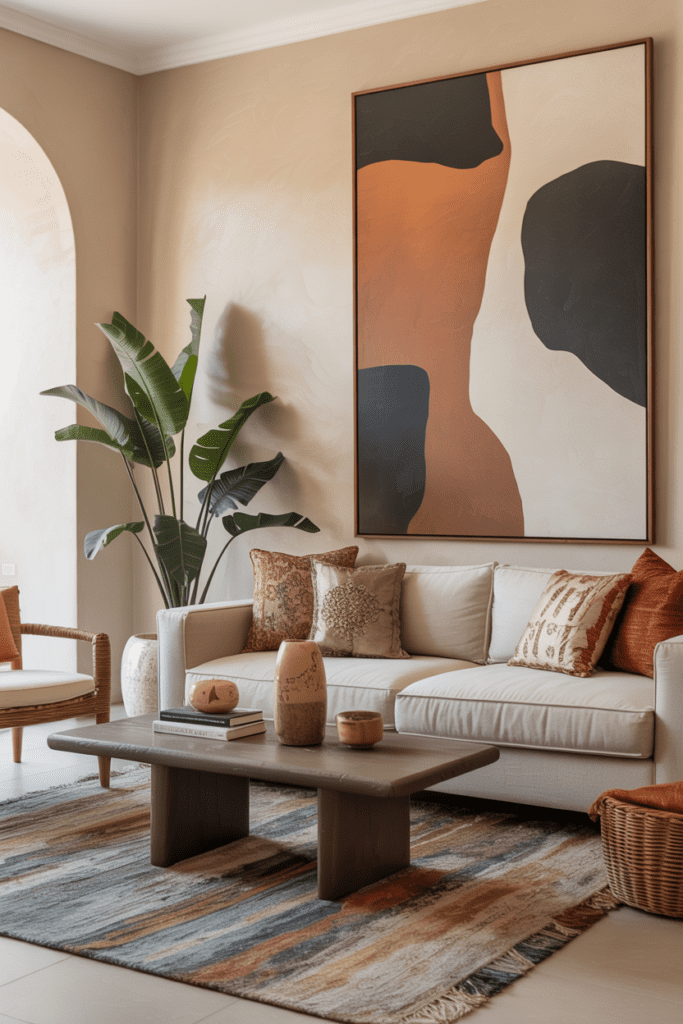
Mediterranean living room ideas often include art that feels expressive and grounded. You can use landscape paintings, abstract pieces in earthy tones, or traditional Mediterranean-inspired prints. The key is choosing art that feels warm and layered.
Art ideas to explore
- Large-scale abstract art in terracotta, blue, or cream.
- Black-and-white photography for contrast.
- Framed vintage prints for character.
- Textural wall hangings for softness.
Art gives the room personality fast. A bare wall can make even a beautiful space feel unfinished, so use this as your chance to add some emotion.
15. Add Greenery With a Casual Feel
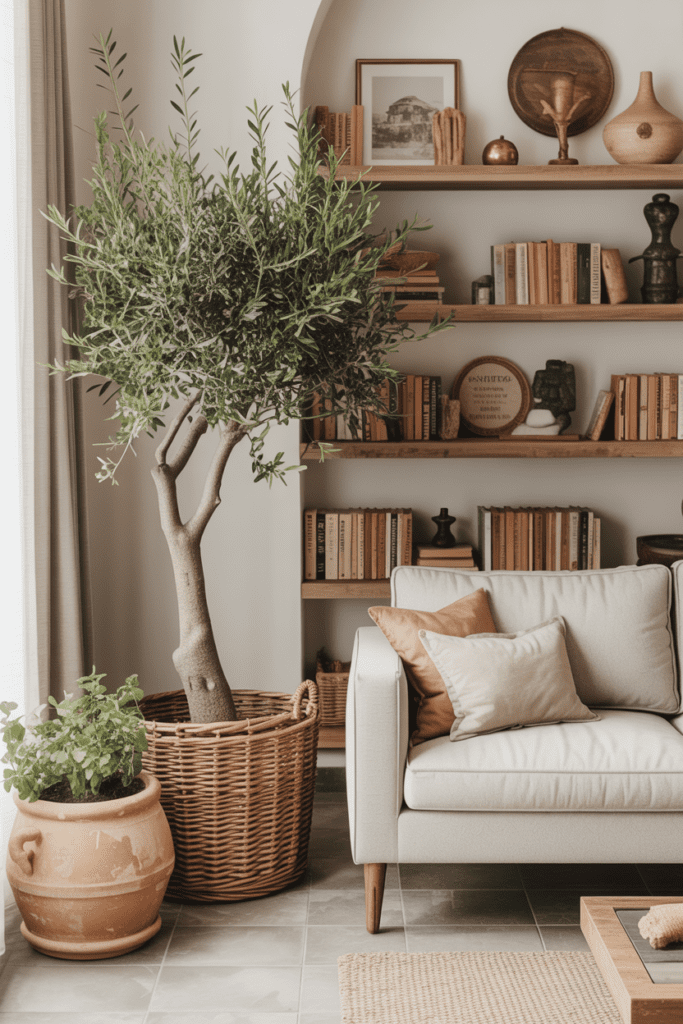
Plants fit Mediterranean spaces beautifully, especially when you choose varieties that feel simple and sculptural. Olive trees, fiddle-leaf figs, herbs, and trailing greenery all work well. The trick is not to overdo it.
Best plants for the look
- Olive trees for classic Mediterranean style.
- Herbs in ceramic pots for charm.
- Fiddle-leaf figs for height and shape.
- Trailing vines for softness.
I like using greenery because it keeps the room from feeling too static. Just don’t turn the place into a jungle unless you really enjoy watering schedules and mild chaos 🙂
16. Keep the Layout Open and Relaxed
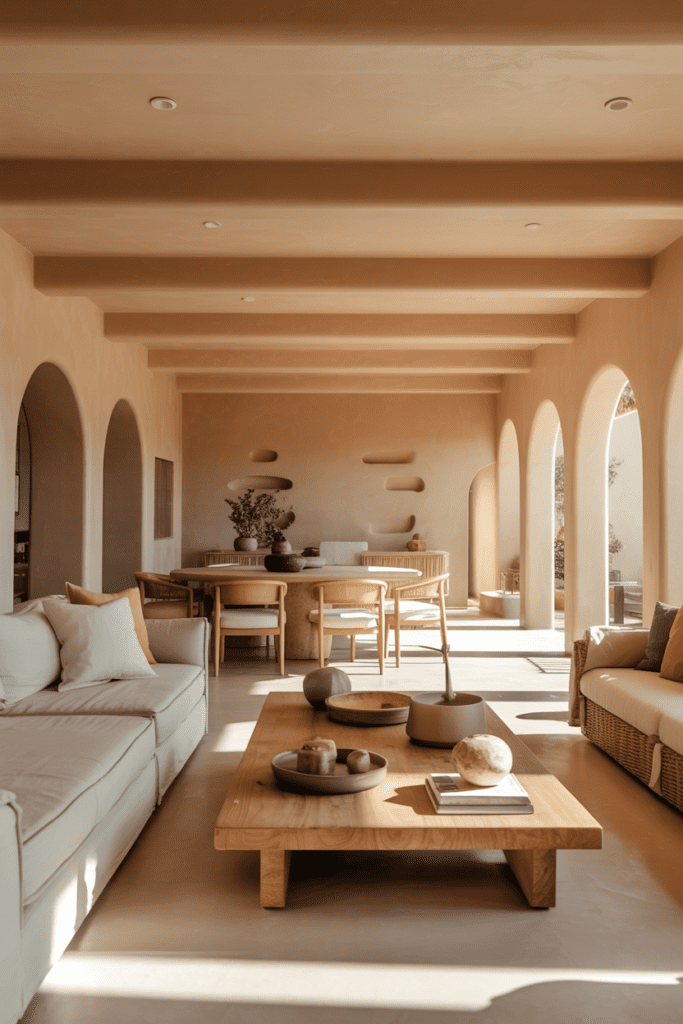
A Mediterranean living room should feel easy to move through. That means open layouts, uncluttered paths, and furniture that supports conversation. You want comfort first, not a space that looks great but feels awkward to live in.
Layout tips
- Float furniture instead of pushing everything against walls.
- Create conversation zones with chairs and sofas.
- Leave breathing room around major pieces.
- Avoid overfilling corners with random decor.
This style thrives on ease. A cluttered room kills the vibe fast, while a calm layout lets all the textures and colors shine.
17. Finish With Personal Touches
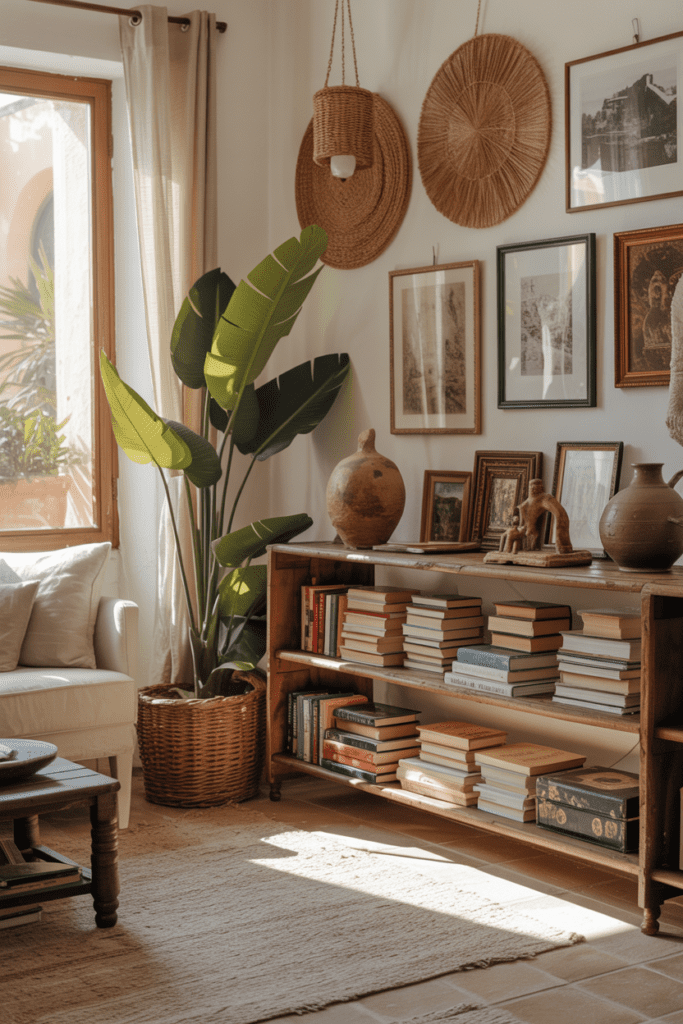
The best Mediterranean living room ideas always include a personal layer. Your space should feel collected over time, not ordered in one afternoon while panic-refreshing a shopping cart. Add books, travel pieces, family objects, or old finds that mean something to you.
Personal touches to include
- Stacked books with warm-toned covers.
- Travel souvenirs like pottery or woven pieces.
- Family heirlooms that bring history into the room.
- Old frames or vintage finds for character.
This is where the room stops looking styled and starts looking lived in. And that’s the sweet spot, right?
How To Make It All Work Together
You don’t need to use all 17 ideas at once. In fact, please don’t. That would make the room feel more like a themed set than a home.
Instead, pick a few core elements:
- A warm neutral base.
- One or two earthy accent colors.
- Natural materials like wood, linen, and stone.
- Handcrafted decor for personality.
- Soft lighting and relaxed furniture for comfort.
That combination usually creates the right Mediterranean balance. It feels curated, not crowded, which is exactly what you want.
Let’s Conclude
Mediterranean living room ideas work because they mix warmth, texture, and effortless style in a way that feels timeless. You don’t need fancy architecture or a giant budget. You just need the right mix of natural materials, soft colors, and relaxed details.
If you want your living room to feel calm, beautiful, and just a little sun-kissed, this style delivers every time. Start small, trust your eye, and build the room piece by piece. Honestly, that’s the fun part anyway.