
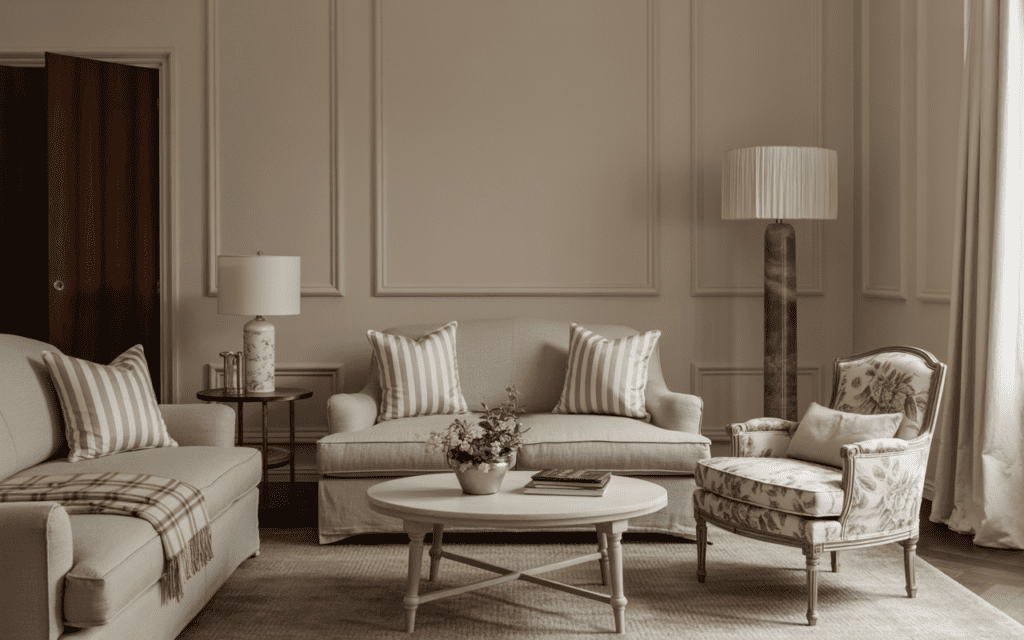
An old money living room has a quiet kind of elegance that never feels forced. It relies on timeless furniture, soft neutral colors, rich textures, and balanced details to create a space that looks polished without trying too hard. Instead of chasing trends, this style focuses on comfort, quality, and classic design choices that always feel relevant. The result is a living room that feels calm, collected, and unmistakably refined. If you want a space that looks expensive in the most understated way, these ideas will help you build that look with confidence.
What Old Money Style Really Means
Old money style isn’t about spending wildly. It’s about choosing pieces that look refined, classic, and lived-in with intention. Think of it as quiet luxury with better manners.
The whole vibe leans on tradition, craftsmanship, and restraint. No neon drama. No “look at me” furniture screaming for attention. Just a room that feels like it has stories.
Key traits of old money design
- Neutral colors
- Quality materials
- Symmetry and balance
- Classic silhouettes
- Subtle patterns
- Antique or heritage-inspired details
Why does this style work so well? Because it feels permanent. Trends come and go, but a well-made velvet sofa or a carved wood console doesn’t panic when the internet changes its mind.
1. Choose a Neutral Color Palette
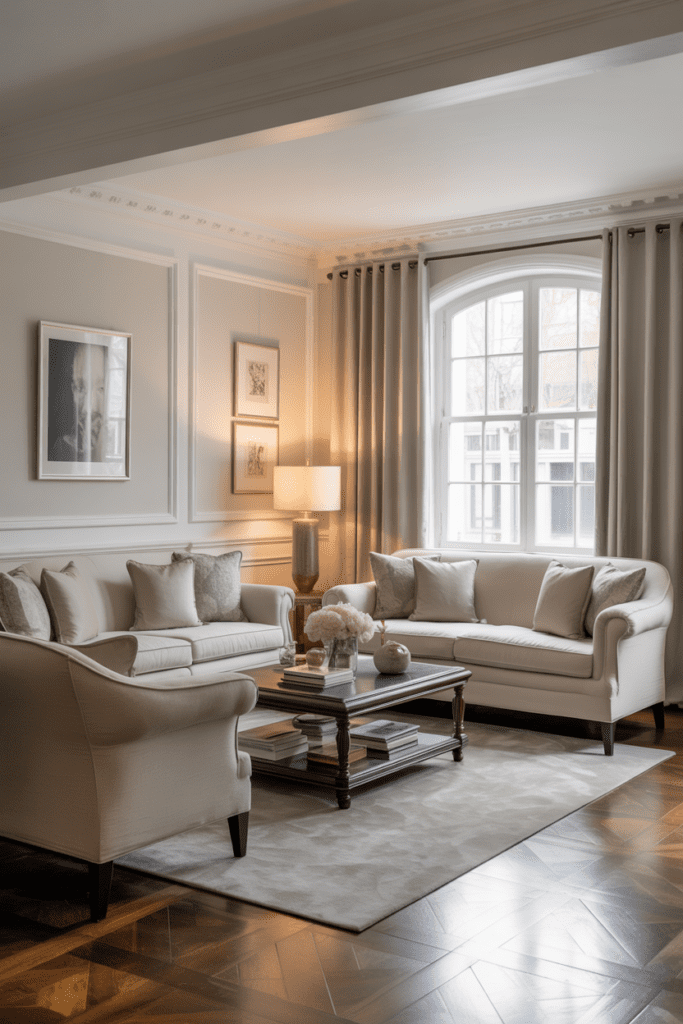
If you want old money living room ideas that actually work, start with color. Neutral tones create the calm, elegant base this style needs. Cream, ivory, taupe, beige, soft gray, and warm white all do the heavy lifting here.
I’d avoid loud accent walls unless you want your room to look like it’s trying to win a competition. Old money style prefers quiet confidence. It makes the room feel airy, expensive, and timeless.
Best shades to use
- Warm white
- Stone gray
- Camel
- Soft olive
- Deep navy
- Muted burgundy
A neutral palette also gives you room to layer textures without making the space feel busy. And that layering? That’s where the magic starts.
2. Invest in a Tailored Sofa
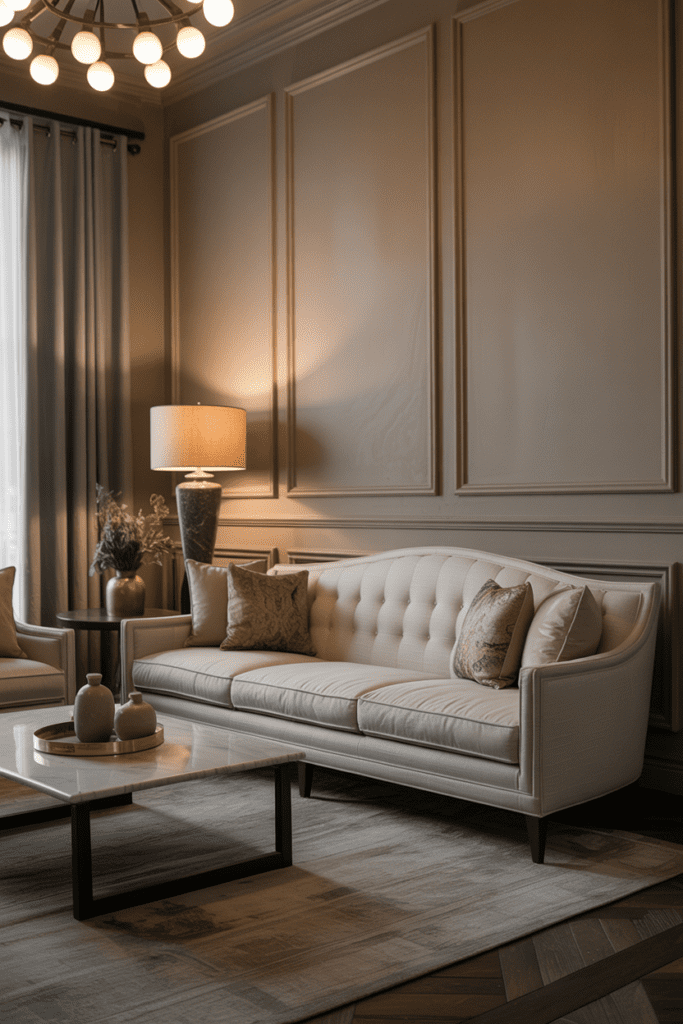
The sofa usually sets the tone, so make it count. A structured, well-made sofa instantly makes a room feel more polished. Look for clean lines, rolled arms, tufting, or subtle curves that feel classic rather than trendy.
I always say the sofa should look like it knows how to behave at dinner parties. Overstuffed, oversized sectionals can work in some homes, but old money style usually leans more tailored and composed. A linen or velvet sofa in a soft neutral shade hits the sweet spot.
Good sofa choices
- English roll arm sofa
- Tufted Chesterfield
- Linen slipcovered sofa
- Structured curved sofa
- Camelback sofa
FYI, if your sofa looks cheap, the whole room feels cheap no matter how fancy the candles are. Harsh? Maybe. True? Absolutely.
3. Use Real Wood Furniture
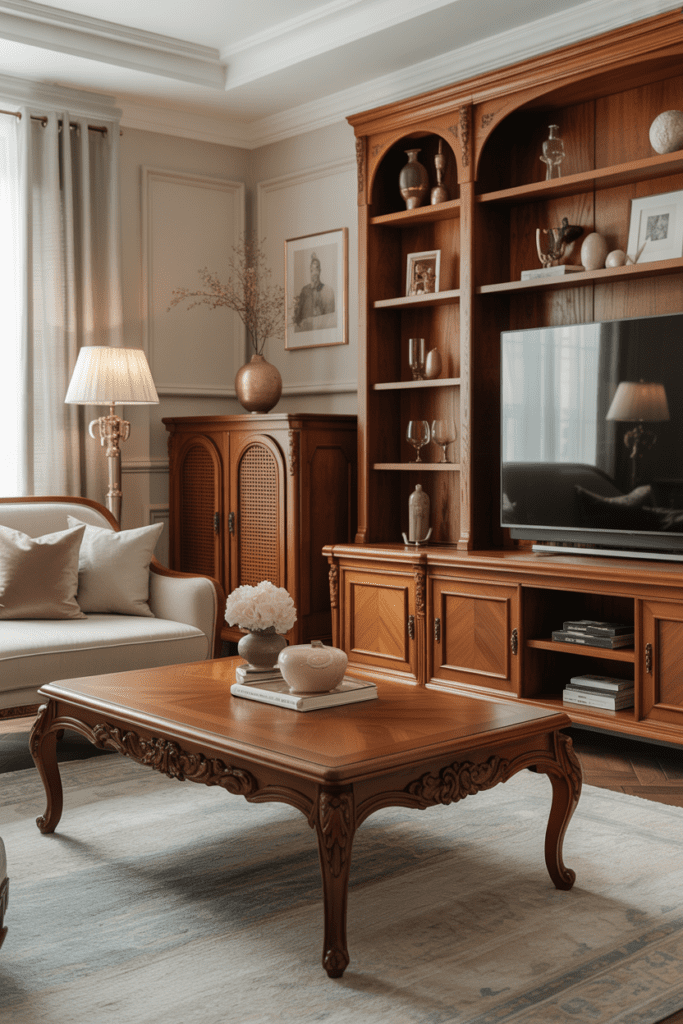
Nothing says old money like real wood furniture with depth and character. Skip the shiny faux finishes if you can. Walnut, mahogany, oak, and dark-stained woods all bring warmth and gravity to the space.
A wooden coffee table, sideboard, or bookshelf adds that “inherited over generations” feel. Even if you bought it last week, no one needs to know. The trick is choosing pieces with elegant proportions and classic shapes.
Best wood furniture picks
- Wood coffee table
- Traditional sideboard
- Bookshelf with molding
- Carved accent tables
- Wood-framed armchairs
Mixing wood tones can work too, as long as they share a similar warmth. Don’t force a matchy-matchy look unless you want the room to feel like a catalog from 1998.
4. Layer in Rich Textures
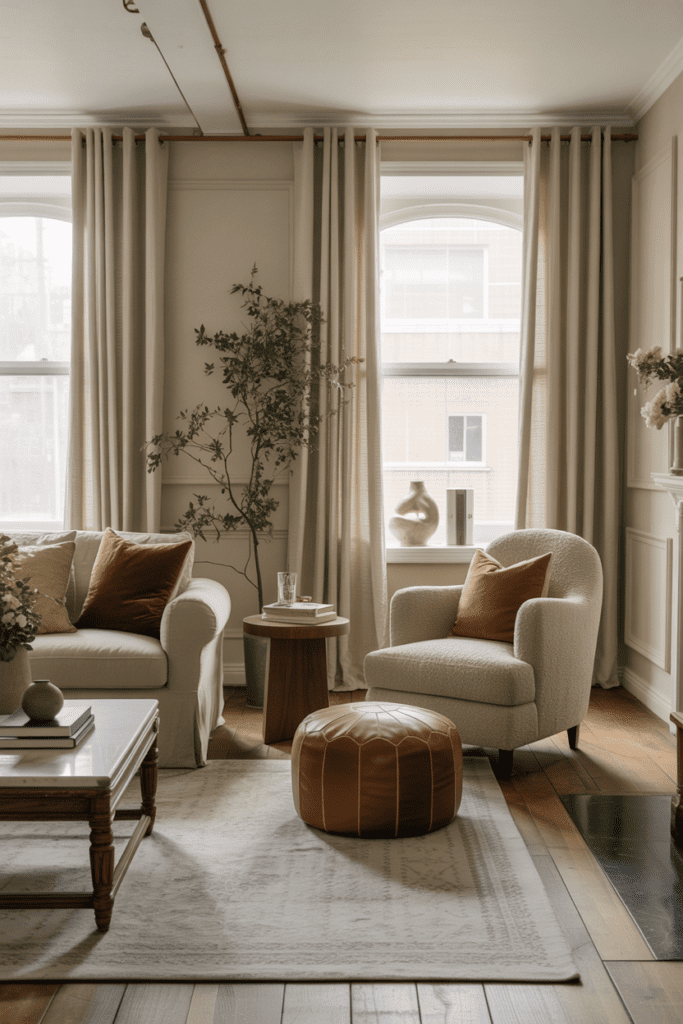
Old money style loves texture. Texture keeps neutral rooms from feeling flat or cold. Think velvet, linen, wool, silk, leather, and bouclé used in a balanced way.
A wool rug under a linen sofa. Velvet pillows on a classic armchair. A leather ottoman beside a wood table. That’s how you make the room feel collected instead of staged.
Easy textures to mix
- Velvet
- Linen
- Wool
- Leather
- Bouclé
- Silk
Ever notice how the most elegant rooms look comfortable without looking sloppy? That usually comes from texture. It gives the eye something interesting to land on, which makes the room feel richer.
5. Add Symmetry
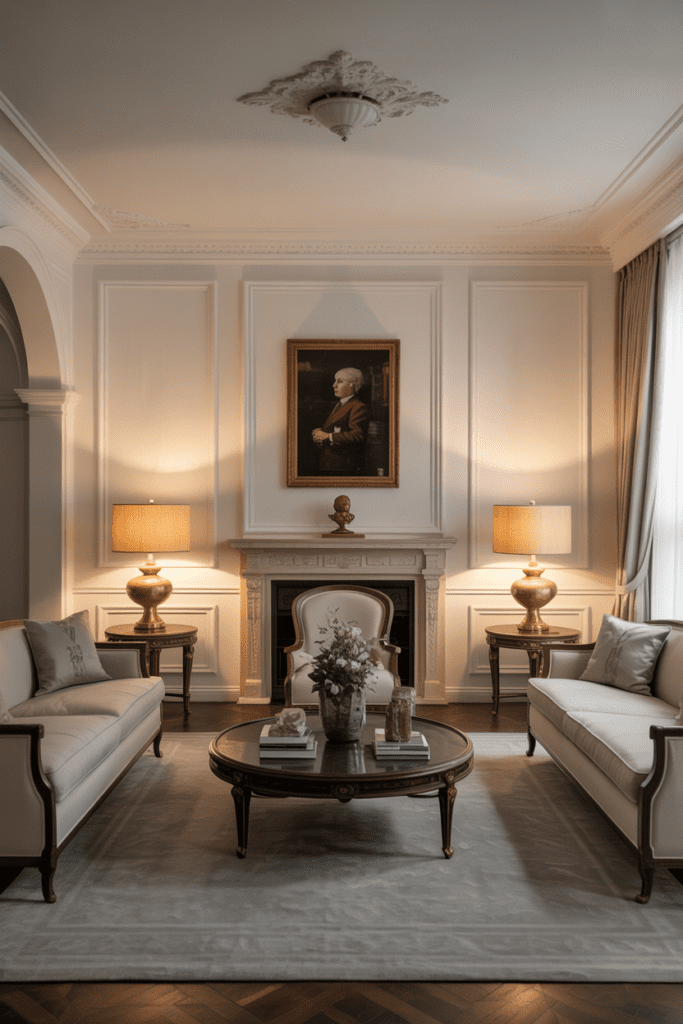
Old money design loves symmetry because it feels balanced and composed. Symmetry creates order, and order reads as elegance. Place matching lamps on either side of a sofa. Use paired chairs. Center the coffee table.
This doesn’t mean your room must look stiff or boring. It just means the layout should feel intentional. A little structure goes a long way when you want the room to look refined.
Simple symmetry ideas
- Two matching lamps
- Paired accent chairs
- Centered artwork
- Balanced shelving
- Twin side tables
I’ve seen rooms transformed just by shifting furniture into a more balanced layout. It’s weirdly satisfying, like the room finally exhaled.
6. Bring in Antique Pieces
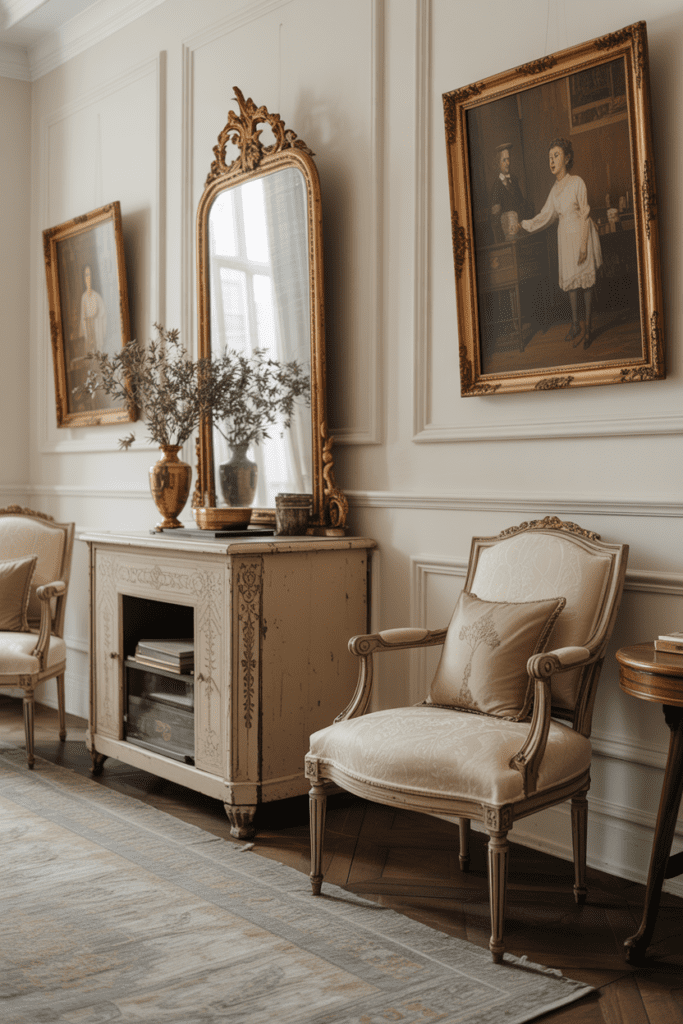
If you want true old money living room ideas, antiques belong on the list. One or two antique pieces can make the entire room feel layered and authentic. You don’t need a museum’s worth of heirlooms, thankfully.
Try a vintage mirror, an antique chest, a gilded frame, or a timeworn side table. These pieces add soul. Without them, a room can look too new and slightly soulless, which is basically the opposite of what we want.
Great antique additions
- Antique mirror
- Vintage lamp
- Old portrait frame
- Inherited cabinet
- Classical sculpture
The key is restraint. Use antiques like punctuation marks, not a full paragraph.
7. Choose Elegant Lighting
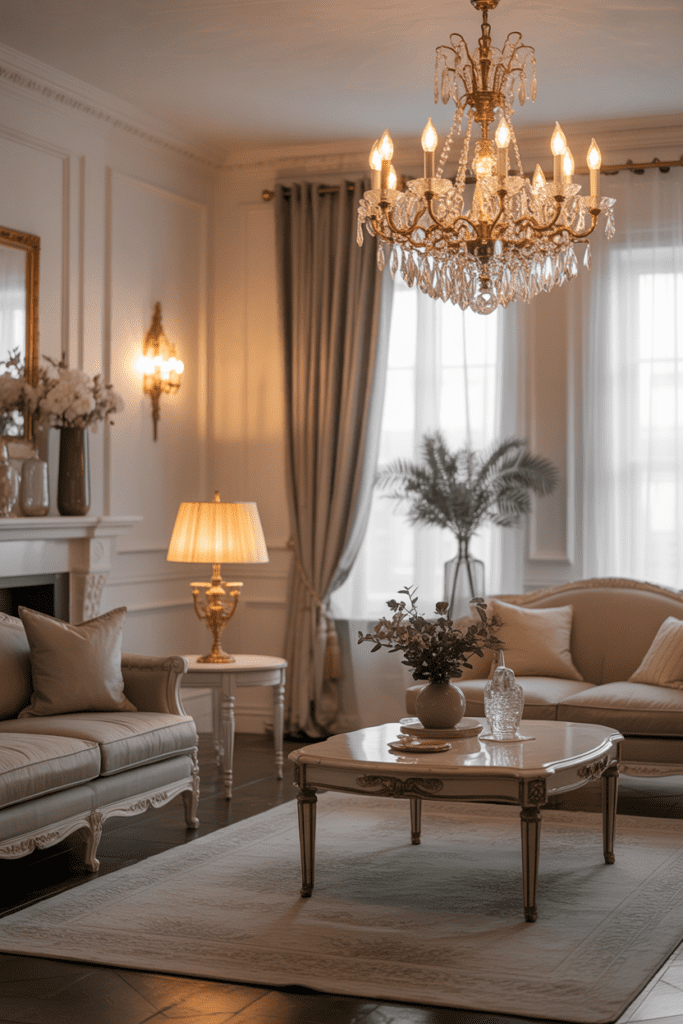
Lighting can make or break the whole vibe. Old money living rooms use warm, layered lighting instead of harsh overhead glare. Nobody wants their elegant sofa exposed under prison-grade brightness, right?
Go for table lamps, sconces, chandeliers, and floor lamps with classic detailing. Brass, aged gold, glass, and ceramic bases all work beautifully. Warm bulbs matter too, because cold light kills the mood fast.
Lighting ideas that work
- Crystal chandelier
- Brass table lamps
- Wall sconces
- Pleated floor lampshades
- Glass pendant lighting
Think soft, not dramatic. The goal is to flatter the room, not interrogate it.
8. Use Heavy Drapes
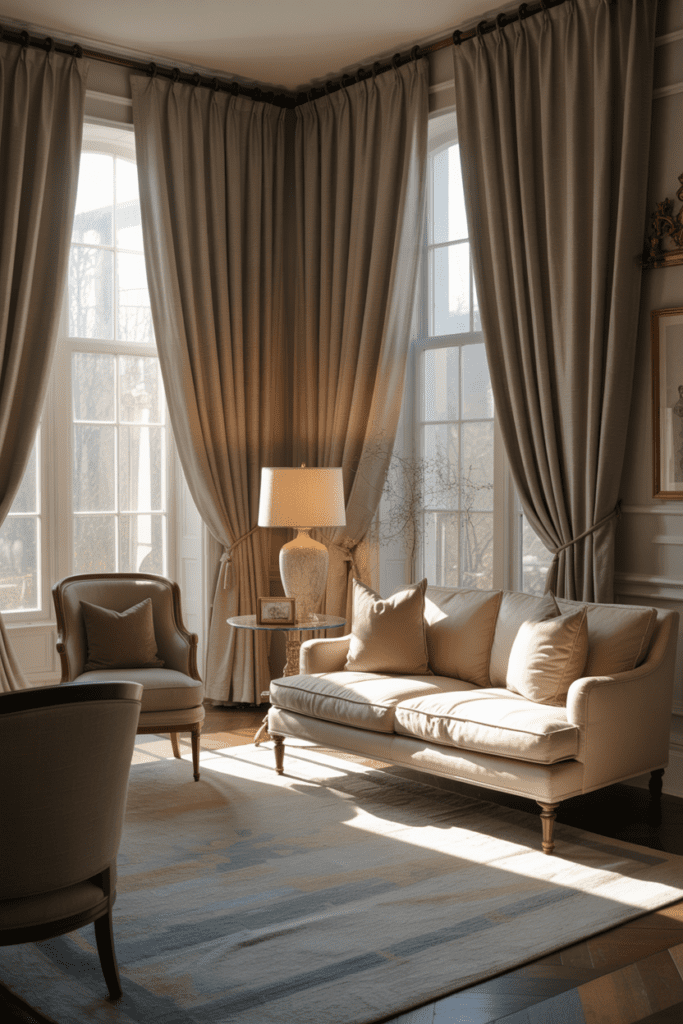
Old money style loves full-length curtains that pool slightly or just skim the floor. Heavy drapes make windows feel taller and the whole room feel more finished. Linen, velvet, and thick cotton all work well.
Bare windows can look stark in this style unless you’re going for a very specific airy look. Drapes add softness and a bit of formal charm. They also make the room feel quieter, which is a nice bonus if your neighbors live like they’re in a drumline.
Curtain tips
- Hang them high
- Go floor-length
- Choose lined fabrics
- Use classic rods
- Stick to muted colors
This is one of those details people notice even if they don’t realize it. The room just feels “done.”
9. Add a Statement Rug
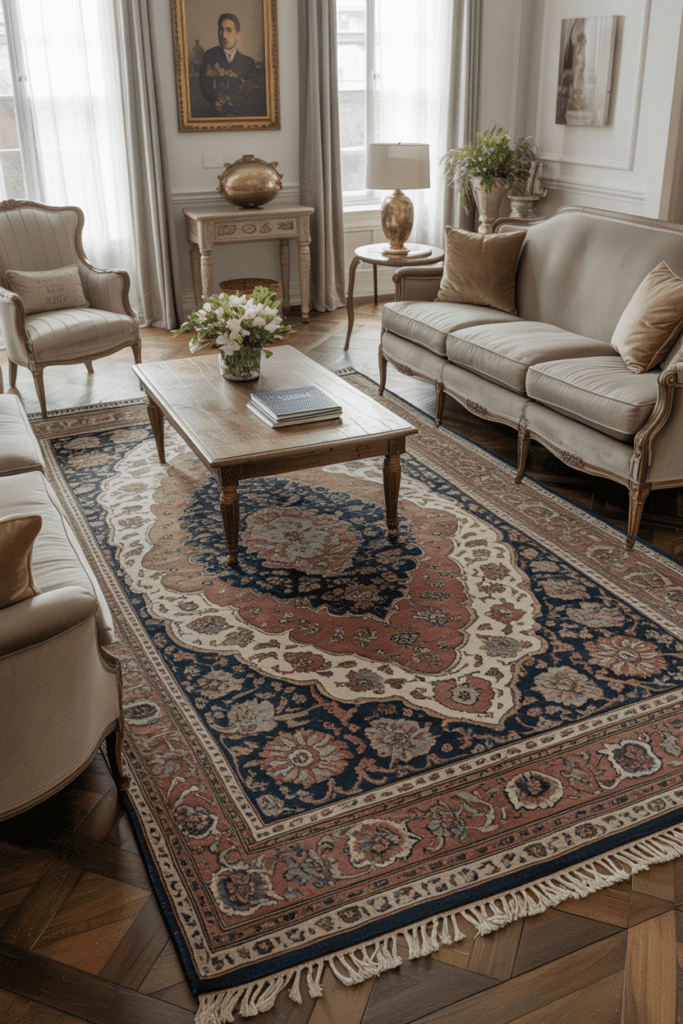
A rug can anchor everything. A good rug grounds the furniture and adds visual richness. Persian-style rugs, faded oriental patterns, and understated wool rugs fit the old money look especially well.
You want something elegant, not overly trendy. A rug with a little age or a vintage-inspired pattern often looks better than something too crisp and modern. The slight wear gives it character, which is basically old money’s favorite accessory.
Rug styles to consider
- Persian rug
- Muted oriental rug
- Vintage wool rug
- Subtle floral pattern
- Neutral bordered rug
Place the rug so it connects the seating area. Floating it awkwardly in the middle of the room? Hard pass.
10. Display Books Thoughtfully
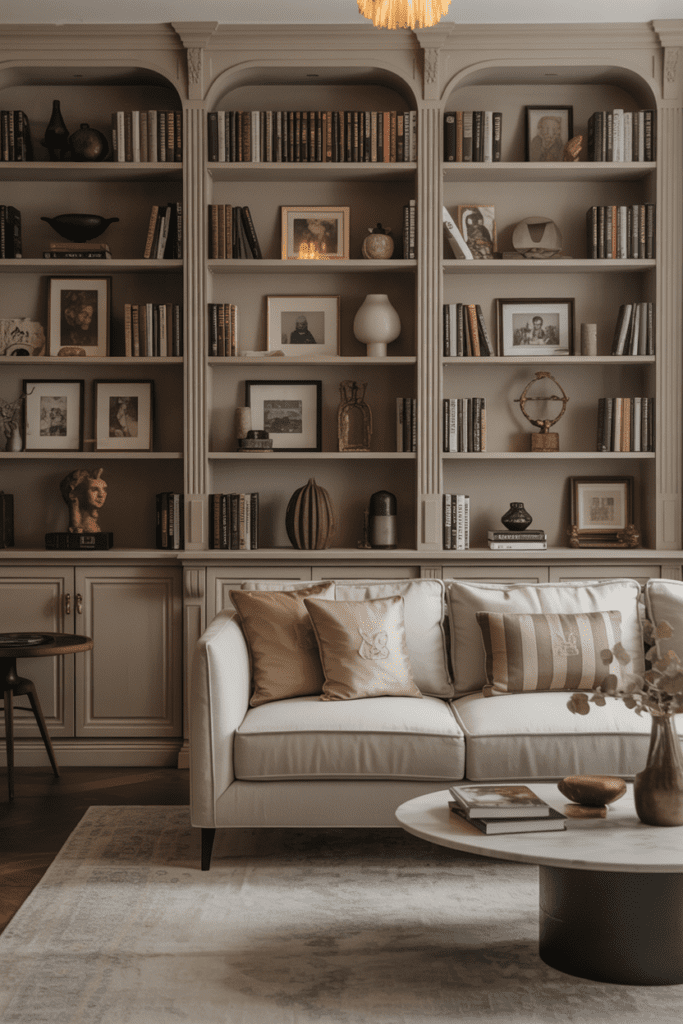
Books signal taste, curiosity, and a life beyond scrolling. Stacking and arranging books adds intelligence and warmth to the room. Old money interiors often include bookshelves filled with hardcovers, art books, and a few treasured objects.
You don’t need to fake a library. Just use books in a way that feels natural. Stack some horizontally, line up others vertically, and leave breathing room so it doesn’t look like a bookstore exploded.
Smart book styling
- Coffee table books
- Hardcover classics
- Vintage novels
- Art and design books
- A few sculptural objects
I love using books as decor because they make a space feel lived in. Also, they give guests something to browse while pretending not to judge your playlist.
11. Include Classic Artwork
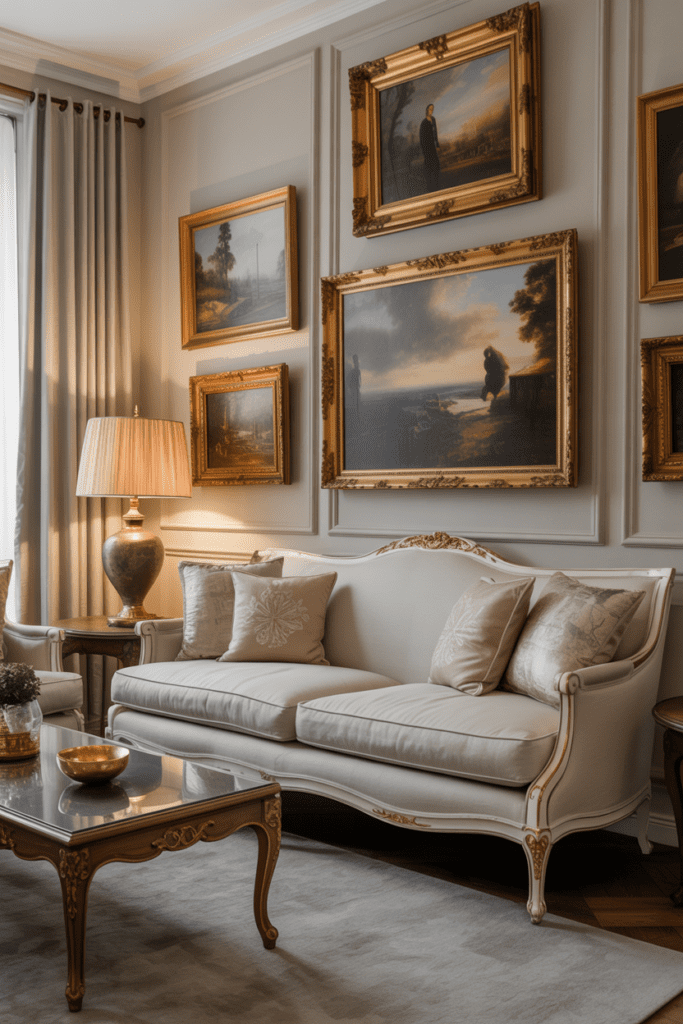
Art matters a lot in old money living rooms. Classic paintings, landscapes, portraits, and black-and-white photography bring depth and culture. You don’t need expensive originals to get the effect.
Choose frames carefully. Gold, wood, or antique-inspired frames usually work best. Keep the art elegant and calm rather than overly graphic or trendy.
Art ideas that fit
- Oil painting
- Landscape print
- Framed botanical art
- Black-and-white photo
- Abstract with muted colors
A single oversized piece can look amazing over a fireplace or sofa. Just don’t overdo the gallery wall unless you know exactly what you’re doing. Otherwise, it can start looking like a waiting room with ambition.
12. Mix in Heritage Patterns
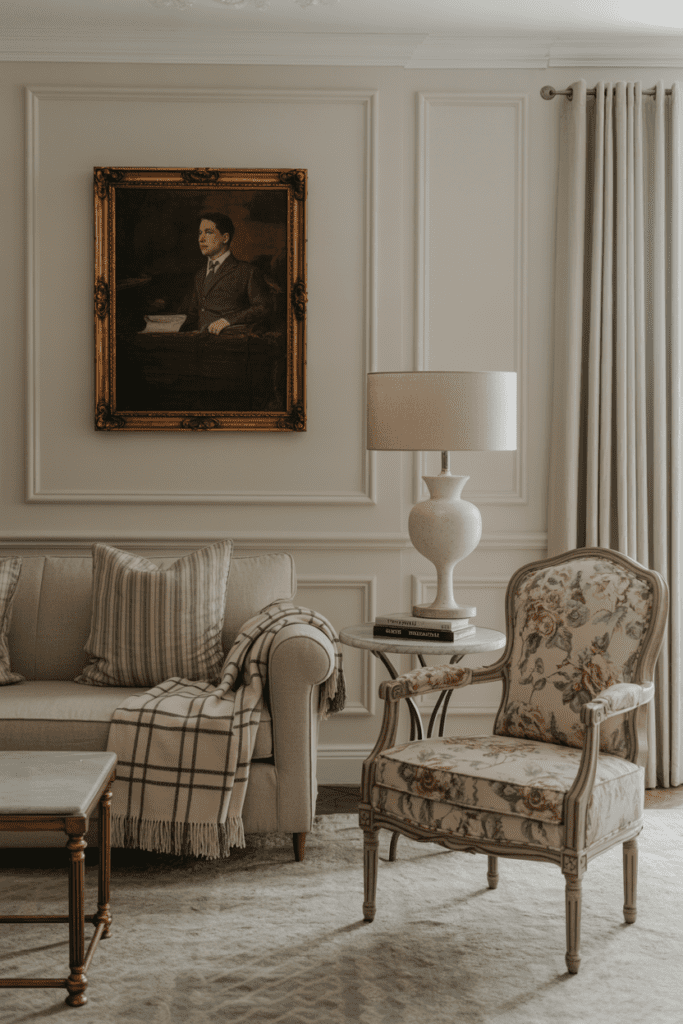
Old money interiors often borrow from traditional patterns. Checks, stripes, florals, plaids, and damasks can add subtle sophistication. The trick is keeping the colors soft and the scale balanced.
Pattern works best when it plays a supporting role. A striped pillow here, a floral armchair there, maybe a plaid throw folded with casual confidence. That’s enough.
Pattern ideas
- Pinstripes
- Tartan
- Small florals
- Damask
- Herringbone
- Subtle checks
Patterns bring personality, but too many can make the room feel noisy. And old money style never yells. It clears its throat politely.
13. Use Fireplace Styling Well
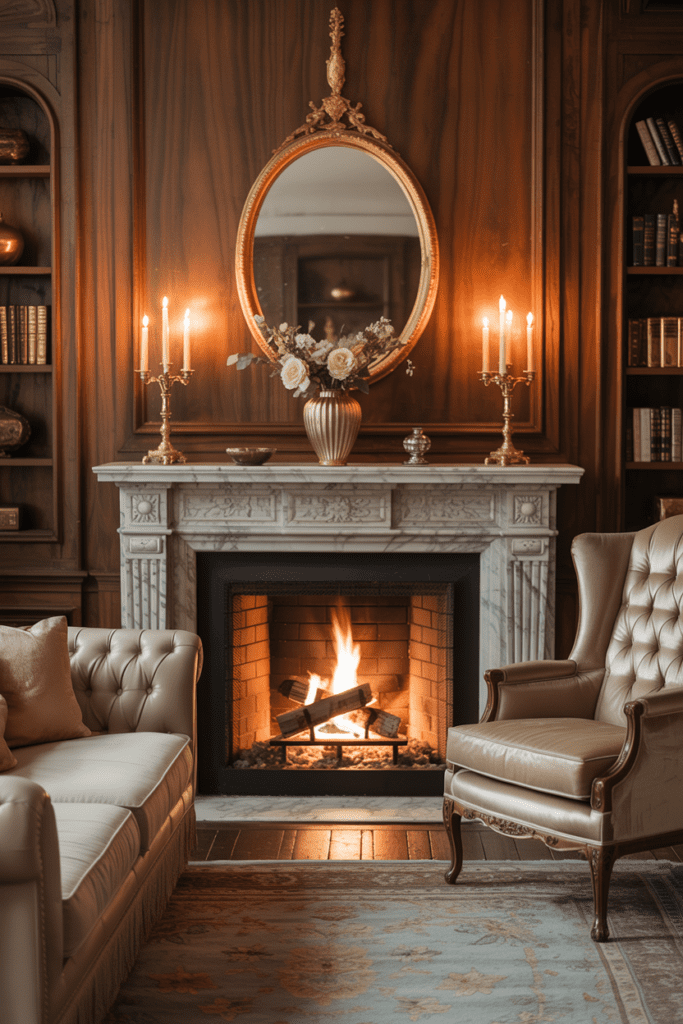
If you have a fireplace, use it. A fireplace creates an instant sense of heritage and warmth. Even a simple mantel can become a focal point with the right styling.
Keep the mantel elegant and restrained. A mirror, a pair of candlesticks, a vase, or a small painting usually does the trick. You want it to look curated, not over-decorated.
Fireplace styling tips
- Center a large mirror
- Add paired candlesticks
- Use a single vase
- Keep the mantel uncluttered
- Place logs neatly below
Fireplaces practically do half the design work for you. Rude, but convenient.
14. Choose Decorative Accents Carefully
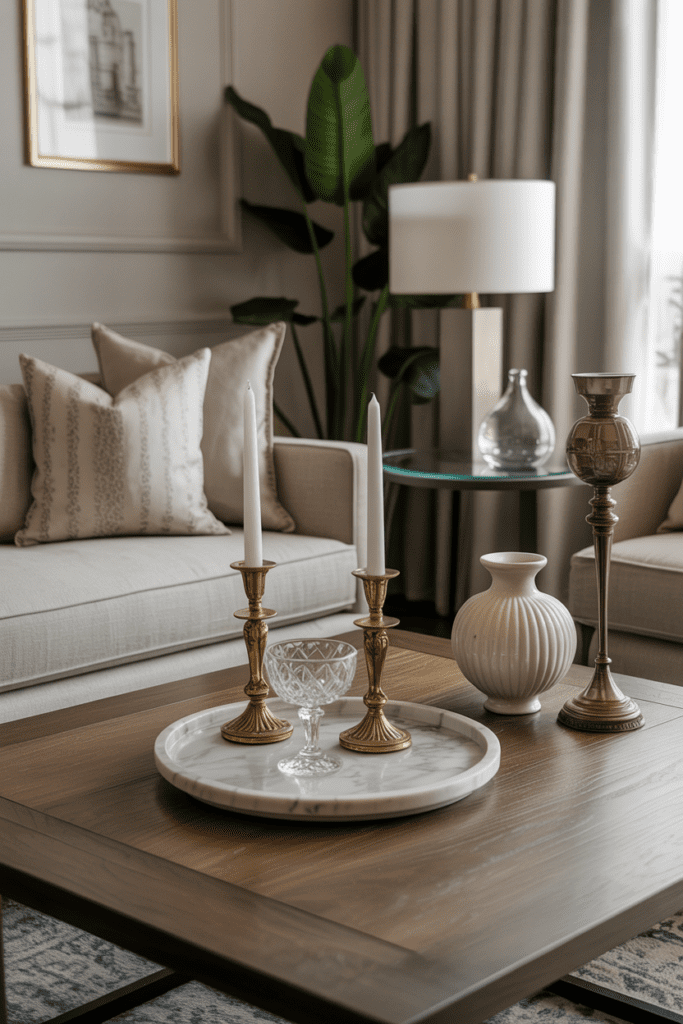
Accessories should feel chosen, not collected in a panic. Old money living rooms use fewer objects, but each one feels meaningful. Think brass trays, ceramic urns, crystal bowls, and tasteful objects with age or texture.
Avoid cluttered shelves packed with random trinkets. That look says “I couldn’t decide,” not “I have impeccable taste.” A few well-placed items always win.
Accent pieces that work
- Brass candlesticks
- Ceramic vases
- Crystal bowls
- Marble objects
- Silver trays
This is where restraint pays off. One beautiful object beats five forgettable ones every time.
15. Bring in Greenery, Not Jungle Madness
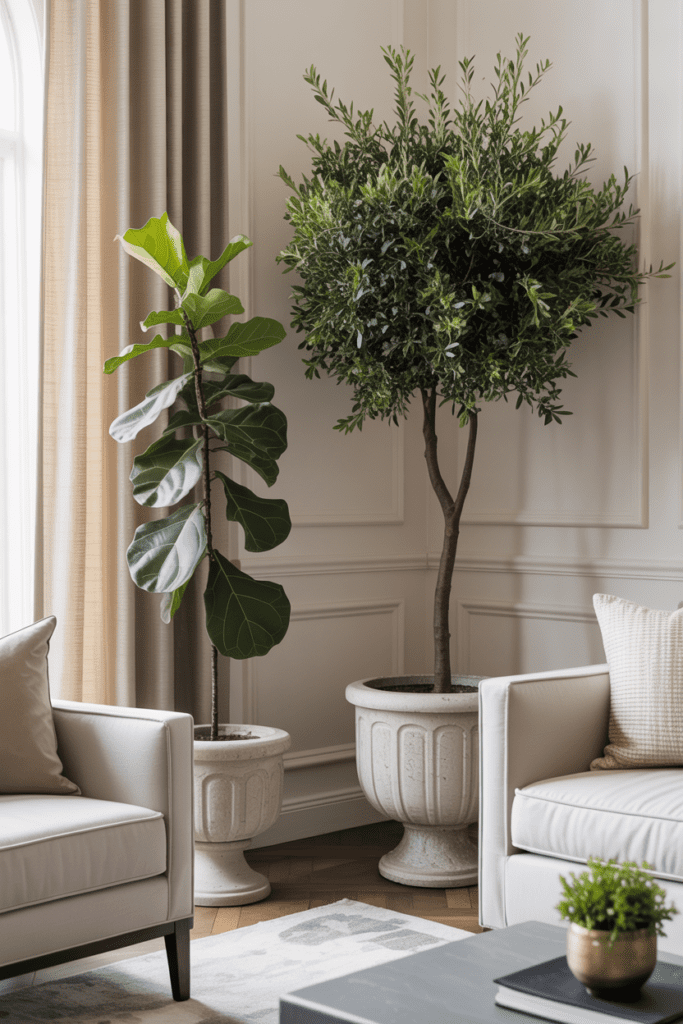
Plants add life, but old money style prefers controlled greenery over chaotic indoor rainforest energy. Use elegant plants in classic planters. A fiddle leaf fig, olive tree, or tall fern can work beautifully.
The planter matters almost as much as the plant. Choose stone, ceramic, brass, or terracotta containers with a refined shape. A plant in a cheap pot can drag the whole room down faster than you’d think. 🙁
Best plant choices
- Fiddle leaf fig
- Olive tree
- Rubber plant
- Fern
- Potted orchids
One or two good plants usually beat ten tiny ones. Let the room breathe.
16. Create a Conversation Zone
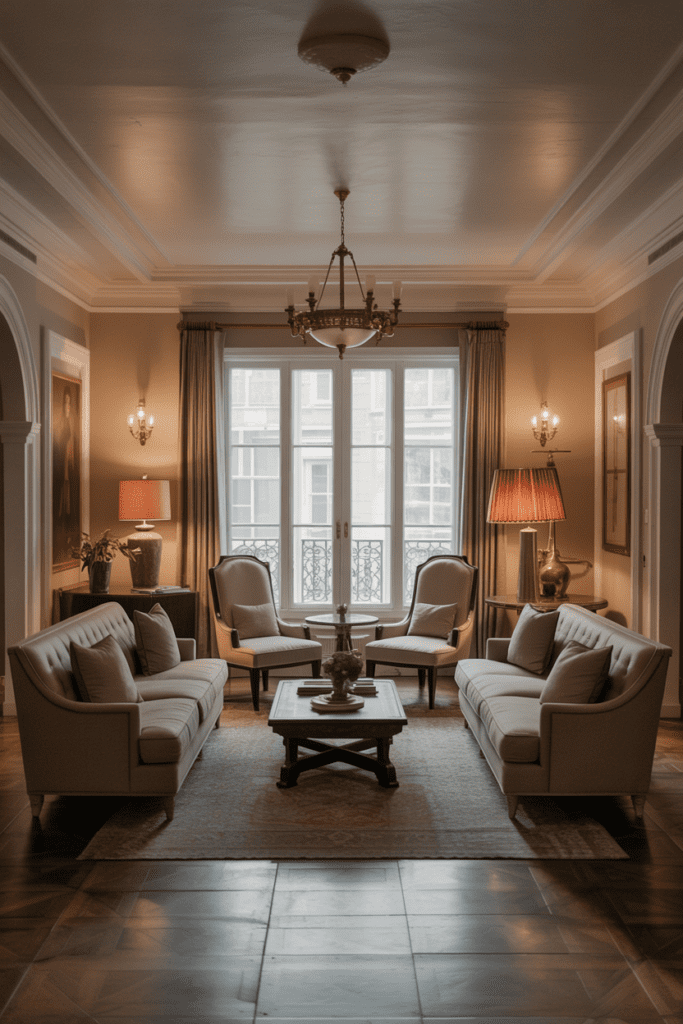
Old money living rooms feel social. They invite conversation instead of turning everyone toward a TV like it’s a court hearing. Arrange chairs and sofas so people can actually talk to one another.
This means pulling furniture in a bit and creating an intimate layout. Add a coffee table in reach, keep side tables useful, and avoid spacing pieces too far apart. The room should feel welcoming, not like a furniture showroom.
Conversation layout tips
- Face seats toward each other
- Keep distances comfortable
- Use a central coffee table
- Add side tables for balance
- Leave walking space around edges
This layout makes the room feel warmer and more intentional. It also makes guests feel like you actually planned for them, which is nice for a change.
17. Keep Technology Discreet
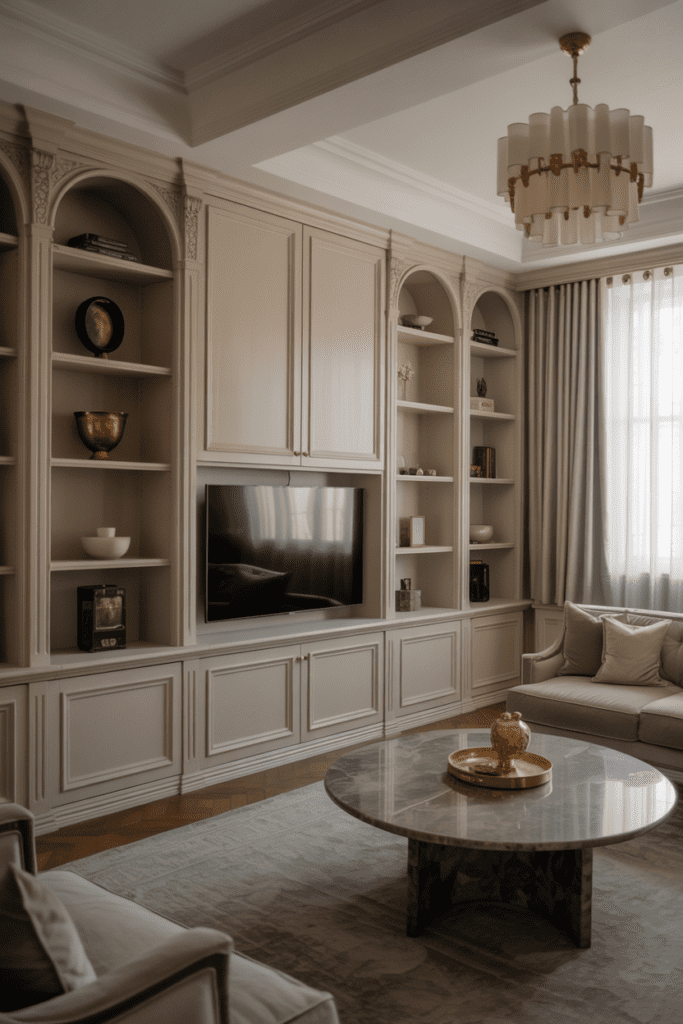
Let’s be honest: giant black TVs and visible wires do not scream old money. Keep technology as hidden as possible so the room stays elegant. Use cabinets, paneling, art-like TV mounts, or low-profile speakers if you can.
This doesn’t mean you need to live like it’s 1895. It just means your tech shouldn’t dominate the room. Let the design lead, and let the gadgets blend in.
Smart ways to hide tech
- Use a media cabinet
- Conceal wires
- Choose slim speakers
- Mount the TV thoughtfully
- Use dark finishes to blend electronics
IMO, this is one of the easiest upgrades with the biggest impact. A room instantly feels more polished when the tech stops shouting for attention.
How to Pull It All Together
The best old money living room ideas don’t rely on one expensive item. They rely on restraint, balance, and quality. When you combine soft colors, classic furniture, layered texture, and a few timeless accents, the room starts to feel naturally elegant.
You don’t need to copy a mansion or buy everything new. Start with the biggest visual pieces first: sofa, rug, lighting, and curtains. Then layer in artwork, books, antiques, and accessories with care.
Quick checklist
- Neutral palette
- Tailored sofa
- Real wood furniture
- Classic lighting
- Layered textures
- Minimal clutter
- Balanced layout
That’s really the secret. Old money style looks expensive because it feels thoughtful, not because it shouts.
Final Thoughts
If you want a living room that feels timeless, calm, and quietly luxurious, these 17 old money living room ideas give you a solid roadmap. Focus on classic materials, balanced layouts, subtle color, and pieces that feel like they belong to a larger story.