

So you want a patio that feels like a cozy cabin retreat, minus the four-hour drive to the mountains? I get it. I’ve spent way too many weekends (and way too much of my paycheck) turning my own concrete slab of a backyard into something that actually makes me want to sit outside with my coffee instead of scrolling on my phone indoors.
Rustic patios have this magic where they look effortless but somehow still pull together perfectly. IMO, that’s the whole appeal — nothing feels forced, nothing feels like it came straight out of a showroom. Everything looks like it’s been there for decades, weathered by sun and stories.
I’ve tested a bunch of these ideas myself, and a few flopped hard (RIP my first attempt at a DIY stone path — my ankles still remember). But the ones that worked? They completely transformed how I use my outdoor space, and honestly changed how often I actually go outside at all. Let’s get into the 15 rustic patio ideas that actually deliver, plus a few honest warnings about what not to do.
1. Reclaimed Wood Flooring
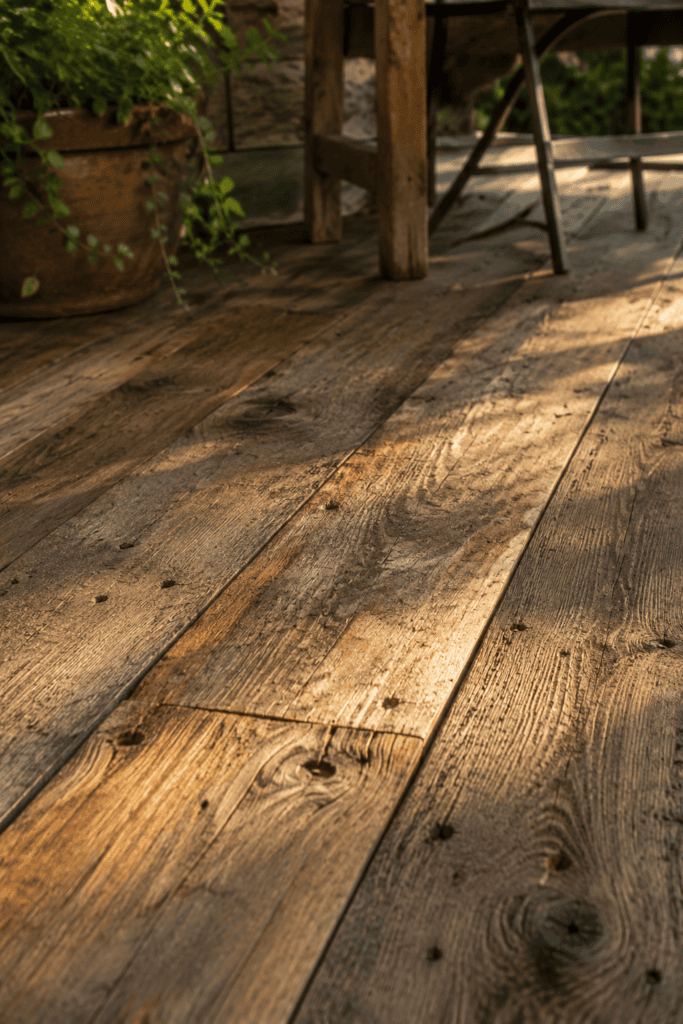
Nothing screams rustic charm louder than reclaimed wood underfoot. I ripped out my old composite decking and swapped it for reclaimed barn wood, and the difference is night and day.
Why it works:
- Adds warmth and texture instantly
- Every plank has its own character — knots, grain, imperfections and all
- More sustainable than buying brand-new lumber
- Ages gracefully instead of just looking “old and tired”
Ever wondered why old wood looks better than new wood? It’s the weathering. Fresh lumber just doesn’t have that lived-in soul yet, no matter how much you stain it. If you can’t source real reclaimed wood, look for lumber yards that sell “distressed” or “barnwood-style” boards. They’re not quite the real deal, but they get you 80% of the way there for a fraction of the hunting-around effort.
One thing I’ll mention: reclaimed wood needs a bit more upkeep than composite decking. You’ll want to reseal it every year or two depending on your climate. I didn’t know that going in, and my first summer taught me a hard lesson about sun damage.
2. Natural Stone Pavers
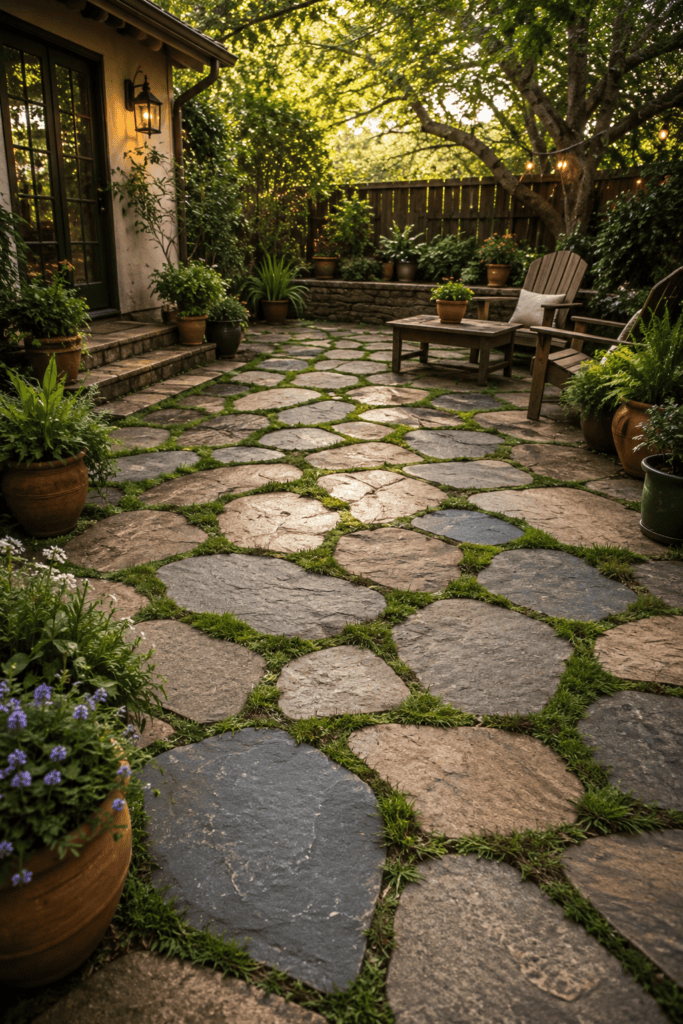
Stone pavers are the backbone of almost every rustic patio I’ve ever admired. They’re durable, they age beautifully, and they don’t scream “I bought this at a big box store last Tuesday.”
I went with irregular flagstone for my own patio because I liked the organic, puzzle-piece look. Here’s what to consider:
- Flagstone — irregular shapes, very natural look, great for a relaxed cottage feel
- Fieldstone — rounder edges, softer feel, works well near garden beds
- Slate — darker tones, great for a moody, cabin-in-the-woods vibe
- Cobblestone — smaller and more uniform, ideal if you want rustic without total chaos
Honestly, laying these took longer than I expected. My back was not thrilled, and I definitely underestimated how much sand and gravel base work goes into a stable patio. But the payoff was worth every groan. If you’re not into manual labor, most stone suppliers will connect you with installers who specialize in exactly this kind of work.
A Quick Note on Cost
Stone pavers aren’t cheap, and IMO that’s the biggest hesitation most people have. Budget-wise, flagstone tends to run higher than poured concrete but lower than natural slate. If money’s tight, you can mix pavers with gravel infill to cut down on the total stone needed while still getting that rustic look.
3. A Stacked Stone Fire Pit
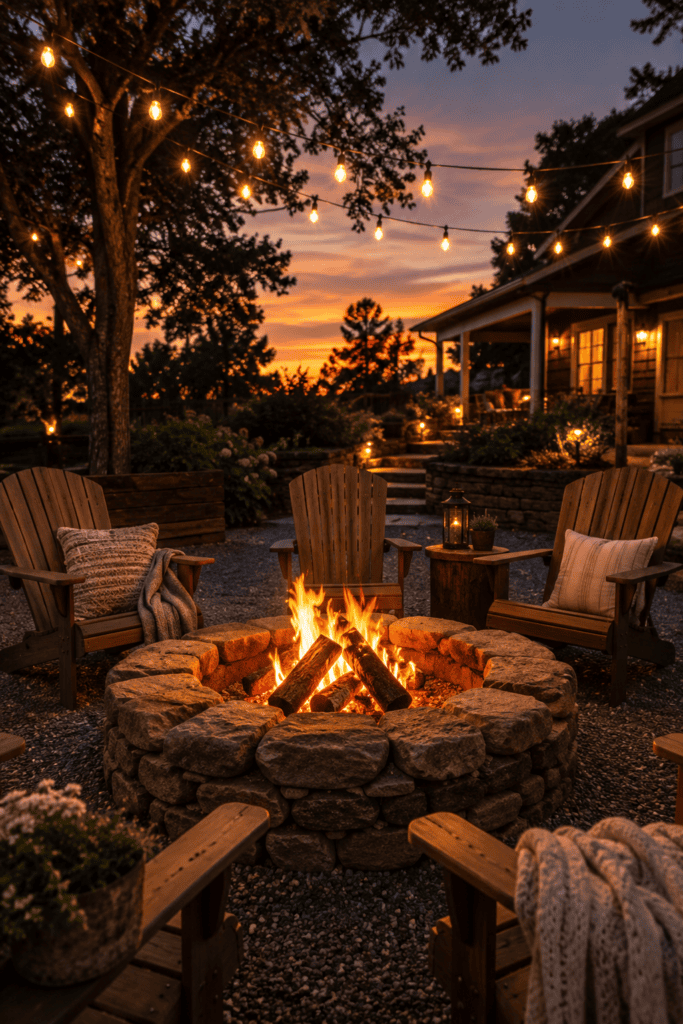
A fire pit is basically non-negotiable if you’re going for rustic. I built mine using stacked fieldstone, and it’s become the centerpiece of every gathering I host now.
Picture this: string lights overhead, a crackling fire, and someone inevitably burning the first marshmallow. That’s the dream, right?
Quick tip: Keep the stones dry-stacked (no mortar) for that authentic, old-world feel. It also makes repairs way easier down the road, since a mortared pit basically becomes a permanent structure the second it’s built.
A few practical things I learned the hard way:
- Check your local fire codes before building anything permanent
- Leave at least 10 feet of clearance from structures and overhanging branches
- Line the interior with fire-rated brick, not just any old stone, or you risk cracking
4. Exposed Wood Beams and Pergolas
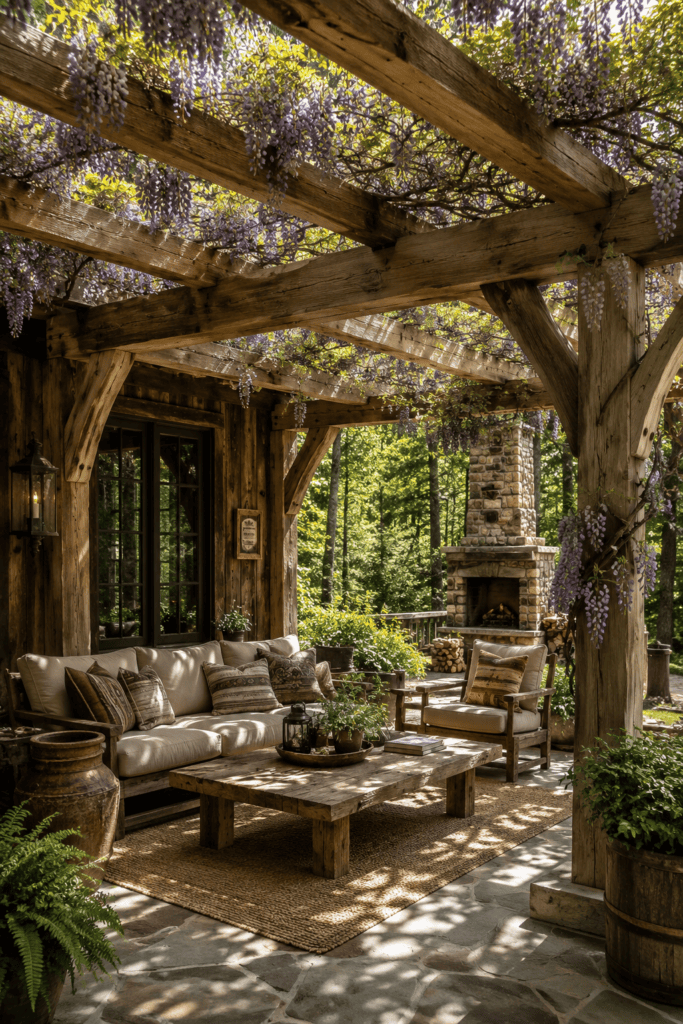
A pergola built from raw, unfinished timber instantly makes any patio feel like it belongs on a mountain lodge property. I added one over my seating area, and it’s completely changed how the whole space feels — more defined, more intentional, almost like an actual outdoor room instead of just “the backyard.”
Don’t sand these beams down too much. The rougher, the better. FYI, a little bit of imperfection here is actually the goal, not a mistake to fix. If you want extra rustic points, look for cedar or reclaimed timber with visible saw marks left in.
You can also dress up a pergola with climbing vines like wisteria or clematis. Give it a season or two, and the whole structure starts to look like it’s been part of the yard forever.
5. Mismatched Wooden Furniture
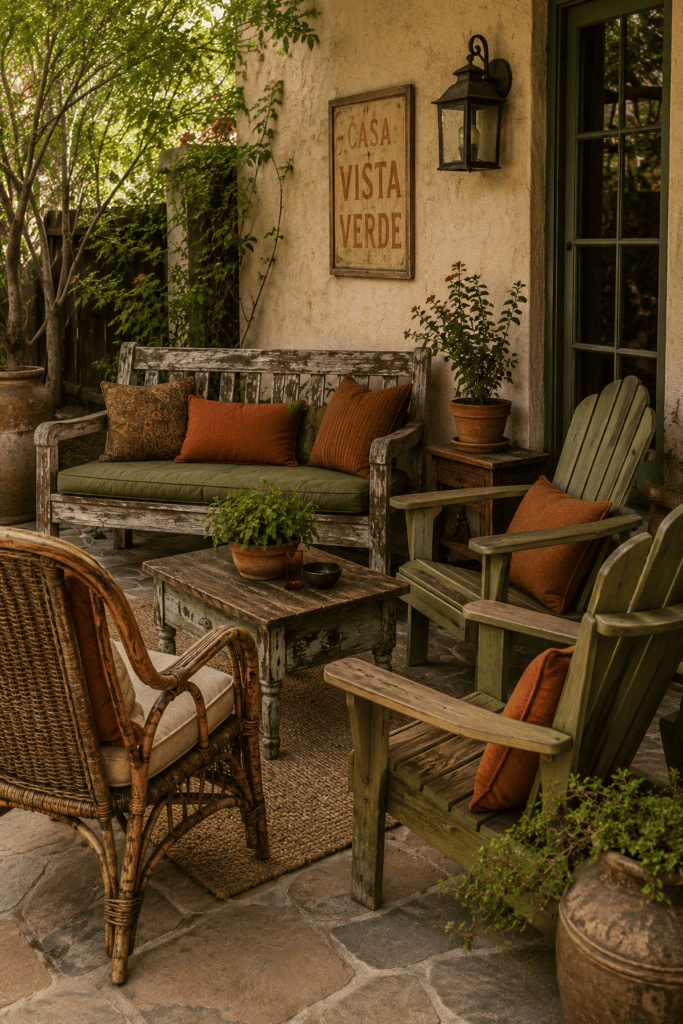
Here’s where I break from the “everything must match” school of design. Rustic patios thrive on variety. I mixed an old wooden bench I found at a flea market with a set of newer Adirondack chairs, and somehow it all just works.
- Look for weathered wood tones that complement each other, even if the pieces aren’t identical
- Add cushions in earthy colors like rust, olive, or mustard
- Throw in a vintage side table for character
- Mix textures — a woven rattan chair next to a solid wood bench adds visual interest without looking chaotic
Matching furniture sets are fine, but they can feel a little too polished for a rustic aesthetic. IMO, a bit of mismatch is what makes the space feel real and collected over time, rather than bought all at once from one catalog.
6. Wrought Iron Accents
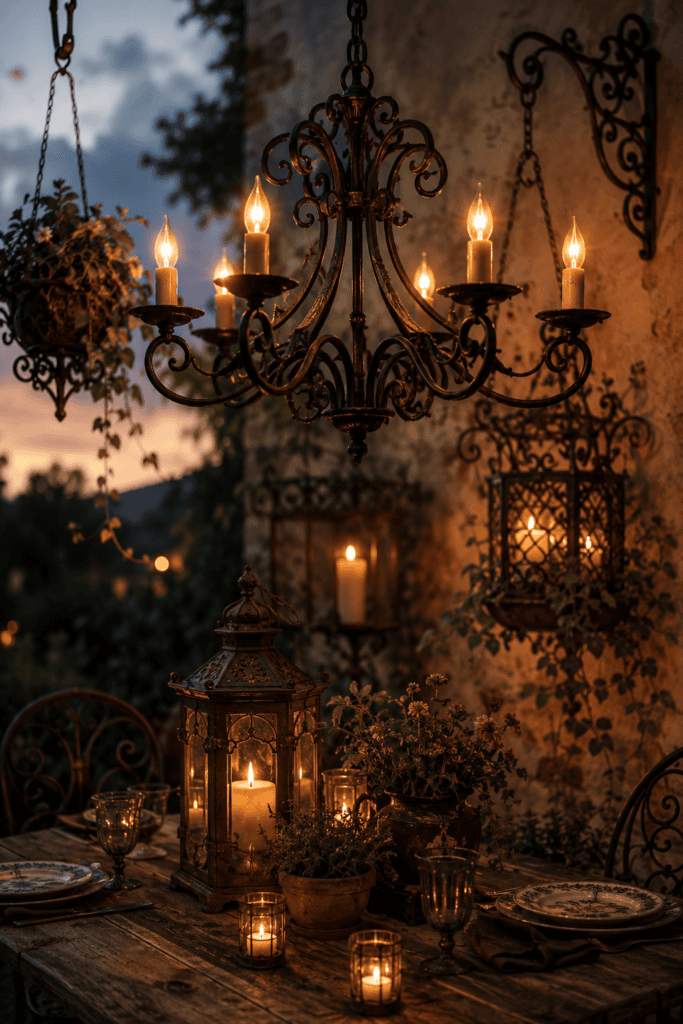
Wrought iron adds a nice contrast against all that natural wood and stone. Think lanterns, plant hangers, or even a small wrought iron bistro table tucked into a corner.
I added a wrought iron chandelier over my dining area, and it’s such a small detail, but it completely elevates the whole vibe at night. It’s basically the jewelry of the patio — subtle, but it pulls the whole look together.
Other places wrought iron works well:
- Curtain rods for outdoor drapes
- Decorative wall brackets for hanging plants
- Candle sconces mounted along a fence line
Just be mindful of rust if you live somewhere humid. A quick coat of clear sealant once a year keeps everything looking sharp without stripping away that aged charm.
7. A Rustic Outdoor Kitchen
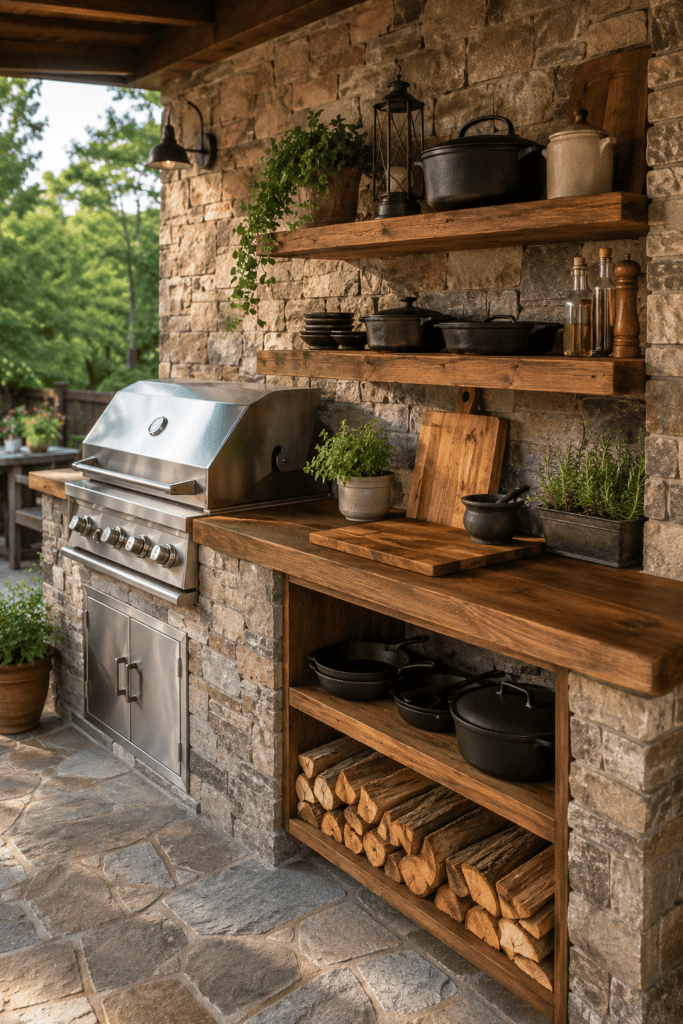
If you love cooking outside as much as I do, a rustic outdoor kitchen might be the single best upgrade you can make. Mine includes a stone-clad grill station and a wood countertop, and it’s turned backyard dinners into an actual event instead of an afterthought.
Key elements for a rustic outdoor kitchen:
- Stone or brick cladding on the grill island
- Wood countertops (sealed properly, trust me on this one)
- Open wood shelving instead of closed cabinets
- Cast iron cookware displayed openly instead of tucked away
Skipping the sealant on my countertop was my biggest regret. Learn from my mistake :/ Within a month, water stains had already started setting in, and I had to sand and reseal the whole thing before it even had a chance to look good.
If a full outdoor kitchen is out of budget, start small. A rolling cart with a butcher block top and a couple of open shelves gives you 90% of the rustic feel without the construction headache.
8. Vintage Metal Signs and Décor
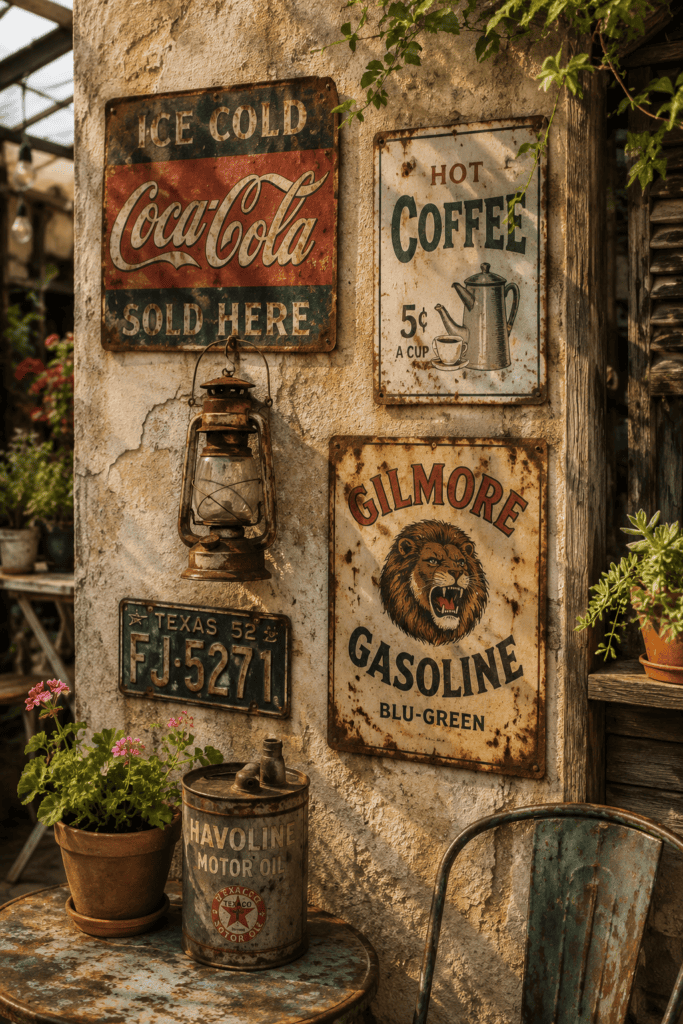
Old gas station signs, weathered license plates, antique lanterns — these small touches add personality without costing a fortune. I found most of mine at flea markets and estate sales for next to nothing.
This is honestly the easiest and cheapest way to add rustic charm. No construction required, no tools, just a good eye and a Saturday morning of thrifting. Ever notice how the cheapest upgrades sometimes end up being everyone’s favorite part of the space? This is one of those cases.
A few sourcing tips:
- Estate sales usually beat antique stores on price
- Reclaimed architectural salvage yards are a goldmine for weathered metal pieces
- Don’t overdo it — three or four well-placed pieces beat a wall cluttered with everything you found
9. Natural Wood Fencing
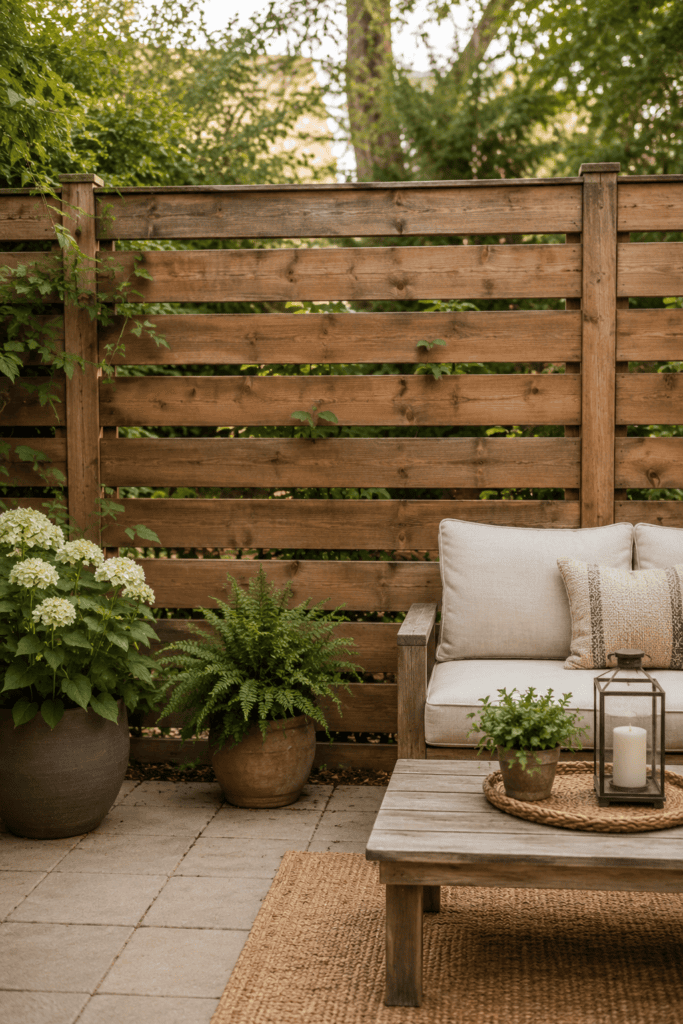
A rustic patio deserves a backdrop that matches. Skip the vinyl fencing and go for natural wood — cedar, pine, or even repurposed pallet wood if you’re on a budget.
Horizontal wood slats have become super popular lately, and I get why. They add a modern-meets-rustic look that still feels warm and welcoming rather than stiff. If you want something even more textured, board-and-batten fencing gives you a slightly more traditional, farmhouse feel.
Cedar is naturally rot-resistant, which makes it worth the extra upfront cost if you’re building something you actually want to last. Pine is cheaper but needs more regular sealing to hold up against the elements.
10. String Lights and Lanterns
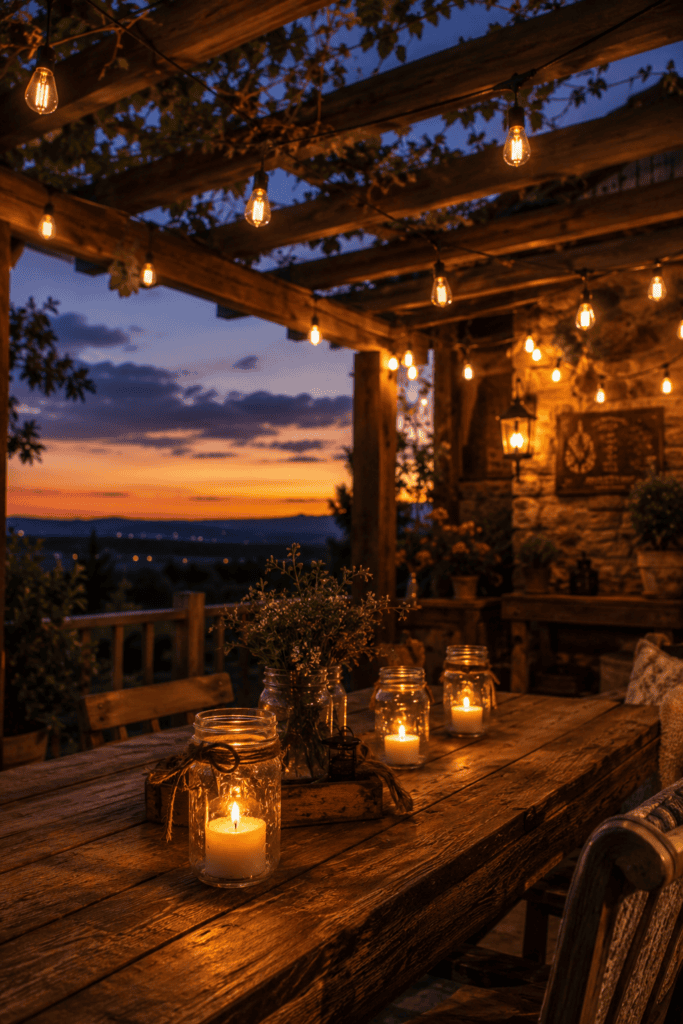
Lighting can make or break the whole atmosphere of a rustic patio. I strung warm white string lights across my pergola beams, and paired them with a few hanging lanterns for good measure.
Best lighting options for rustic patios:
- Edison bulb string lights for that warm, vintage glow
- Mason jar lanterns with candles inside
- Wrought iron lantern stakes along walkways
- Solar-powered path lights disguised inside old tin cans
Skip the bright white LEDs here. They’re way too clinical for a cozy rustic feel — trust me, I made that mistake early on, and my patio ended up looking more like a parking lot than a cabin retreat.
11. A Cozy Rug Layered Over Stone or Wood
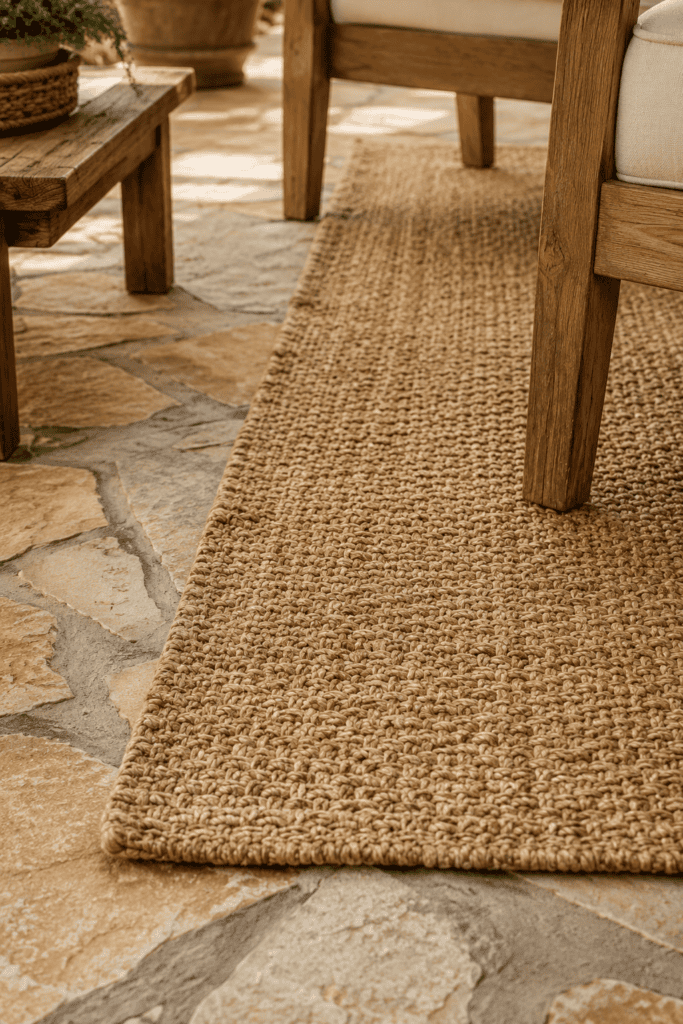
Yes, outdoor rugs are a thing, and yes, they make a massive difference. I layered a woven jute rug over my stone patio, and it instantly softened the whole space.
Look for rugs in natural fibers or earthy patterns. Avoid anything too glossy or synthetic-looking — it’ll clash with the raw materials around it. Jute and sisal both hold up decently outdoors, though I’d avoid leaving them out through heavy rain if you can help it.
If you want a rug that can handle more weather exposure, look for polypropylene rugs designed to mimic natural fiber. They’re not quite as authentic to the touch, but they’re way more forgiving if you forget to bring them in before a storm.
12. Potted Herbs and Wildflowers
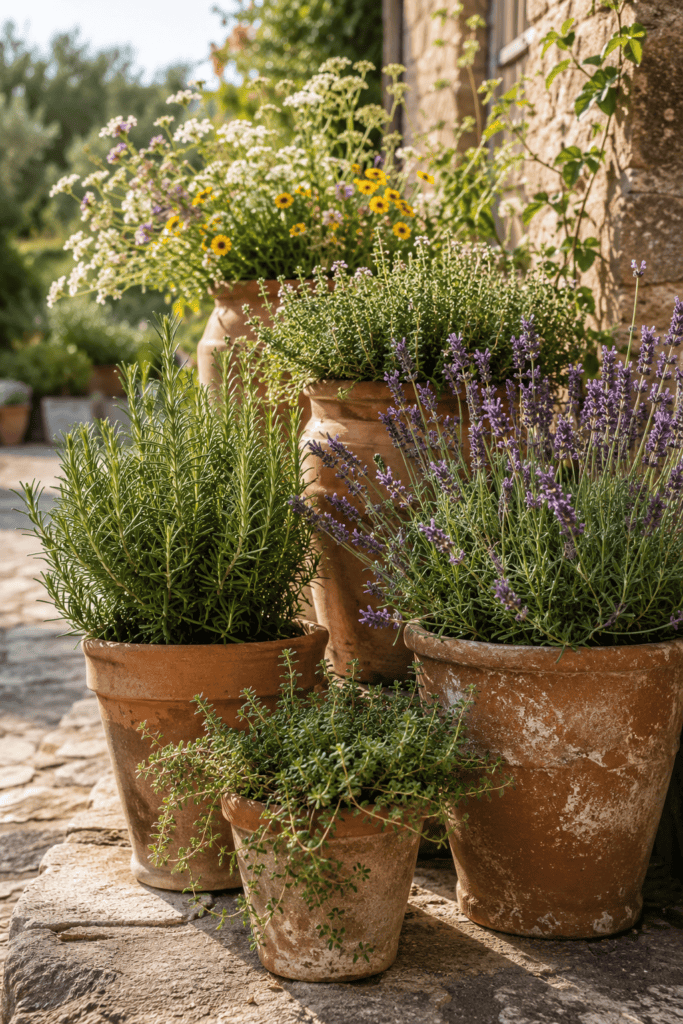
Nothing rounds out a rustic patio quite like a little greenery that looks like it grew there on its own. I keep pots of rosemary, thyme, and lavender scattered around mine, both for the smell and for casual cooking access.
- Use terracotta pots instead of sleek modern planters
- Mix herbs with wildflowers for a relaxed, garden-meets-patio feel
- Add a few hanging planters if floor space is limited
- Let some plants spill over the edges of pots instead of keeping everything perfectly trimmed
Ever notice how a few plants can make a space feel finished? It’s such a small addition, but it does a lot of heavy lifting. I’ve found that letting things look a little wild actually works better here than keeping everything manicured.
13. A Wood-Burning Pizza Oven
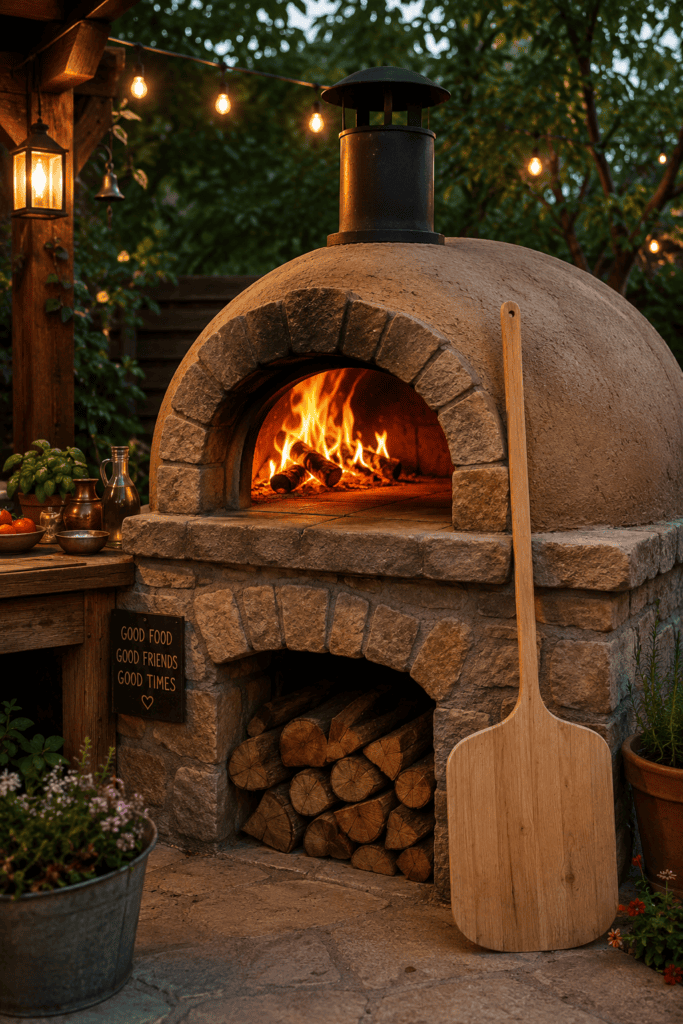
Okay, this one’s a splurge, but hear me out. A wood-fired pizza oven doesn’t just look incredible on a rustic patio — it becomes the whole reason people show up to your house.
I built mine using a stone and clay combo, and honestly, the compliments never stop. Is it a bit of a project? Absolutely. Is it worth it? For me, yes, a thousand times over. There’s something about handing someone a pizza that came out of an oven you built with your own hands that just hits different than store-bought anything.
If a full build feels like too much, prefab kits exist that only require basic stone or brick cladding on the outside. It’s a solid middle ground between DIY-from-scratch and buying something that looks obviously mass-produced.
14. Exposed Brick Elements
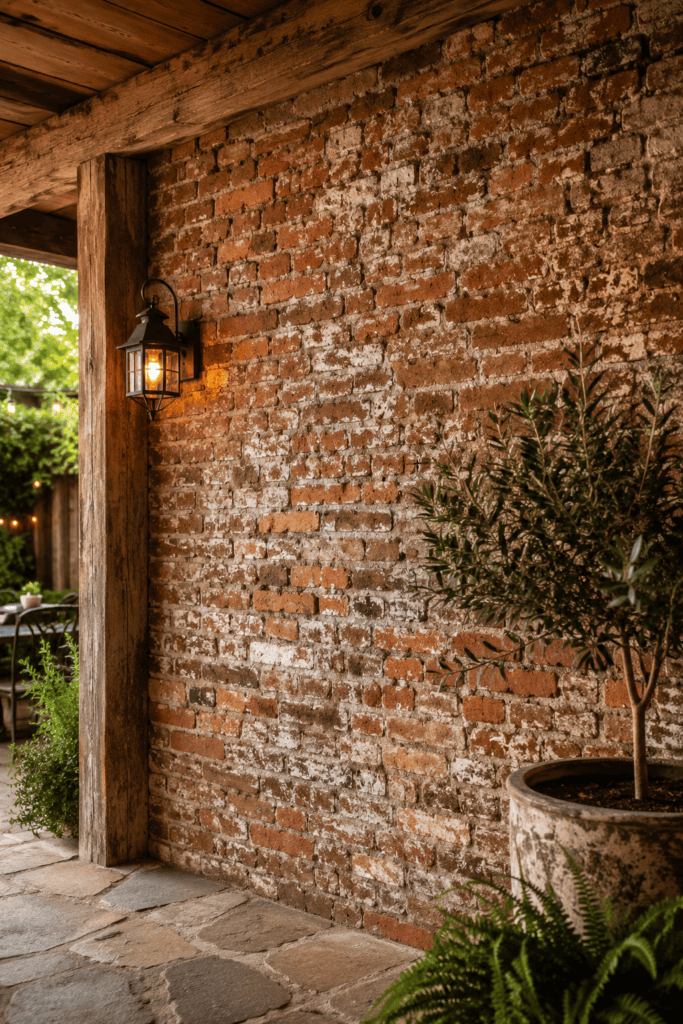
Brick brings a slightly different texture into the mix, and it pairs surprisingly well with wood and stone. I added a small exposed brick accent wall behind my seating area, and it grounds the whole space.
Where brick works well:
- Accent walls
- Fire pit surrounds
- Pathway borders
- Raised garden bed edging
Just don’t go overboard — too much brick can start to feel more industrial than rustic. I’d recommend picking one or two spots max and letting wood and stone carry the rest of the space.
15. A Hammock or Porch Swing
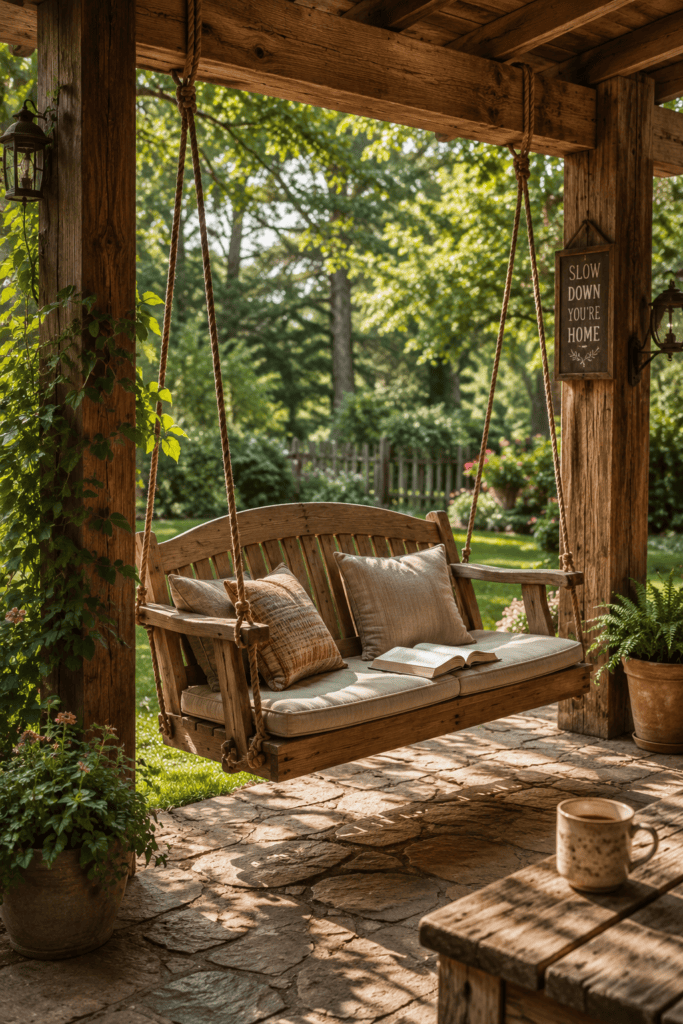
Every rustic patio needs a spot for doing absolutely nothing, and a hammock or wooden porch swing delivers exactly that. I hung mine between two sturdy posts near the edge of my patio, and it’s become my go-to reading spot.
There’s something about swaying gently with a book in hand that makes a backyard feel like an actual retreat rather than just an extension of the house. If you don’t have two posts or trees to hang between, a freestanding wooden hammock stand solves that problem without needing any permanent installation.
Budgeting Your Rustic Patio Project
I won’t pretend all fifteen of these ideas cost the same. Some are weekend flea-market finds, and others are full weekend-eating, wallet-draining builds. Here’s roughly how I’d rank them by investment level:
- Low cost, high impact: vintage décor, potted herbs, string lights, a layered rug
- Mid-range: mismatched furniture, wrought iron accents, natural wood fencing
- Bigger investment: stone pavers, a pergola, an outdoor kitchen, a pizza oven
My advice? Start with the low-cost stuff first. It’s genuinely surprising how much personality a few well-placed lanterns and a good rug can add before you even touch the bigger, pricier projects.
Common Mistakes to Avoid
I’ve made pretty much every mistake on this list at least once, so let me save you the trouble:
- Skipping sealant on wood surfaces — it’s a small step that saves you a huge headache later
- Going too matchy-matchy — rustic thrives on variety, not a coordinated furniture set
- Overlighting with cool-toned bulbs — always go warm white, never daylight white
- Ignoring local codes for fire pits and ovens — always double-check before you build anything permanent
- Overcrowding with décor — a few intentional pieces beat a cluttered wall of finds
FAQ: Rustic Patio Ideas
Do rustic patios cost more than modern ones? Not necessarily. Reclaimed materials and flea-market finds can actually be cheaper than brand-new modern fixtures. It really comes down to which elements you choose and how much DIY work you’re willing to put in yourself.
Can I do a rustic patio in a small backyard? Absolutely. Scale things down — a small stacked-stone fire bowl instead of a full pit, a couple of potted herbs instead of a full garden bed, and a small bistro set instead of a full dining area. The style translates well at any size.
What’s the easiest rustic upgrade to start with? Lighting and décor, hands down. Swapping in warm string lights and a couple of vintage finds gives you an immediate mood shift without any construction involved.
Conclusion
Building a rustic patio isn’t about following a strict formula — it’s about layering natural materials, weathered textures, and personal touches until the space feels like you. From reclaimed wood floors to a stacked stone fire pit, every element on this list works because it embraces imperfection instead of fighting it.
My own patio didn’t come together overnight, and yours probably won’t either. But that’s kind of the point, right? Grab a coffee, start with one or two of these ideas, and watch your backyard slowly turn into the retreat you didn’t know you needed.