

Picture this: a warm evening, string lights glowing overhead, and a patio that actually makes you want to put your phone down. That’s the farmhouse look done right, and trust me, it’s easier to pull off than you’d think.
I didn’t start out as some patio expert, by the way. My backyard used to be a sad slab of concrete with a plastic table I bought in a hurry from a big box store. Over three summers of trial and error, including one memorable incident where I stained a fence panel on a windy day and spent a week picking dried paint flecks out of the grass, I finally landed on a setup that felt genuinely cozy instead of thrown together.
Here’s the thing about farmhouse patios: they’re not about spending big or copying some perfectly styled photo you saw online. They’re about texture, warmth, and a few well-placed imperfections that make a space feel like it’s been lived in for years, even if you finished it last weekend. Ever wonder why some patios feel instantly inviting while others just feel like outdoor furniture sitting in a yard? It usually comes down to the small stuff—the lighting, the materials, the little vintage touches nobody notices until they’re missing.
So if you’re ready to turn your backyard into the spot everyone “just happens” to gather at, stick around. I’ve rounded up 16 ideas that actually work, based on what held up (and what fell apart) in my own yard.
1. Reclaimed Wood Furniture
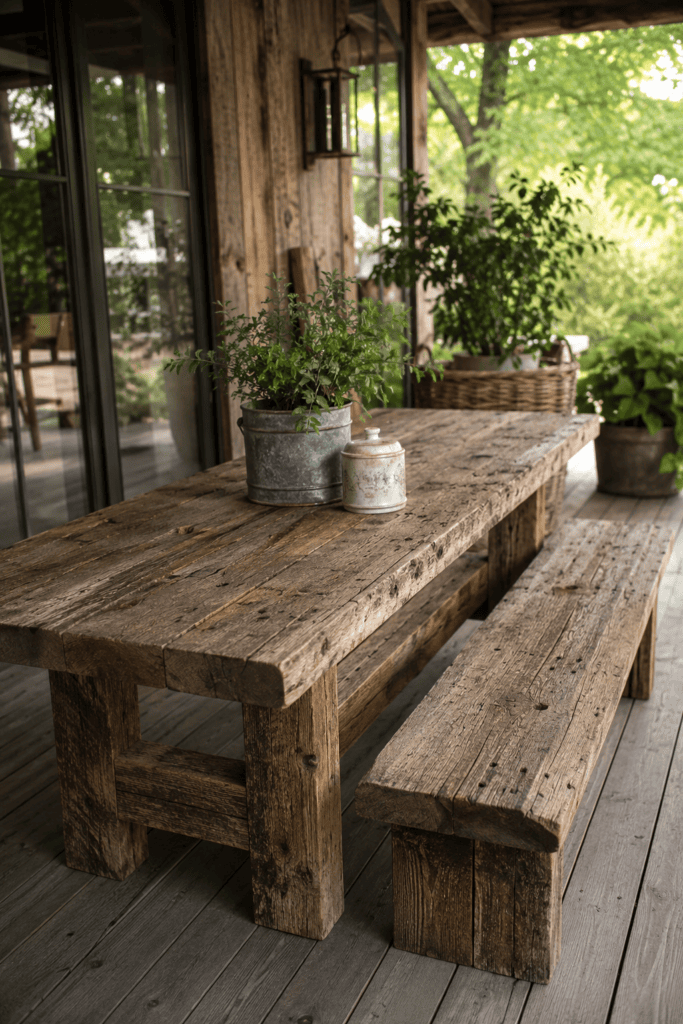
Nothing screams farmhouse louder than furniture with a story. I picked up an old barn table from an estate sale for practically nothing, and it’s still the first thing people comment on when they walk into the backyard.
Reclaimed wood brings texture and history that new furniture just can’t fake. Every knot, nail hole, and weathered plank adds character you can’t buy off a factory shelf. IMO, this is the easiest way to nail the aesthetic without a full renovation.
- Look for salvage yards, barn teardowns, or estate sales
- Sand lightly but keep the imperfections
- Seal with a matte protective coat to handle outdoor weather
Caring for Reclaimed Pieces Outdoors
Outdoor exposure is rougher on reclaimed wood than you’d think, since it’s already been through decades of wear. Reapply a penetrating oil sealer once or twice a year, and bring fabric-covered pieces inside during heavy rain. A little maintenance keeps that weathered look intentional instead of actually falling apart.
2. A Farmhouse-Style Pergola
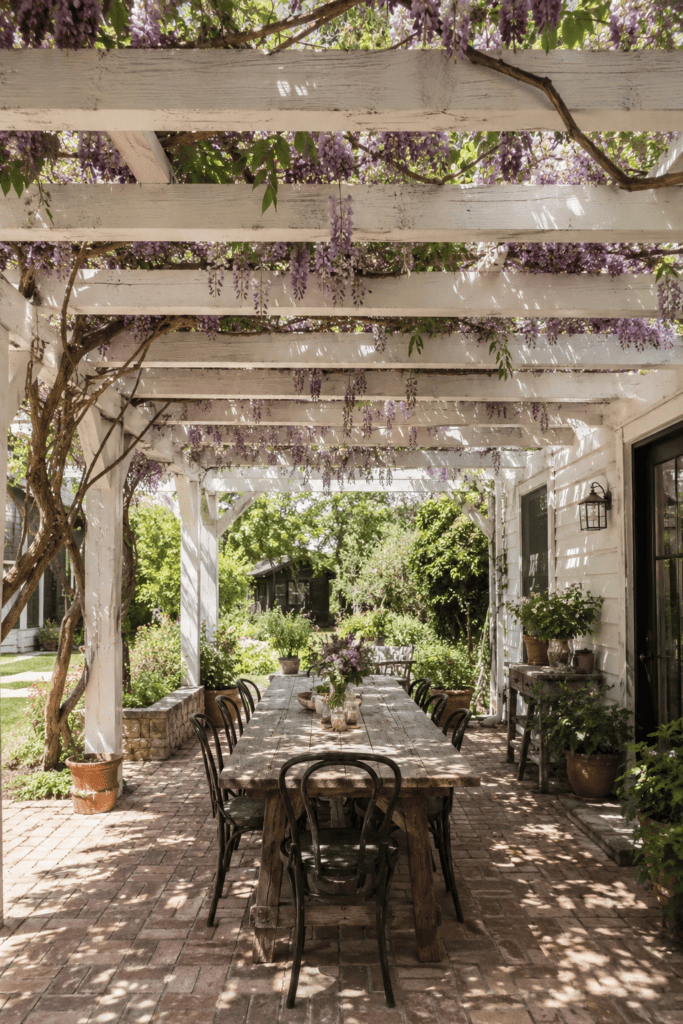
Ever wondered why pergolas instantly make a patio feel finished? It’s the vertical structure—it gives your eye somewhere to travel instead of just staring at a flat slab of concrete.
Go with thick, chunky beams instead of thin modern posts. Paint them white or leave them raw for that timber-frame barn look. I added one over my dining area, and it turned an awkward, exposed corner into the coziest spot in the yard.
Cedar and redwood naturally resist rot without heavy chemical treatment, though pressure-treated pine works too if you’re on a budget and don’t mind a slightly less premium look up close. Add a climbing vine like wisteria or clematis, and give it a season or two to fill in—patience pays off once it forms a real canopy.
3. Vintage Metal Accents

Galvanized buckets, old milk cans, weathered metal signs—these small touches punch way above their weight. They’re cheap, durable, and photograph beautifully in golden hour light (not that I’m speaking from personal Instagram experience or anything).
Rusted metal planters contrast nicely against wood and greenery. Just don’t go overboard—three or four pieces is plenty. More than that and your patio starts looking like a flea market exploded rather than a curated space.
A Quick Aging Trick
Can’t find genuinely old metal? A mix of vinegar, salt, and hydrogen peroxide sprayed onto raw steel will rust it within a day or two. It’s a fun weekend project, and satisfying to watch a shiny bucket transform into something that looks decades old.
4. Classic Rocking Chairs
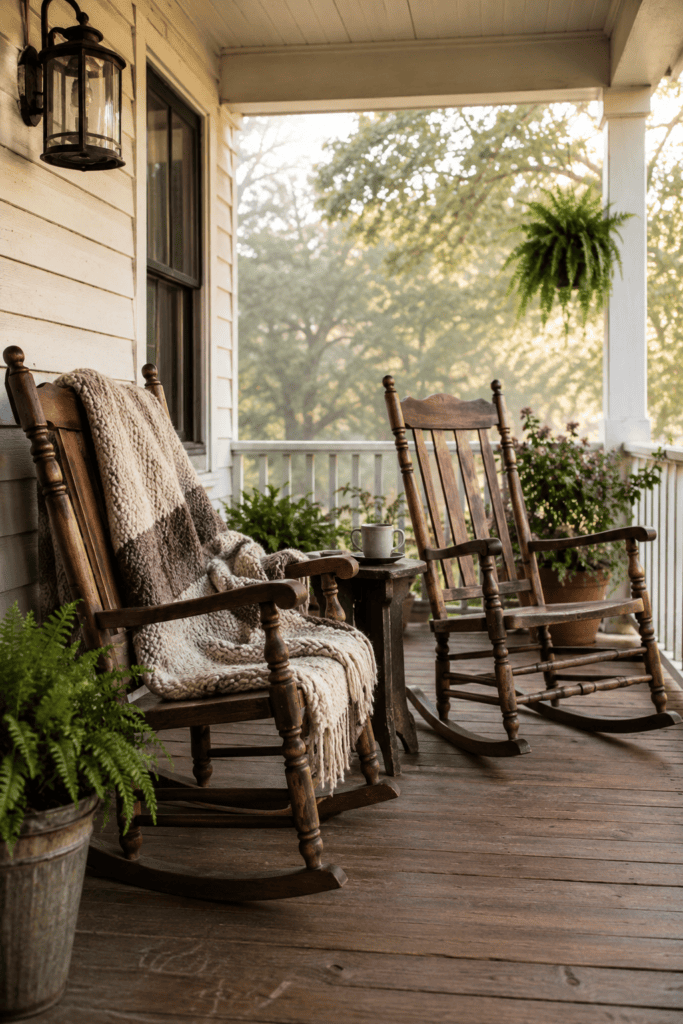
A patio without a rocking chair is like a porch without lemonade. It just feels incomplete. Rocking chairs invite you to slow down and actually use the space instead of rushing through it.
Pick chairs with turned wood spindles and a slightly worn finish. Add a wool throw blanket for cooler evenings, and you’ve basically built a reading nook that doubles as free therapy. Angle them slightly toward each other to encourage conversation, or face them toward the yard for quiet sunset watching—placement matters more than people think.
Rocking chairs take up less space and rearrange easily, while porch swings encourage shared, social moments but need a sturdy overhead structure. If your patio has room, why not both?
5. Exposed Beam Ceilings (For Covered Patios)
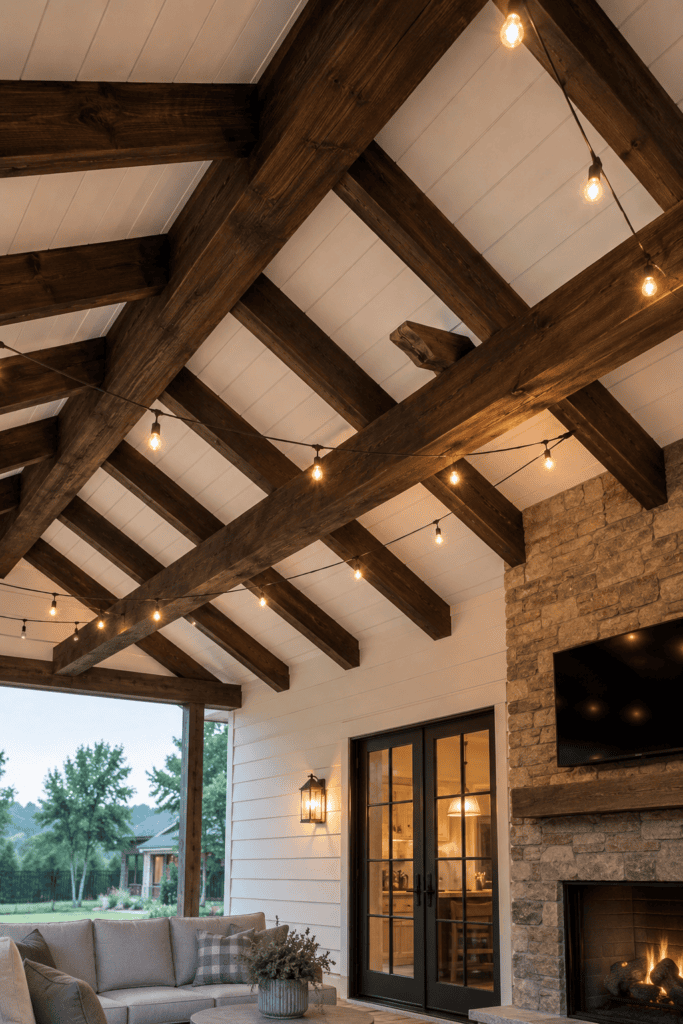
If your patio has any kind of roof or overhang, exposed beams are non-negotiable. They add architectural depth and instantly signal “farmhouse” before anyone even sits down.
This sounds like a big project, but you don’t need to gut your whole structure. Faux beams made from lightweight polyurethane look shockingly real and install in an afternoon. Nobody will know unless they climb up there and knock on it (please don’t let your guests do that).
Real timber beams are gorgeous but heavy and often need structural reinforcement. Faux beams cost a fraction of the price and hold up just as well against weather. A dark walnut or espresso stain on either option contrasts beautifully against white ceiling panels for extra depth.
6. Warm String Lighting
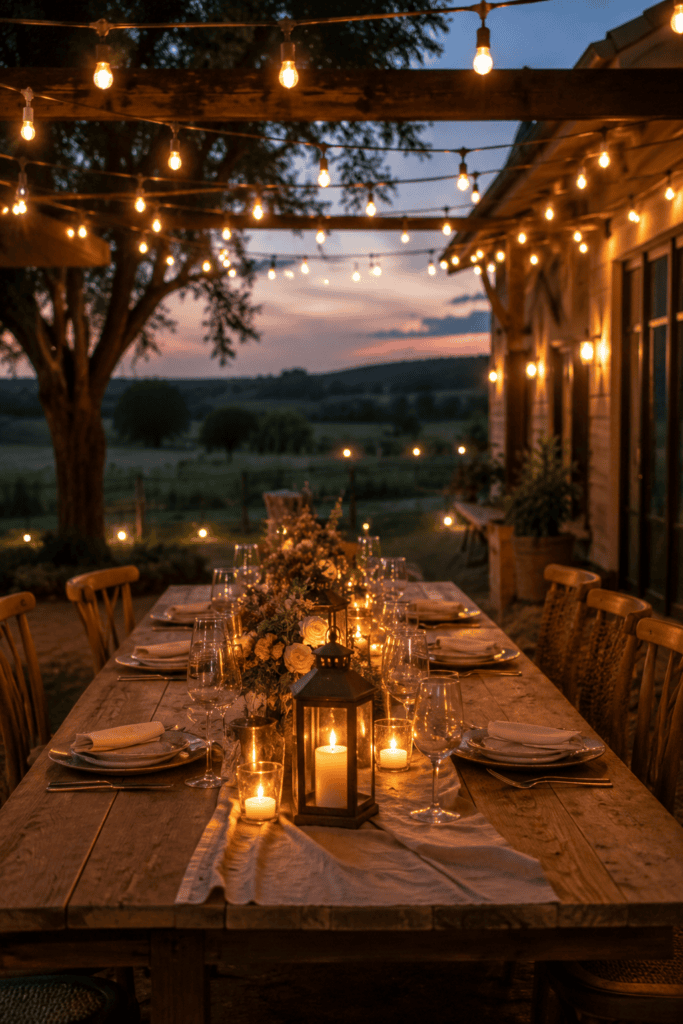
Rhetorical question time: is there anything cozier than string lights glowing over an outdoor dinner table? I don’t think so.
Edison-style bulbs with visible filaments give off that warm, amber farmhouse glow that regular white LEDs just can’t replicate. Drape them across the pergola beams or zigzag them overhead. This one change transforms a patio from “backyard” to “destination.”
If you can, wire in a dimmer switch or grab plug-in lights with a remote for flexibility between bright dinner-party mode and quiet-evening mode. Layer in a few lanterns on the table too—a single light source can feel flat no matter how charming the bulbs are.
7. A Stone or Brick Fire Pit
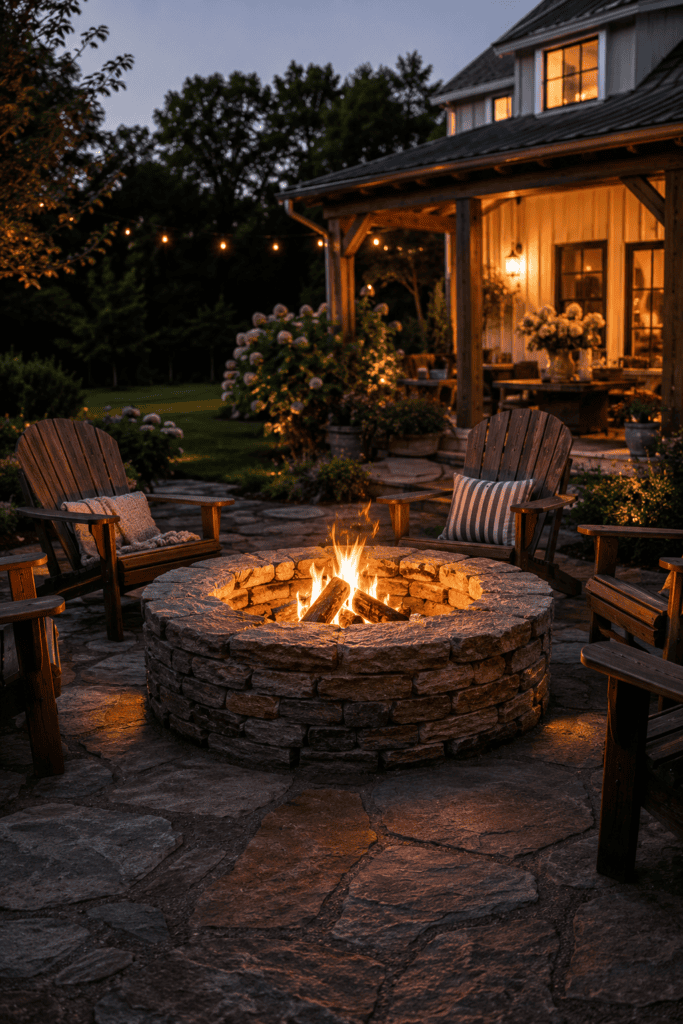
Fire pits are basically mandatory at this point, and farmhouse style leans hard into stacked stone or reclaimed brick. Skip the sleek metal bowls from big box stores—they read more “modern patio” than “farmhouse charm.”
Building one yourself isn’t as intimidating as it sounds:
- Dig a shallow circular base and add a gravel layer for drainage
- Stack fieldstone or reclaimed brick in a ring, roughly 3–4 feet across
- Leave small gaps for airflow between the lower stones
- Add a metal fire ring insert for safety and easier cleanup
Fieldstone gives the most authentic look but costs more; manufactured veneer gets you most of the visual payoff for less. Whichever you choose, keep it at least 10 feet from your house, fences, or overhanging branches, and always have a hose or bucket of sand nearby.
8. Woven and Natural Textiles

Jute rugs, linen cushion covers, and cotton throw pillows bring softness to what’s otherwise a hard, angular space. Natural fibers age beautifully outdoors, developing a slightly faded look that only adds to the charm.
Avoid anything too glossy or synthetic-looking—it clashes with the rustic aesthetic. I learned this the hard way after buying shiny outdoor cushions that looked more “hotel lobby” than “farmhouse porch.” Big mistake. Huge.
If you’re in a humid climate, look for mildew-resistant outdoor fabric rather than assuming cotton or linen will hold up. Sunbrella and similar performance fabrics mimic that natural look while actually surviving outdoor conditions long-term.
9. A Farmhouse Dining Table Set
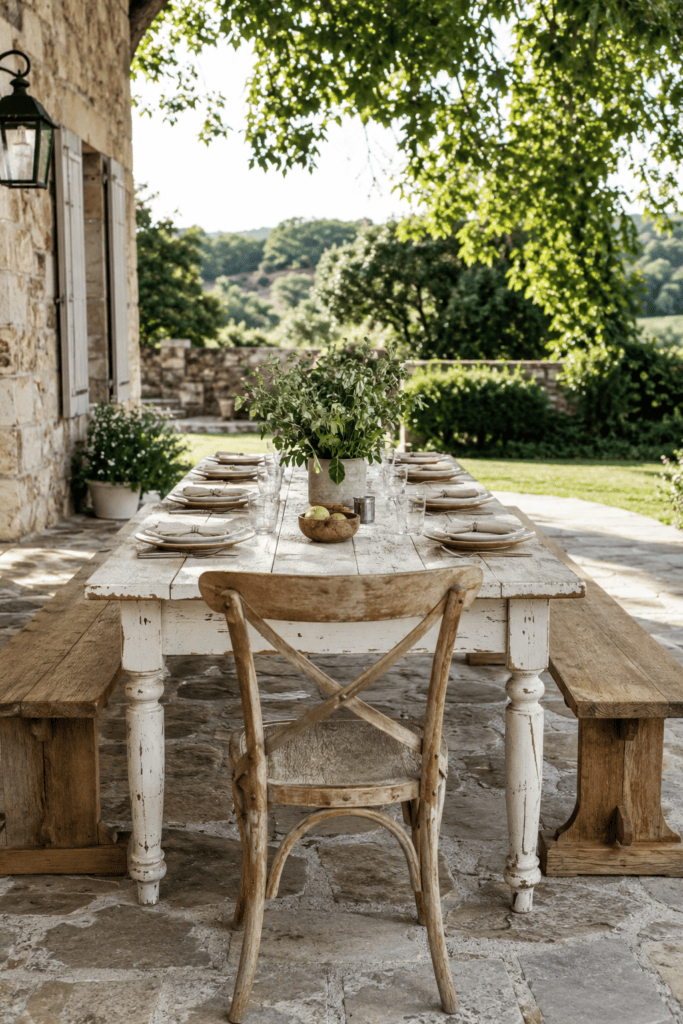
If you entertain outdoors even occasionally, invest in a solid wood dining table with benches instead of matching chairs. Benches feel more communal and fit more people when your cousin brings unexpected guests to the barbecue again.
Distressed white or natural wood finishes both work well here. Pair with mismatched vintage-style chairs at the ends for extra character—perfectly imperfect is the goal.
Measure your patio before falling for a table online. Leave at least 36 inches of walking room around the perimeter so guests can push back their chairs without bumping the grill. And plan on a fresh coat of teak oil or exterior polyurethane once a year to keep the wood from graying prematurely.
10. Potted Herbs and Wildflowers
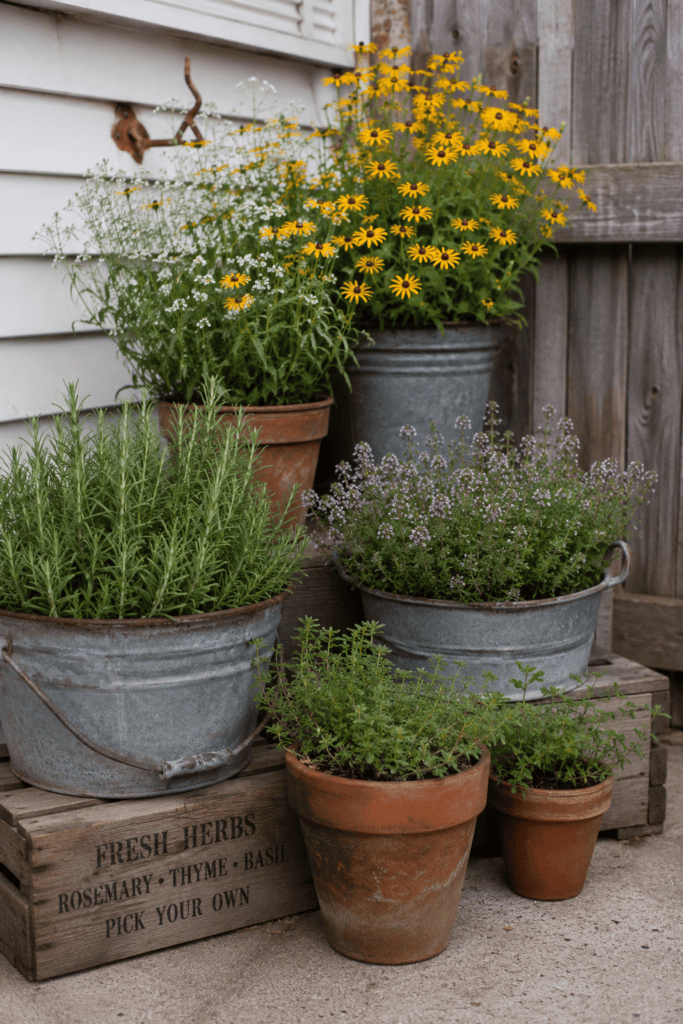
A farmhouse patio isn’t complete without greenery that looks like it grew there naturally, not like a landscaper arranged it with a ruler. Potted herbs—rosemary, thyme, mint—add fragrance and function since you can literally cook with them.
Mix in wildflowers like black-eyed Susans or cosmos for color, and group pots of varying heights instead of lining them up like soldiers. Skip sleek modern planters and go for galvanized tubs, terracotta pots, or wooden crates instead, since they age gracefully with the rest of the space.
If you don’t have a green thumb (no judgment, IMO half of gardening is just luck anyway), stick with hardy picks like rosemary, sedum, and lavender—they tolerate neglect far better than delicate flowering annuals.
11. A Barn Door Accent Wall
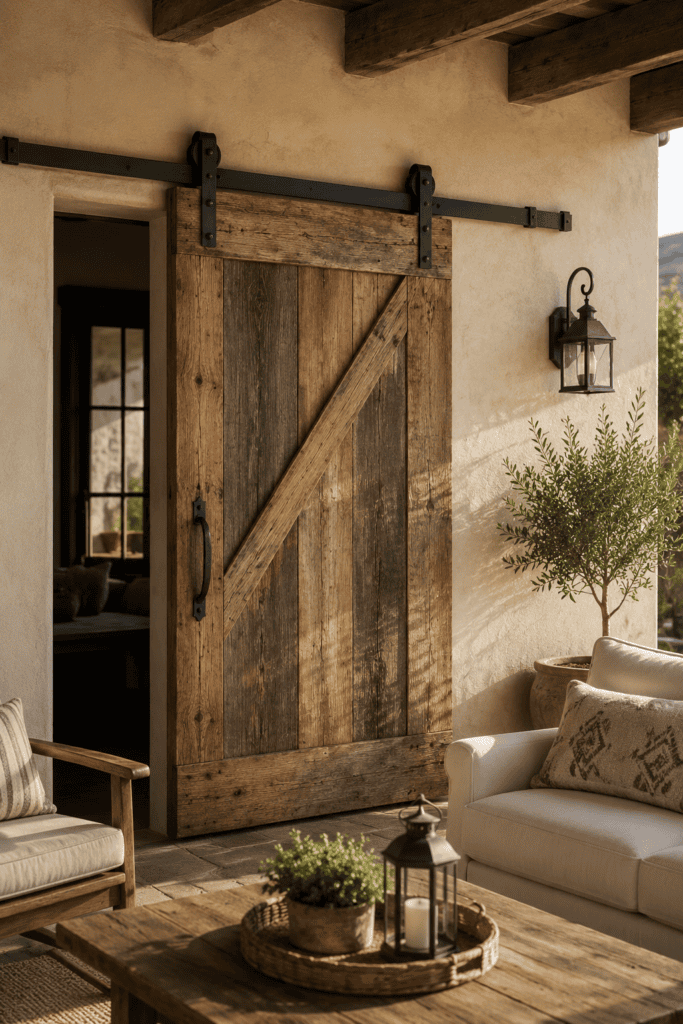
Got a wall or fence section backing your patio? A sliding barn door, even a purely decorative one, adds instant texture and a focal point. I mounted one against a blank stucco wall, and it completely changed how the space felt.
You don’t need working hardware if it’s purely decorative—just the visual of the door and track sells the look. Home improvement stores sell hardware kits for under $100, which you can pair with reclaimed wood planks for the door face. Just seal it thoroughly, since untreated exterior wood can warp within a season or two.
12. Neutral, Earthy Color Palette
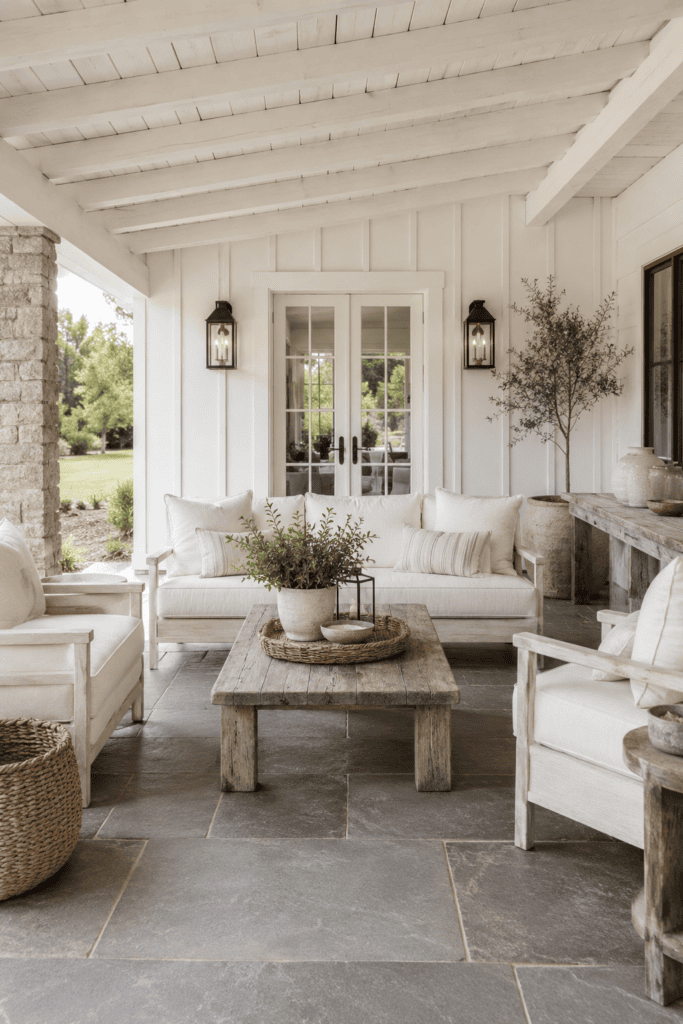
Farmhouse style thrives on whites, creams, warm grays, and natural wood tones. Skip the bold, saturated colors—they clash with the rustic vibe you’re going for. Think “sun-bleached barn” rather than “beach house rainbow.”
This doesn’t mean boring, though. Layer different textures and shades within that neutral palette so things don’t feel flat:
- Whitewashed wood furniture
- Charcoal or slate stone flooring
- Cream and oatmeal-toned cushions
- Warm wood accents throughout
Bring in color through living elements—green foliage and seasonal wildflowers—rather than painted surfaces, and always test paint or stain colors directly on your patio at different times of day before committing. Colors look completely different in natural sunlight than under a store’s fluorescent lights.
13. A Vintage-Inspired Outdoor Rug

An outdoor rug ties the whole space together, plain and simple. Look for faded, striped, or floral patterns reminiscent of old French or American farmhouse textiles.
Durability matters here since it’s outside. IMO, polypropylene rugs made to mimic vintage patterns are your best bet—they handle rain and sun way better than authentic antique textiles, and you won’t cry if it gets a little muddy. Size it so the rug extends at least a foot beyond your furniture’s front legs, or the seating area ends up looking disjointed rather than pulled together.
14. Chicken Wire and Wood Planter Boxes
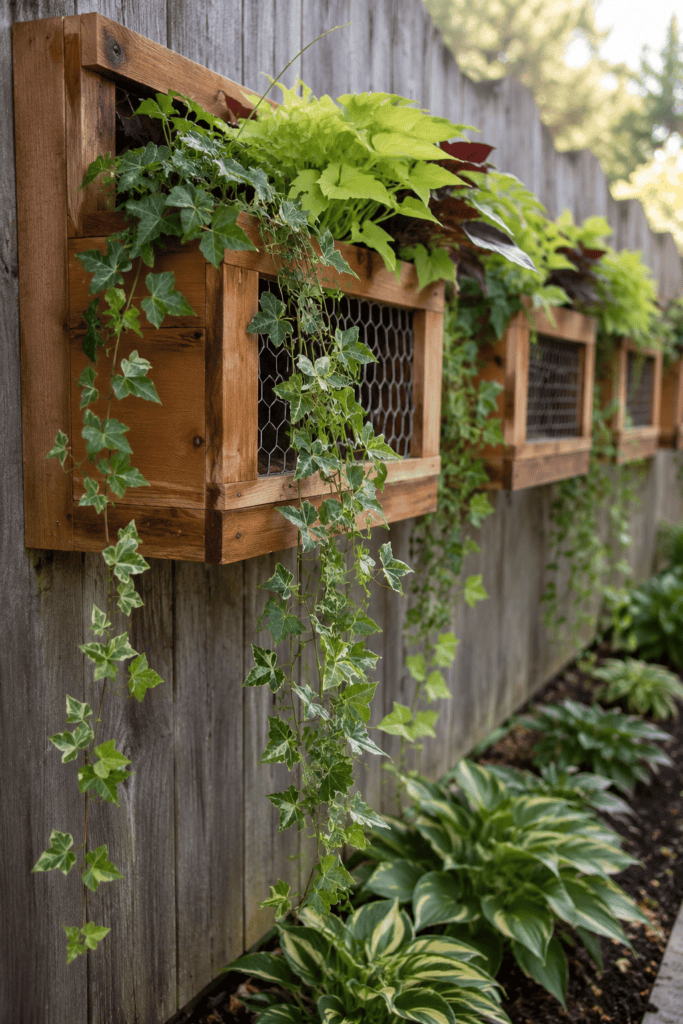
Simple wood planter boxes with a strip of chicken wire across the front instantly say “farmhouse” without trying too hard. Fill them with trailing greenery like ivy or sweet potato vine for a softer, cascading look.
Build them yourself with basic cedar boards—it’s genuinely one of the easiest weekend projects out there:
- Cut cedar boards into a rectangular frame
- Staple a section of chicken wire across the front face
- Line the interior with landscape fabric
- Drill a few drainage holes before adding soil
Mount them along a fence line, a railing, or stacked in tiers along a staircase for maximum impact.
15. A Cozy Outdoor Fireplace
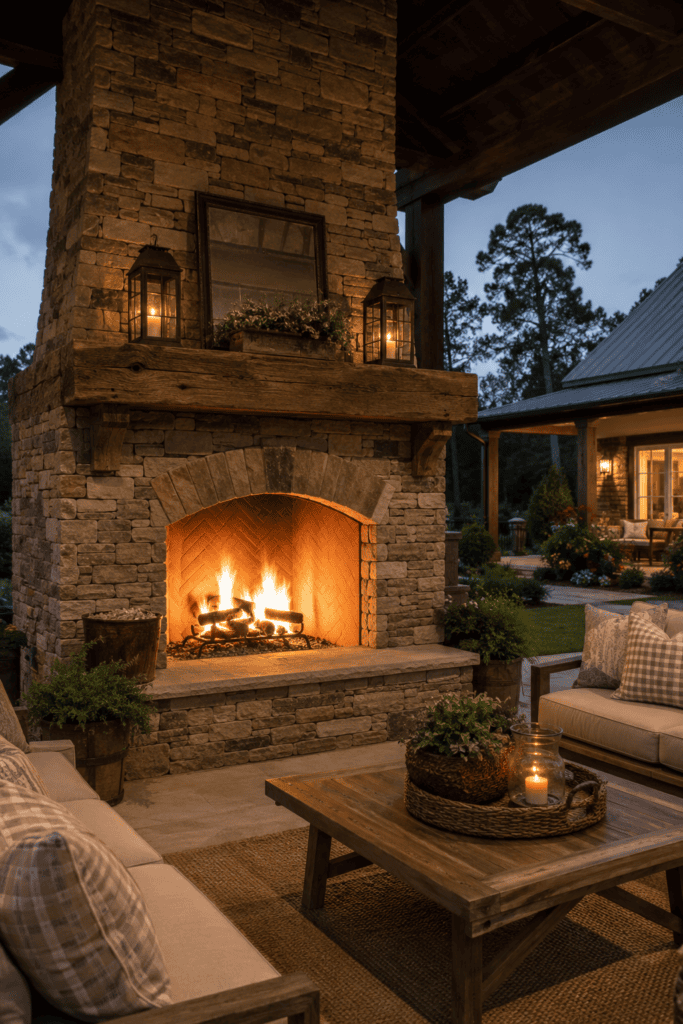
If a fire pit feels too casual for your space, go bigger with a stacked stone fireplace. This works especially well for larger patios where you want a true architectural anchor rather than just a gathering point.
Yes, it’s a bigger investment, and no, I’m not going to pretend it’s cheap. But if you’re staying in your home long-term, it adds serious value and turns your patio into a three-season living room. Worth it? For me, absolutely.
- Fire pits are cheaper, more casual, and easier to DIY
- Fireplaces create a defined focal point but typically need professional installation
Add a reclaimed wood mantel on top to display lanterns or seasonal greenery, turning a functional fireplace into a genuine gathering spot rather than just a heat source.
16. Mismatched Vintage Decor
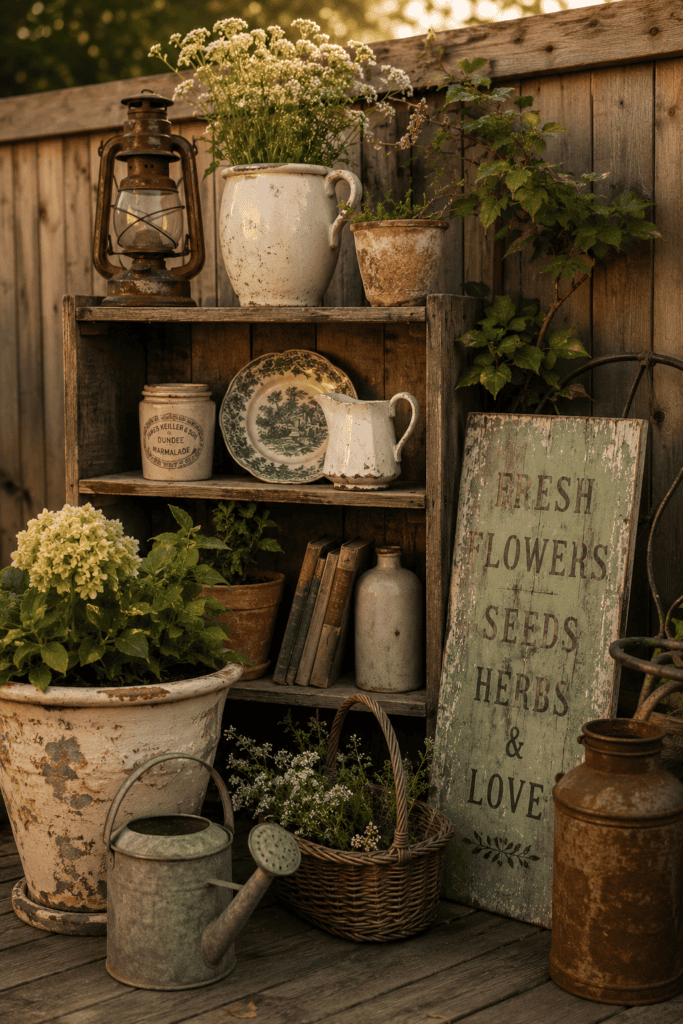
Here’s my final tip, and honestly, my favorite one: stop trying to match everything perfectly. Farmhouse style celebrates mismatched, collected-over-time decor—an old lantern here, a chipped ceramic pot there, a weathered sign leaning against the fence.
Ever notice how the most charming spaces look like they evolved naturally instead of being bought all at once from a single catalog? That’s the secret. Hit up flea markets, estate sales, and secondhand shops instead of ordering a matching decor set online. Your patio will feel authentic instead of staged, and honestly, it’s way more fun to shop that way anyway 🙂
Resist the urge to buy everything at once—part of what makes mismatched decor feel genuine is that it actually was collected gradually. And watch the line between charmingly mismatched and trying too hard: pick a handful of standout pieces and let each one breathe instead of cramming every surface with knickknacks.
Wrapping It Up
Building a farmhouse patio isn’t about following a strict formula—it’s about layering warmth, texture, and a little bit of imperfection until the space feels like an extension of your home rather than an afterthought. Start with the big-ticket items like furniture or a fire feature, then build outward with lighting, textiles, and those small vintage touches that really sell the look.
You don’t need to tackle all 16 ideas at once. Pick two or three that fit your budget and space, and let the rest come together over time—the best farmhouse patios always look like they took years to perfect anyway. So grab that rocking chair, pour something cold, and start planning. Your future self, lounging under those string lights, will thank you.