
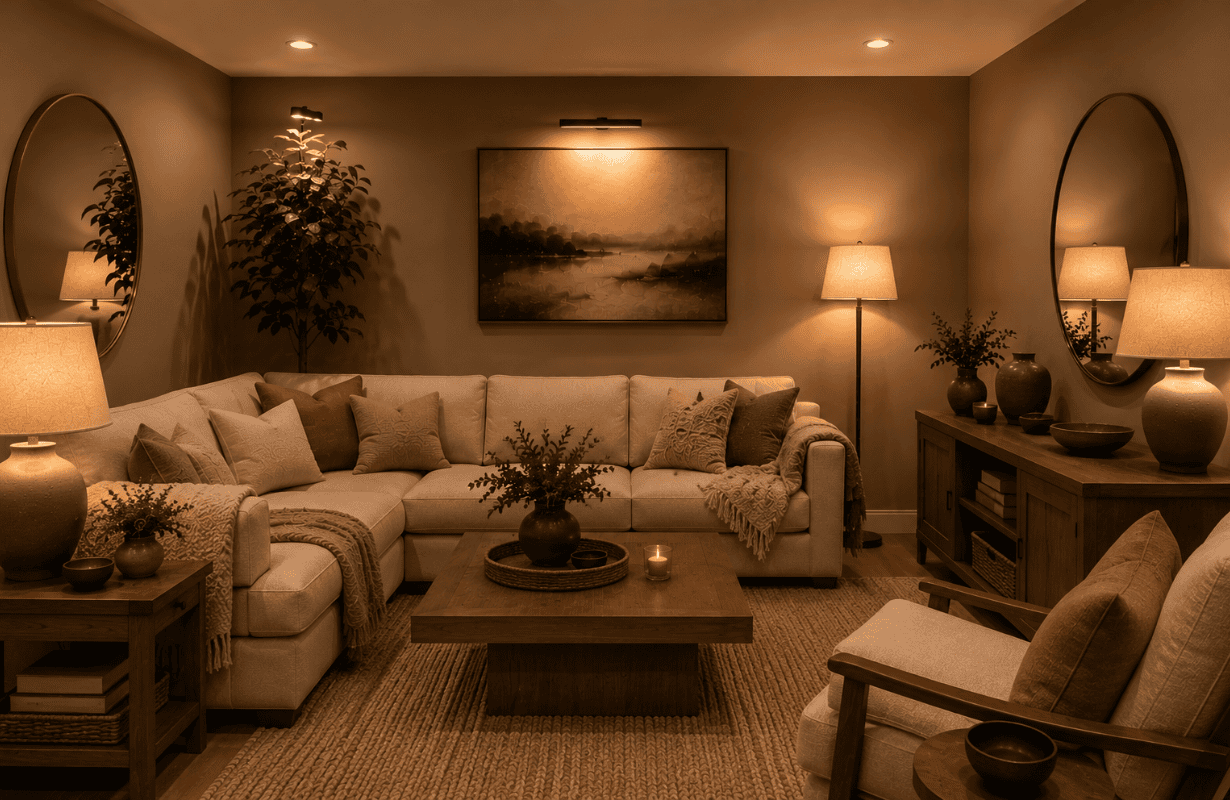
A room with no windows or one tiny window that barely counts can be surprisingly frustrating to decorate. You paint the walls a nice color, add a lamp, bring in some furniture, and somehow the whole space still feels flat, gloomy, or a little like a basement.
The problem usually isn’t that the room needs to be brighter. It needs to feel like it has depth, warmth, and variation, which is what natural daylight normally gives a space for free.
That’s an important distinction.
If you’re trying to figure out how to decorate a room with no natural light, don’t approach it by simply buying brighter bulbs and painting everything stark white. In fact, those are two of the easiest ways to make a windowless room feel even less inviting.
What actually works is creating your own version of daylight through layered lighting, reflective surfaces, intentional color choices, and materials that keep the room from looking flat.
Here’s how I’d approach it.
Stop Trying to Make the Room Look Like It Has Windows
Most people get this wrong because they immediately try to make a dark room as bright as physically possible.
They install one powerful ceiling fixture, choose bright white walls, and hope enough artificial light will somehow imitate sunshine.
It rarely does.
Natural light isn’t just bright. It comes from a direction, changes across surfaces, creates shadows, and gives objects dimension. One extremely bright overhead fixture can’t reproduce that.
Instead of asking, “How can I make this room really bright?” ask:
How can I make the lighting feel natural and comfortable?
That change in thinking makes decorating a room without windows much easier.
A cozy basement family room, interior home office, hallway, or windowless bathroom doesn’t necessarily need to feel sunny. It just needs to feel intentional.
Build the Lighting in Layers
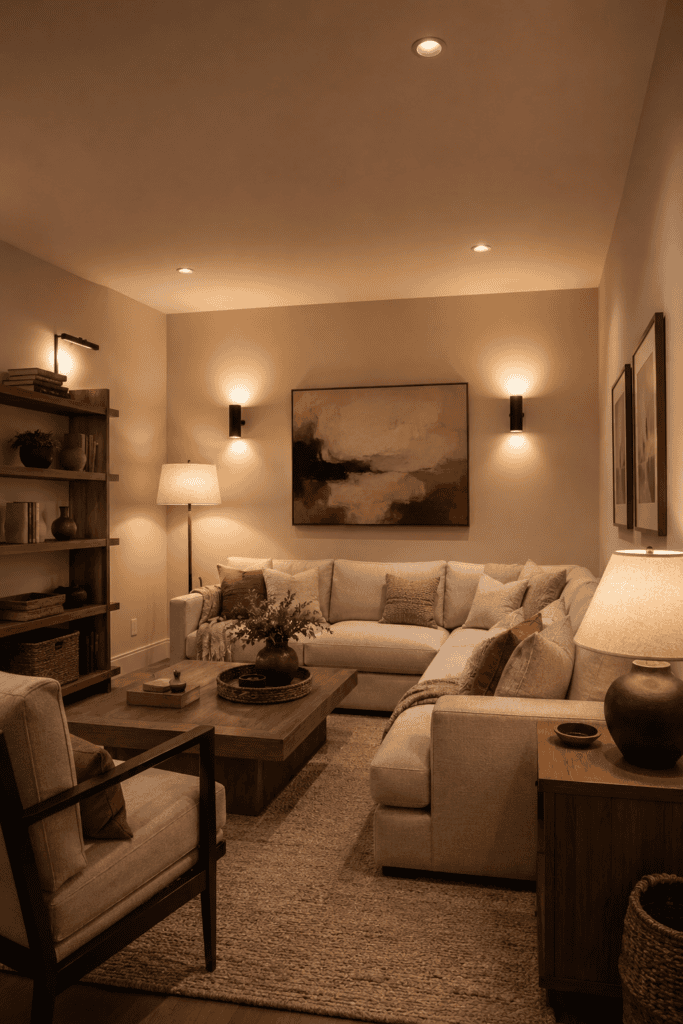
If you change only one thing in a room with no natural light, make it the lighting.
One ceiling fixture isn’t enough.
Start With Ambient Lighting
Your ambient lighting provides the room’s general illumination. This might come from recessed lights, a semi-flush ceiling fixture, or a few well-positioned ceiling lights.
The goal is even illumination without creating that harsh “interrogation room” effect.
Whenever possible, use dimmers. They give you much more control over how the room feels at different times of day.
Add Light at Eye Level
This is where the room starts feeling dramatically better.
Use table lamps, floor lamps, wall sconces, or even small lamps on shelves and consoles.
Why?
Because natural daylight normally hits walls, furniture, and objects from different angles. Multiple light sources recreate some of that dimensionality.
For example, in a windowless family room, you might have recessed ceiling lights, a floor lamp beside the sofa, and a small table lamp across the room.
Suddenly the space has different pools of light instead of one flat wash of brightness.
Pay Attention to Bulb Temperature
You can have beautiful furniture and still make the room uncomfortable with the wrong bulbs.
For living rooms and bedrooms, I generally prefer warm white lighting around 2700K to 3000K. It gives the room warmth without making everything look excessively yellow.
For a home office, laundry room, or other task-oriented space, slightly cooler lighting can make sense.
Here’s the thing: consistency matters almost as much as temperature.
If one lamp is warm yellow, another looks icy blue, and your ceiling lights are somewhere in between, the room can feel visually messy.
Try to keep bulbs within a similar color-temperature range.
And pay attention to color rendering. Higher-CRI bulbs generally make paint, wood, fabrics, artwork, and skin tones look more natural instead of dull or strangely tinted.
Don’t Automatically Paint Everything Bright White
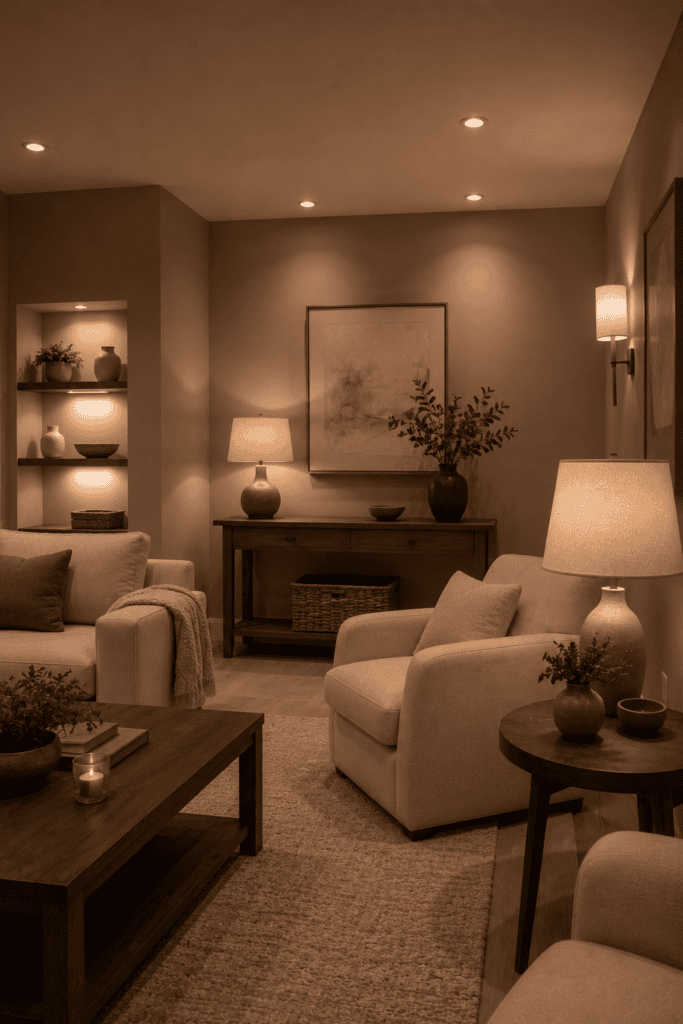
The standard advice for a dark room is always “paint it white.”
I don’t think that’s automatically the best answer.
White paint depends heavily on light. In a naturally bright room, white walls can look crisp and airy. In a windowless room with mediocre artificial lighting, the same white can look gray, cold, or strangely lifeless.
Choose Colors Based on the Mood You Want
Warm off-whites, creamy beige, mushroom, soft taupe, muted sage, dusty blue, and other slightly softened colors can work beautifully.
And don’t be afraid of darker colors.
A windowless powder room painted deep navy or charcoal can feel dramatically more intentional than the same room painted sterile white.
Instead of fighting the darkness, you’re sometimes better off leaning into it.
For larger rooms where you want an airy feeling, stay lighter—but choose colors with enough warmth to keep artificial lighting from making the room feel cold.
Use Reflective Surfaces Strategically
Mirrors are useful in rooms without natural light, but simply hanging a huge mirror somewhere isn’t the whole solution.
Placement matters.
Put mirrors where they can reflect an attractive light source, artwork, or another visually interesting part of the room.
You can also introduce reflection through smaller details:
- Glass or glossy ceramic lamps
- Metallic picture frames
- Satin or eggshell wall finishes
- Glass-front cabinets
- Polished hardware
- Light-colored artwork
You don’t need the room to sparkle. A few reflective surfaces simply help artificial light travel farther and create more visual movement.
Add Texture So the Room Doesn’t Feel Flat
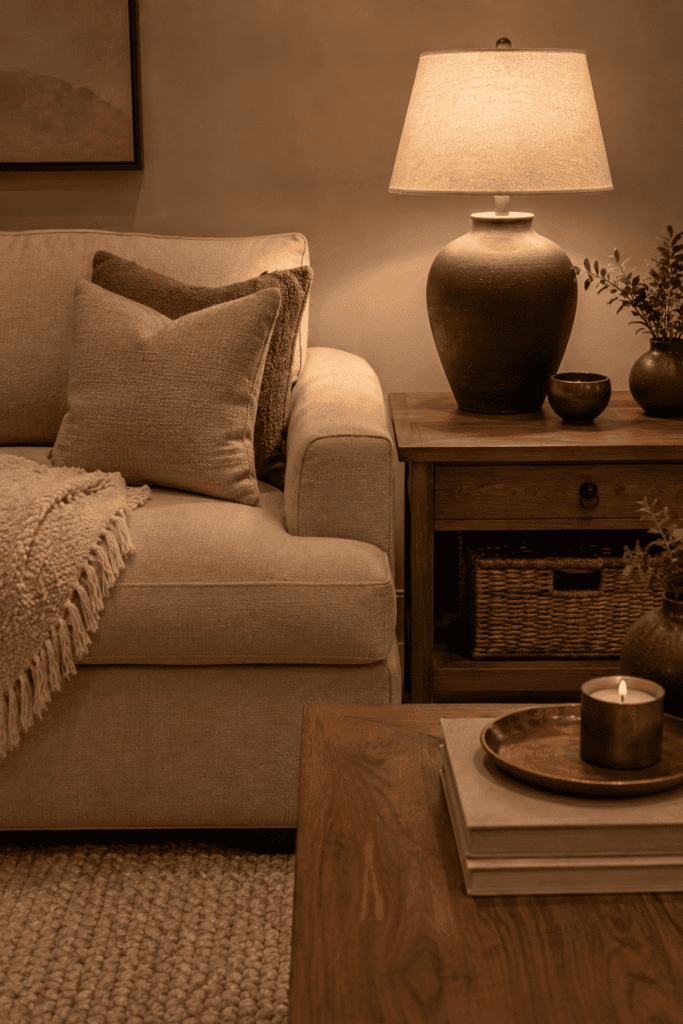
Rooms without windows often have another problem that people don’t immediately identify: everything looks unusually flat.
Natural daylight highlights texture automatically. It catches the weave of linen curtains, the grain in wood, and the uneven surface of a woven basket.
Without daylight, you have to work harder to create that dimension.
Use materials that respond differently to artificial light.
Think natural wood, linen, boucle, wool, woven baskets, matte ceramics, subtle metallic finishes, and textured rugs.
For example, instead of putting a gray sofa against a gray wall over a gray rug, combine a warm upholstered sofa with a woven rug, wooden side table, linen pillows, ceramic lamp, and a little metal.
The color palette can still be restrained. The variation comes from texture.
Create a Focal Point
When there’s no window, your eye needs somewhere else to land.
Give it one.
This could be a large piece of artwork, an interesting console arrangement, built-in shelving, a fireplace, a dramatic headboard, or even one intentionally darker accent wall.
What actually works is making that focal point feel clearly more important than everything surrounding it.
Imagine a windowless basement sitting room. Instead of scattering small decorations around every wall, hang one substantial piece of artwork above the sofa and light it softly with a picture light.
Now the eye has a destination.
That’s far more effective than filling every blank wall.
Bring in Greenery—But Be Realistic
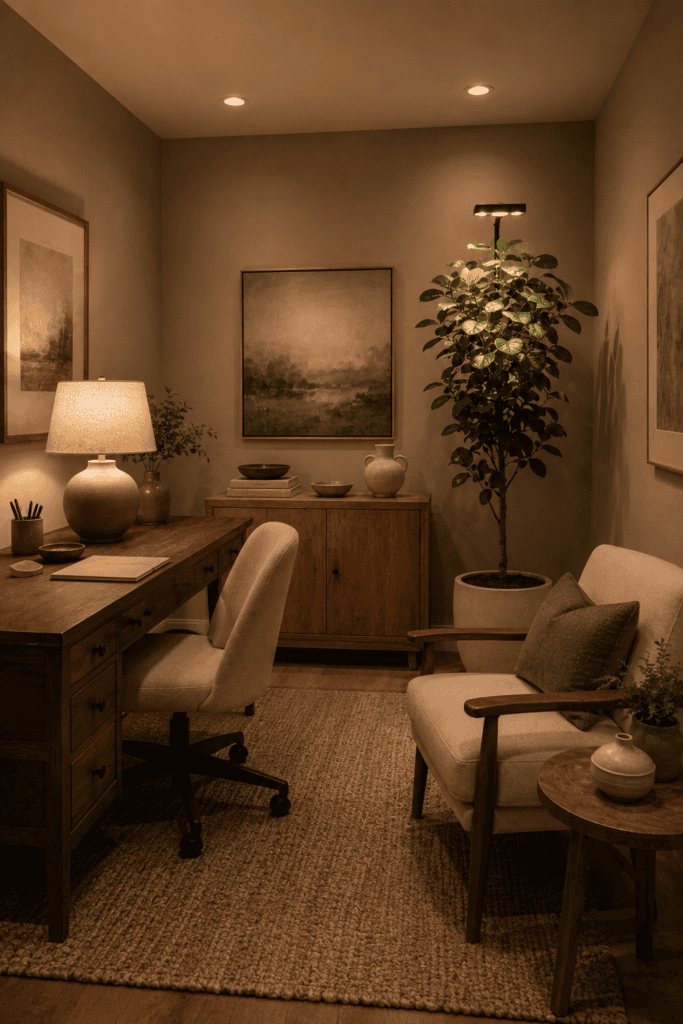
Plants make dark spaces feel more alive, but there’s an obvious problem: plants need light.
Some varieties tolerate lower light better than others, but a completely windowless room generally won’t provide enough natural light for most houseplants long-term without supplemental grow lighting.
So don’t keep replacing dying plants just because someone told you every room needs greenery.
If you want real plants, consider discreet grow lights.
Otherwise, a good-quality faux plant can add the same visual softness without becoming another maintenance problem.
A single leafy plant in a corner is usually enough. You don’t need to turn the room into an artificial jungle.
Don’t Overfill a Windowless Room
This is especially important in small windowless spaces.
Because you can’t visually “escape” through a window, too much furniture and decor can make the room feel enclosed much faster.
Leave some breathing room.
Keep a few surfaces relatively clear. Allow visible wall space around artwork. Avoid filling every corner just because it’s empty.
Furniture with exposed legs can also help because seeing more floor creates a sense of openness.
The goal isn’t minimalism. It’s visual breathing room.
A Simple Formula That Works
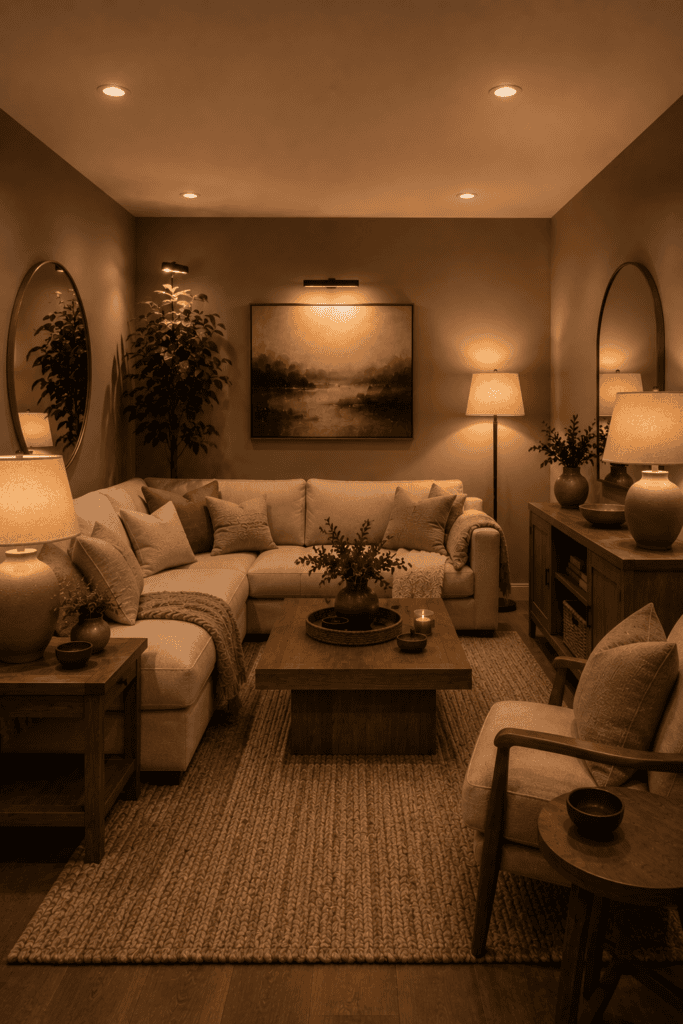
If I were decorating a room with no natural light from scratch, I’d keep the process pretty straightforward.
Start with a warm, comfortable wall color. Add good ambient lighting, then bring in at least two additional light sources at different heights. Keep your bulbs relatively consistent. Add natural wood and textured fabrics for warmth, then use a mirror or a few subtle reflective finishes to move light around.
After that, establish one clear focal point and resist the temptation to decorate every remaining surface.
That’s usually enough.
You don’t need twelve decorating tricks competing with each other. You need a handful of decisions working together.
Final Thoughts
Learning how to decorate a room with no natural light is really about stopping the fight against the room itself.
You probably aren’t going to make a completely windowless space feel exactly like a sunny living room—and that’s okay. What you can do is make it warm, layered, comfortable, and intentionally designed.
Focus first on multiple light sources rather than sheer brightness. Choose colors that actually look good under artificial lighting, introduce texture, use reflection thoughtfully, and give your eye somewhere interesting to land.
Most importantly, test things in the actual room. Paint colors, bulbs, and finishes can look completely different without daylight.
Work with the space you have instead of pretending it’s something else. That’s usually when a difficult dark room finally starts feeling good.