
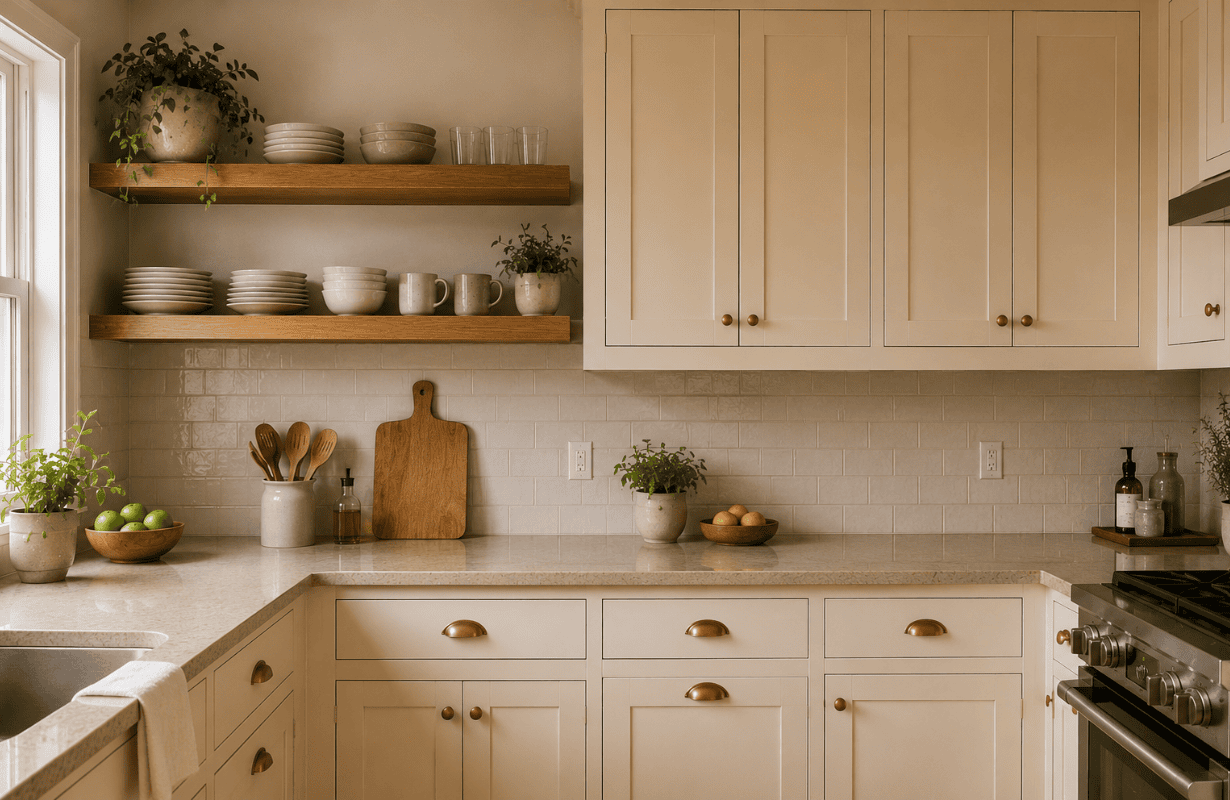
If you’re remodeling a kitchen or even just thinking about replacing a few cabinets, you’ve probably found yourself stuck on the open shelving vs. upper cabinets question.
Open shelves look light, airy, and effortlessly styled in photos. Traditional upper cabinets give you somewhere to hide the mismatched mugs, cereal boxes, water bottles, and everything else a real kitchen collects. Both can look great. Both can also become annoying if they don’t match the way you actually use your kitchen.
Here’s the thing: this decision shouldn’t start with which option looks better on Pinterest. It should start with what you store, how often you cook, how much visual clutter bothers you, and how much storage your kitchen can realistically afford to lose.
Most people get this wrong by treating open shelving as purely a design choice. It isn’t. It changes how your kitchen functions every single day.
So, let’s compare open shelving and upper cabinets honestly including storage, cleaning, cost, accessibility, and appearance—so you can figure out which setup actually makes sense for your home.
Open Shelving vs. Upper Cabinets at a Glance
Before getting into the details, the basic difference is pretty straightforward.
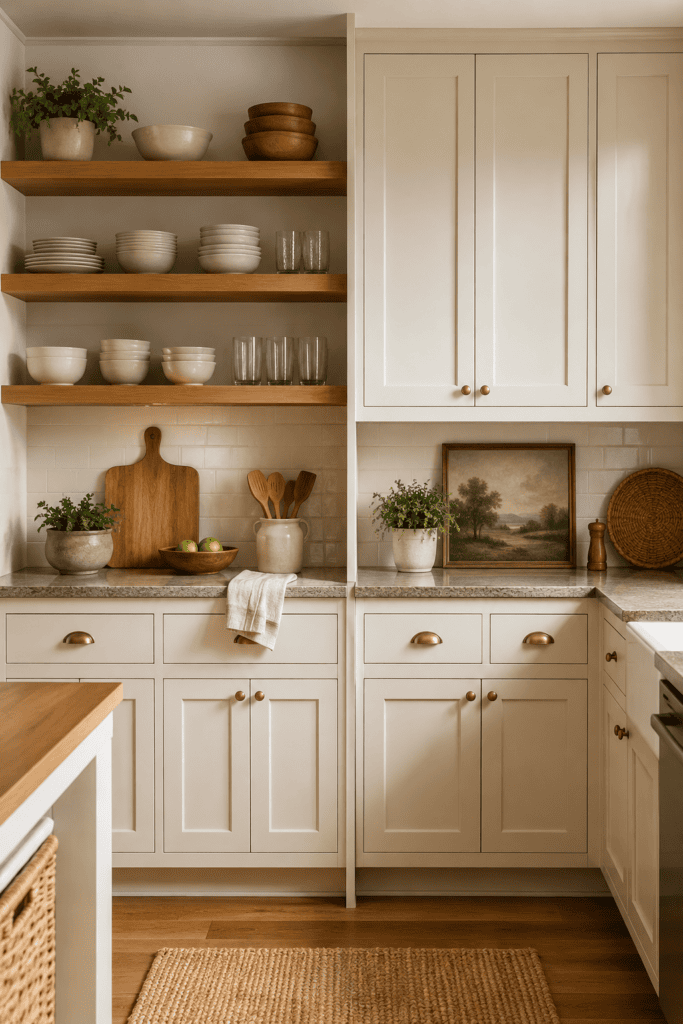
Open shelving prioritizes openness and accessibility. Upper cabinets prioritize storage and concealment.
Open shelves can make a kitchen feel larger because you see more wall instead of a continuous row of cabinet boxes. They also put everyday dishes right within reach.
Upper cabinets, meanwhile, use vertical space much more efficiently. You can stack items on multiple shelves, store things all the way to the ceiling, and close the doors when everything isn’t perfectly organized.
Neither one automatically creates a better kitchen.
The right answer depends on what your kitchen needs more: breathing room or hidden storage.
And sometimes, as we’ll get into later, the best answer is actually both.
Where Open Shelving Really Works
Open shelving gets criticized for being impractical, but I don’t think that’s completely fair. Used in the right place, it can be incredibly functional.
It Makes a Kitchen Feel More Open
This is probably the biggest advantage.
A wall filled with upper cabinets adds visual weight, especially in a small kitchen. Remove a few of those cabinets and suddenly you see more backsplash and wall surface.
That extra negative space can make the entire room feel less boxed in.
This works particularly well in narrow galley kitchens, kitchens with limited natural light, or layouts where upper cabinets surround a window.
You don’t necessarily need to eliminate every cabinet, either. Removing just one section can create that lighter feeling.
Everyday Items Become Easier to Grab
Open shelves work best when they’re storing things you actually use.
Think:
- Everyday dinner plates
- Bowls
- Drinking glasses
- Coffee mugs
- Frequently used serving bowls
If you’re reaching for something several times a day, having it sitting openly on a shelf can actually be more convenient than opening and closing cabinet doors constantly.
And because those items are regularly being washed and reused, they generally don’t sit around long enough to collect much dust.
They Create an Easy Decorative Moment
Kitchen cabinets are mostly visual blocks. Shelving gives you another opportunity to add texture and personality.
A few ceramic bowls, clear glasses, wood cutting boards, cookbooks, or a small piece of pottery can soften a kitchen that otherwise feels very cabinet-heavy.
The key word there is few.
Open shelves aren’t supposed to become display storage for every attractive object you own.
Where Open Shelving Starts Becoming a Problem
This is the part that gets conveniently left out of many beautiful kitchen photos.
Open shelving requires discipline.
Not extreme minimalist discipline, but you do have to think about what stays visible.
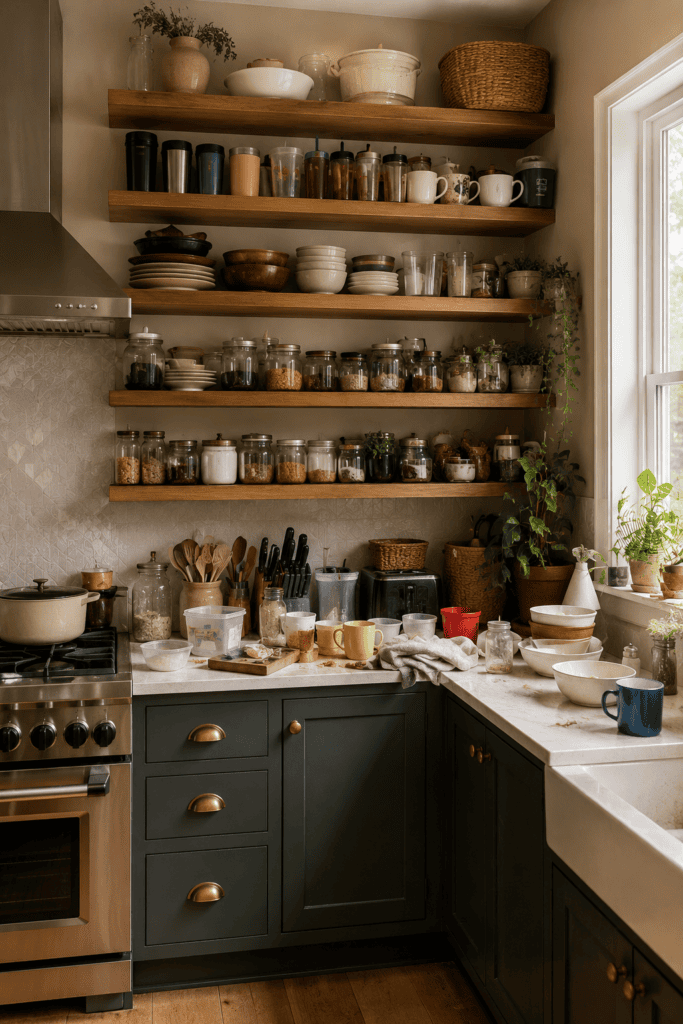
Visual Clutter Builds Quickly
Most people get this wrong by assuming open shelves automatically make a kitchen look cleaner.
Empty shelves look airy.
Shelves packed with twenty mugs, plastic cups, food containers, appliances, supplement bottles, and random serving pieces don’t.
Once shelves become overloaded, they can actually make a kitchen feel busier than traditional cabinets would.
If your current cabinets are already overflowing, removing storage probably isn’t going to solve the problem.
Dust and Cooking Grease Are Real Issues
Open shelves near a stove require more maintenance.
Cooking doesn’t just produce steam. Tiny grease particles can travel through the kitchen and settle on nearby surfaces. Mix that with normal household dust and neglected shelves can develop a slightly sticky film.
This is one reason I wouldn’t place open shelves directly beside a cooktop unless you’re comfortable cleaning them regularly.
Shelves holding frequently used plates are less troublesome because the dishes are constantly cycling through the dishwasher. Decorative items that sit untouched for months are another story.
You Lose More Storage Than You Think
Replacing a 36-inch-wide upper cabinet with a 36-inch shelf doesn’t necessarily give you equivalent storage.
Cabinets have depth, multiple internal shelves, and doors that allow you to fill them without worrying much about appearance.
Open shelving needs breathing room.
Pack every available inch and you lose the visual benefit that made you want shelves in the first place.
Why Upper Cabinets Still Make Sense
Upper cabinets aren’t as exciting as open shelves, but there’s a reason kitchens have relied on them for decades.
They are extremely efficient.
You Can Hide Real-Life Kitchen Stuff
Not everything deserves to become decor.
Travel mugs. Kids’ cups. Food storage containers. Vitamins. Half-used bags of coffee. Plastic measuring cups. Random appliances.
Upper cabinets let your kitchen function normally while keeping the room visually calm.
That matters more than people realize.
What actually works is having enough closed storage that countertops don’t have to become overflow storage.
Cabinets Use Vertical Space Better
This becomes especially important in smaller kitchens.
Upper cabinets can extend close to the ceiling, giving you storage for less frequently used items such as holiday dishes, oversized serving bowls, pitchers, and baking supplies.
If your kitchen doesn’t have a pantry or a large island, that vertical storage may be too valuable to sacrifice.
They’re More Forgiving
You don’t need perfectly coordinated dishes.
You don’t need to arrange everything intentionally.
You don’t have to worry about whether a bright plastic cup ruins your carefully planned color palette.
Close the door and the room still looks tidy.
For busy households, that convenience is hard to beat.
The Biggest Mistake: Choosing Based Only on Looks
Imagine two identical kitchens.
Kitchen A belongs to someone who cooks occasionally, owns one coordinated dish set, has a large pantry, and prefers uncluttered spaces.
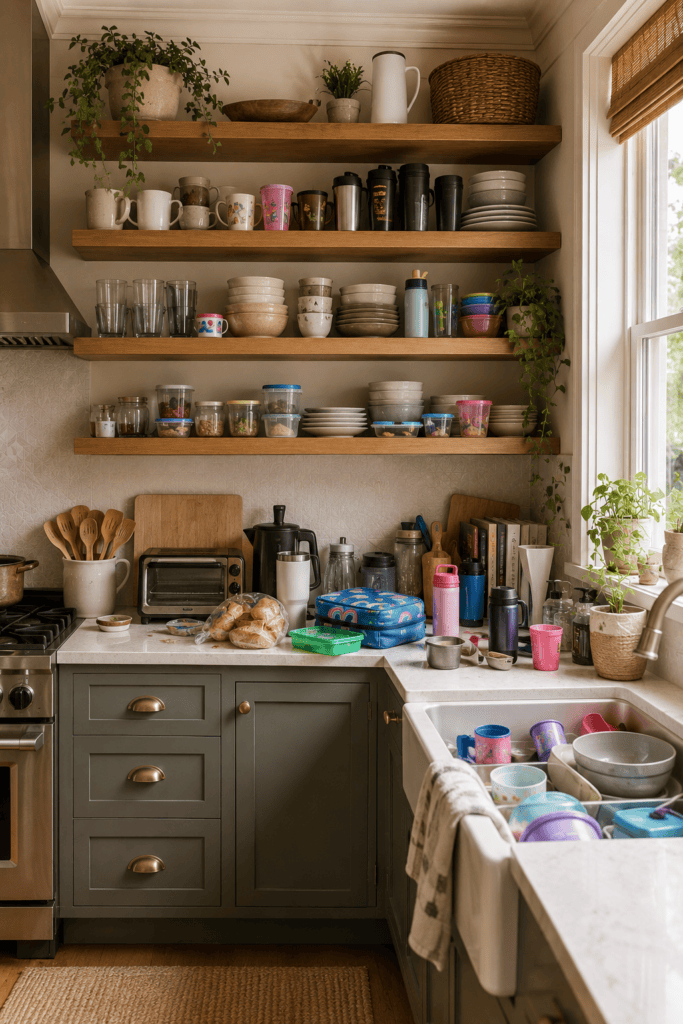
Kitchen B belongs to a family of five with lunch containers, kids’ dishes, baking equipment, travel mugs, and a small pantry.
Open shelving might work beautifully in Kitchen A.
Put the exact same shelving in Kitchen B and everyone may be fighting for storage within a month.
That’s why your lifestyle needs to come before the aesthetic.
Before removing upper cabinets, actually open them and look at what’s inside.
Ask yourself: Where would all of this go?
If you don’t have a specific answer, keep the cabinet.
Open Shelving vs. Upper Cabinets: Which Is Easier to Maintain?
Upper cabinets win when it comes to low-maintenance storage.
Cabinet doors protect dishes and supplies from much of the everyday dust and cooking residue floating around a kitchen. You’ll still need to clean the doors and interiors occasionally, but the contents generally stay protected.
Open shelving needs more frequent wiping.
That doesn’t mean you’ll be dusting plates every morning. If you store frequently used dishes on the shelves, maintenance can be quite manageable.
The mistake is using open shelves for items that barely move.
A decorative pitcher sitting beside the stove for six months will require more cleaning than the dinner plates you use every night.
If you choose shelving, place everyday items in the easiest-to-reach areas and keep decorative objects limited.
Which Option Is Better for a Small Kitchen?
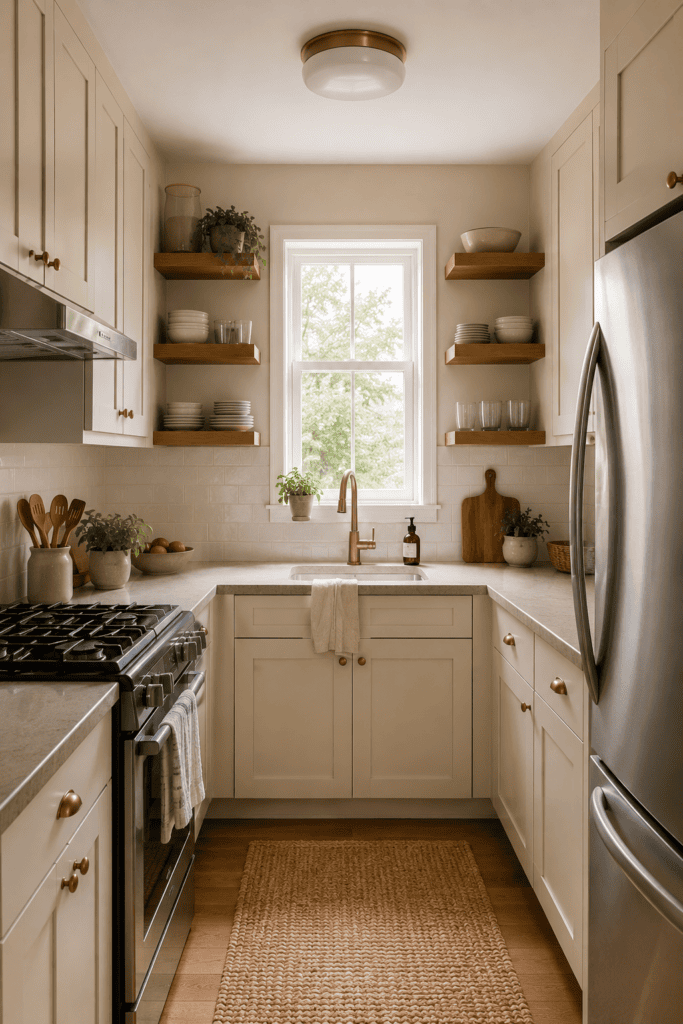
This one is tricky because both have genuine advantages.
Open shelving can make a small kitchen look larger, while upper cabinets can make a small kitchen function larger by increasing storage.
So you have to identify your actual problem.
If the kitchen feels cramped visually but you already have enough lower-cabinet or pantry storage, replacing one or two uppers with shelves could help tremendously.
But if you’re already storing cookware on top of the refrigerator because every cabinet is full, don’t sacrifice valuable storage just to make the room look slightly more open.
Instead, consider lighter cabinet colors, glass-front cabinets, under-cabinet lighting, or simply removing one strategic cabinet rather than an entire wall.
What About Cost?
Open shelving can be less expensive than installing full upper cabinetry, but don’t automatically assume it’s the budget option.
Simple wood shelves with basic brackets can certainly be affordable.
But thick custom floating shelves, quality hardwood, concealed mounting hardware, professional installation, and a new backsplash can add up quickly.
There’s another hidden cost during remodeling.
If you remove existing upper cabinets, the wall behind them may need patching, painting, tile work, or electrical adjustments.
If budget is the main reason you’re considering shelves, price the complete project, not just the shelves themselves.
The Hybrid Approach Is Often the Best Choice
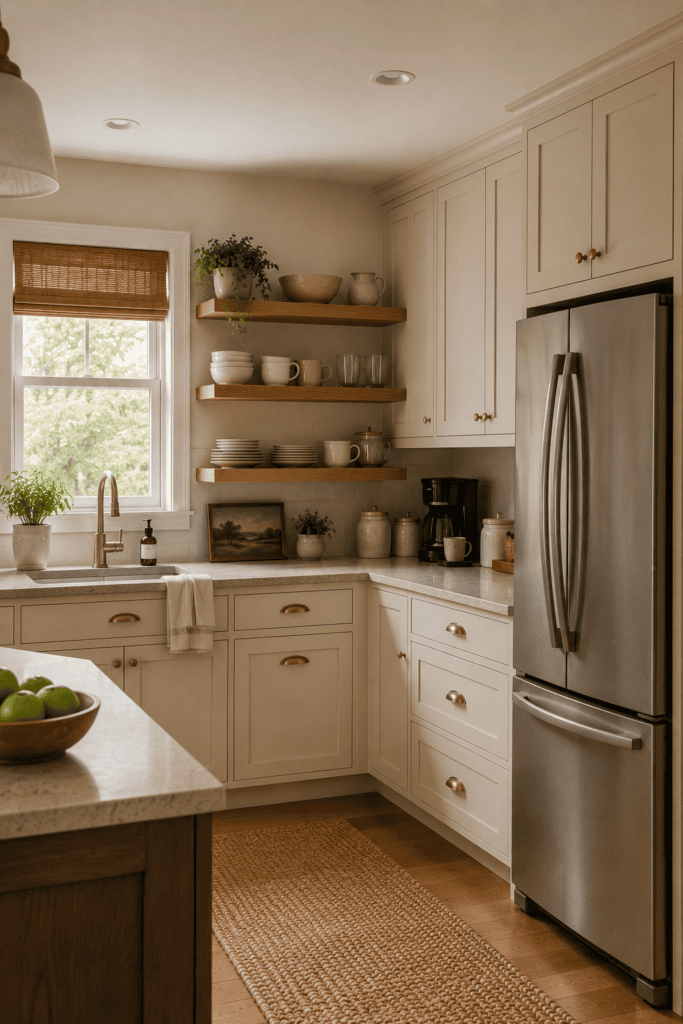
For most kitchens, I actually prefer a combination.
You don’t have to choose between an entire wall of cabinets and an entire wall of open shelves.
Keep upper cabinets where storage matters most, then introduce shelving where it improves the room.
For example, you might use upper cabinets around the refrigerator and pantry area but install two shelves near a window or coffee station.
Another good option is ending a long cabinet run slightly early and adding shelving at the end. That breaks up the visual heaviness without sacrificing most of your storage.
This approach gives you something very useful: closed storage for ugly necessities and open storage for attractive everyday items.
It also tends to age better because the kitchen isn’t completely dependent on one design idea.
How to Decide What Your Kitchen Actually Needs
Before making the final decision, do a quick storage reality check.
Step 1: Inventory Your Current Upper Cabinets
Don’t estimate. Actually look.
Separate what you use daily from what you use occasionally.
If half your upper cabinets contain things you rarely touch, you may have room to reduce cabinetry.
If every shelf is actively used, removing cabinets deserves more thought.
Step 2: Look at Your Other Storage
Do you have a pantry?
A large island?
A dining room hutch?
Deep drawers?
A nearby utility cabinet?
The more alternative storage you have, the easier open shelving becomes.
Step 3: Identify Where Visual Weight Is the Problem
You don’t need to remove cabinets everywhere.
Maybe one wall feels particularly heavy.
That’s your opportunity.
Removing two cabinets around a window, for example, can create a much bigger visual improvement than randomly replacing cabinets throughout the kitchen.
Step 4: Decide What Would Actually Go on the Shelves
This is important.
Don’t install shelves and figure out what to put on them afterward.
Plan the contents first.
If you can picture stacks of everyday white dishes, glasses, bowls, and perhaps one or two decorative pieces, great.
If you’re mentally trying to squeeze your blender, cereal boxes, medications, water bottles, and twelve mismatched mugs onto them, keep the cabinet.
Practical Rules That Make Open Shelving Work Better
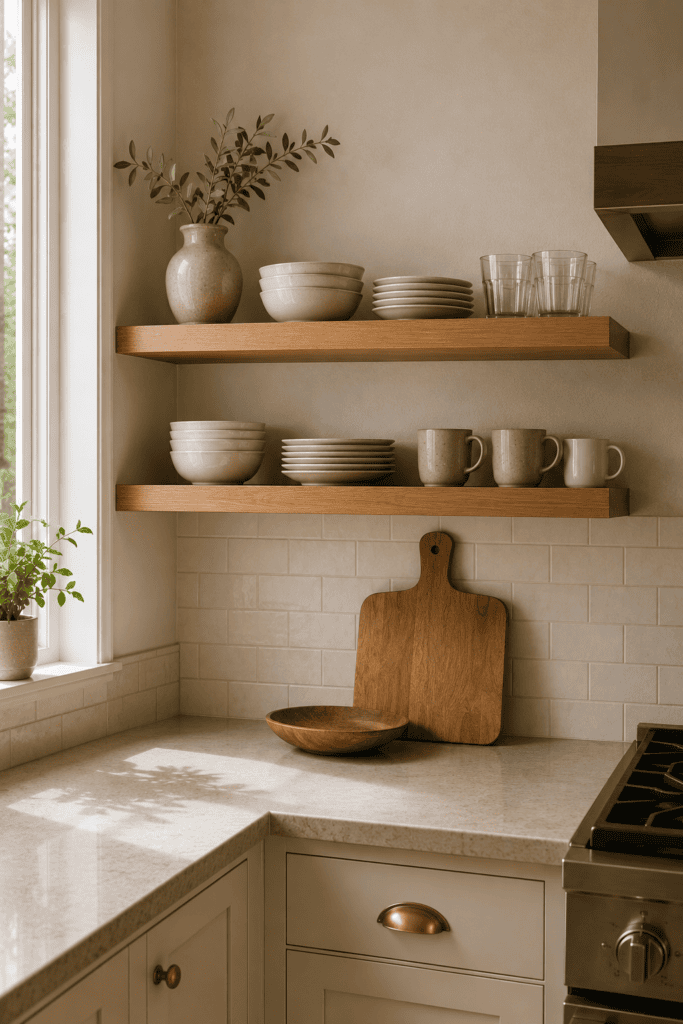
If you decide to incorporate open shelves, restraint makes all the difference.
Don’t make shelves excessively deep. You want to comfortably reach what sits at the back without creating a second hidden row of stuff.
Leave some empty space around objects instead of filling every inch.
Keep your most-used pieces at comfortable reaching height.
And pay attention to location. Shelves beside the range will generally need more cleaning than shelves across the room.
Most importantly, don’t treat open shelving like a showroom display.
A real kitchen should still look usable.
A stack of plates, a few bowls, glasses, and a coffee mug you actually drink from every morning will usually look more natural than twelve decorative objects carefully arranged for a photograph.
So, Are Open Shelves or Upper Cabinets Better?
When comparing open shelving vs. upper cabinets, there isn’t one option that’s automatically better.
If you have plenty of storage elsewhere, enjoy keeping things relatively organized, and want your kitchen to feel lighter, open shelving can be a great choice.
If storage is tight, your household owns a lot of kitchen gear, or you simply don’t want everyday items on display, upper cabinets are probably going to make your life easier.
For many homes, though, the sweet spot is somewhere in the middle.
Keep enough cabinets to handle the messy realities of daily life, then use open shelves strategically where they’ll actually improve the room. You don’t need to turn your entire kitchen into open storage to get that lighter, more relaxed look.