
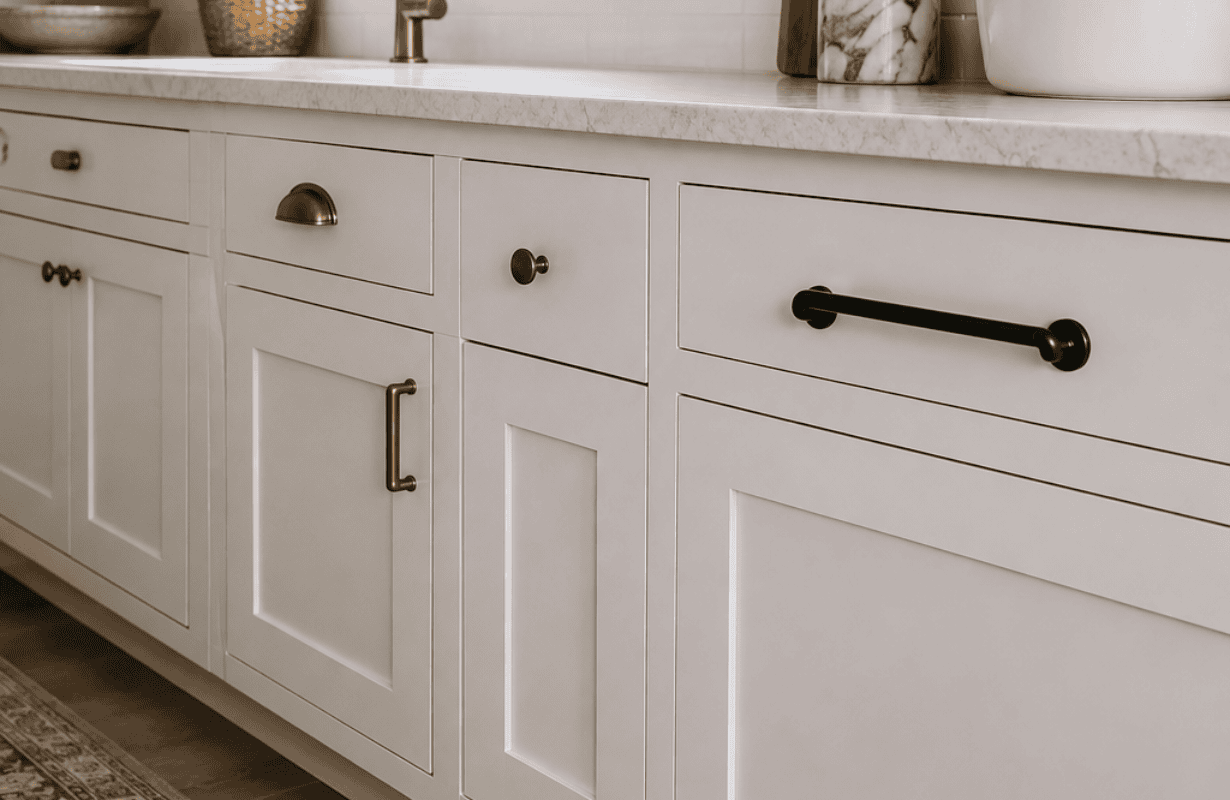
So you finally painted your cabinets, or maybe you just bought a house with builder-grade boxes that are begging for an upgrade. You head to the hardware aisle, grab a cute set of knobs, and then… you stand in your kitchen holding a pencil, completely frozen. Where does this actually go? How big should it even be? Is there a “right” answer, or are you just supposed to eyeball it and hope?
I’ve been there. I once drilled a hole for a knob about an inch too high, and let’s just say wood filler and touch-up paint became my best friends that weekend. Kitchen cabinet hardware size and placement seems like it should be simple, but it’s actually one of those details that quietly makes or breaks how “finished” a kitchen looks. Get it wrong and something feels off even if you can’t say why. Get it right and people assume you hired a designer.
Here’s the good news: there’s actual logic behind this stuff, not just rules pulled out of thin air. Once you understand the “why,” you’ll never second-guess a drill hole again.
Why Hardware Size and Placement Matters More Than You Think
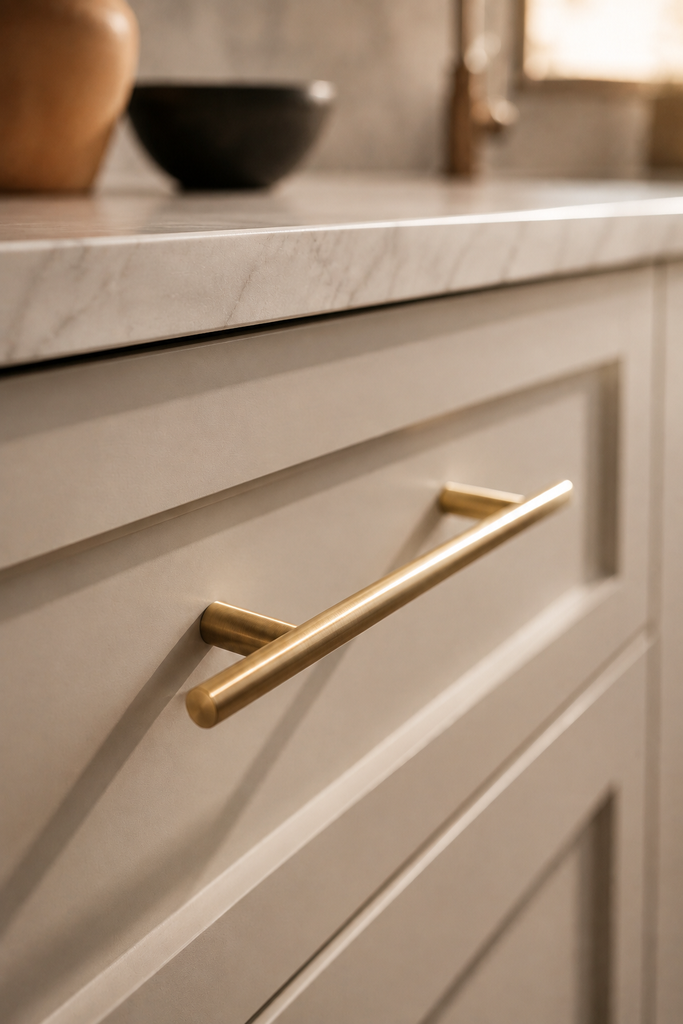
Most people treat hardware like an afterthought — something you slap on at the very end. But hardware is basically jewelry for your cabinets. It’s one of the few things people touch every single day, and it sits at eye level or hand level constantly. A mismatched or poorly placed pull draws the eye in the worst way, kind of like a crooked picture frame you can’t stop staring at.
The size and placement also affect function, not just looks. A knob that’s too small is annoying to grip with wet or greasy hands. A pull placed in a weird spot can make a drawer feel harder to open than it should be, purely because of leverage.
Common Mistakes People Make (I’ve Made Most of These)
Going Too Small
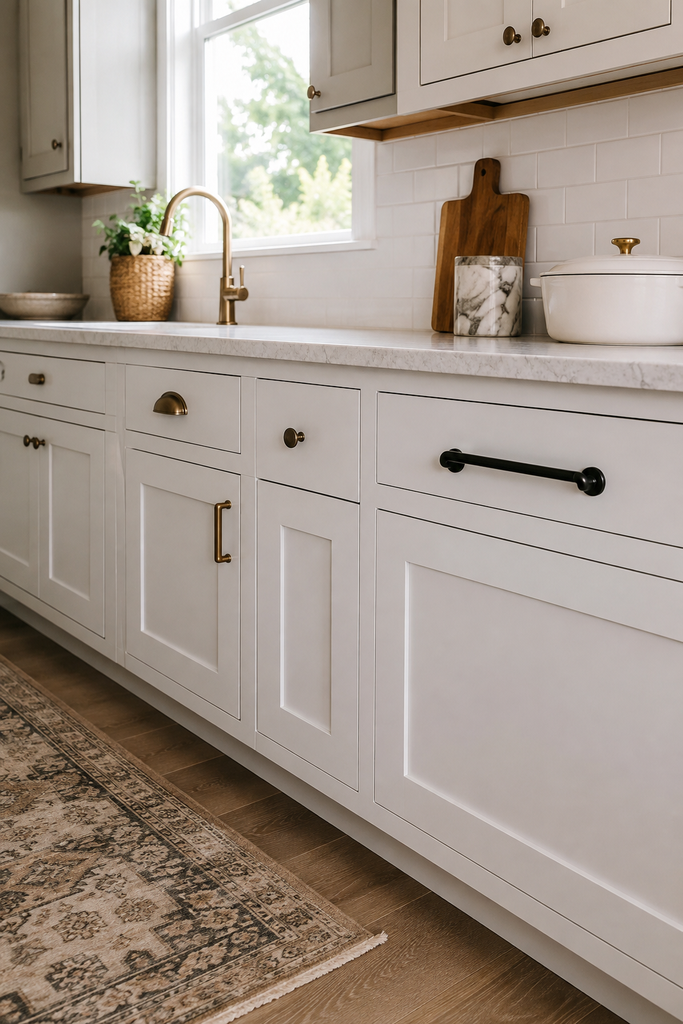
This is the number one mistake. A lot of folks buy tiny 1-inch knobs because that’s what’s cheap and available, but on a modern cabinet door, a small knob can look lost, like a button on a winter coat. The general rule of thumb is that hardware should feel proportional to the cabinet door or drawer front, not just “a piece of metal that fits.”
Ignoring Cabinet Size Differences
Here’s the thing — not every cabinet in your kitchen is the same size, so why would the same hardware size work everywhere? A narrow drawer under the sink and a huge pantry cabinet door shouldn’t necessarily get identical hardware treatment. Most people grab one size and slap it on everything, and that’s often where things start to feel slightly “off.”
Placing Pulls in Random Spots
Sticking a pull dead center on a drawer might seem obvious, but depending on the drawer’s height and function, that’s not always the most comfortable or visually balanced spot. Same with cabinet doors — hardware placed too close to the edge can look like an afterthought, while hardware placed too far in can look accidental.
Mixing Finishes Without a Plan
Mixed metals are trendy right now, and they can look amazing — but only when it’s intentional. Randomly mixing brushed nickel here and matte black there because that’s what was on sale usually reads as chaotic instead of curated.
The Key Principles That Actually Make This Work
Match Hardware Size to Cabinet Proportions
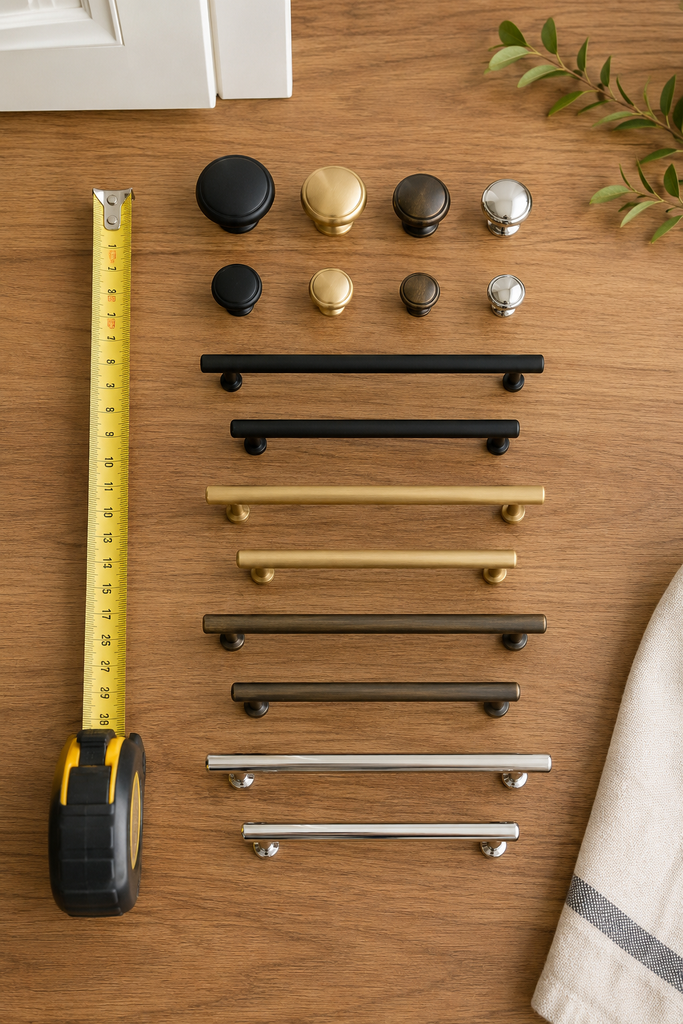
What actually works is scaling your hardware to the size of the door or drawer front. For knobs, a good general approach is picking something that’s roughly proportional, not tiny and not oversized — enough to feel substantial without looking like a doorknob. For pulls, longer bars generally suit wider drawers, while shorter pulls work better on narrower cabinet doors.
Why this matters: proportion is what your brain reads as “balanced,” even if you can’t consciously identify why. It’s the same reason a tiny picture frame looks strange on a huge blank wall.
Placement Should Follow Function, Not Just Symmetry
Most people obsess over perfect symmetry and forget that hardware needs to actually work with how your hand moves. For upper cabinets, pulls or knobs are usually placed toward the bottom corner closest to where you’d naturally reach up. For lower cabinets, hardware typically goes toward the top corner, since that’s closer to hand height when you’re reaching down.
Consistency Creates a “Custom” Look
You don’t need identical hardware everywhere, but you do need a consistent logic. Maybe all upper cabinets get knobs and all drawers get pulls. Maybe pull length scales consistently with drawer width. Whatever your system is, keeping it consistent throughout the kitchen is what makes it look intentional instead of thrown together.
A Step-by-Step Approach That Actually Works
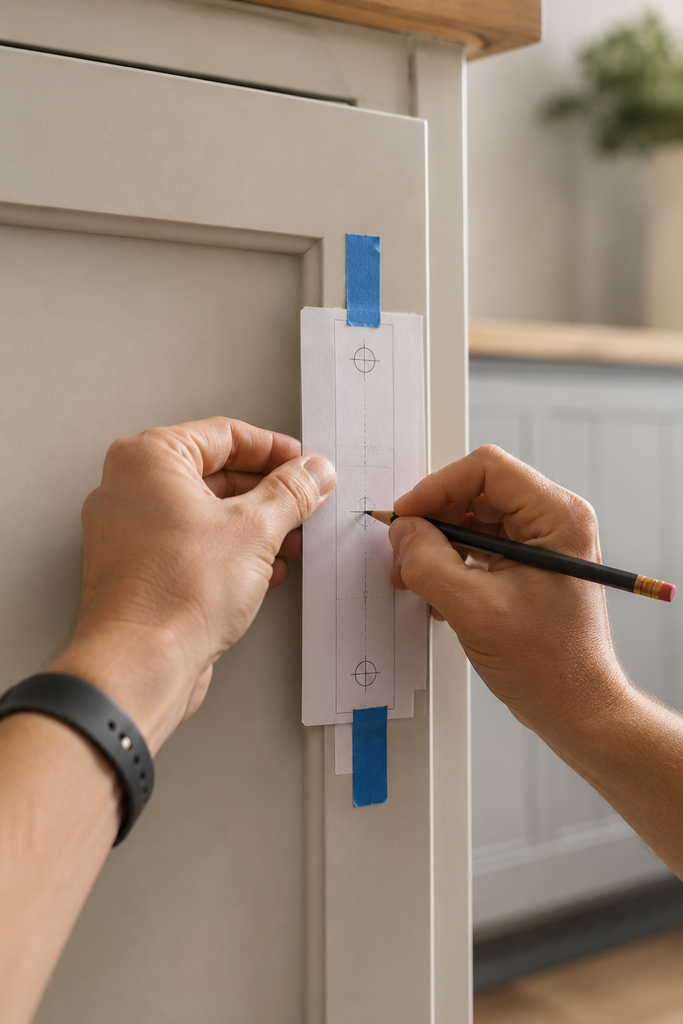
- Measure your cabinet doors and drawers first. Don’t buy hardware before you know your dimensions — this is the step most people skip, and it’s the reason things end up looking mismatched.
- Decide on knobs vs. pulls for each cabinet type. A common approach is pulls on drawers (since you’re often pulling with more force or a full hand) and knobs on doors.
- Choose pull length based on drawer width. Wider drawers generally look better with longer pulls, since a short pull on a huge drawer can feel stingy and disproportionate.
- Use a template or painter’s tape for placement. Mark your spot, stick tape over it, and step back to look at it from a few feet away before drilling anything. Your eye will catch problems that a ruler alone won’t.
- Drill one cabinet first as a test. Live with it for a day before doing the whole kitchen. It’s way easier to fix one mistake than twenty.
Practical Tips Nobody Tells You
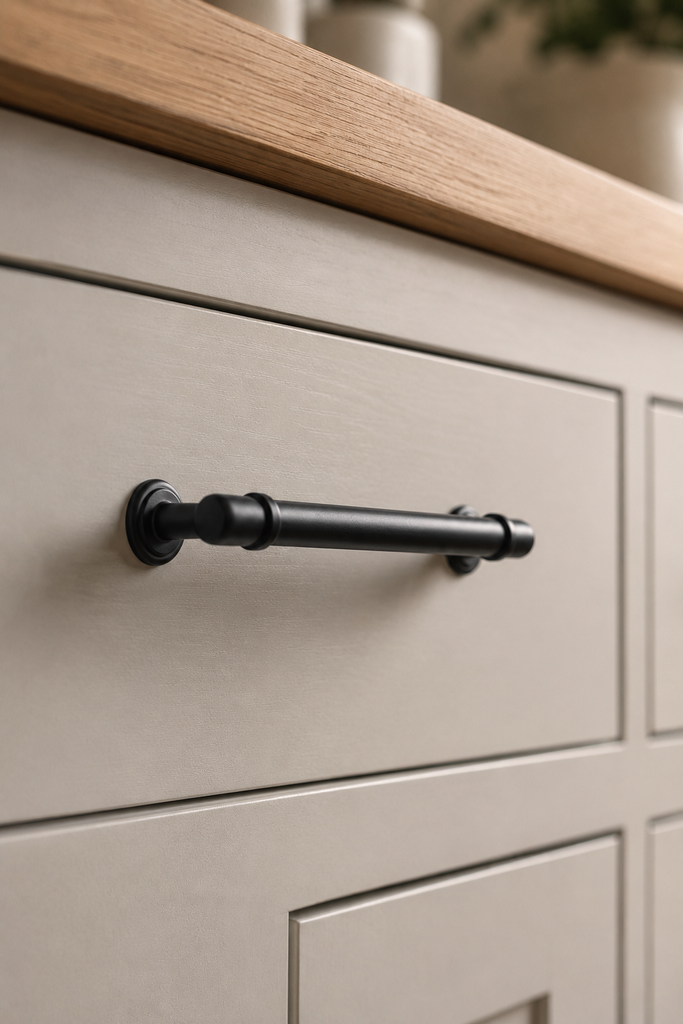
- If you’re reusing existing holes to avoid extra drilling, measure your current hole spacing before shopping so your new hardware actually fits.
- Slightly heavier hardware (in a good way) often feels more expensive, even if it’s not pricier — the weight signals quality to your hand, not just your eyes.
- When in doubt, go one size up rather than down. Undersized hardware is the more common mistake, and it’s the one that ages a kitchen faster.
Wrapping It Up
At the end of the day, choosing kitchen cabinet hardware size and placement comes down to proportion, function, and consistency. Measure before you buy, think about how your hand actually moves through the space, and stick to a system instead of guessing cabinet by cabinet. It’s a small detail, but it’s the kind of small detail that people notice even when they can’t explain why your kitchen just feels put together. Grab that tape measure, test a template before you drill, and trust the process your cabinets (and your hands) will thank you.