
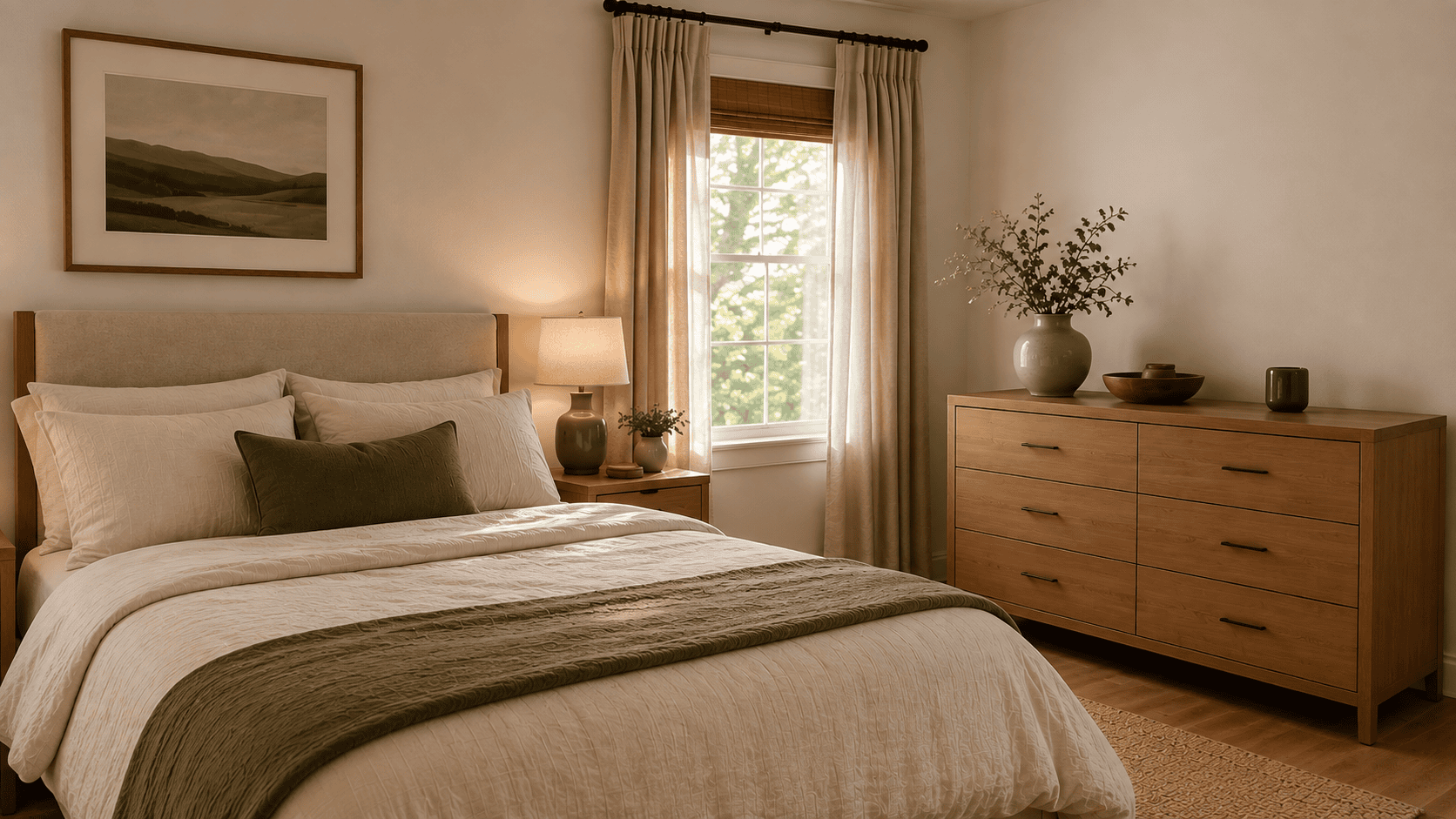
You want your bedroom to feel cozy, the kind of room where you walk in at night and immediately feel more relaxed. But when you start looking at cozy bedroom inspiration, the solution often seems to be more stuff. More pillows, more blankets, more candles, more baskets, more framed prints.
That works in a styled photo. In a real bedroom, especially a small one, it can quickly turn into clutter.
Here’s the thing: cozy doesn’t have to mean full.
A bedroom feels comfortable because of warm lighting, soft textures, restful colors, good furniture placement, and a lack of visual noise. You can create all of that without decorating every empty surface.
In fact, if your room currently feels slightly chaotic, adding decor may be the last thing it needs.
If you’re wondering how to make a bedroom feel cozy without adding clutter, focus on making the things you already need—your bed, lighting, curtains, furniture, and storage contribute to the atmosphere.
Here’s how to do it without turning your bedroom into another space you constantly have to organize.
Why Cozy Bedrooms Can Easily Become Cluttered
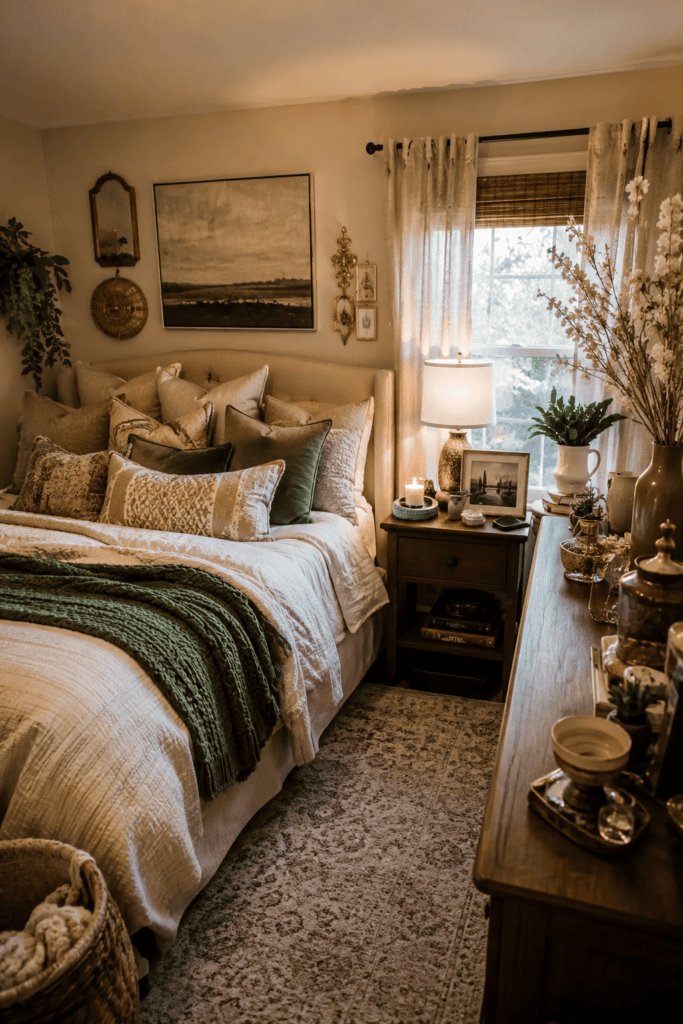
Most people get this wrong because we tend to confuse cozy with heavily decorated.
You see an empty dresser and add a candle. Then a plant. Then a tray, framed photo, vase, and stack of books.
Individually, everything looks nice. Together, you’ve created a surface full of objects.
The same thing happens with beds. You start with your sleeping pillows, then add decorative pillows, a lumbar pillow, quilt, chunky throw, and another blanket draped across the corner.
Suddenly, getting into bed involves removing half the decor.
A bedroom should make your routine easier, not create more work.
Stop Trying to Fill Every Empty Space
Empty space isn’t wasted space.
A little breathing room makes a bedroom feel calmer because your eyes aren’t constantly jumping between objects.
Look at your nightstand. If it already contains a lamp, phone, book, water glass, candle, and charger, adding decor isn’t going to make it cozier.
Removing a couple of things probably will.
The same principle applies to dressers, window sills, shelves, and floors.
Choose Fewer, More Impactful Pieces
Small decorative objects create a surprising amount of visual clutter.
Instead of five small frames above your bed, one larger piece of artwork can create a stronger focal point.
Instead of filling a dresser with several decorative accessories, try one substantial lamp and one personal object.
The room still feels decorated. It just doesn’t feel busy.
Start With a Warm, Calm Foundation
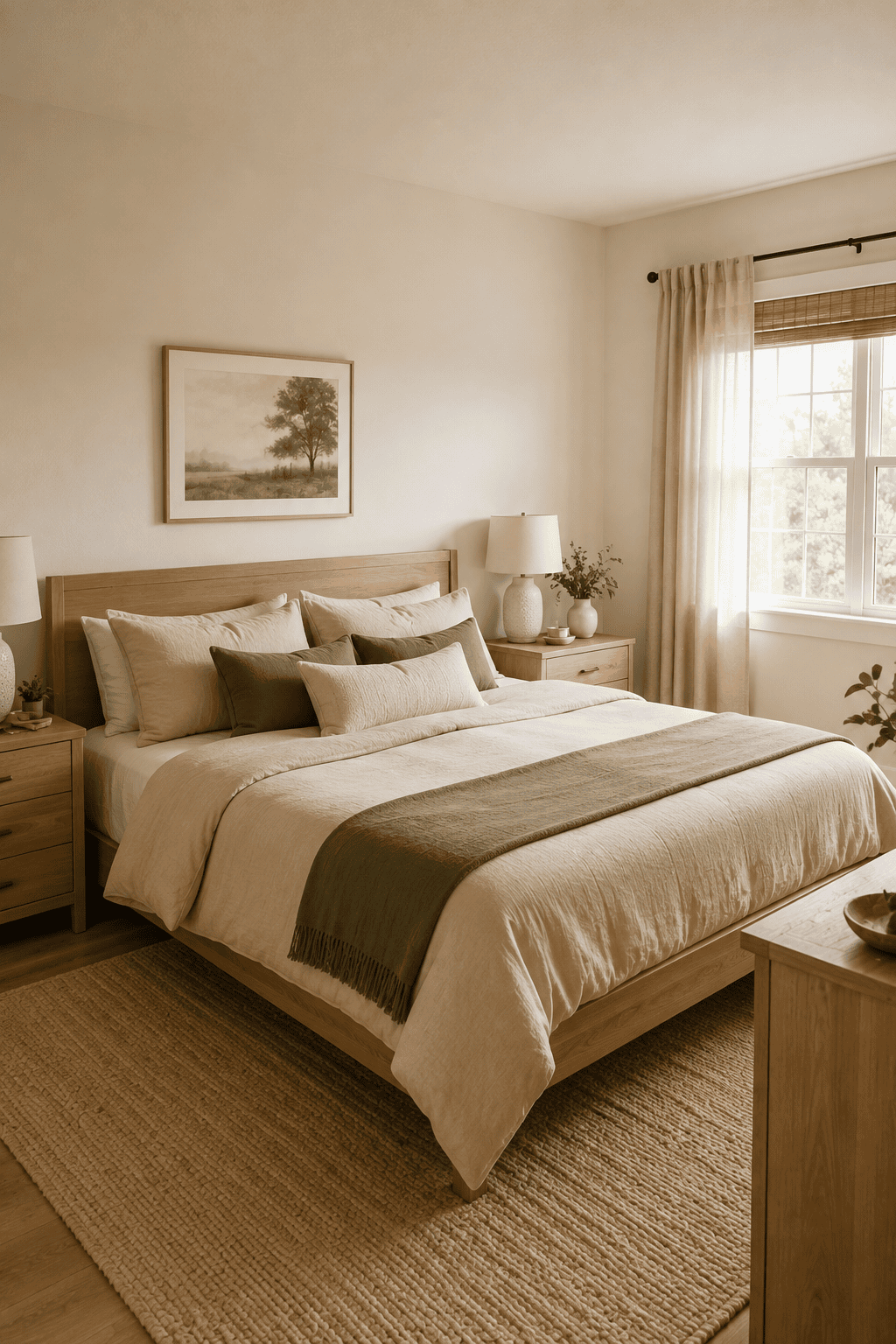
Before buying decorations, look at the largest surfaces in your bedroom.
Your walls, bedding, curtains, flooring, and furniture make up most of what you see. If those elements work together, you need far fewer accessories.
Build a Simple Color Palette
You don’t have to paint everything beige.
Warm white, muted green, dusty blue, mushroom, soft brown, terracotta, and warm gray can all create cozy bedrooms.
What’s more important is limiting the number of competing colors.
For example, you might use warm white walls, light oak furniture, oatmeal bedding, and muted olive accents.
Repeating those colors throughout the room creates visual consistency.
If your bedroom has bright white walls and you can’t repaint, that’s fine. Bring warmer colors closer to eye level through bedding, curtains, wood furniture, or lampshades.
The goal isn’t to make everything match perfectly. It’s to prevent the room from feeling visually disconnected.
Let the Bed Do Most of the Decorating
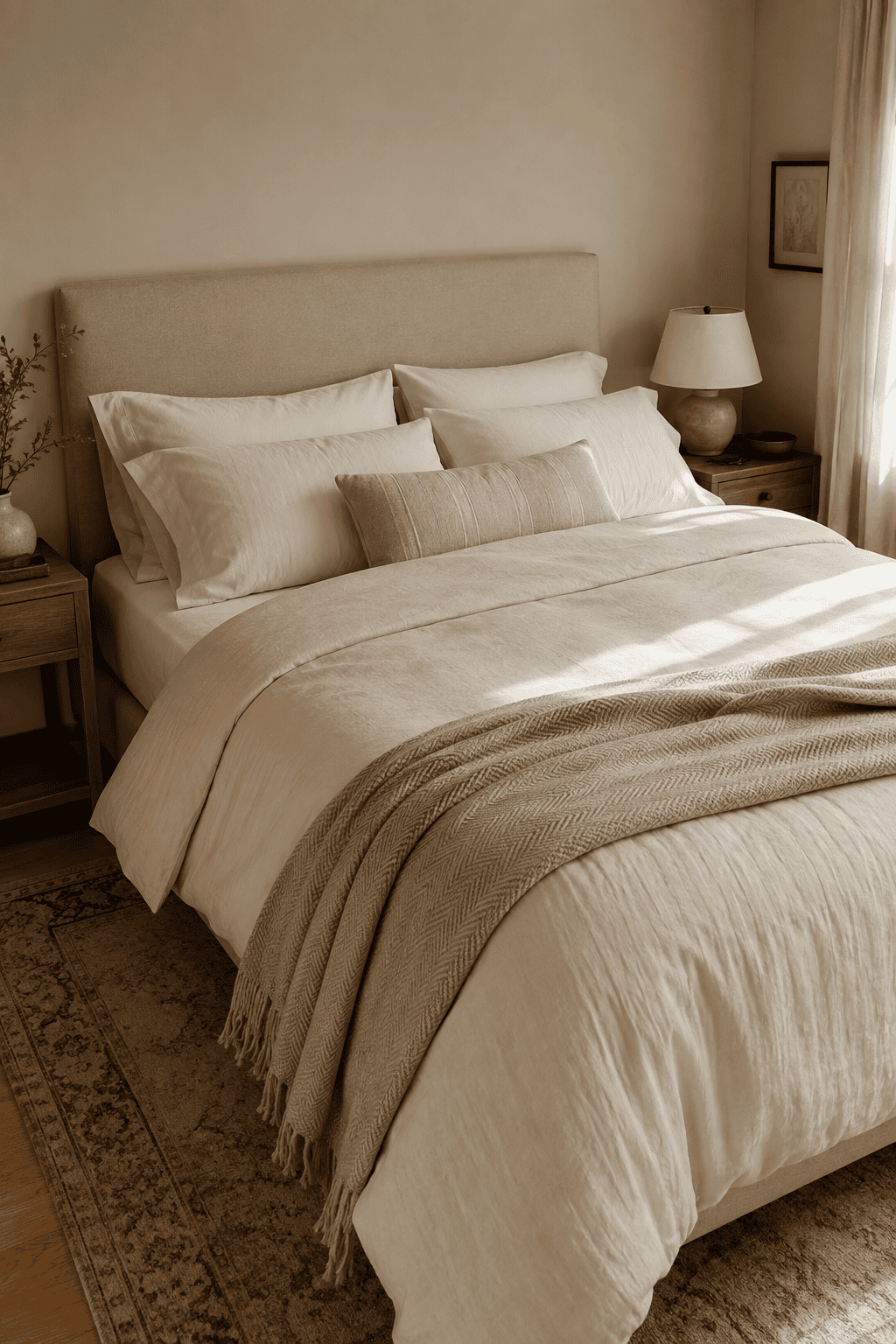
Your bed is probably the largest object in the bedroom, which means it has more influence over the room than almost any decorative accessory.
Use that to your advantage.
Layer Textures Instead of Piling on Accessories
Start with comfortable sheets and a duvet or comforter you actually enjoy sleeping under.
Then add one additional layer if you want more texture—a lightweight quilt or throw.
That’s usually enough.
You can create depth by mixing materials rather than adding more objects. Crisp cotton sheets paired with a softly textured duvet and a knitted throw can make the bed feel inviting without looking overloaded.
The same goes for pillows.
Your sleeping pillows plus one lumbar pillow or two decorative pillows are usually plenty.
If making your bed requires storing six pillows on the floor every night, the decor isn’t really working for you.
Use Lighting to Create Coziness
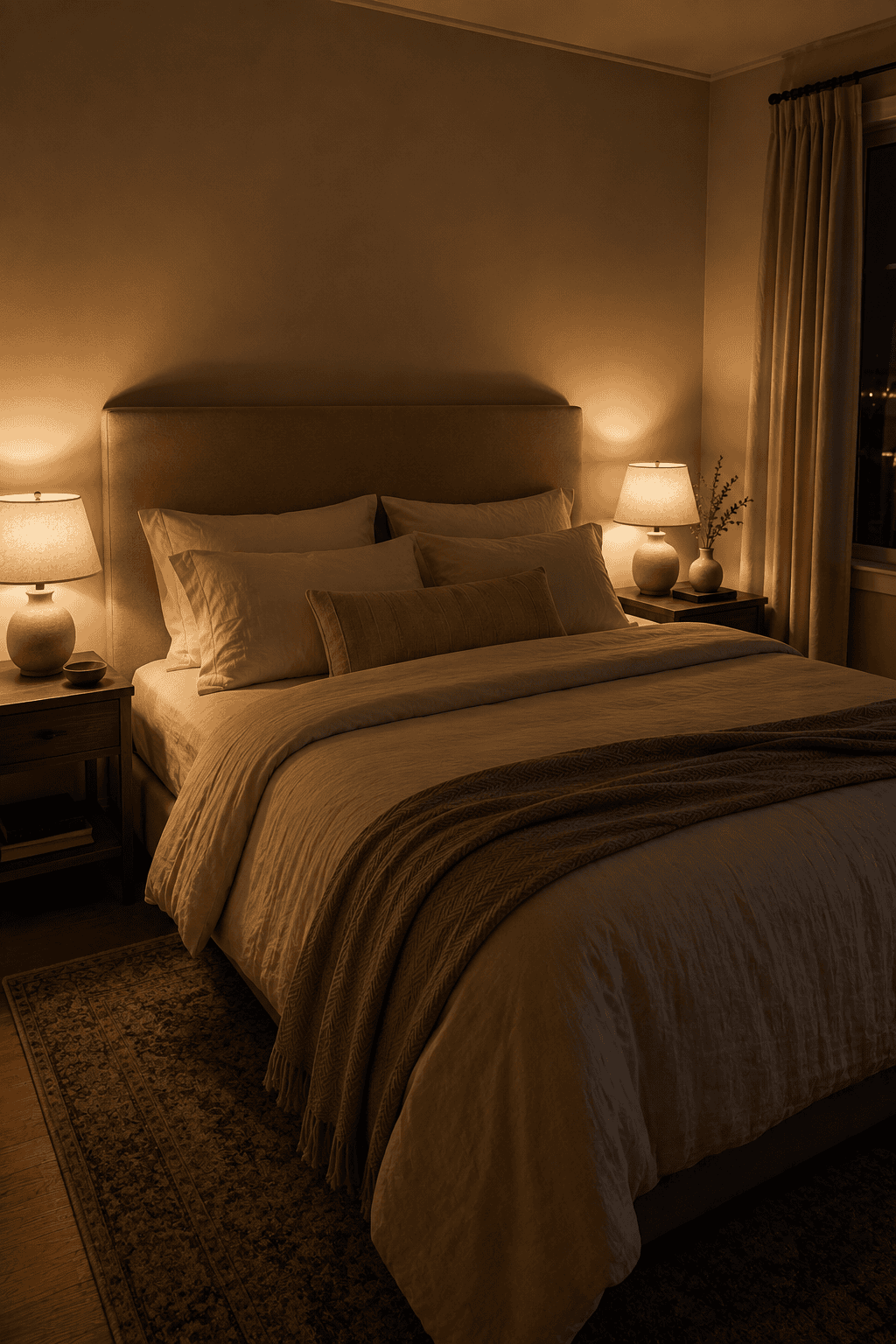
Lighting is one of the easiest ways to make a bedroom feel warmer without physically adding much to the room.
Honestly, I would fix bad lighting before buying almost any decorative accessory.
Don’t Depend Only on the Ceiling Light
Overhead lighting is useful when you’re cleaning or getting dressed.
At night, it can make a bedroom feel harsh and flat.
Instead, create lower pools of light using bedside lamps, wall sconces, or a floor lamp.
If your nightstands are small, wall-mounted sconces are especially useful because they provide cozy lighting while keeping the nightstand surface clear.
Choose Warm Bulbs
Sometimes you don’t even need new lamps.
Changing the bulbs can be enough.
For bedrooms, warm light around 2700K generally creates a soft, relaxing atmosphere without making everything look overly yellow.
Try to keep the bulb temperatures similar throughout the room. Mixing icy-white light with warm-yellow light can make the space feel disjointed.
Dimmable bulbs are even better because you can lower the brightness as you wind down at night.
Add Texture Without Adding More Stuff
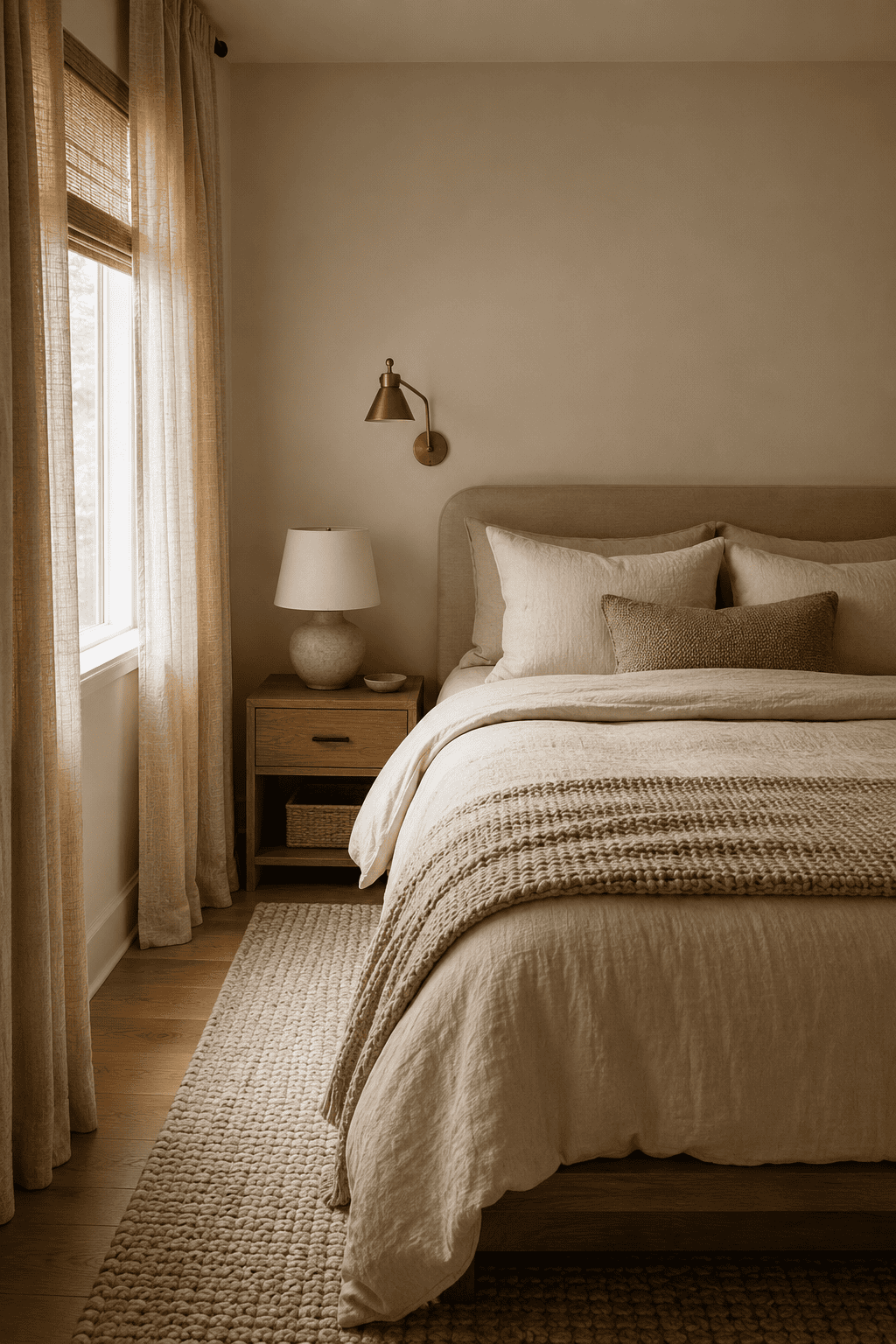
Texture is one of the best ways to make a bedroom feel cozy without adding clutter.
Instead of asking, “What decoration can I put here?” ask:
“Can something I already need provide more texture?”
That’s a much better decorating strategy.
Upgrade Functional Items
You already need bedding, so choose bedding with texture.
You already need curtains, so consider soft cotton, linen-look, or another woven fabric.
If your bedroom needs a rug, choose something that feels comfortable underfoot.
If you’re replacing a nightstand, natural wood can bring more warmth than a glossy finish.
None of these changes increase the number of objects in the room. They simply make functional objects contribute more to the atmosphere.
Mix Materials Carefully
A bedroom where every surface is smooth and shiny can feel cold even when it’s perfectly decorated.
Try mixing a few different finishes.
Natural wood, woven fabric, cotton bedding, matte ceramic, and brushed metal work well together because they create subtle contrast.
You don’t need every texture imaginable.
Three or four materials repeated around the room are usually more effective than ten unrelated ones.
Make the Layout Feel Comfortable
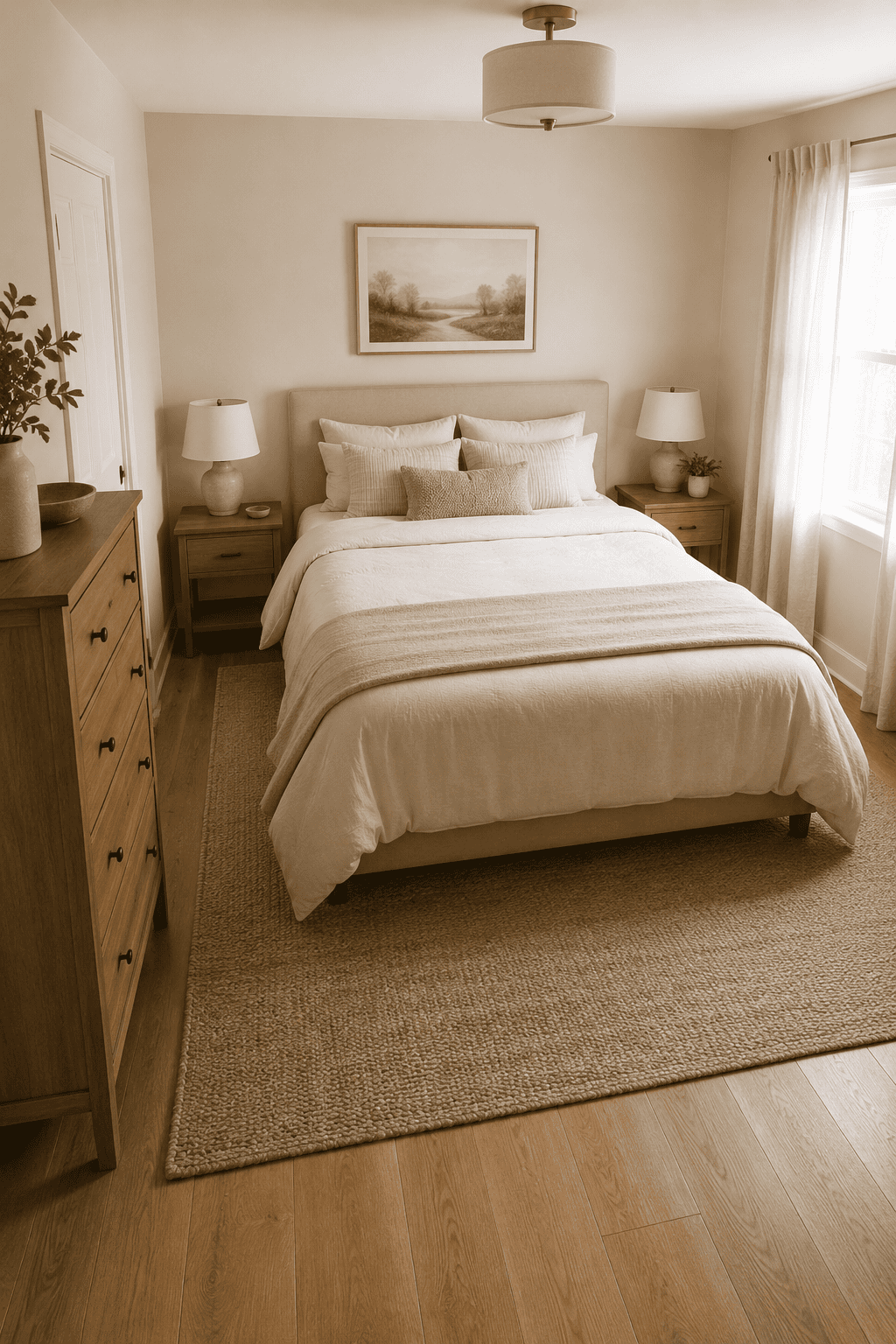
Sometimes the problem isn’t your decor at all.
It’s the furniture arrangement.
A bedroom can contain beautiful furniture and still feel uncomfortable if everything is squeezed together.
Give the Bed a Clear Focal Point
Whenever possible, position your bed against a solid wall where it feels visually anchored.
A headboard can strengthen that effect.
It doesn’t need to be elaborate. A simple wooden, upholstered, or woven headboard makes the bed feel finished without requiring a wall full of decorations.
If you don’t want a headboard, paint can sometimes create the same visual effect. A slightly deeper color behind the bed gives it more presence without taking up any floor space.
Keep Walkways Clear
Nothing makes a bedroom feel less peaceful than constantly squeezing around furniture.
In a small bedroom, that may mean accepting that you don’t need two full-size nightstands.
One nightstand and one small wall shelf may work better.
Or a tall dresser may make more sense than a long, wide one.
What actually works is prioritizing how you move through the room instead of trying to fit every traditional bedroom furniture piece into it.
Clear the Surfaces You See From Bed
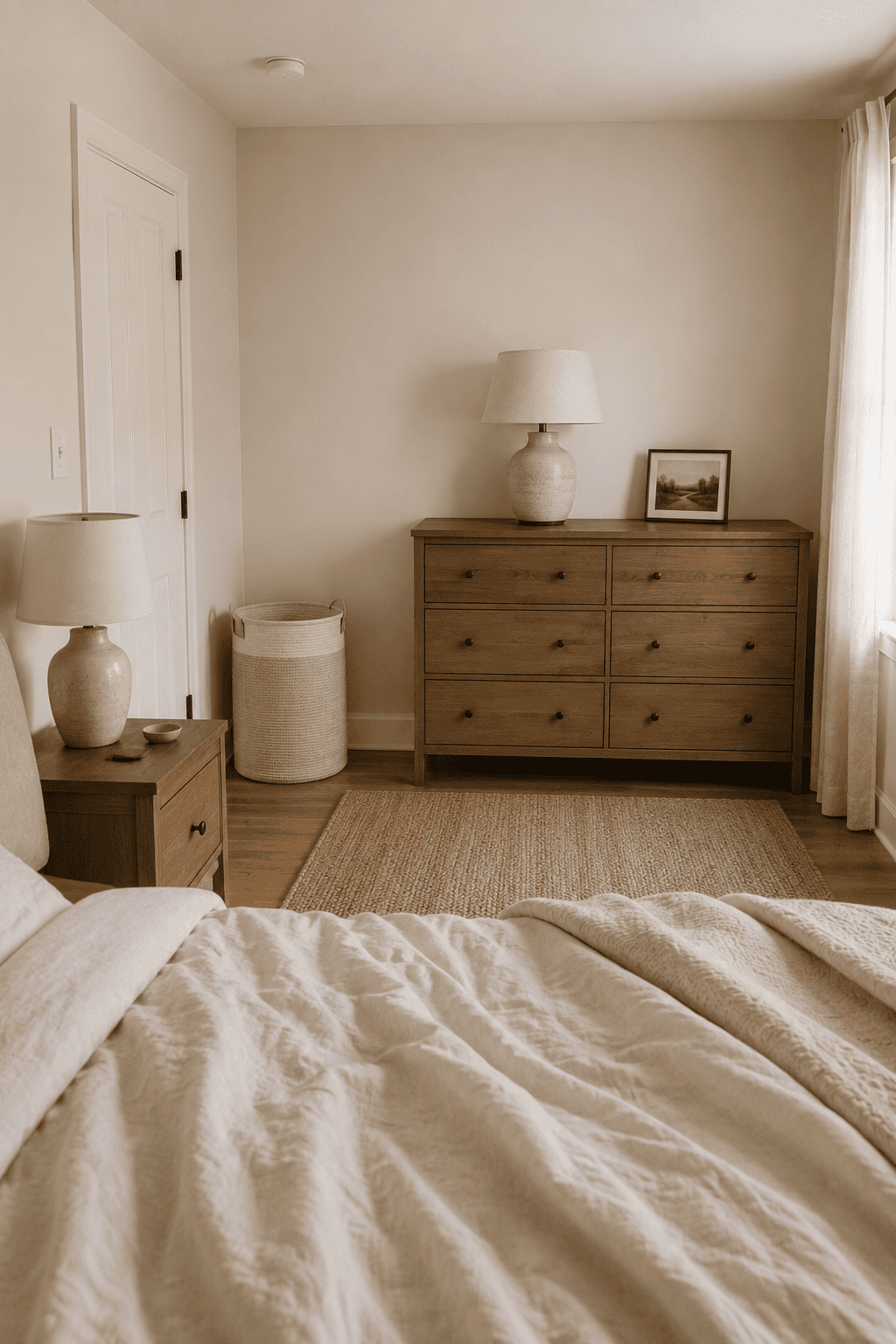
Here’s a practical trick: lie down in your bed and look around.
What do you see?
If your dresser is covered with perfume bottles, skincare products, mail, jewelry, chargers, and random receipts, that’s the visual information your brain gets while you’re trying to relax.
Start decluttering the surfaces that are visible from bed.
Give Everyday Clutter a Specific Home
You don’t need to hide everything you own.
You just need predictable places for the things that constantly create mess.
Keep skincare together inside a dresser drawer instead of spread across the top.
Use a hamper where clothes naturally get dropped.
Route charging cables behind the nightstand instead of letting them hang across the floor.
Add a hook behind the door for clothes you’ve worn but aren’t ready to wash.
Your bedroom should be easy to reset in a few minutes.
That’s much more realistic than expecting yourself to maintain a perfectly styled room every day.
Use Hidden Storage Before Adding More Storage Furniture
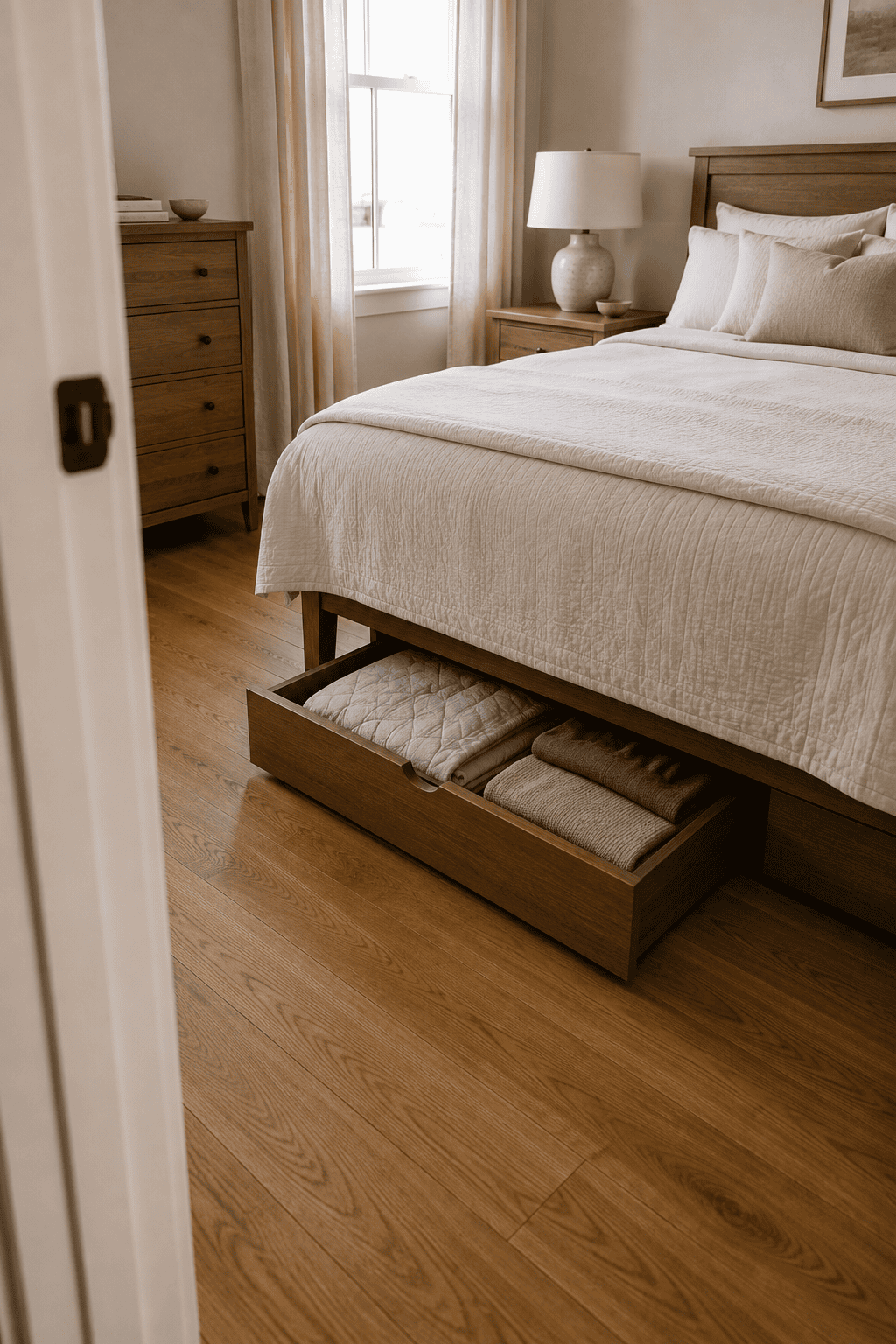
When a bedroom feels cluttered, the instinct is often to buy baskets, storage carts, or another cabinet.
But more storage furniture also means more things occupying the room.
Before adding anything, look for unused storage capacity.
Use Space Under the Bed
Under-bed space is perfect for items you need but don’t use every day.
Think seasonal clothing, extra bedding, shoes, or spare linens.
Low-profile containers can slide completely out of sight.
If you’re eventually replacing your bed frame, one with built-in drawers can be especially useful in a small bedroom.
Organize Around Your Real Habits
Good organization should follow how you actually use the room.
If jewelry always ends up beside your bed, storing it across the room isn’t going to work very well.
If dirty clothes consistently land beside your closet, that’s probably where the hamper belongs.
If you read in bed every night, leave enough nightstand space for a book.
Instead of designing storage around how you wish you behaved, design it around what you already do.
That’s how rooms stay tidy long-term.
Add Personality Without Covering Every Surface
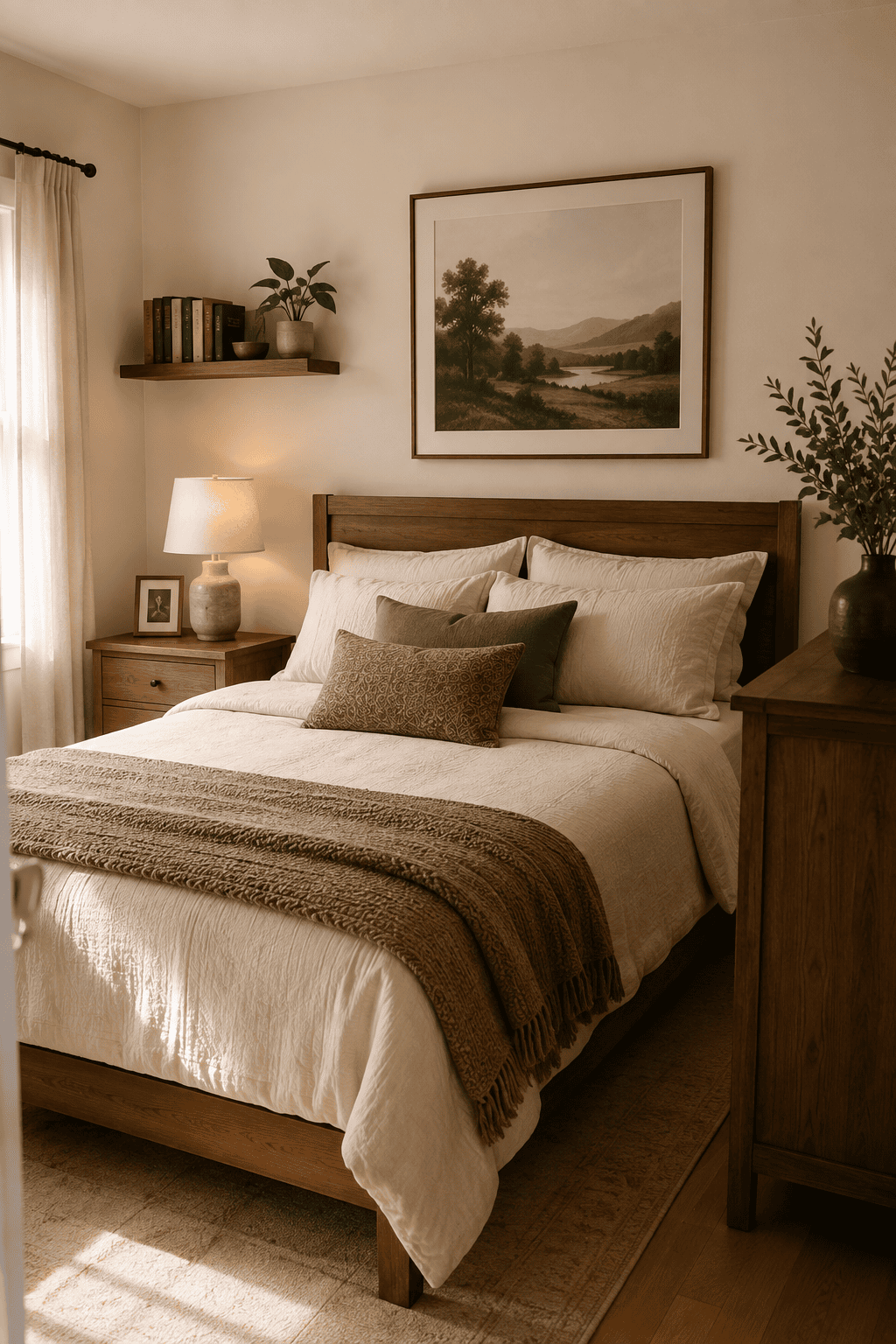
A clutter-free bedroom shouldn’t feel like a generic hotel.
Personal objects matter. You just don’t need dozens of them.
Pick One or Two Personal Focal Points
Maybe you have a large framed photograph from a favorite trip.
Maybe it’s artwork you love, a vintage dresser, a handmade quilt, or something sentimental from your family.
Give meaningful objects enough space to actually stand out.
A framed photograph beside a simple lamp often has more emotional impact than ten photographs crowded onto one dresser.
Group Collections Together
If you collect books, perfume, ceramics, or something else you enjoy seeing, you don’t necessarily need to hide it.
Just contain the display.
Keep favorite books together on one shelf rather than scattered across the nightstand, dresser, floor, and window sill.
Grouped objects tend to read visually as one collection instead of random clutter.
Reduce Visual Clutter You Might Be Overlooking
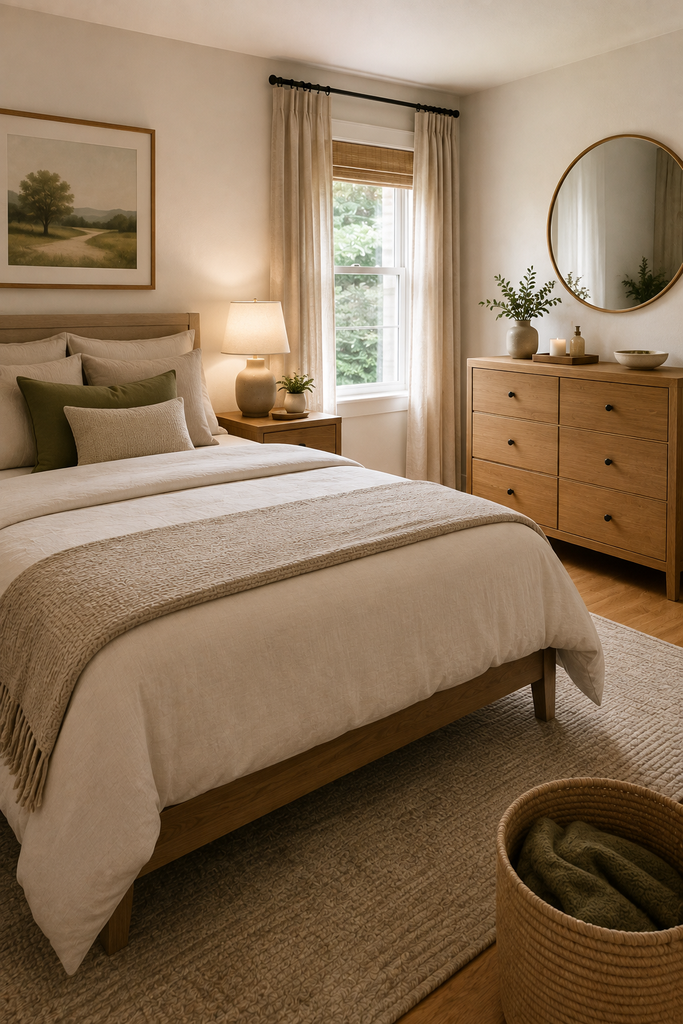
Physical clutter isn’t the only reason bedrooms feel busy.
Labels, cords, patterns, colors, and packaging all contribute to visual noise.
You don’t need to decant everything into matching containers, but frequently used products don’t necessarily need to live on display.
Move extra toiletries and skincare into drawers.
Hide charging cords behind furniture where possible.
Keep electronics together rather than scattered throughout the room.
And pay attention to color repetition.
If your bedding contains muted olive, repeating a similar shade in one piece of artwork or your curtains helps connect the room.
The more visually connected the major elements feel, the fewer decorative accessories you’ll need.
A Simple Step-by-Step Cozy Bedroom Reset
If your bedroom currently feels cluttered or slightly cold, don’t redesign everything at once.
Start here.
Step 1: Remove Visual Noise
Clear your nightstand, dresser, and other visible surfaces.
Temporarily remove anything that isn’t necessary.
You’ll quickly see which objects were contributing to the clutter.
Step 2: Fix the Lighting
Turn off the overhead light and look at your bedside lighting.
Switch harsh bulbs for warmer ones and reposition lamps if needed.
This is often the fastest way to change the mood of the room.
Step 3: Simplify the Bed
Remove unnecessary pillows and extra blankets.
Rebuild the bed with comfortable bedding, your sleeping pillows, and one intentional decorative layer.
Step 4: Add Warmth Through Essentials
Look at things you already need—bedding, curtains, rug, headboard, lamps.
Could one of them provide more texture or warmth?
Improve those elements before buying decorative accessories.
Step 5: Solve Your Everyday Clutter
Identify the three things that repeatedly make the room messy.
Laundry? Give it a conveniently placed hamper.
Charging cords? Route them behind the nightstand.
Half-worn clothes? Add a discreet hook.
Solve the actual cause rather than repeatedly cleaning up the symptom.
Step 6: Add Back Only What Matters
Finally, bring back a few personal objects.
Add them slowly instead of automatically returning everything to its old location.
You may discover that your dresser looks better with a lamp and one framed photograph than with eight decorative pieces.
Know when to stop.
Final Thoughts
Figuring out how to make a bedroom feel cozy without adding clutter isn’t really about finding more things to decorate with. It’s about getting more atmosphere from fewer things.
Start with the elements that have the biggest visual impact: comfortable bedding, warm lighting, soft textures, a simple color palette, and an easy furniture layout. Then tackle the everyday clutter by giving the things you actually use practical places to live.
After that, add personality selectively.
Your bedroom doesn’t need to look empty, but it does need breathing room.