
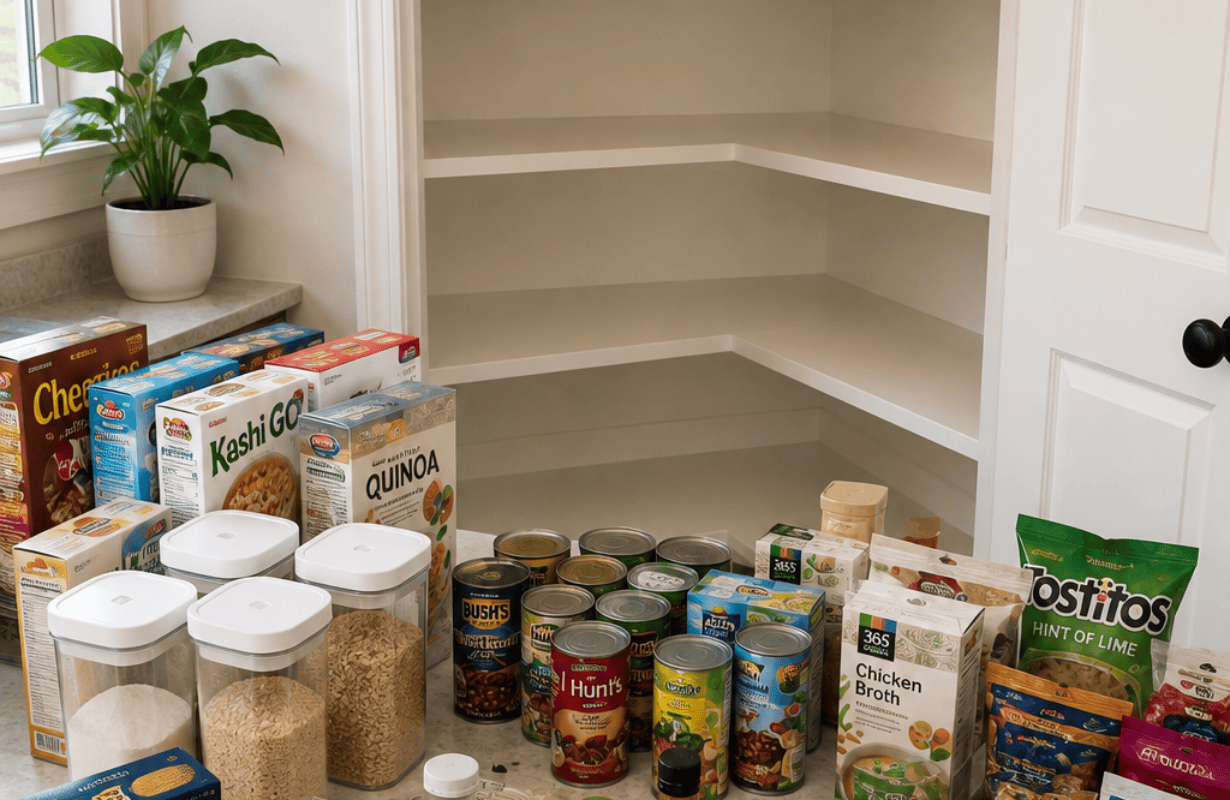
If you’ve ever searched for small pantry organization ideas, you’ve probably seen the same picture over and over: matching clear containers, perfectly labeled jars, coordinated baskets, and absolutely no evidence that anyone actually cooks in that kitchen.
It looks great. But do you really need to buy 25 containers just to make a small pantry functional?
No.
In fact, when your pantry is already tight on space, adding too many organizers can sometimes make the problem worse. Containers have their own dimensions, baskets waste a little space around the edges, and transferring every grocery item into a matching jar creates another chore you have to keep up with.
If you’re trying to figure out how to organize a small pantry without buying lots of containers, the better approach is to work with the space you already have first.
That means removing what doesn’t belong, creating simple food zones, using shelf depth properly, and making everyday ingredients ridiculously easy to find.
Here’s how I’d tackle it.
Why Small Pantries Get Messy So Quickly
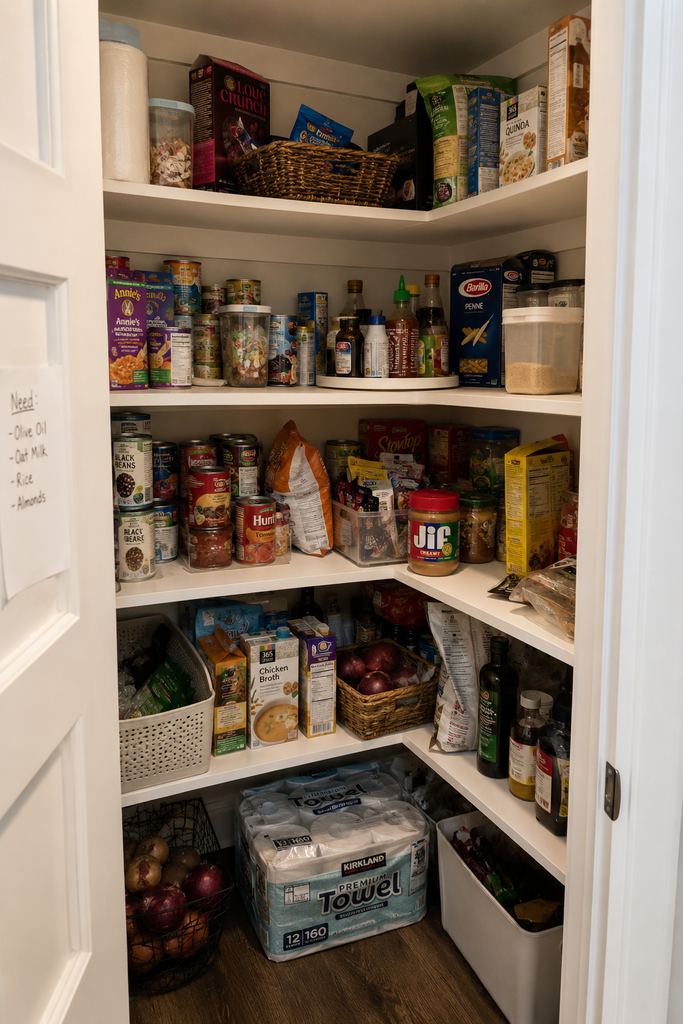
Before reorganizing anything, it helps to understand why your pantry keeps becoming chaotic.
Usually, it isn’t because you don’t own enough organizers.
It’s because a small pantry has almost no room for error.
Too Many Categories Are Mixed Together
Pasta ends up beside cereal. Peanut butter gets pushed behind canned tomatoes. Half-used baking ingredients are scattered across three shelves.
When unrelated items share the same space, you have to visually search the entire pantry every time you need something.
That’s how duplicate groceries happen too.
You can’t see the unopened bottle of ketchup hiding behind a bag of flour, so you buy another one.
Deep Shelves Hide Food
Deep pantry shelves look useful until you actually fill them.
The front row becomes visible storage. Everything behind it basically disappears.
Three months later, you discover two boxes of crackers, expired tortillas, and a can of beans you apparently bought during another era of your life.
The goal isn’t simply fitting more food onto a shelf. You need to be able to see and reach what you already have.
Common Small Pantry Organization Mistakes
Most people get this wrong because they start shopping before they start organizing.
Buying Organizers Before Measuring
Those beautiful pantry makeovers make it tempting to order baskets, bins, jars, and shelf risers immediately.
Don’t.
Organize the pantry first.
Once everything has a logical home, you’ll discover where an organizer would actually solve a problem.
Maybe you need one basket for snack bags that constantly fall over. Great. Buy one basket.
You probably don’t need twelve matching ones.
Decanting Absolutely Everything
I like decanted pantry staples when there’s a practical reason for them.
Flour? Sure.
Rice that comes in a flimsy bag? Makes sense.
Individually packaged granola bars?
Probably unnecessary.
Decanting should solve problems such as awkward packaging, freshness, or difficult pouring—not become an additional household job.
Filling Every Inch
A pantry packed completely full isn’t necessarily well organized.
You need a little breathing room.
Otherwise, bringing home one normal grocery haul means playing pantry Tetris for twenty minutes.
Aim for some flexible space rather than trying to maximize every cubic inch.
Start With a Complete Pantry Reset
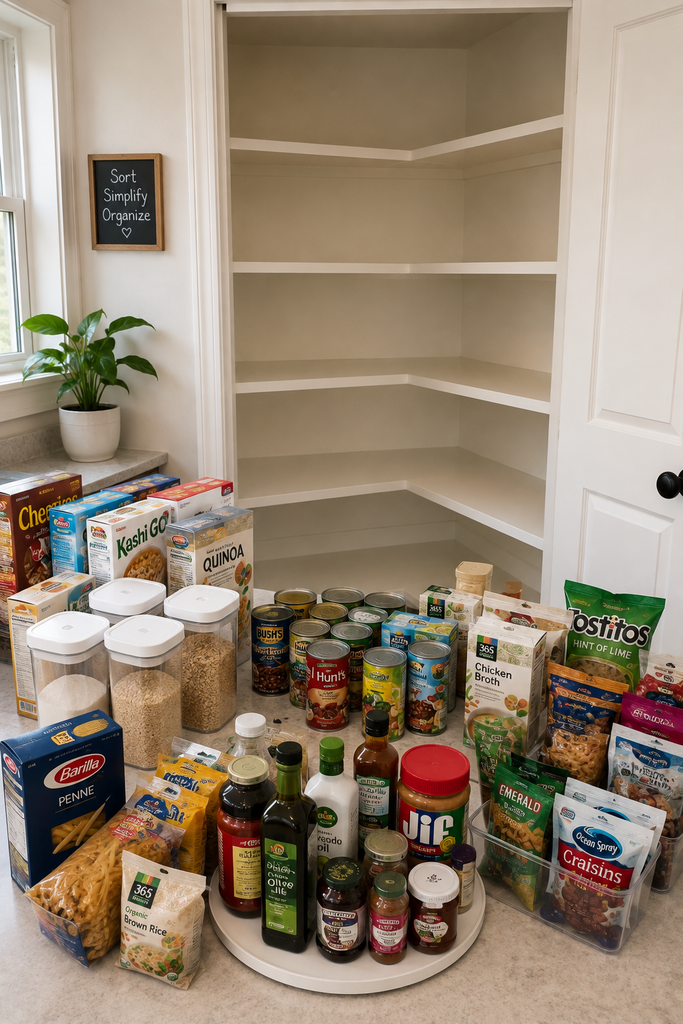
If your pantry has gotten seriously messy, rearranging a few cans isn’t enough.
Take everything out.
Yes, everything.
It sounds dramatic, but it lets you see what you actually own instead of organizing around forgotten food.
Sort Before Anything Goes Back
Put similar items together on your kitchen counter or dining table.
Create loose groups such as:
- Breakfast foods
- Snacks
- Canned goods
- Pasta, rice, and grains
- Baking supplies
- Sauces and condiments
- Quick meals
- Backstock
You’ll probably notice duplicates immediately.
You may also discover foods nobody in your house actually eats.
Check expiration dates and get rid of anything that’s spoiled or no longer usable. Donate unopened, unexpired food you realistically won’t use when appropriate.
Now look at what remains.
That is what your pantry actually needs to accommodate.
Create Zones Instead of Buying Containers
This is probably the biggest improvement you can make for free.
Give every section of your pantry a job.
Instead of putting groceries wherever they happen to fit, decide where categories belong.
For example:
Top shelf: backstock and rarely used ingredients
Eye-level shelf: everyday foods
Middle shelf: canned goods and meal ingredients
Lower shelf: snacks and breakfast foods
Bottom area: bulky or heavier items
Your exact setup will depend on your pantry, but the principle matters more than the layout.
Here’s the thing: you don’t necessarily need physical dividers between zones.
The shelf itself can create the boundary.
Keep pasta together on the left and rice and grains together on the right. Suddenly the pantry becomes much easier to scan without adding another plastic bin.
Organize According to How You Actually Cook
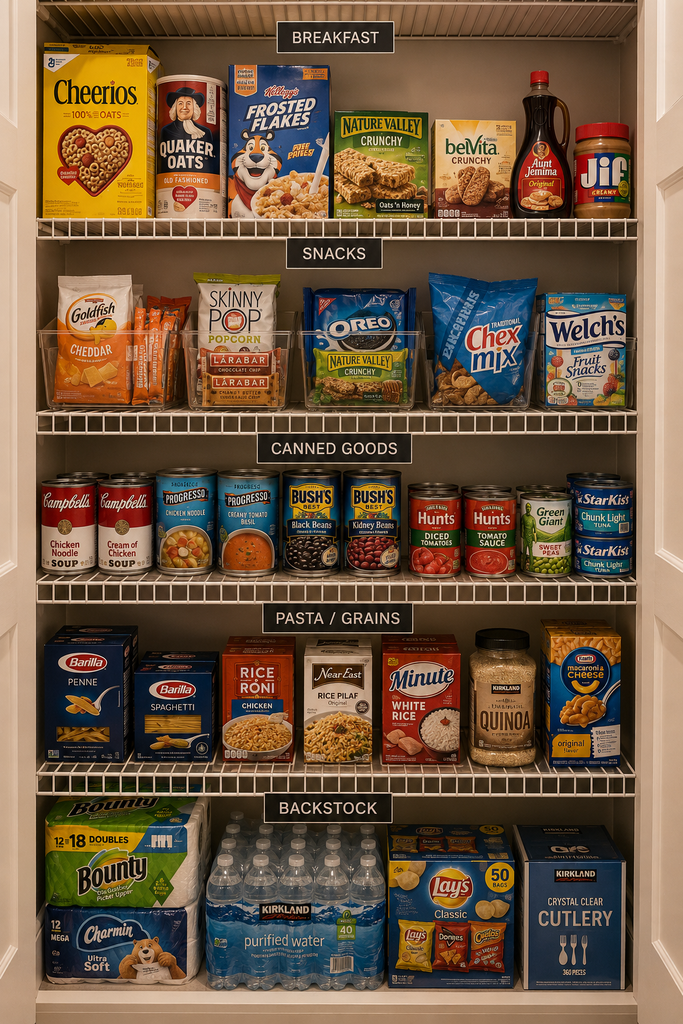
This is where a pantry becomes genuinely useful rather than simply looking organized.
Don’t organize based on what looks symmetrical.
Organize based on behavior.
Put Frequently Used Foods in the Best Spots
The easiest-to-reach shelves should contain things you grab regularly.
If your family eats oatmeal every morning, putting it on the highest shelf because the box fits nicely there makes no sense.
Save inconvenient spaces for foods you use occasionally.
Heavy items should generally stay lower, while lightweight backstock can go higher.
Keep Ingredients That Work Together Near Each Other
Think in terms of routines.
If you frequently make pasta, keep pasta, tomato sauce, and related ingredients in the same general area.
If breakfast usually involves cereal, oatmeal, peanut butter, and bread, group those foods together.
You reduce the amount of searching you have to do every day.
That’s what actually makes an organization system stick.
Use Original Packaging More Efficiently
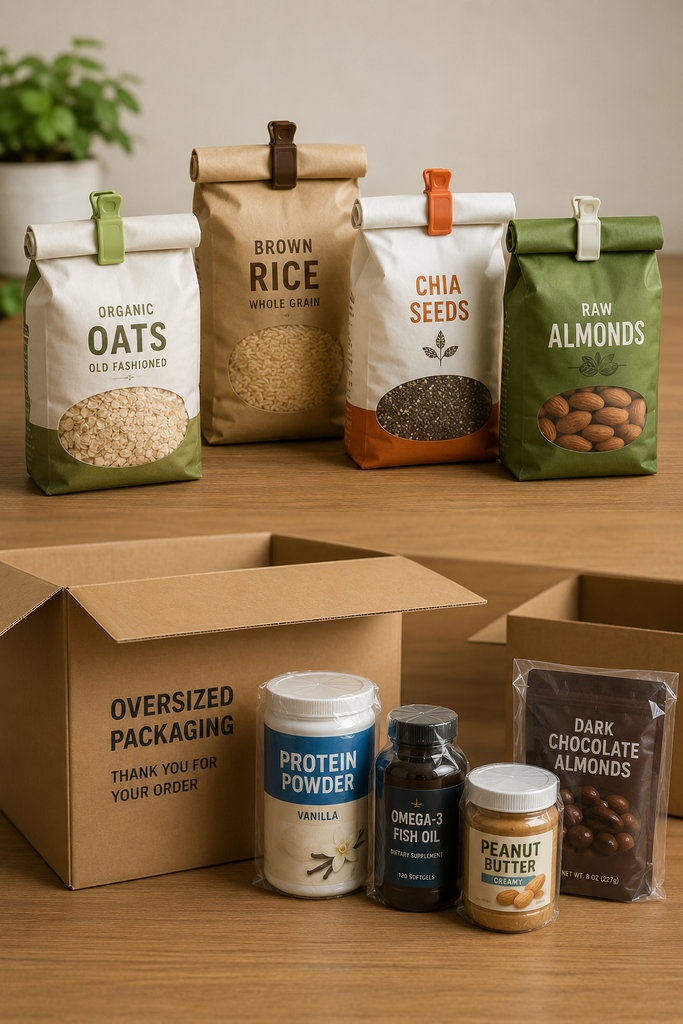
You don’t have to transfer everything into containers, but you can make bulky grocery packaging behave better.
Remove Unnecessary Outer Boxes
Some products contain individually wrapped packages inside a large cardboard box.
If the box is mostly empty space, remove the individual packages and recycle the box.
Just make sure you keep any cooking directions, expiration dates, or important product information you need.
Turn Bags Into Compact Packages
Half-empty bags of rice, nuts, cereal, baking ingredients, or snacks can take up surprising amounts of space.
Roll down the empty portion of the bag and secure it with a clip or rubber band.
Now it takes up roughly the amount of space the food actually requires.
It isn’t Pinterest-perfect.
It works.
And in a small pantry, I’ll take functional over photogenic every time.
Use What You Already Own as Organizers
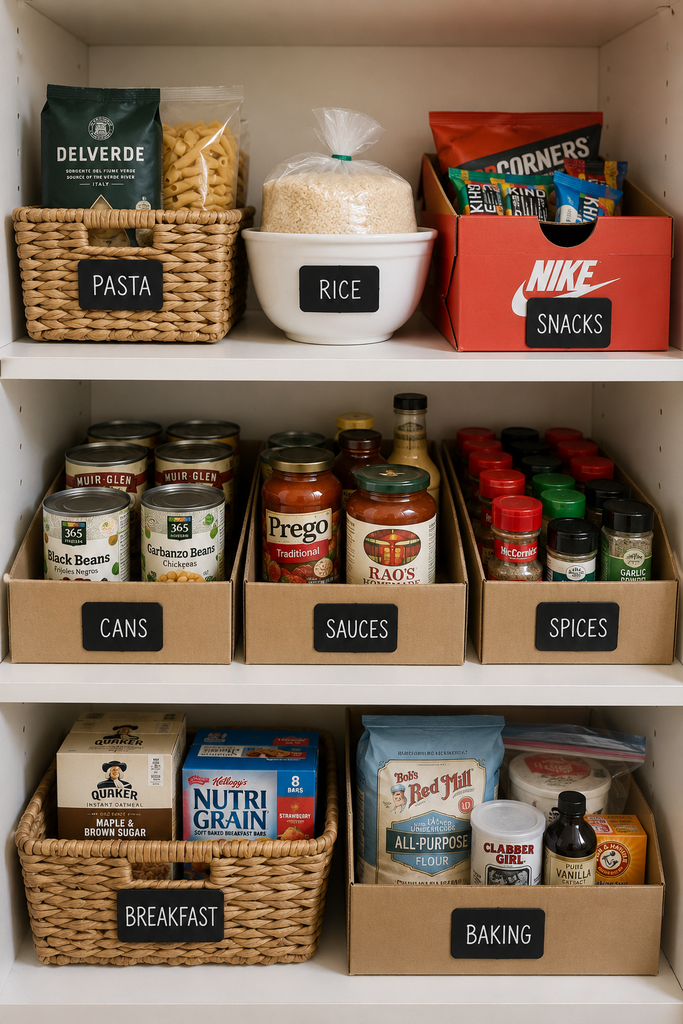
Before buying anything, walk around your kitchen.
You may already own perfectly useful pantry organizers.
Repurpose Baskets, Bowls, and Boxes
A sturdy shoebox can hold seasoning packets.
An unused basket can corral snacks.
A large bowl can hold onions or garlic.
A small cardboard box can keep baking supplies together.
You can even cut down a clean cardboard box to create a simple open-front pantry bin.
It doesn’t need to be permanent. Use it for a few weeks.
If the system works, you can eventually replace it with something nicer if you want to.
This is actually a great way to test organizers before spending money.
Make Deep Pantry Shelves Work Harder
Deep shelves need a different strategy because simply lining everything front-to-back creates hidden food.
Put Tall Items Behind Short Items
Instead of randomly stacking cans and jars, arrange them according to height.
Shorter items stay toward the front.
Taller items go behind them.
That allows you to see multiple rows at once.
If you already own a shelf riser, use it. If not, don’t immediately buy one. A sturdy, appropriately sized box can sometimes temporarily elevate lightweight items in the back.
Don’t Create Too Many Rows
Just because a shelf is 18 inches deep doesn’t mean you should create four rows of food.
The fourth row will become pantry archaeology.
Keep frequently used items within easy reach and use the deepest section for predictable backstock.
For example, your open jar of peanut butter stays near the front while the unopened replacement goes directly behind it.
That creates a simple first-in, first-out system without needing another organizer.
Control Backstock Before It Controls Your Pantry
Bulk buying and small pantries aren’t always good friends.
A sale isn’t saving you much if six extra packages make your pantry impossible to use.
Decide how much backstock your space can reasonably hold.
You might keep one replacement of frequently used foods rather than four or five.
Give backstock one defined location too.
When that area is full, that’s your signal that you already have enough.
This creates a physical inventory limit without maintaining complicated lists.
Use Containers Only Where They Solve a Specific Problem
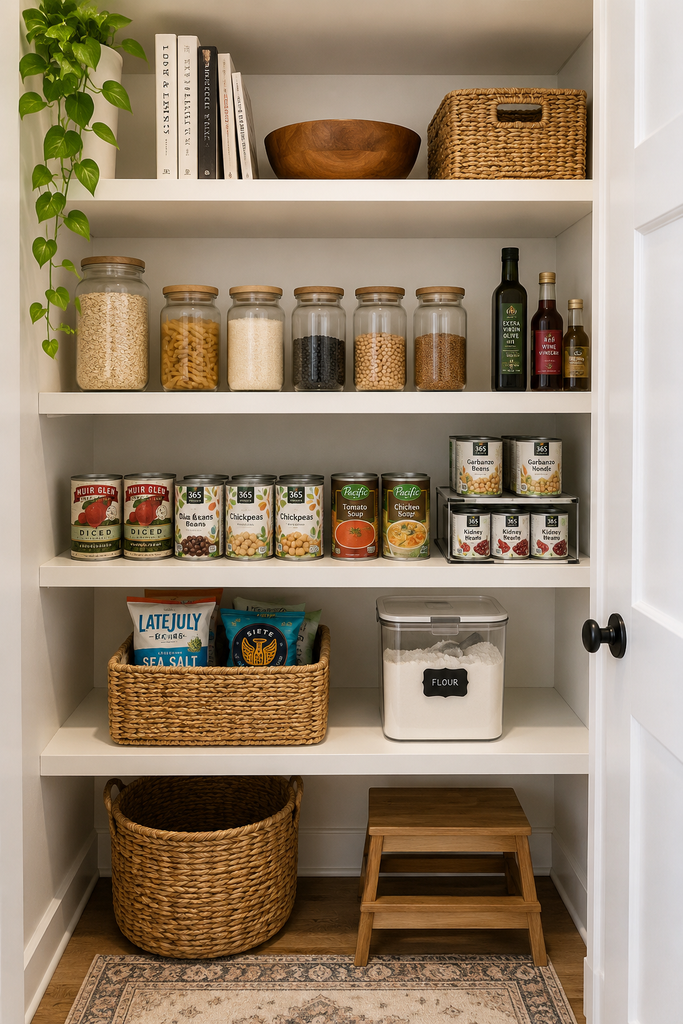
I’m not anti-container.
I’m anti-buying-containers-because-the-internet-said-your-pantry-needs-them.
After organizing everything else, identify the remaining trouble spots.
Maybe snack packets constantly collapse into a pile. A basket could help.
Maybe flour bags leak everywhere. An airtight container makes sense.
Maybe cans disappear behind each other. A small riser might be worth buying.
That’s the difference.
You’re buying a solution to a known problem instead of buying an entire organization system and hoping your groceries fit into it.
Give Yourself a Small Flexible Zone
One of my favorite practical tricks is intentionally leaving a little space unassigned.
Not an entire shelf—just enough room for groceries that temporarily don’t fit your usual categories.
Maybe you buy hamburger buns for a weekend cookout.
Maybe someone brings home a giant bag of tortilla chips.
Maybe Thanksgiving suddenly requires three bags of marshmallows.
A flexible area absorbs these temporary items without destroying the rest of your pantry organization.
Once they’re gone, the space becomes available again.
Maintain the Pantry With a Two-Minute Reset
You shouldn’t need to reorganize your pantry every month.
If you do, the system is probably too complicated.
Instead, do tiny resets while you’re already using the space.
Before grocery shopping, scan your main categories.
Move older foods toward the front.
Combine duplicate open packages when it’s safe and appropriate.
Return wandering items to their zones.
It takes a couple of minutes because you’re correcting small problems before they turn into a pantry avalanche.
Final Thoughts
Learning how to organize a small pantry without buying lots of containers is really about changing the way you use the space—not filling it with more stuff.
Start by taking everything out, getting rid of what you don’t use, and grouping foods according to how your household actually cooks and eats. Give each category a predictable home, keep everyday ingredients visible, control your backstock, and make awkward packaging smaller whenever possible.
Then live with the system for a little while.
If one area keeps becoming messy, that’s where an organizer might be worth buying.