
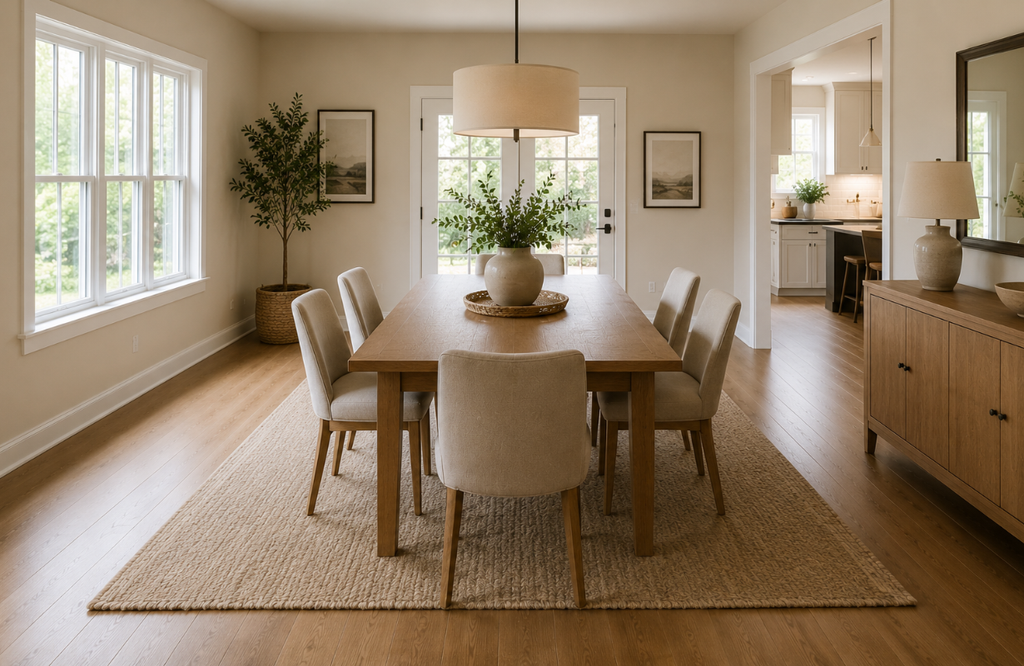
Choosing a dining table sounds easy until you actually start shopping. You find a table you love online, check the dimensions, convince yourself it will fit, and then realize the chairs practically touch the wall every time someone sits down.
Or you go in the opposite direction and buy something small because you’re worried about overwhelming the room only to end up with a dining area that feels oddly empty and unfinished.
Here’s the thing: how to choose the right dining table for your space has much less to do with finding the prettiest table and much more to do with understanding how people will move around it.
The right table needs to work when the chairs are pulled out, when someone walks behind them, when you’re carrying food from the kitchen, and when six people are actually sitting there.
Before worrying about wood finishes or trendy pedestal bases, get the proportions right. Once you do that, choosing the style becomes surprisingly easy.
The Biggest Dining Table Mistake: Measuring Only the Table
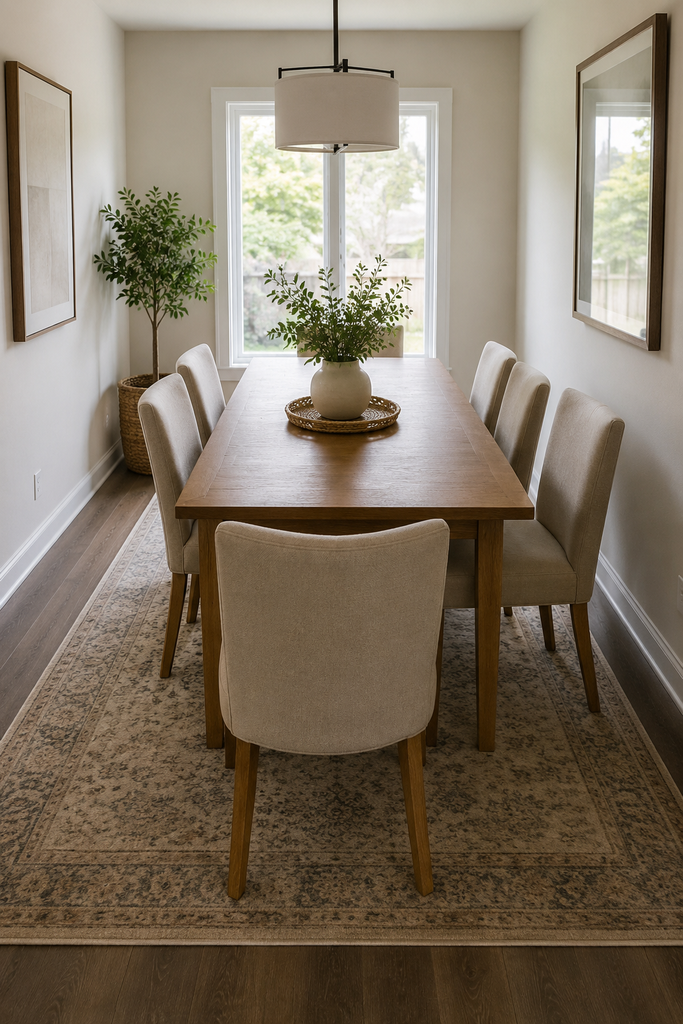
Most people get this wrong. They measure the empty dining area and ask, “Will a 72-inch table fit here?”
Technically? Maybe.
Comfortably? That’s a completely different question.
Your dining table doesn’t exist by itself. It needs chairs, circulation space, and enough room for people to sit down without performing an awkward sideways shuffle.
Think About Clearance, Not Just Table Dimensions
A useful starting point is to leave at least 36 inches between the table edge and a wall or other obstruction.
That space allows someone to pull out a chair and sit down reasonably comfortably.
If the area behind the chairs is also an important walkway, aim closer to 42–48 inches when the room allows it.
Imagine a dining table beside the main path between your kitchen and living room. Thirty-six inches might technically accommodate the chair, but every seated person becomes a roadblock. Giving that side additional clearance makes the entire floor plan work better.
This is why two rooms with identical dimensions can need completely different tables.
Start With Your Usable Dining Space
Before choosing a table shape, measure the actual usable area rather than the room’s total square footage.
A 12-by-12-foot dining room doesn’t necessarily give you 12 feet for a table. Doorways, cabinets, radiators, architectural openings, and traffic routes all reduce usable space.
Try the Painter’s Tape Test
One of the easiest ways to avoid buying the wrong size is also one of the cheapest.
Use painter’s tape to mark the proposed tabletop dimensions directly on the floor.
Then place your existing chairs—or chairs of roughly the same depth—around the taped outline.
Pull them out.
Walk around them.
Pretend you’re carrying dinner to the table.
It might feel slightly ridiculous, but you’ll learn more from five minutes doing this than from staring at a furniture website’s dimension diagram for an hour.
What actually works is testing the table according to how your home functions.
Choose the Table Shape Based on the Room
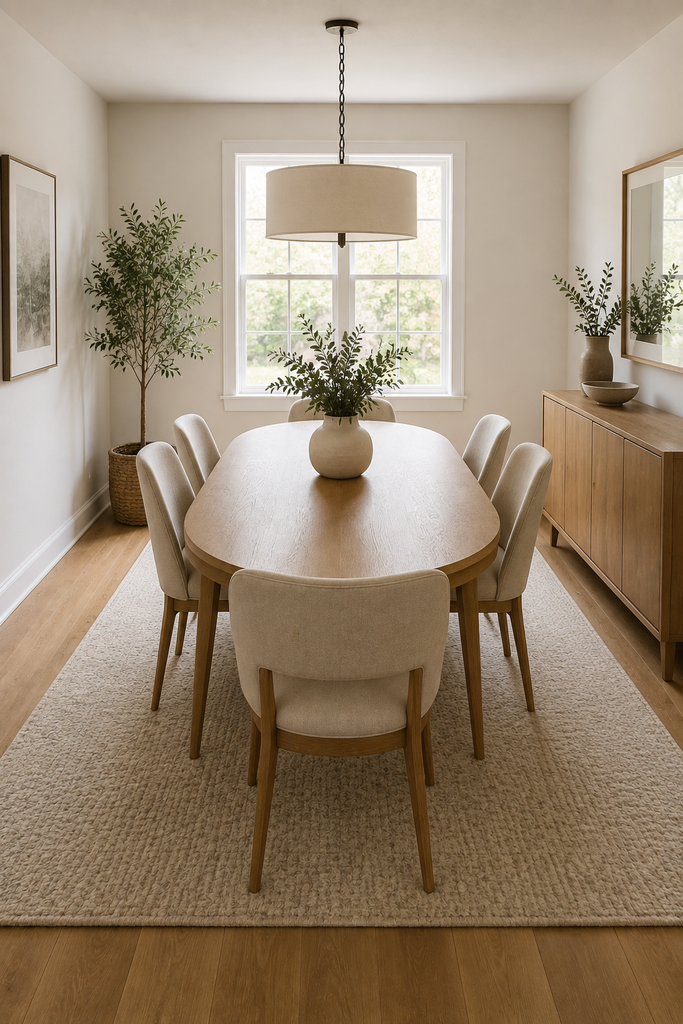
Table shape affects much more than appearance. It changes circulation, seating capacity, and how large the dining area feels.
Rectangular Tables Work Best in Longer Rooms
A rectangular dining table is the safest choice for a long or traditionally shaped dining room.
It follows the room’s proportions instead of fighting them and usually provides the most seating.
For example, if your dining area is noticeably longer than it is wide, a 60- or 72-inch rectangular table may feel more natural than a large round table occupying the same general footprint.
Rectangular tables also work particularly well for larger households and people who entertain regularly.
Round Tables Are Excellent for Tight Spaces
I think round tables are underused in smaller dining areas.
Without sharp corners, circulation around the table feels easier. They’re especially useful in breakfast nooks, square dining rooms, and open-plan spaces where you’re constantly walking around the dining area.
Round tables also make conversation easier because everyone faces toward the center.
Just don’t assume round automatically means space-saving. A very large round table can consume an enormous footprint. They work best when the diameter remains proportional to the room.
Square Tables Need the Right Room
Square tables can look fantastic in genuinely square dining spaces.
Put one in a narrow rectangular room, though, and the proportions can quickly feel awkward.
They’re usually better for four-person dining arrangements or rooms where symmetry is part of the design.
Oval Tables Are a Great Compromise
If you like the seating capacity of a rectangular table but want softer circulation, consider an oval.
You eliminate hard corners while keeping a longer tabletop.
That makes oval dining tables particularly useful in open-concept homes where the dining area sits between other living zones.
Match Table Size to How You Actually Live
Don’t buy your everyday dining table for the biggest dinner party you might host once a year.
This is another surprisingly common mistake.
If four people use the table 350 days a year but you occasionally host ten people for Thanksgiving, permanently filling your dining room with a ten-person table probably isn’t the best trade-off.
Consider an Extendable Dining Table
An extendable table is often the smarter solution.
You can keep the table appropriately sized for everyday life and add leaves when guests come over.
For a smaller household, for example, a compact four- or six-person table that expands for eight may be far more practical than permanently sacrificing circulation space.
Think in terms of everyday capacity first, occasional capacity second.
Pay Attention to the Table Base
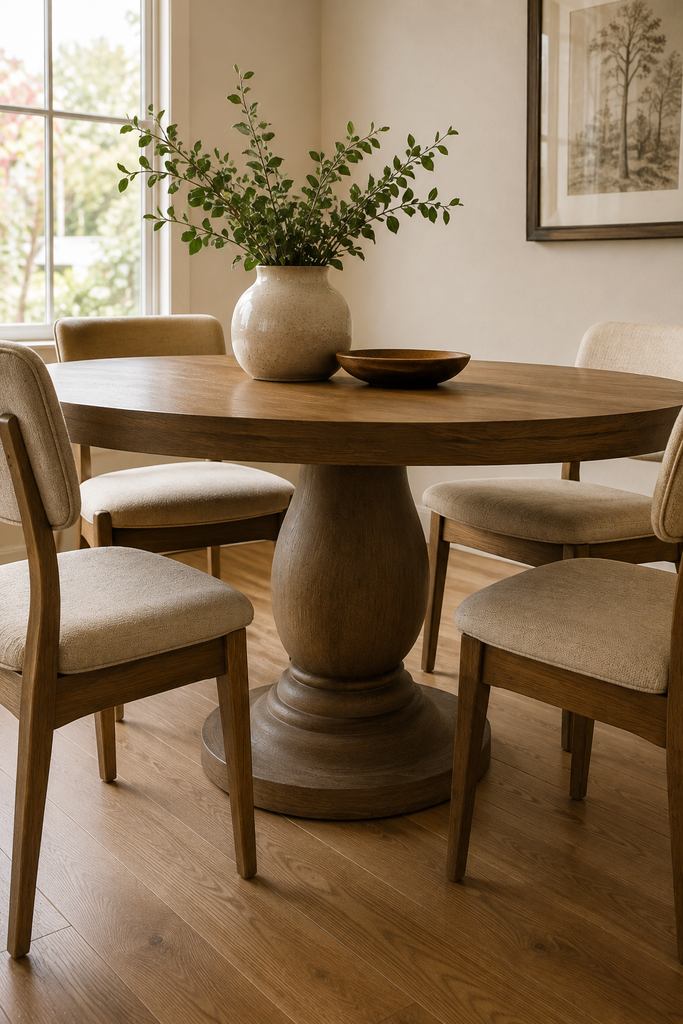
Table bases don’t get nearly enough attention when people shop.
Four-leg tables are classic and stable, but the legs can interfere with seating—particularly when you’re trying to squeeze an extra chair onto each end.
Pedestal and trestle tables often provide more flexibility.
Check Where People’s Legs Will Actually Go
Look underneath the table before buying it.
Where are the supports?
Will someone sitting near the corner constantly hit a table leg?
Can chairs slide completely underneath?
This becomes especially important with smaller tables because every inch matters.
A 60-inch table with an awkward base can sometimes seat fewer people comfortably than a slightly smaller table with a thoughtfully positioned pedestal.
Don’t Ignore Dining Chair Size
You can’t really choose the right dining table without considering the chairs.
Some modern dining chairs are surprisingly deep and wide. An oversized upholstered chair can completely change the clearance requirements around your table.
As a rough planning guideline, allow around 24 inches of table width per person for comfortable everyday dining.
Then check the actual chair dimensions rather than assuming six chairs will fit because the table is marketed as a “six-person table.”
Armchairs require particular attention because the arms need to clear the underside of the tabletop.
Get the Height and Proportions Right
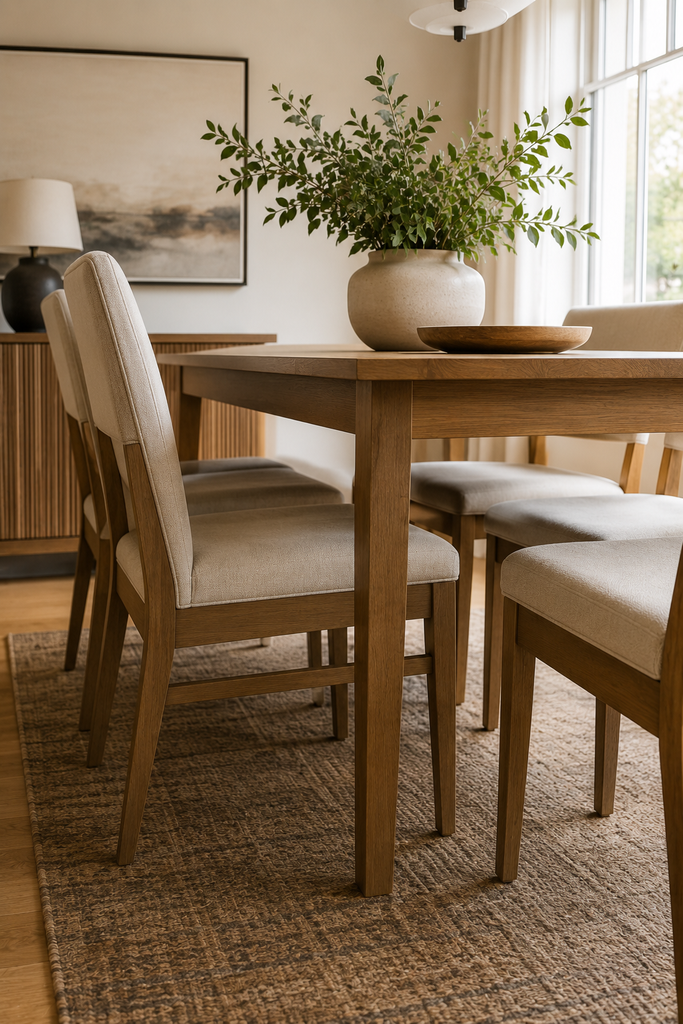
Most standard dining tables are roughly 28–30 inches high, which works with most standard dining chairs.
Problems usually happen when people mix unusual table and chair heights.
You want enough space between the chair seat and the underside of the table for your legs to fit comfortably. Also watch for thick table aprons underneath the tabletop, which can reduce knee clearance even when the overall table height looks normal.
Visually, consider the table’s weight too.
A chunky dark-wood table can make a small dining area feel crowded even when its measurements technically work. A slimmer table with lighter legs may occupy almost the same footprint while making the room feel much more open.
Choose Materials for Your Real Life
Once you’ve figured out size, shape, and clearance, then worry about materials.
Solid wood is warm, durable, and forgiving, but some finishes show scratches and watermarks more easily than others.
Glass can visually lighten a small dining space, although fingerprints become part of your daily décor.
Stone and marble-look tables can be beautiful, but they’re physically and visually heavy.
If you have young kids, host frequently, or use your dining table as a homework station and temporary office, I’d prioritize durability over a delicate finish that makes you nervous every time someone puts down a glass.
The best dining table isn’t the one that photographs beautifully when it’s empty. It’s the one you’re comfortable actually using.
A Simple Checklist Before You Buy
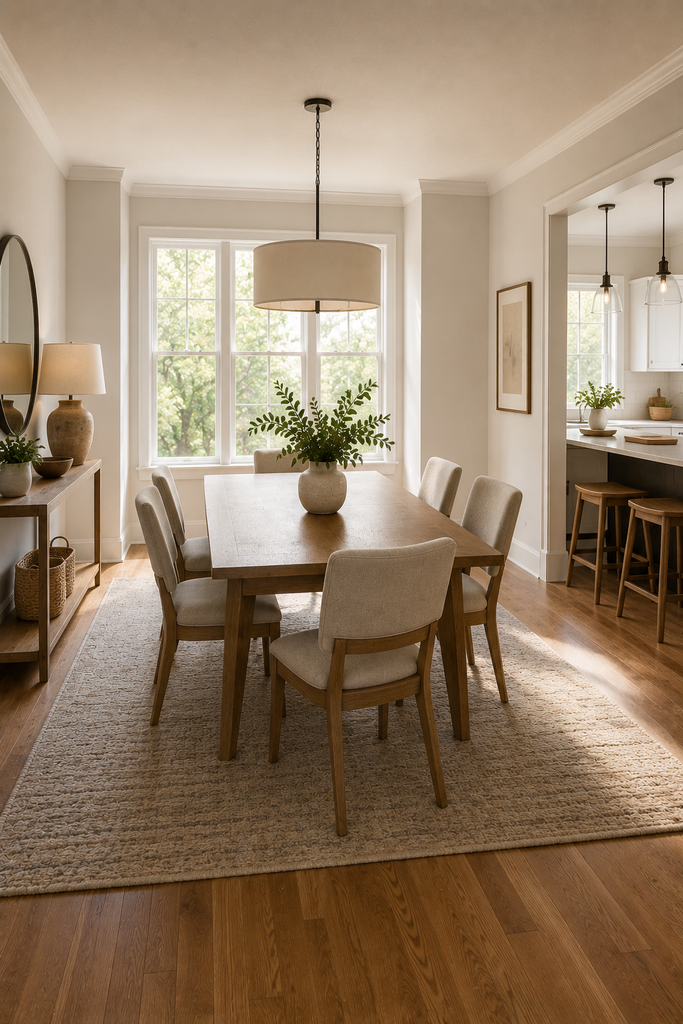
Before ordering anything, confirm these five things:
- Table footprint: Does the table itself comfortably fit?
- Chair clearance: Can chairs pull out without hitting walls or furniture?
- Traffic flow: Can someone walk behind a seated person?
- Everyday seating: Is it sized for the number of people who normally use it?
- Expanded seating: If you entertain, can an extension table solve that problem instead of buying oversized?
If all five work, you’re probably looking at a table that’s genuinely appropriate for the space—not simply one that technically fits.
Wrap Up
Learning how to choose the right dining table for your space really comes down to thinking beyond the tabletop.
Measure your usable dining area, protect your circulation space, choose a shape that follows the room, and size the table around everyday life rather than occasional gatherings.
And seriously, try the painter’s tape trick before ordering. Seeing the footprint on your actual floor can immediately expose a table that’s too large or show you that you have room for something bigger than you thought.