
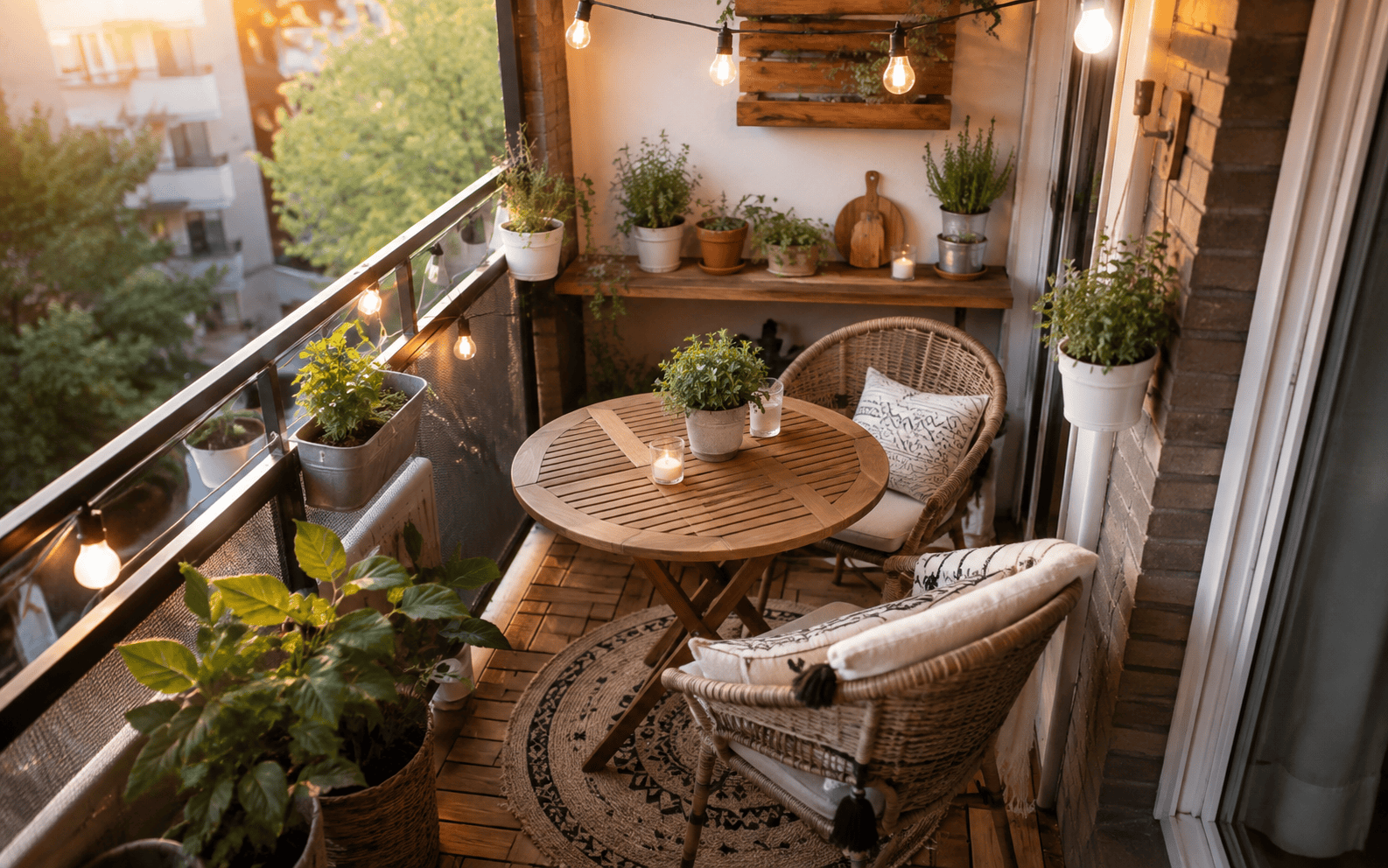
Small outdoor spaces get a bad reputation they don’t deserve. A balcony, a narrow patio, a tucked-away side yard — the assumption is always that “real” outdoor dining needs room to spread out, so anything smaller just doesn’t count.
That’s simply not how it works.
Here’s the thing: a small space isn’t a limitation it’s a design constraint — and constraints are what force good decisions. The problem isn’t square footage. It’s that most people try to shrink down a full dining room setup instead of rethinking the whole approach from scratch. That’s where things go sideways: furniture that’s technically small but still doesn’t fit right, layouts that block every path through the space, decor that crowds out any sense of breathing room.
What actually works is treating a small outdoor dining area as its own category, not a scaled-down version of something bigger. Once you approach it that way, spaces that seemed impossible to use suddenly make total sense. If you’re wondering how to create an outdoor dining area in a small space without it feeling cramped or thrown together, that shift in mindset is really where it starts. Here’s how to actually do it.
The Mistakes That Make Small Spaces Feel Even Smaller
Before we talk solutions, let’s talk about why so many small outdoor dining setups fail. Because honestly, most people get this wrong in the same three or four ways.
Buying Furniture Sized for a Showroom, Not Your Space
Furniture stores stage their outdoor sets in big, open showroom floors. A table that looks “compact” next to a display of ten other sets will look massive the second you get it home. This is probably the number one mistake — people measure their space, forget to account for chair pull-out distance, and end up with a table nobody can actually sit down at comfortably.
The fix is simple but people skip it constantly: measure your space, then subtract at least 30 inches on each side where a chair needs to be for someone to sit and scoot in. If you don’t have that clearance, the table is too big, full stop.
Treating It Like a Full-Size Dining Room
A lot of small outdoor areas fail because people try to replicate an indoor dining room outside — matching chairs, a centerpiece, place settings, the whole thing. What actually works is scaling down the concept of dining, not just the furniture. Think bistro, not banquet. A small space wants one strong focal point (the table) and everything else minimal.
Ignoring Traffic Flow
This one’s sneaky. You can have a table that technically fits, but if it blocks the path to your grill, your door, or your steps, you’ll resent it within a week. Before buying anything, physically walk your space the way you’d move through it day-to-day — carrying dishes, opening the door, walking the dog out — and make sure the table doesn’t sit in that path.
Overdecorating
Small spaces have zero tolerance for excess. One too many lanterns, an oversized umbrella, a rug that’s the wrong scale — any of these can tip a cozy space into cluttered. We’ll get into scale more below, but keep this in the back of your mind: in a small space, every object needs to justify its presence.
Key Principles Behind a Small Space That Actually Works
Scale Everything Down, Including Your Expectations
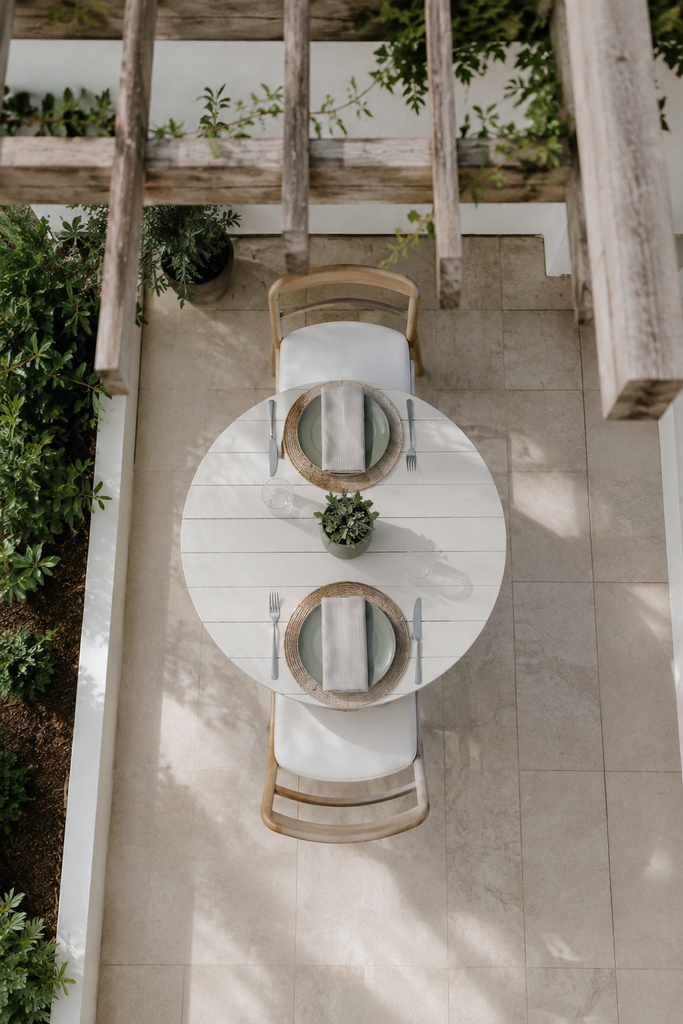
A round table almost always beats a rectangular one in tight spaces. Here’s why: rectangular tables create dead zones in the corners of a room or patio that you can’t use for anything else, while round tables let people and traffic flow around them naturally. A 36-inch round table comfortably seats four and takes up noticeably less visual and physical space than even a small rectangular option.
Vertical Space Is Your Best Friend
Most small-space dining setups fail because people only think in two dimensions — length and width. But you’ve got a third dimension: up. String lights, hanging planters, a wall-mounted shelf for serving dishes, even a vertical herb garden next to the table — these add warmth and function without eating into your floor space. This is genuinely one of the biggest unlocks for small outdoor dining areas and it’s the one people skip most often.
Multi-Functional Furniture Isn’t Just a Buzzword Here — It’s Necessary
A bench instead of individual chairs can slide under the table when not in use and seat more people than chairs would in the same footprint. Stackable or foldable chairs mean you can clear the whole area for other use (yoga, kids playing, whatever) and bring it back in under two minutes. If your outdoor space serves double duty — and in a small space, it almost always does — your furniture needs to earn its keep in more than one way.
Color and Material Choices Affect Perceived Size
Light, natural materials (light wood, rattan, woven resin) visually recede and make a space feel more open. Dark, heavy furniture — think solid black metal or bulky upholstered pieces — visually advances, making the space feel like it’s closing in, even if the actual measurements are identical. This isn’t decorating trivia, it’s basic visual perception, and it matters more outdoors than indoors because there’s usually less going on visually to distract from the furniture itself.
Step-by-Step: Building Your Small Outdoor Dining Area
Step 1: Measure Twice, Then Measure Again
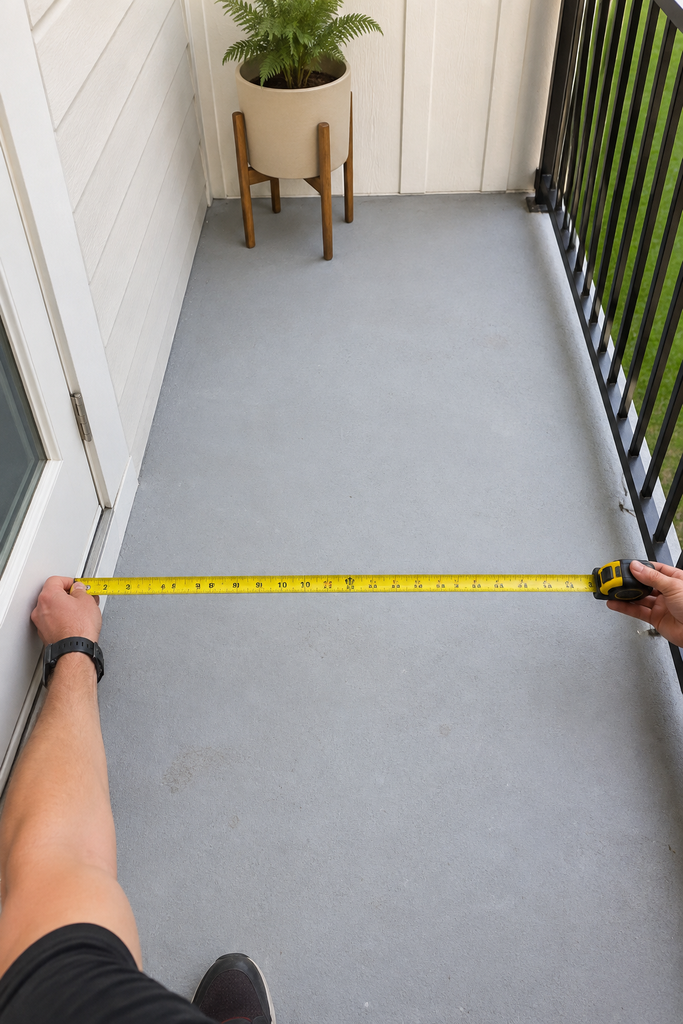
Get the exact dimensions of your space, then map out clearance zones — the door swing, the grill’s footprint, the path to your gate or stairs. Draw it on paper or use a free room-planning app. This step feels tedious but it’s the difference between a space you love and a $400 table you end up selling.
Step 2: Choose Your Table Shape Based on Your Space’s Shape, Not Trends
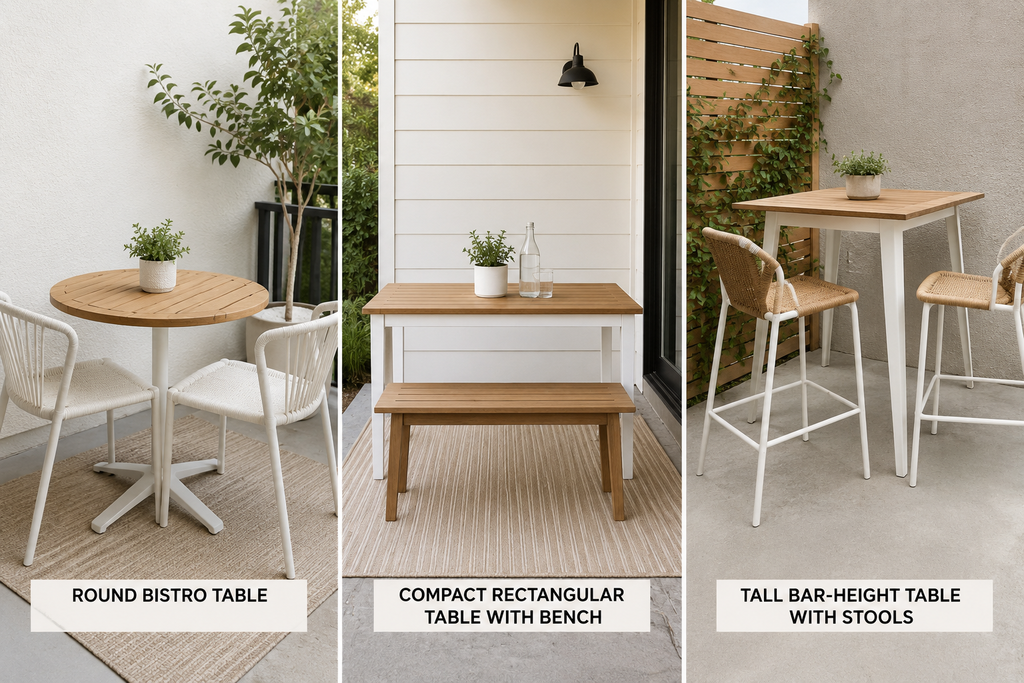
- Narrow balcony or long strip of patio: a bar-height table with two stools, positioned against the railing, works better than a standard dining set because it uses vertical space and leaves floor space open.
- Square or slightly awkward corner space: round table, hands down, for the traffic-flow reasons mentioned above.
- Small but relatively open rectangular patio: a compact rectangular table (under 48 inches long) with a bench on one side and two chairs on the other.
Step 3: Pick Seating That Can Disappear When Needed
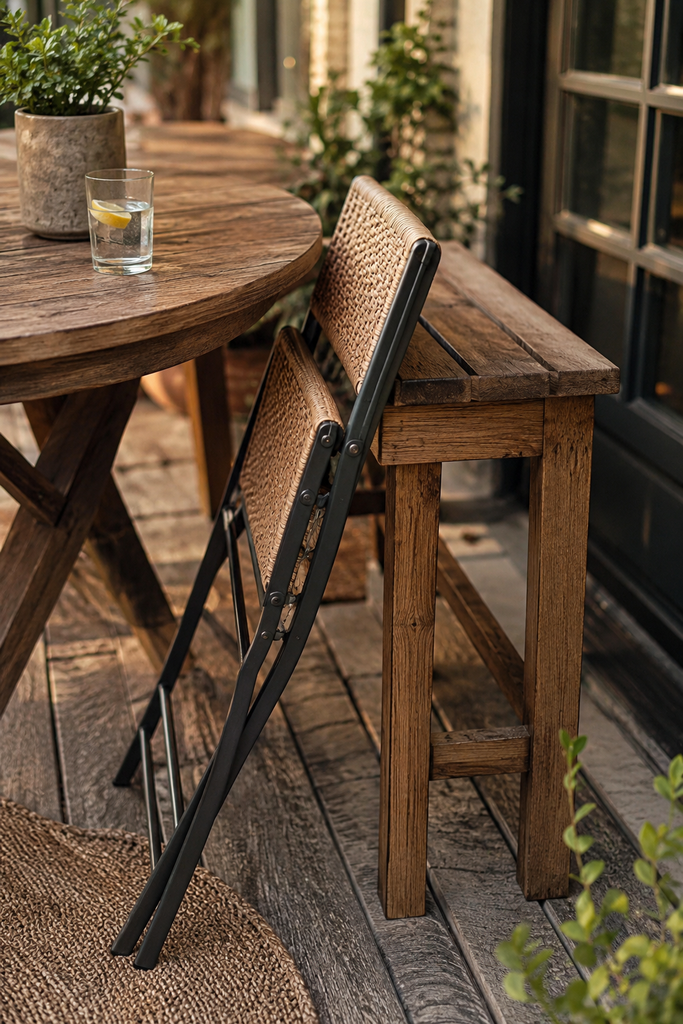
Foldable bistro chairs, a bench that tucks fully under the table, or even stools that stack — anything that lets you reclaim the space when you’re not actively dining there. This matters more in small spaces because that square footage is probably doing other jobs too (storage, lounging, potted plants).
Step 4: Add One Statement Element, Not Five Small Ones
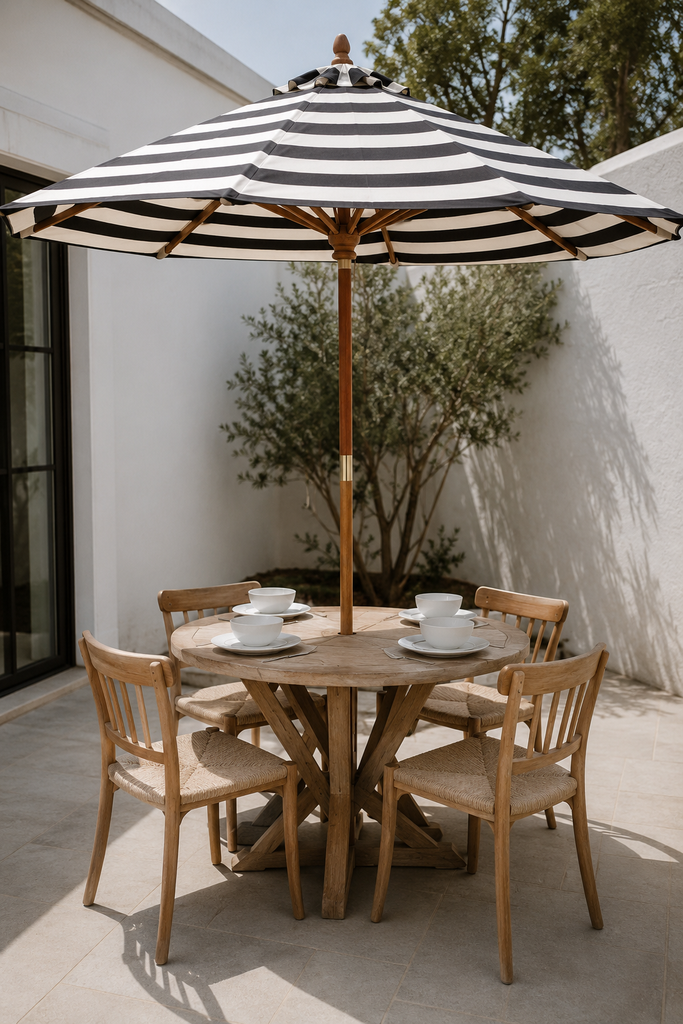
This is where a lot of people overcorrect from “boring” to “cluttered.” Pick one thing to be the visual anchor — a patterned umbrella, a bold-colored table, a single oversized pendant light overhead — and keep everything else neutral. One statement piece reads as intentional. Five small decorative touches read as busy, especially in tight quarters where your eye has nowhere to rest.
Step 5: Layer in Lighting Last
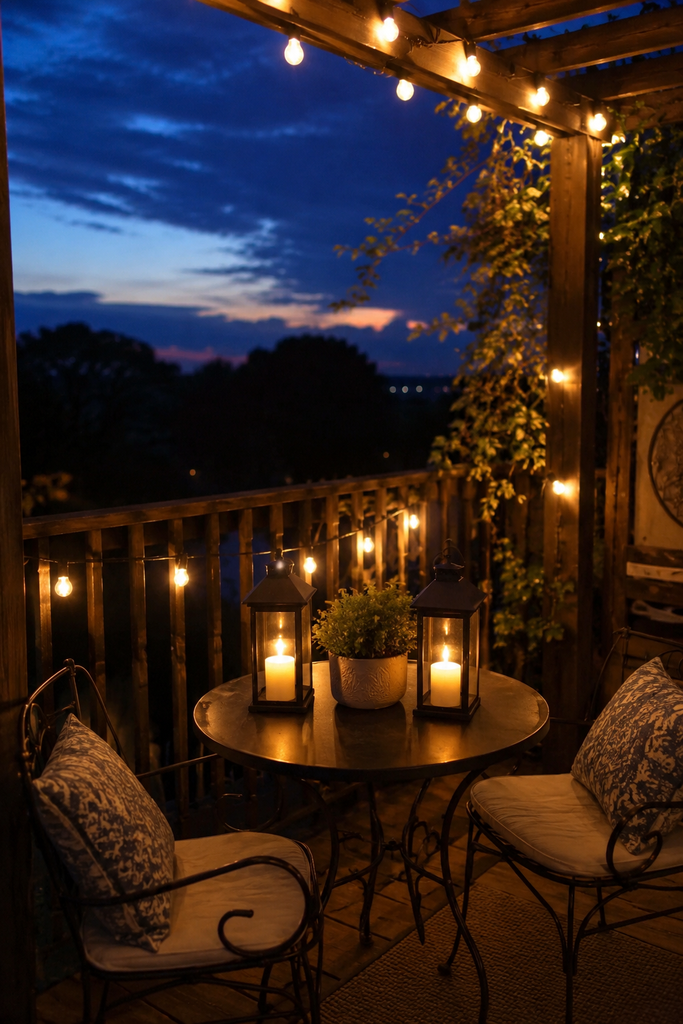
String lights along a railing or pergola, a couple of flameless lanterns on the table, maybe a small solar path light if you’ve got a walkway — lighting is what makes a small outdoor dining area feel finished and intentional rather than like leftover furniture on a patio. Do this step last because you’ll have a much better sense of what the space actually needs once the furniture’s in place.
Practical Tips That Make a Real Difference
Use a round rug under a round table. Rectangular rugs under round tables create awkward negative space in the corners that makes the whole setup feel mismatched, even if you can’t quite put your finger on why.
Skip the umbrella if you’ve got any kind of overhead shade already. A pergola, an awning, even a mature tree branch overhead can eliminate the need for a table umbrella, which frees up a surprising amount of both visual and physical space. Umbrellas are one of the bulkiest additions to a small dining setup and they’re not always necessary.
Go with two-tone or woven chairs instead of solid, heavy ones. Chairs with some visual “breathing room” — think woven rattan, cross-back wood designs, or anything with negative space in the backrest — feel lighter than solid-back chairs even at the exact same physical dimensions. Your eye reads negative space as, well, space.
Keep the color palette to two or three tones max. A cohesive palette — say, natural wood, white, and one accent color — makes a small space feel deliberate. A mismatched mix of colors and materials, even if each piece is nice on its own, reads as cluttered fast in tight quarters.
Don’t forget about storage for cushions and small items. A weatherproof storage bench or an under-table basket for napkins and condiments keeps the surface itself clear, which matters enormously in a space where every surface pulls double duty.
The Bottom Line
Creating an outdoor dining area in a small space really comes down to being deliberate instead of default — choosing furniture that fits your actual measurements (not showroom photos), letting shape and traffic flow guide your table choice, and using vertical space and multi-functional pieces to stretch what little floor space you’ve got. It’s not about cramming in more stuff to make it feel “complete.” It’s about making every single piece earn its spot.
Start with the measuring step this weekend if you haven’t already — genuinely, that’s the one thing that will save you from buyer’s remorse later. Once you’ve got real numbers in hand, the rest of this gets a lot easier to picture. Your future self, sipping coffee outside on a table that actually fits, will thank you.