
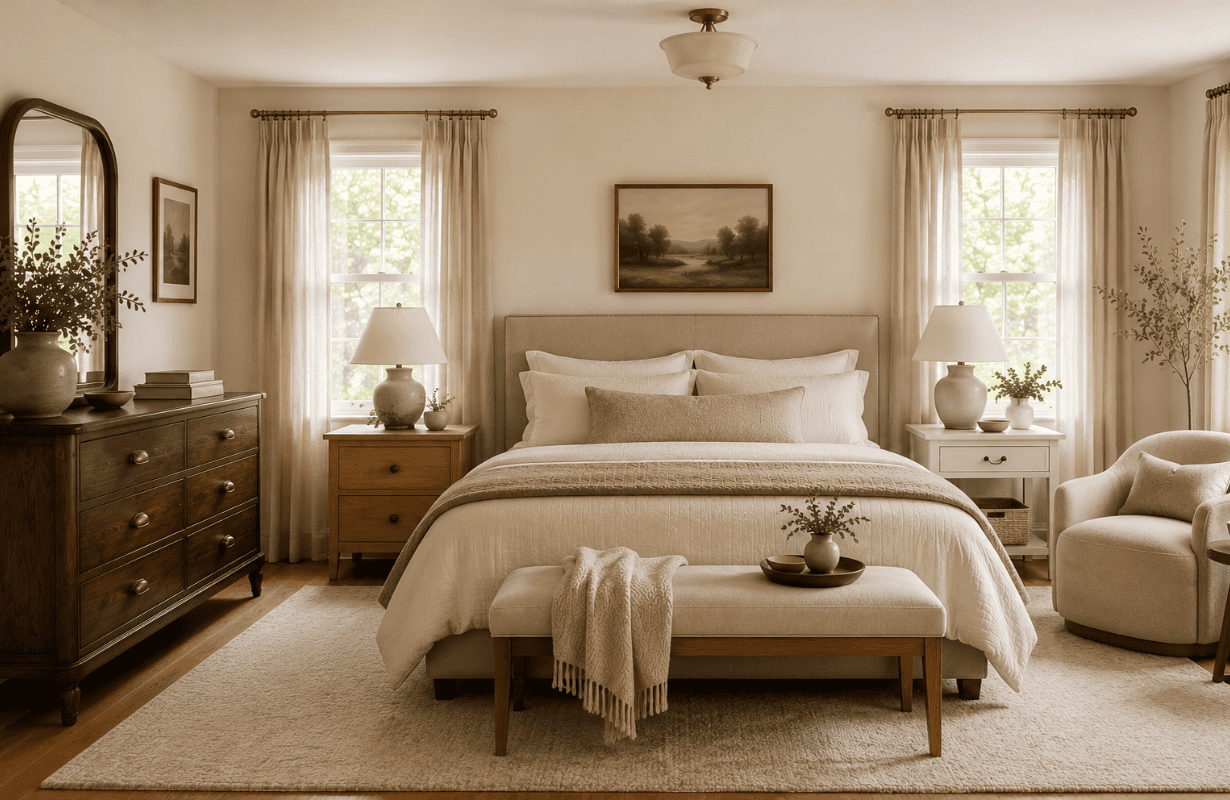
If your bedroom furniture looks like it was collected from three different houses over the last ten years, you’re definitely not alone. Maybe you have a dark wood dresser you’ve owned forever, a newer upholstered bed, one painted nightstand, and another nightstand that technically belongs to a completely different furniture style.
The first instinct is usually to think, “I need a matching bedroom set.”
You probably don’t.
In fact, bedrooms with mismatched furniture can look warmer and more interesting than rooms where the bed, dresser, and nightstands all came from the same collection. The problem isn’t that the furniture is different. The problem is when nothing in the room visually connects those differences.
Here’s the thing: learning how to decorate a bedroom with mismatched furniture is less about making everything match and more about making the differences look intentional. Once you create a few visual connections through color, proportion, materials, and repetition, the room starts feeling collected rather than random.
And you usually don’t need to replace much to get there.
Why Mismatched Bedroom Furniture Can Actually Look Better
A perfectly matching bedroom set is easy to understand visually. Every piece has the same finish, hardware, shape, and design language.
But that can also make a bedroom feel a little flat.
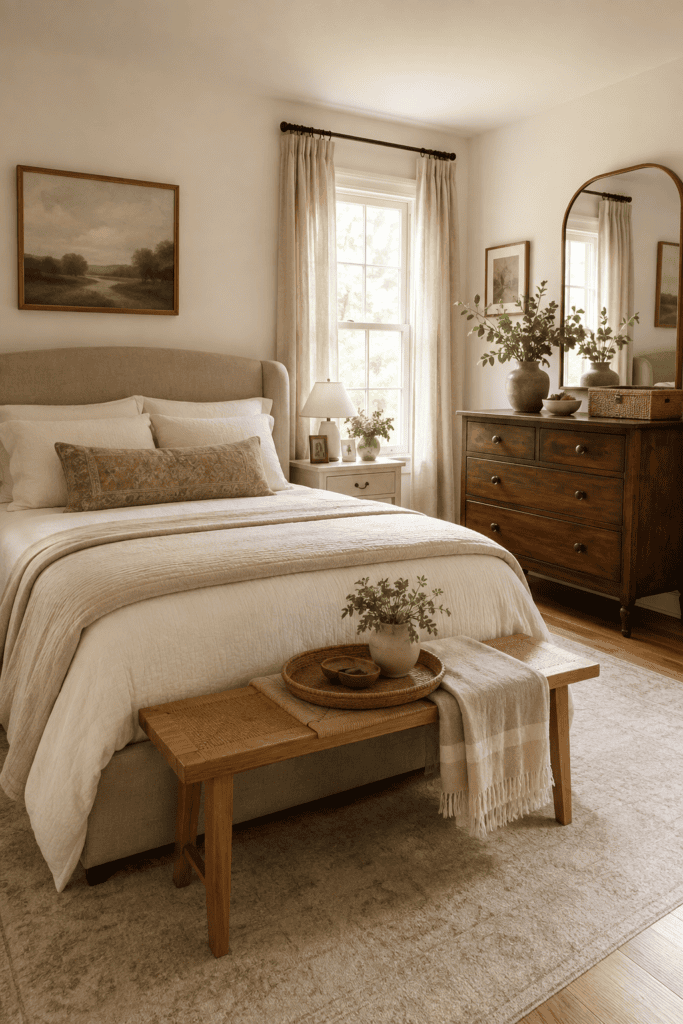
Mismatched furniture introduces contrast. You might have a traditional walnut dresser beside a simple upholstered bed, or vintage nightstands paired with a modern headboard. Those differences give the room personality.
What actually works is controlled contrast.
You want enough repetition that the room feels connected, but enough variation that it doesn’t look like everything was purchased on the same afternoon.
Think of your furniture as individual pieces that need a few things in common—not identical twins.
Start With the Piece You Definitely Want to Keep
Before changing anything, decide which furniture piece is your anchor.
Usually, that will be your:
- Bed or headboard
- Largest dresser
- Vintage or sentimental piece
- Most expensive piece you don’t plan to replace
Then build the room around it.
For example, imagine you have a substantial dark walnut dresser that you love, but your bed has a cream upholstered headboard. Don’t immediately start searching for a walnut bed.
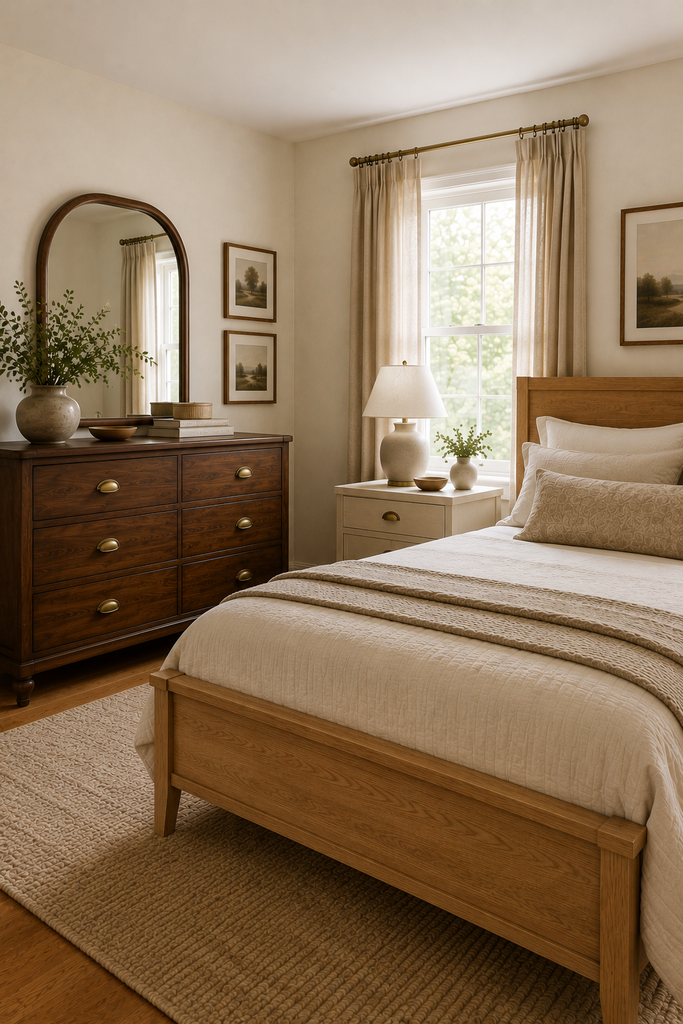
Instead, let the dresser be the main dark wood element and repeat its warmth in smaller places—perhaps picture frames, a wooden tray, a bench, or a lamp base.
Now the dresser doesn’t look like the odd piece out. It looks intentional.
This is much easier than trying to make four unrelated furniture pieces equally important.
Choose a Simple Color Palette Before You Touch the Furniture
Most people get this wrong because they focus entirely on furniture finishes.
They see oak, walnut, white paint, and upholstery and assume the woods are the problem.
Sometimes the bigger issue is everything surrounding them.
If your bedding has several colors, the rug introduces three more, the curtains add another pattern, and the walls are competing with all of it, mismatched furniture becomes even more noticeable.
A restrained bedroom palette gives different furniture styles somewhere to visually settle.
Use the Room Around the Furniture to Create Unity
Suppose your bedroom contains:
- A medium oak bed
- White painted nightstands
- A dark walnut dresser
- A beige upholstered bench
That combination can absolutely work.
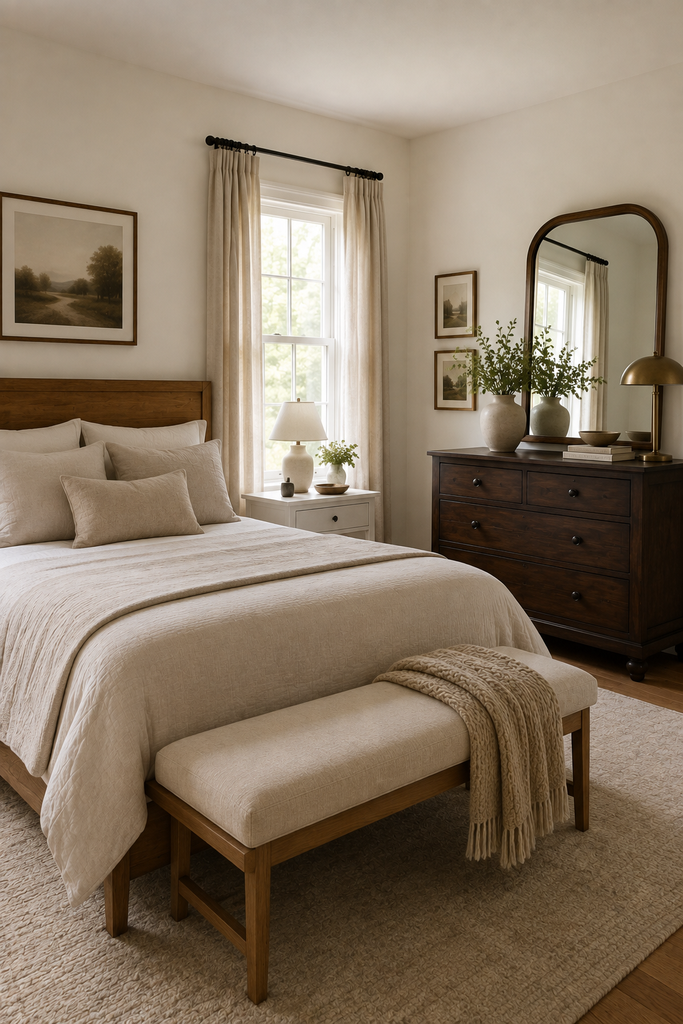
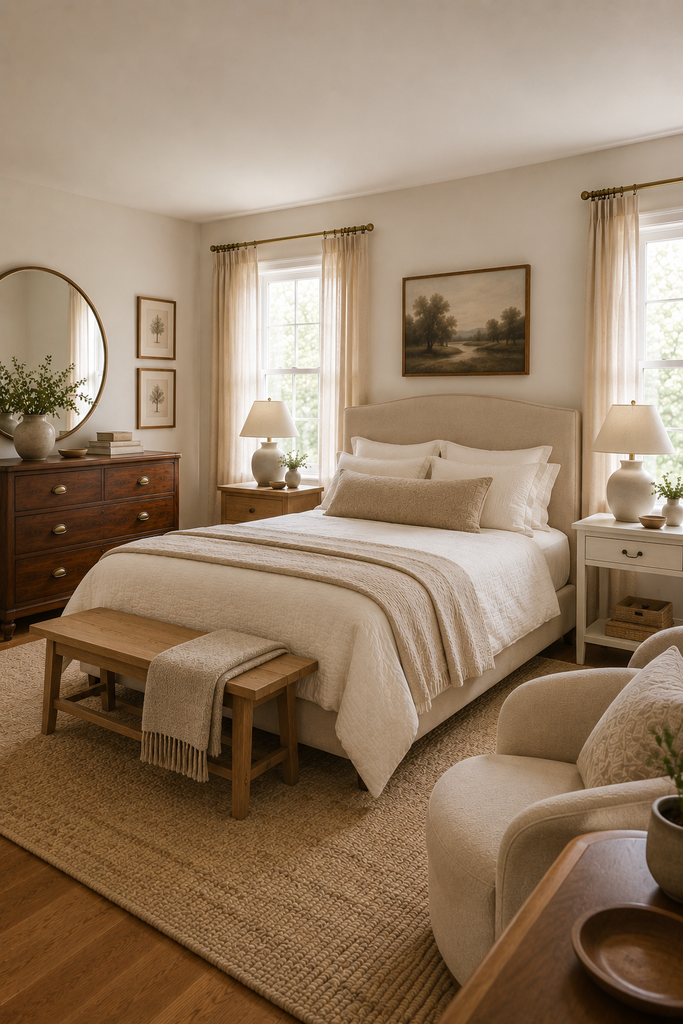
You might connect everything with warm white walls, oatmeal bedding, a muted beige rug, warm linen curtains, and a few black or aged brass accents.
Suddenly, your eye notices the whole room rather than evaluating every furniture finish individually.
You don’t have to make the furniture match. You need to make the room cohesive.
Mix Wood Tones Without Making the Bedroom Look Random
Mixing wood tones is probably where people get the most nervous.
The good news is that you don’t need every piece of wood furniture to be the same color.
Actually, I’d rather see two clearly different wood tones than three pieces that almost match but don’t.
Pay Attention to Undertones
Look at whether your wood furniture feels generally warm or cool.
Warm woods tend to have golden, reddish, honey, or orange undertones. Cooler woods can appear grayer, ashier, or slightly taupe.
They don’t need identical undertones, but some relationship helps.
A warm walnut dresser can sit comfortably with medium oak because both have warmth. A very orange wood beside a heavily gray-washed wood may require more effort to connect.
Repeat Each Important Wood Tone
If you have one dark wood piece sitting alone in an otherwise light bedroom, it will naturally attract attention.
Repeat that darker tone somewhere else.
It could be as small as:
- A mirror frame
- Picture frames
- A decorative bowl
- A lamp
- A small stool
You aren’t trying to sneak another dresser into the room just to make things match.
Small repetitions are enough to tell your eye, “Yes, that color belongs here.”
Your Nightstands Do Not Have to Match
This is one of my favorite places to loosen the rules.
Matching nightstands can look beautiful, but they’re not required.
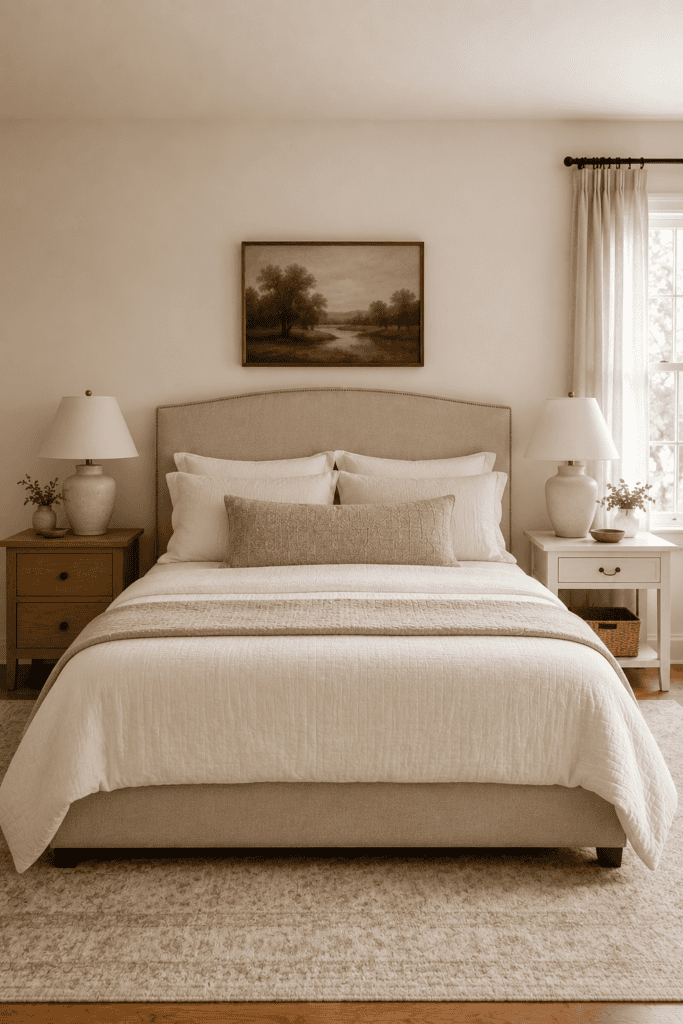
If your bedroom already contains mismatched furniture, forcing matching bedside tables sometimes creates an awkward situation where one part of the room feels overly coordinated while everything else doesn’t.
Instead, make mismatched nightstands feel related.
Match Their Visual Weight, Not Their Exact Design
One nightstand might be painted wood while another is natural wood. That’s fine.
What matters more is whether they feel reasonably balanced beside the bed.
If one is a delicate 20-inch table and the other is a huge three-drawer chest, the bed may look visually lopsided.
Try to keep their heights relatively close and their overall scale compatible.
Then use matching or similar bedside lamps to create symmetry above them.
This trick works surprisingly well. The tables can be different, but the repeated lamps visually connect both sides of the bed.
Use Textiles as the Bridge Between Different Furniture Styles
If there’s one inexpensive way to make mismatched bedroom furniture cooperate, it’s textiles.
Your rug, bedding, curtains, pillows, and throw blankets occupy a lot of visual space. That means they have tremendous influence over how the furniture feels.
Say you have a rustic wood dresser and a clean modern bed.
Instead of deciding which style should “win,” use textiles that sit somewhere between them.
You could choose:
- Simple linen bedding
- A softly textured neutral rug
- Relaxed cotton curtains
- One or two subtly patterned pillows
- A chunky woven throw
The natural textures complement the rustic dresser, while the simple shapes work with the modern bed.
That middle ground is what makes the combination believable.
Repeat Shapes and Materials Around the Room
Color isn’t the only thing that creates repetition.
Shape can do the same job.
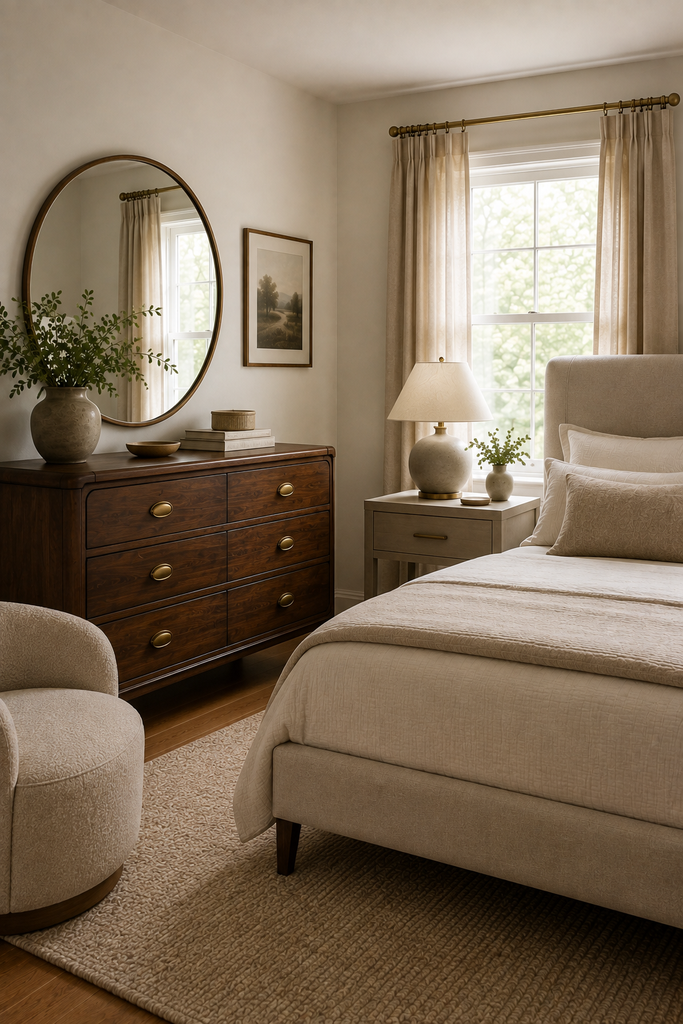
Maybe your vintage dresser has rounded corners while your bed is very straight and modern. Introduce another curved element—a round mirror, curved lamp, or small rounded chair.
Now that curve appears more than once.
The same strategy works with metal finishes.
If your dresser has aged brass hardware, repeat aged brass on your bedside lamps or curtain rod. If your modern nightstand has black hardware, a black picture frame across the room can help connect it.
These repetitions don’t need to be obvious.
Actually, they’re usually better when they aren’t.
The room should simply feel like the pieces belong together without making it immediately obvious why.
Avoid Having Too Many “Statement” Furniture Pieces
This is one of the biggest mistakes when decorating a bedroom with mismatched furniture.
Every piece cannot be the star.
Imagine a bedroom with an ornate antique dresser, dramatic carved bed, brightly painted nightstand, sculptural chair, patterned bench, and oversized decorative cabinet.
Individually, those pieces might be fantastic.
Together? Exhausting.
Choose one or maybe two pieces that deserve attention. Let the remaining furniture be quieter.
If you already own several visually strong pieces, you don’t necessarily need to replace them. Sometimes simply moving one to another room is enough.
Bedrooms usually benefit from a little visual breathing room.
Don’t Try to Fix Everything With Paint
Painting furniture can be useful, but it shouldn’t automatically be your first solution.
People often assume mismatched furniture means, “I’ll paint everything white.”
Then they end up with five different furniture styles that are technically the same color but still don’t really relate.
Before painting a good-quality wood piece, see whether you can connect it through bedding, hardware, artwork, lighting, or other wood accents.
If one inexpensive nightstand genuinely looks completely disconnected, painting that single piece may make sense.
But beautiful natural wood doesn’t need to disappear simply because another piece is a different wood tone.
Edit the Room Before Buying Anything New
Before shopping for replacement furniture, remove some things.
Seriously.
Mismatched furniture often looks much worse when the bedroom is visually crowded.
Take unnecessary decor off the dresser. Remove the random storage basket beside the nightstand. Simplify the bedding. Clear some floor space.
Then stand at the doorway and look again.
You may discover that the furniture wasn’t actually fighting each other. There were simply too many competing objects in the room.
Negative space gives your eye time to understand individual pieces.
This is especially important in smaller bedrooms where furniture is already positioned close together.
A Simple Formula for Making Mismatched Furniture Feel Intentional
If you’re staring at your bedroom wondering where to begin, don’t try to redesign everything at once.
Use this order:
- Pick your main furniture piece.
- Decide on a simple room color palette.
- Identify the dominant wood tones.
- Repeat important finishes elsewhere in smaller doses.
- Balance furniture scale around the bed.
- Use textiles to connect different styles.
- Repeat one or two shapes or materials.
- Remove anything creating unnecessary visual competition.
Only after doing those things should you decide whether a furniture piece genuinely needs to be painted, moved, or replaced.
You might be surprised by how little shopping is actually necessary.
Let’s Conclude
Learning how to decorate a bedroom with mismatched furniture really comes down to creating connections rather than forcing matches.
Your dresser doesn’t need to match your bed. Your nightstands don’t even have to match each other. Different wood tones, furniture eras, and finishes can live together beautifully when color, scale, texture, shape, and repetition give the room a common thread.
Start with the furniture you already like. Simplify the palette around it, repeat a few important finishes, and let textiles do some of the heavy lifting.
Most importantly, don’t panic just because your bedroom didn’t come from one furniture collection.