
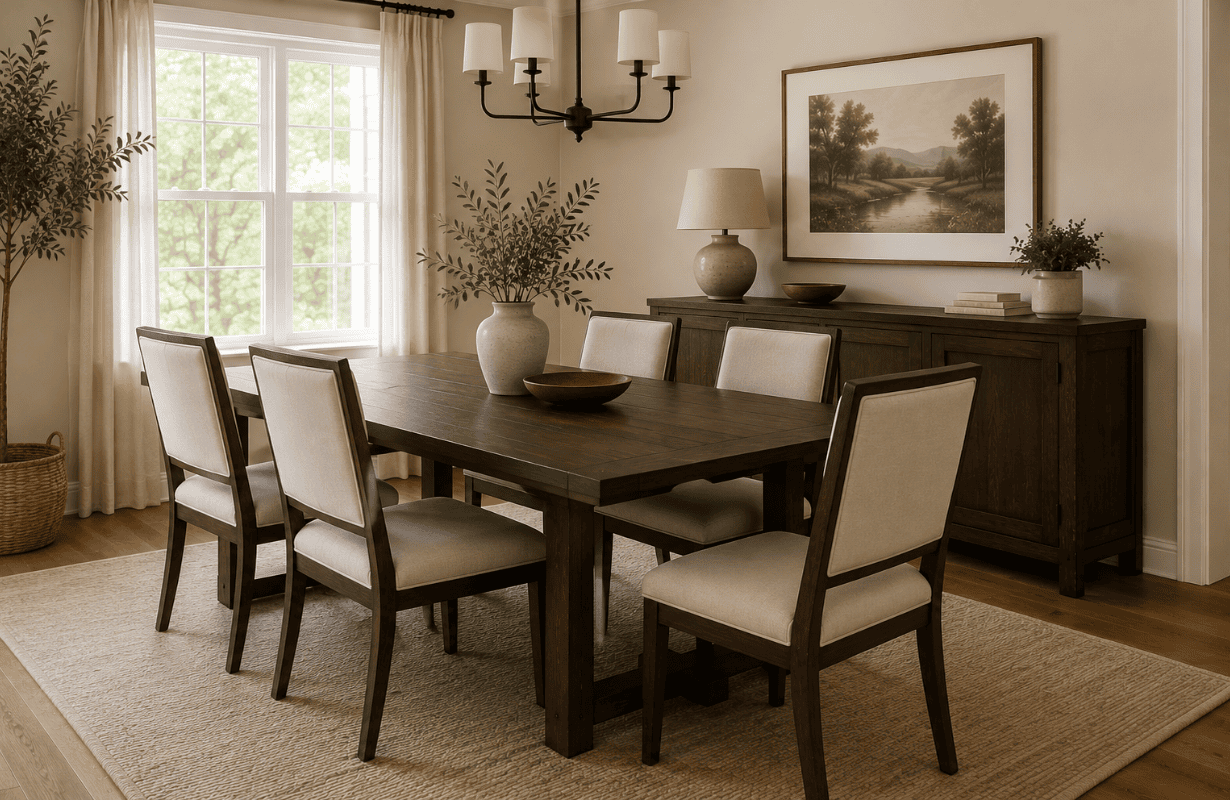
Dark wood furniture has a way of making a room look expensive, warm, and collected—right up until you put several dark pieces together and suddenly the whole space feels heavier than you expected.
Maybe you have a beautiful walnut dining table you don’t want to replace. Or a dark espresso dresser that’s solid, practical, and honestly too good to get rid of. The problem usually isn’t the furniture itself. It’s everything happening around it.
Here’s the thing: dark wood needs contrast and breathing room. When the walls, floors, upholstery, curtains, and accessories are all visually heavy too, your eye has nowhere to rest. That’s when a cozy room starts feeling dark and crowded.
Learning how to decorate with dark wood furniture without making rooms feel heavy isn’t about covering the wood with white accessories or replacing half your furniture. It’s about balancing visual weight.
And once you understand that, dark furniture actually becomes much easier to work with.
Why Dark Wood Furniture Can Make a Room Feel Heavy
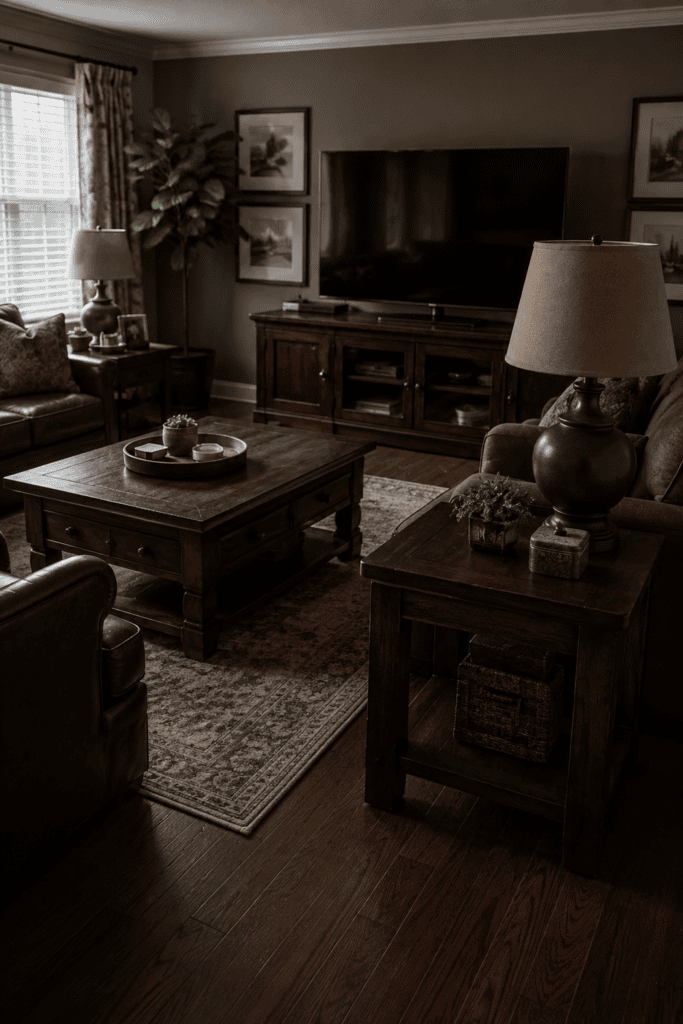
Before changing anything, it helps to understand why the room feels off.
Dark furniture naturally carries more visual weight than pale furniture. A large mahogany dresser will attract your attention faster than a light oak dresser of exactly the same size.
That isn’t necessarily bad. In fact, it can give a room a strong anchor.
Problems start when every major surface competes for attention.
Too Many Dark Elements Are Competing
Most people get this wrong by trying to make everything “match.”
They have a dark walnut bed, so they add dark nightstands. Then a dark dresser. Then a brown rug. Maybe deep-colored curtains too.
Individually, none of those choices are terrible. Together, they create one large visual block.
You don’t need to eliminate dark pieces. You need to stop repeating the same visual weight everywhere.
The Furniture Is Too Large for the Layout
Sometimes what looks like a color problem is actually a scale problem.
A chunky dark wood coffee table can feel enormous in a small living room because both its size and color give it presence. The same table in a larger room might look perfectly balanced.
Before blaming the wood tone, look at your walking space and sightlines. If you’re squeezing around furniture or several large pieces sit close together, rearranging or removing one piece may make a bigger difference than changing the color palette.
Start With a Lighter Background
One of the easiest ways to balance dark wood is to create contrast behind it.
That doesn’t mean every wall needs to be stark white.
Warm off-white, cream, pale greige, muted beige, soft mushroom, and light taupe can all work beautifully with walnut, mahogany, espresso, and other deep woods.
Pay Attention to Undertones
Look closely at your furniture before choosing surrounding colors.
Walnut often has warm brown undertones. Mahogany can lean reddish. Some espresso finishes have cooler undertones.
What actually works is choosing lighter colors that relate to those undertones without copying them.
For example, a warm walnut dining table against creamy walls tends to feel softer than the same table surrounded by cool gray walls.
The contrast is still there, but the room feels connected rather than harsh.
Use Light Upholstery to Break Up the Darkness
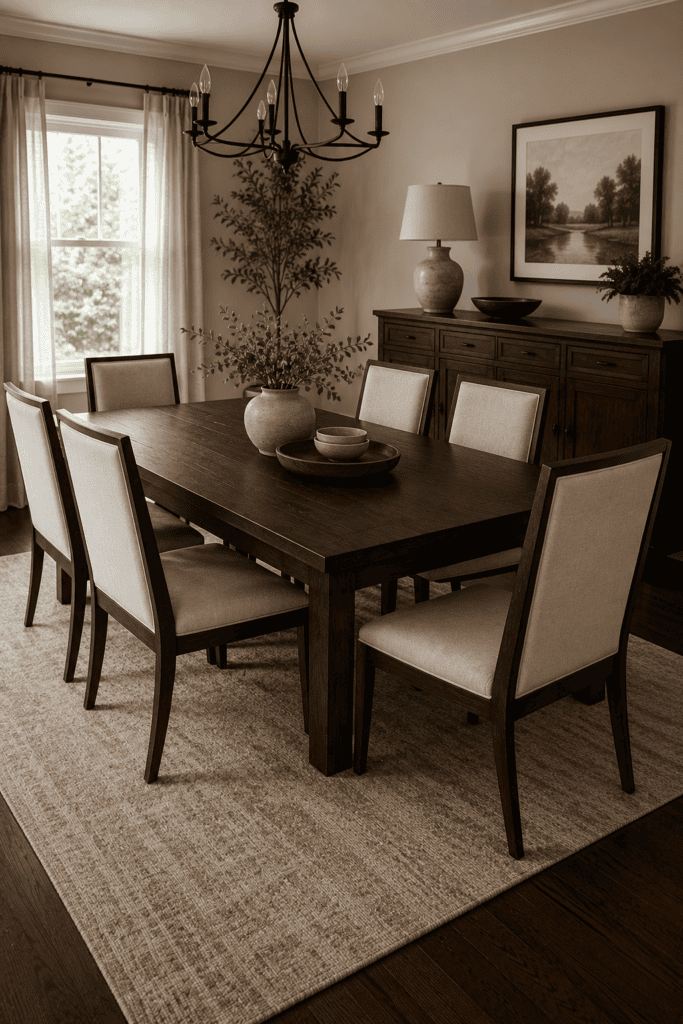
If you have several dark wood pieces, upholstery is one of your best tools for balancing them.
Think oatmeal linen, warm ivory, flax, pale gray-beige, muted sage, dusty blue, or other soft mid-to-light tones.
A dark wood dining table paired with dark wood chairs can become visually dense very quickly. Put light upholstered seats on those chairs—or mix in fully upholstered dining chairs—and suddenly there is separation between all that brown.
The same idea works in bedrooms.
If your bed frame and dresser are dark wood, lighter bedding creates a large visual break. Cream sheets, a warm white duvet, and a textured beige throw allow the furniture to frame the bed instead of dominating the room.
Add Texture Instead of More Dark Color
Here’s where decorating dark furniture gets interesting.
You don’t necessarily need more color. You often need more texture.
Dark wood tends to have a smooth, visually solid appearance. Natural woven materials create contrast without making the room feel busy.
Try combining dark furniture with materials such as linen, cotton, wool, jute, cane, rattan, boucle, ceramic, and woven baskets.
For example, imagine a dark walnut console against a light wall. Add a woven basket underneath, a cream ceramic lamp, and a slightly irregular handmade vase.
Now the console feels grounded rather than heavy.
Don’t Make Everything Sleek
A common mistake is pairing dark polished furniture with shiny accessories, glossy surfaces, dark leather, and perfectly smooth textiles.
That can make a residential room feel surprisingly formal.
Mixing finishes softens things.
A slightly rumpled linen curtain next to a polished walnut dresser creates the kind of contrast that makes a room feel lived-in rather than staged.
Let Some Floor Show
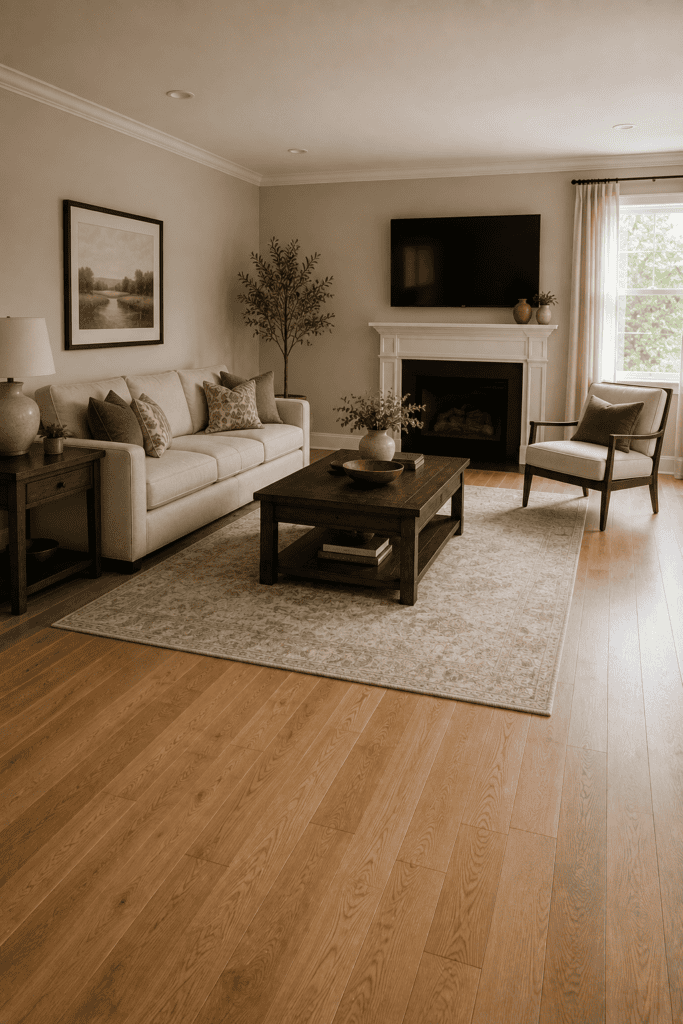
This is one of those small changes that people underestimate.
Visible flooring acts like negative space.
If a dark sofa table, dark coffee table, large rug, floor baskets, and several chairs cover almost every inch of the floor, the room can feel packed even when it’s technically organized.
Give furniture some space around it.
In a living room, you might remove an unnecessary side table instead of adding another decorative piece. In a bedroom, avoid filling every empty corner just because you have space for something.
Dark furniture looks better when you can actually see its silhouette.
Balance Dark Wood With Lighter Rugs
Your rug can dramatically change how heavy dark furniture appears.
If dark furniture sits on dark hardwood floors, there may not be enough separation between the two.
A lighter rug creates a visual buffer.
You don’t need a bright white rug that becomes a cleaning project. Look for practical shades like oatmeal, natural jute, faded beige, warm gray, or a softly patterned vintage-style rug with plenty of lighter areas.
For a dark dining table, a lighter rug underneath can make the table look intentional and sculptural rather than like one huge brown mass in the middle of the room.
Mix Wood Tones Instead of Matching Everything
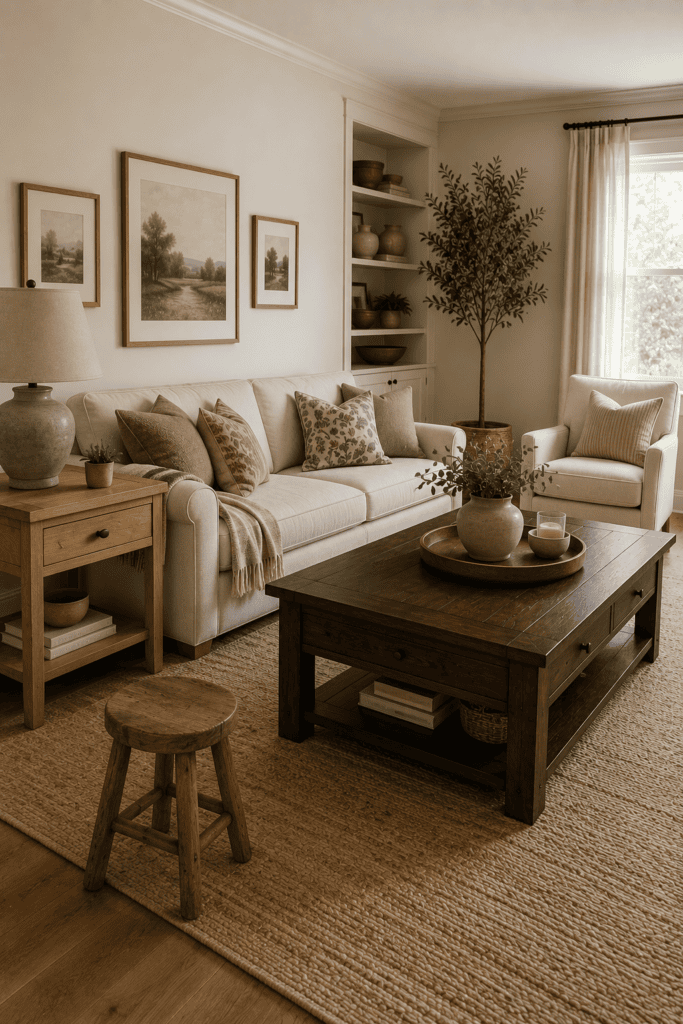
You absolutely do not need every wooden item in the room to match.
Actually, I think rooms often look more natural when they don’t.
If you already own a dark walnut coffee table, adding medium oak side tables can lighten the arrangement while still keeping the warmth of natural wood.
The trick is repetition.
Don’t introduce five unrelated wood finishes once each. Choose perhaps two or three general tones and repeat them somewhere else.
For example, you could have a dark walnut dining table, medium oak picture frames, and an oak stool. Repeating that lighter wood makes the mix look deliberate.
Keep Window Treatments Airy
Heavy furniture plus heavy window treatments can make a room feel closed in surprisingly fast.
If privacy allows, keep curtains lighter in color and visual weight.
Linen-look panels, warm white cotton curtains, or light woven shades work especially well because they soften the windows without creating another large dark rectangle.
And hang curtains high enough to emphasize the height of the room.
More visible wall and window area helps counteract the horizontal weight created by large dark dressers, sideboards, tables, and bed frames.
Use Dark Furniture as an Anchor, Not the Entire Story
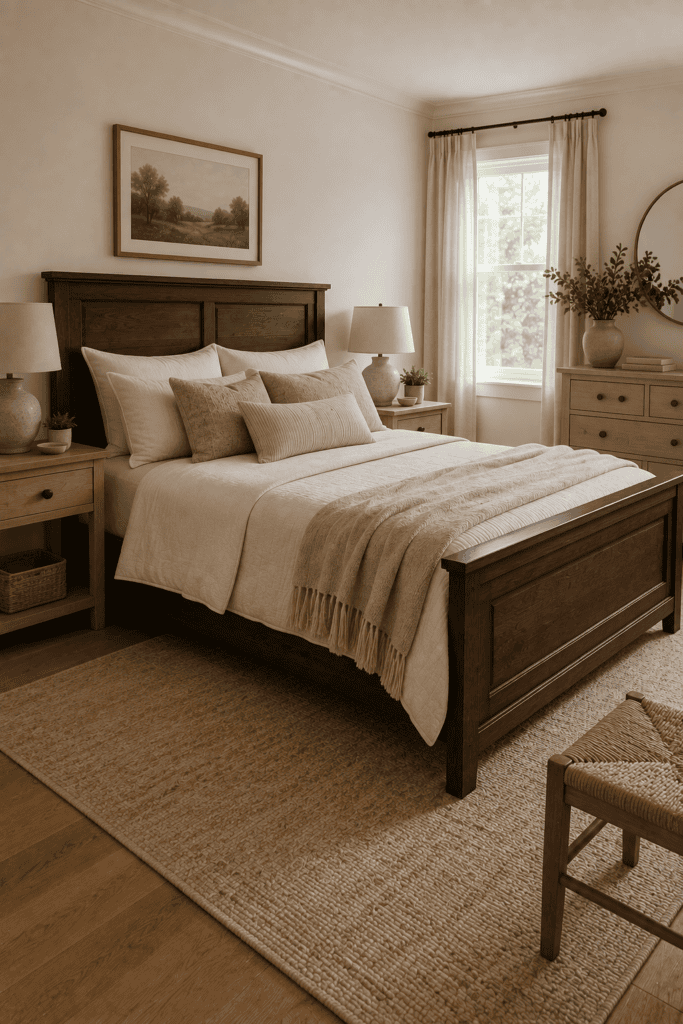
A useful approach is to decide which dark wood piece deserves to be the anchor.
Maybe it’s your dining table.
Great. Let it be important.
Then the chairs don’t necessarily need equally dark frames. The sideboard doesn’t have to match exactly. The light fixture doesn’t need to be dark brown or black just because the table is.
The same applies in a bedroom.
If a substantial dark wood bed is the focal point, you might choose lighter nightstands or even small painted tables rather than purchasing a matching dark bedroom set.
That contrast actually makes the dark piece look more special.
Be Careful With Black Accessories
Dark wood and black can look fantastic together, but black shouldn’t automatically become your “accent color.”
If the room already contains several substantial dark wood pieces, adding a black coffee table, black lamp, black frames, black curtain rods, and black accessories can push the visual weight too far.
Instead, spread small dark accents around the room and mix them with lighter materials.
A thin black picture frame? Fine.
A simple black lamp next to a walnut dresser? Great.
Seven chunky black accessories surrounding that dresser? Probably unnecessary.
Bring in Greenery and Organic Shapes
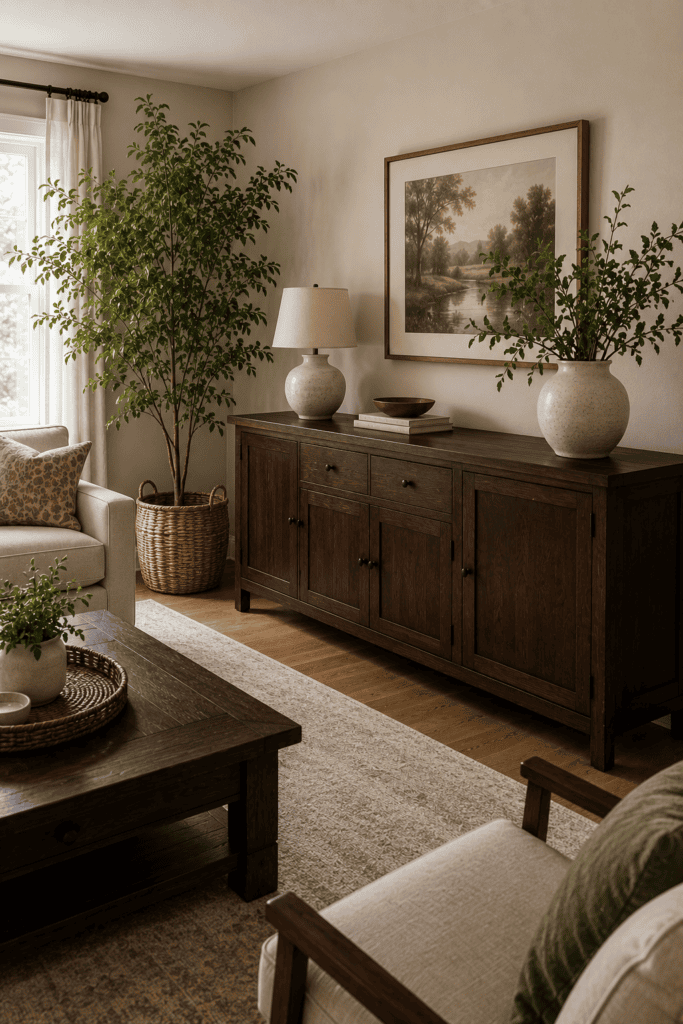
Plants work particularly well around dark furniture because they interrupt all those straight furniture lines.
Dark wood dressers, bookcases, dining tables, and consoles are usually very rectangular. A plant introduces irregular shapes and movement.
You don’t need to turn the room into a greenhouse.
One substantial plant beside a dark sideboard can do more visually than six tiny accessories sitting on top of it.
If maintaining plants isn’t your thing, branches in a ceramic vase can create a similar effect.
Edit the Room Before Buying Anything
This might be the most practical step of all.
Before buying a new rug, curtains, pillows, or lighter furniture, remove a few things.
Take accessories off the dark furniture. Remove one unnecessary side table. Pull the curtains fully open. Clear objects from the floor. Then look at the room again.
Dark furniture needs breathing room more than it needs decoration.
If a dark dresser has 12 decorative objects sitting on top, adding another light-colored vase isn’t going to fix the heaviness.
Try three or four larger, purposeful objects instead.
Sometimes the cheapest solution is simply allowing the furniture you already own to stand on its own.
A Simple Formula for Balancing Dark Wood
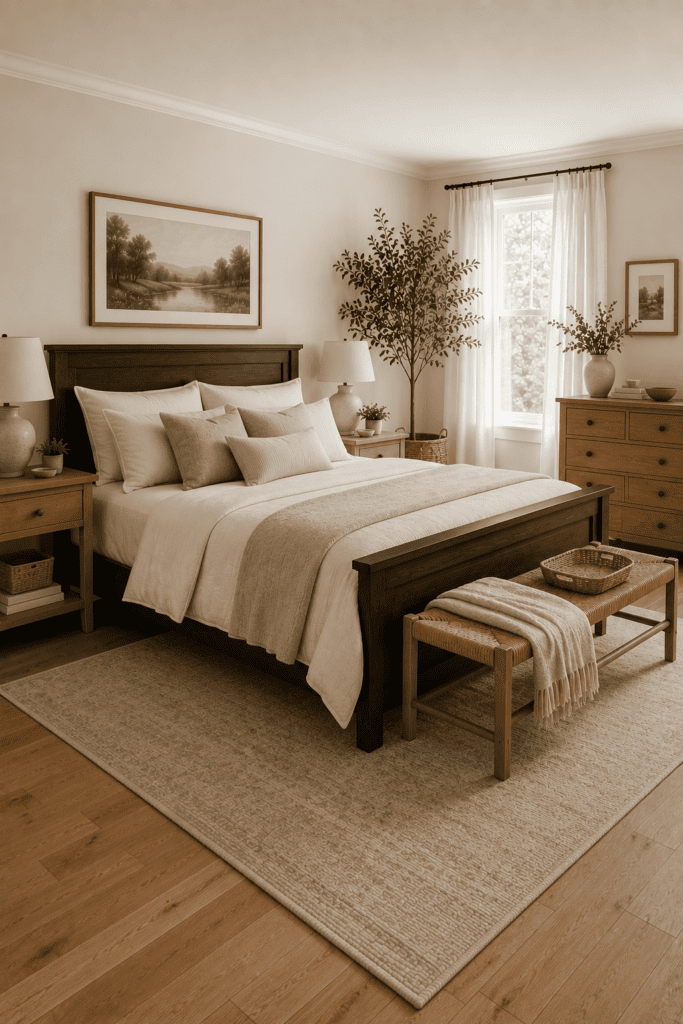
If you’re staring at your room wondering where to begin, don’t try to change everything at once.
Start with the largest dark piece and build contrast around it.
Pair the furniture with a lighter background, introduce one substantial light textile such as a rug or bedding, add natural texture, and leave some open space around the piece. Then repeat the dark wood tone once or twice elsewhere in smaller amounts so it feels connected to the room.
For example, a dark walnut bed might sit against warm cream walls with oatmeal bedding, light curtains, a woven bench, and two small walnut picture frames elsewhere in the room.
Simple, but balanced.
Final Thoughts
Figuring out how to decorate with dark wood furniture without making rooms feel heavy really comes down to contrast, scale, and restraint.
You don’t need to disguise beautiful dark furniture. And you definitely don’t need to replace good pieces just because lighter woods are popular.
Give dark wood a lighter background. Break it up with textiles and natural textures. Mix in lighter wood tones instead of forcing everything to match. Most importantly, leave enough visual space for those darker pieces to breathe.
Start by changing one area the rug beneath your dining table, the bedding around your dark bed, or the accessories on your walnut dresser. Once the visual weight starts balancing out, you’ll probably find that the dark furniture wasn’t the problem at all. It just needed a little more room to shine.