
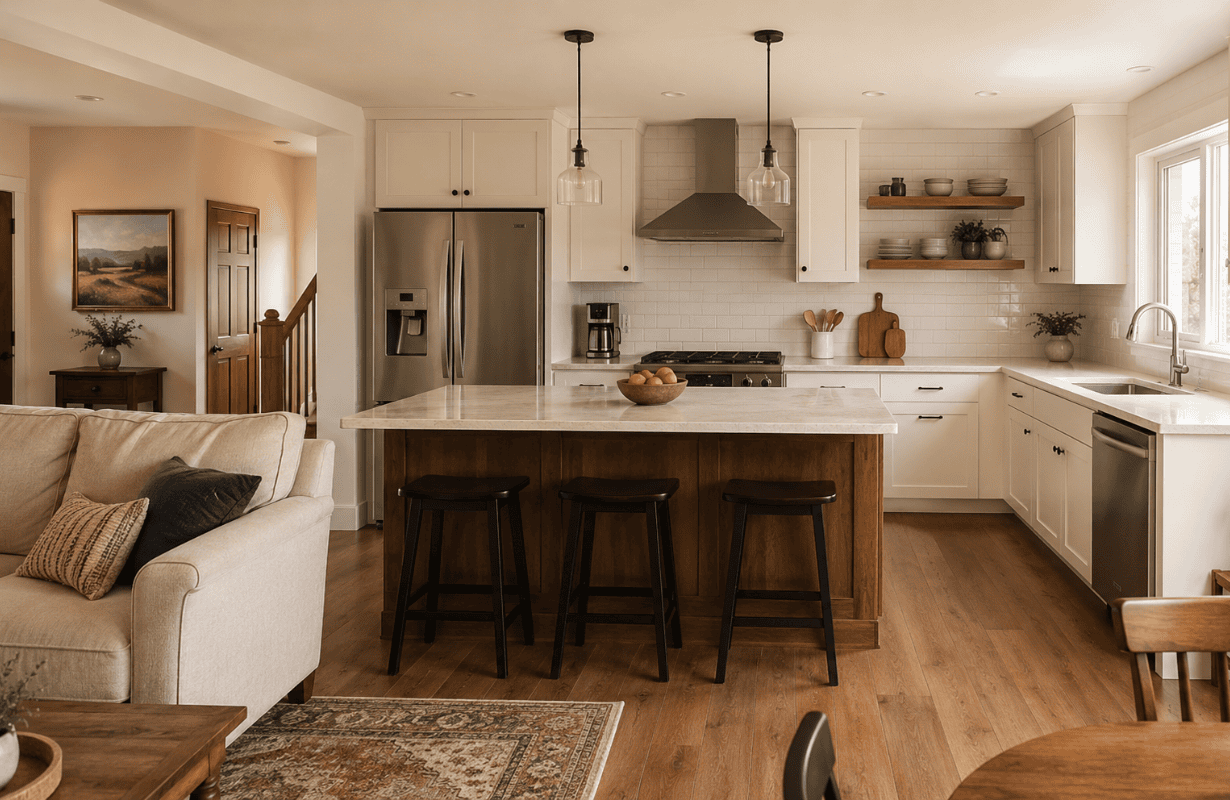
Open kitchens look amazing in photos. Then you actually live in one.
Suddenly, the coffee maker, drying dishes, mail, grocery bags, cooking oil, kids’ water bottles, and yesterday’s Amazon box are visible from the sofa. There isn’t a door you can close when someone comes over. Whatever happens in the kitchen basically becomes part of the living room.
If you’re trying to figure out how to make an open kitchen feel less cluttered, the answer isn’t to keep your kitchen perfectly empty. That’s not realistic, and honestly, a kitchen with absolutely nothing out can feel more like a showroom than a home.
The real goal is to reduce visual noise while keeping the things you actually use convenient.
That distinction matters. A kitchen can contain plenty of stuff and still feel calm. On the other hand, a relatively clean kitchen can look chaotic because everything is competing for attention.
Here’s how I’d approach it.
Why Open Kitchens Look Cluttered So Quickly
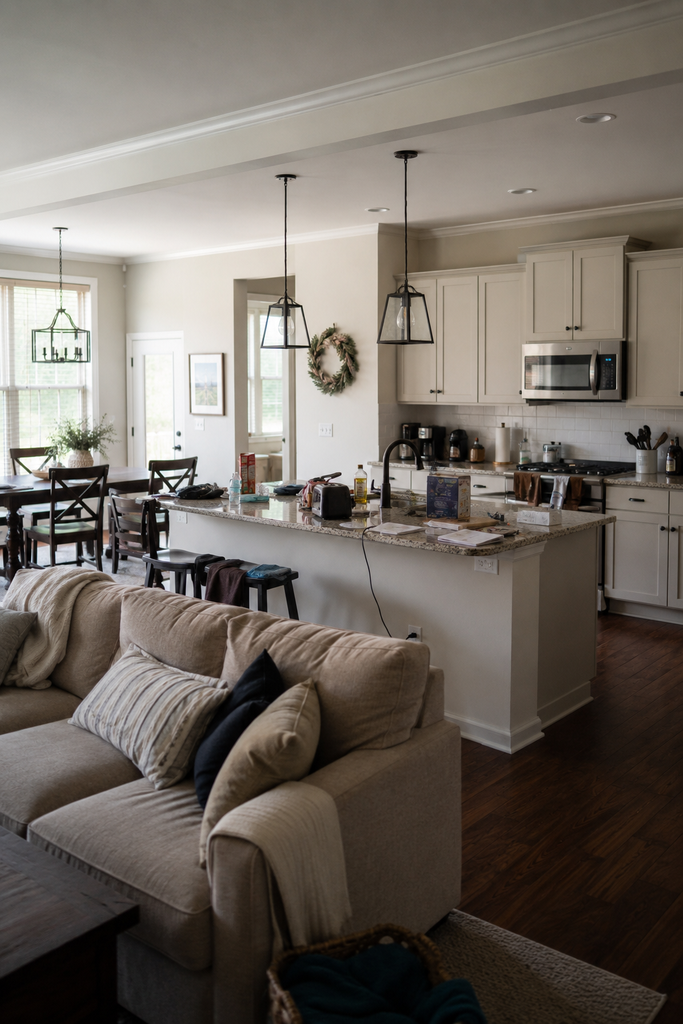
The biggest challenge with an open kitchen is simple: you see almost everything at once.
In a closed kitchen, a crowded countertop might only affect the kitchen itself. In an open floor plan, that same counter becomes part of the view from your sofa, dining table, and sometimes even the front door.
Visual Clutter Matters as Much as Actual Clutter
Five random objects scattered across a counter often look messier than ten objects intentionally grouped together.
That’s because your eye registers separate shapes, colors, labels, cords, and containers.
A toaster beside a bright cereal box beside a bottle of vitamins beside three pieces of mail creates four different visual interruptions. Put away the cereal and mail, move the vitamins elsewhere, and suddenly the toaster doesn’t seem particularly cluttered.
This is why decluttering an open kitchen isn’t just about owning less. It’s about controlling what remains visible.
Start With Your Main Sightlines
Before reorganizing a single cabinet, walk into your living room and look toward the kitchen.
What catches your eye first?
Maybe it’s the island covered in miscellaneous items. Maybe it’s a crowded refrigerator door. Maybe you can see twenty different products sitting beside the stove.
These sightlines deserve your attention first.
Prioritize the Island and Peninsula
Most people get this wrong by treating the kitchen island as extra storage space.
Technically, it is. Visually, however, it’s often the most prominent surface in an open-plan room.
Try keeping roughly two-thirds of the island visually clear when you’re not actively cooking. You don’t need an empty slab of countertop. A bowl of fruit or simple vase can stay.
What you don’t want is a permanent collection of chargers, receipts, supplements, keys, lunch bags, appliances, and unopened mail.
If the island constantly becomes a dumping ground, the problem isn’t really the island. You probably need a better landing zone somewhere else.
Decide What Actually Deserves Counter Space
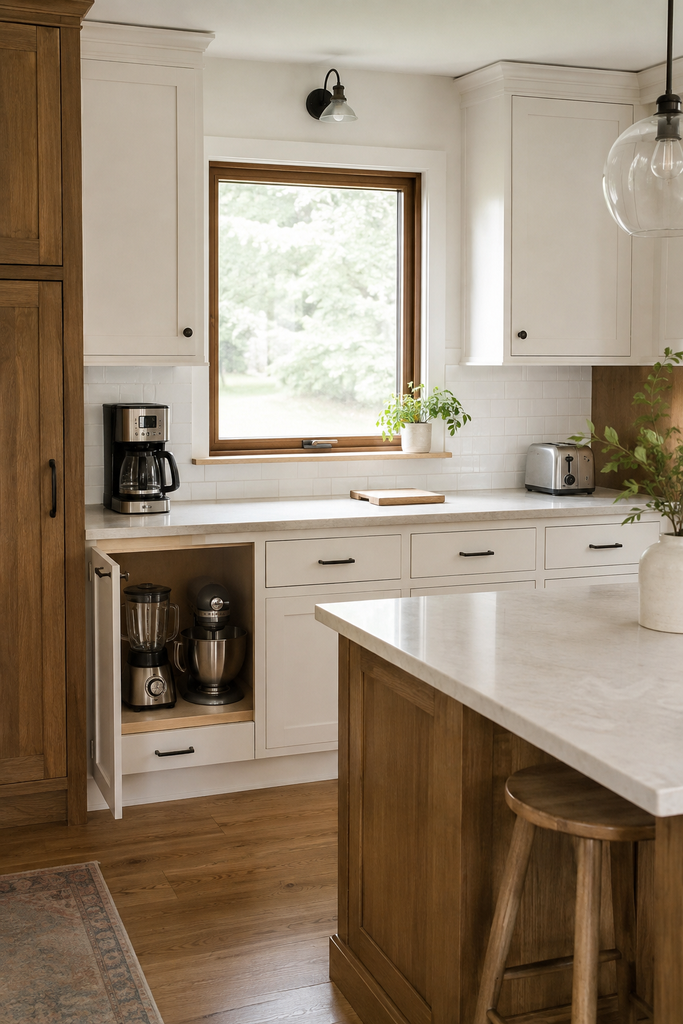
Here’s the thing: not every appliance you use regularly needs to live on the counter.
There is a huge difference between something you use three times every day and something you use twice a week.
Use Frequency, Not Habit, to Decide
For one week, pay attention to what you actually use.
Your coffee maker might deserve permanent counter space. The stand mixer you use twice a month probably doesn’t. Neither does the blender you automatically leave beside it.
I like thinking about countertop items in three groups:
Daily: Keep accessible.
Several times a week: Keep nearby but consider a cabinet, appliance garage, or easy-access shelf.
Occasionally: Store away.
The goal isn’t an Instagram-empty countertop. It’s eliminating things that occupy prime visual space without earning it.
Create Small Functional Zones
One of the best ways to make an open kitchen feel less cluttered is to stop spreading related items across the entire room.
Group them into compact zones instead.
Build a Coffee Zone
If you drink coffee every morning, don’t fight reality by hiding every coffee item.
Instead, create one deliberate coffee station.
Keep the machine, perhaps a small container of coffee, and whatever you genuinely use daily together. Store extra mugs, backup coffee, syrups, filters, and other supplies inside the cabinet above or drawer below.
Now your coffee supplies read as one functional area instead of seven random objects.
Do the Same Around the Stove
Cooking oils, salt, pepper, and utensils can easily become another messy cluster.
Keep only your most-used items accessible. Put oils or seasonings on a small tray if they’re staying out.
The tray isn’t magic. What it does is create a visual boundary. Instead of your eye seeing five unrelated containers, it sees one organized group.
Give Everyday Clutter Somewhere to Go
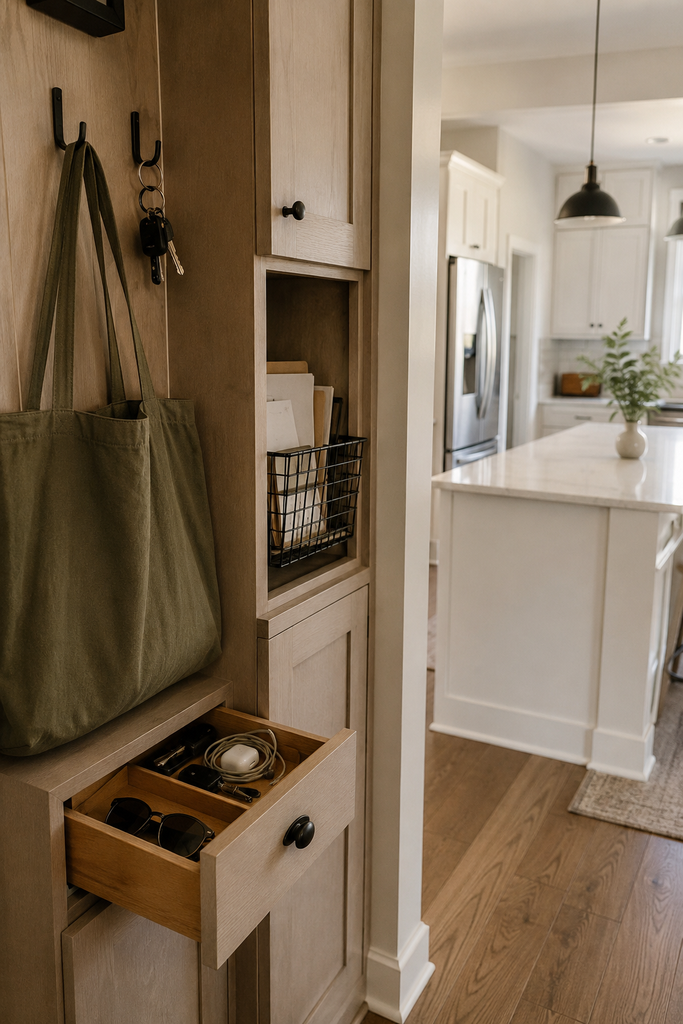
Open kitchens frequently become cluttered because they’re located right in the middle of daily life.
Someone walks through the door and drops keys on the island. Mail arrives and lands beside them. A phone charger appears. Then sunglasses. Then a school form.
By Friday, your island has accidentally become an office.
Create a Landing Zone Outside the Main Prep Area
What actually works is giving these objects a designated home before they reach the kitchen counter.
That could mean a shallow entryway drawer, wall-mounted key hooks, a small basket inside a cabinet, or one drawer near the edge of the kitchen.
Make the correct storage location almost as convenient as dropping something on the counter.
If putting the mail away requires walking upstairs, opening a closet, and finding a folder, nobody is going to do it consistently.
Good organization works with your habits instead of pretending you’ll develop completely different ones.
Reduce Packaging and Label Clutter
This is a smaller detail that makes a surprisingly big difference.
Commercial packaging is designed to grab attention. Bright colors, large logos, contrasting typography—exactly what you don’t want dominating an open kitchen.
You don’t need to decant every cracker into matching glass jars. That becomes its own maintenance project.
Instead, focus on visible products.
Simplify What Stays Out
If dish soap permanently sits beside the sink, a simple refillable dispenser can calm that area considerably.
If tea bags sit on an open shelf, put them inside one container rather than displaying several cardboard boxes.
If snacks are visible, group them inside a basket.
Leave hidden cabinet interiors alone unless they’re genuinely dysfunctional. You don’t need beautiful cereal containers behind a closed door just to make your living room look better.
Be Careful With Open Shelving
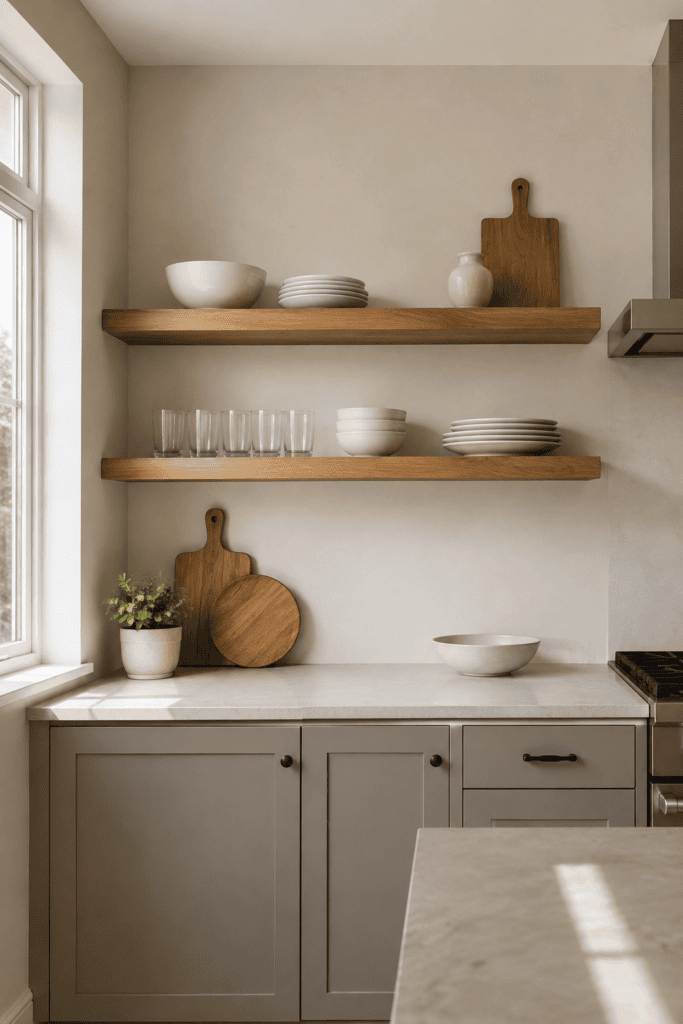
Open shelving can look beautiful in an open kitchen, but it can also double the amount of visual clutter.
If you already have open shelves, don’t treat them like regular cabinets without doors.
Leave Some Breathing Room
Instead of filling every inch, display things with similar visual characteristics.
For example, you might use:
- white everyday dishes
- clear glasses
- a few wooden cutting boards
- one small plant or ceramic piece
What tends to create chaos is mixing colorful food packages, stacks of mismatched mugs, appliances, cookware, cookbooks, and decorative objects across the same shelves.
Open shelves need negative space.
That doesn’t mean they’re useless. It simply means everything stored there participates in the room’s decor whether you intended it to or not.
Calm Down the Refrigerator
A refrigerator covered in magnets, photos, coupons, calendars, receipts, and children’s artwork can become the loudest surface in an open kitchen.
You don’t necessarily have to remove everything.
Just edit it.
Keep a few things you actually enjoy seeing and relocate paperwork somewhere less visible. A cabinet door interior can be great for schedules, shopping lists, and reminders.
You still have access to them without turning the refrigerator into a bulletin board visible from the entire first floor.
Use Closed Storage for the Ugly Stuff
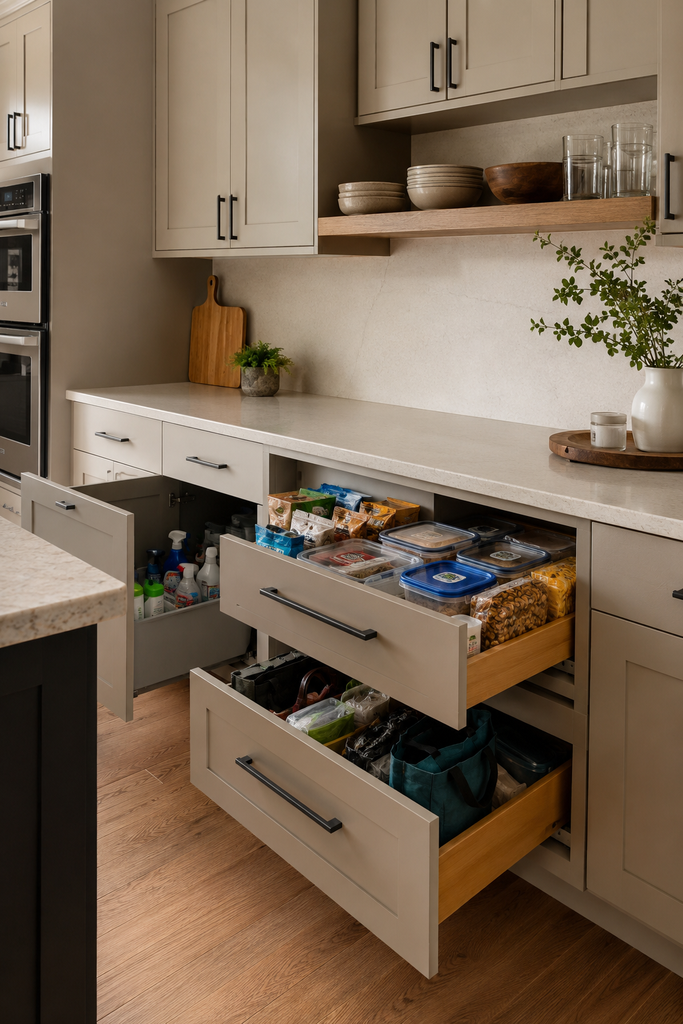
Some things simply aren’t attractive, and that’s okay.
Food packages, plastic containers, cleaning supplies, reusable shopping bags, pet supplies, and miscellaneous kitchen gadgets don’t need decorative storage solutions.
They need doors.
Don’t Waste Closed Cabinets on Pretty Objects
This is where I’d prioritize function over Pinterest.
Use your most accessible closed cabinets and drawers for things that would otherwise create countertop clutter.
If you have attractive serving bowls or matching glassware, those can survive on an open shelf. Your giant collection of protein powder containers probably doesn’t need the same privilege.
The more open your floor plan is, the more valuable closed storage becomes.
Keep Materials and Colors Visually Consistent
Sometimes the kitchen isn’t particularly messy—it just has too many competing finishes.
Black appliance. Red toaster. Blue dish towels. Patterned rug. Bright soap bottle. Wooden cutting board. Stainless-steel kettle.
Individually, none of those things is a problem. Together, they can make a small open kitchen feel busy.
You don’t need to replace your appliances.
Instead, gradually make the inexpensive visible items more cohesive.
Choose dish towels, countertop containers, trays, and other accessories that relate to the kitchen’s existing palette.
Repeating two or three finishes also helps. For example, warm wood, white ceramic, and stainless steel can create enough consistency that everyday objects feel intentional rather than random.
Make Your Sink Area Easy to Reset
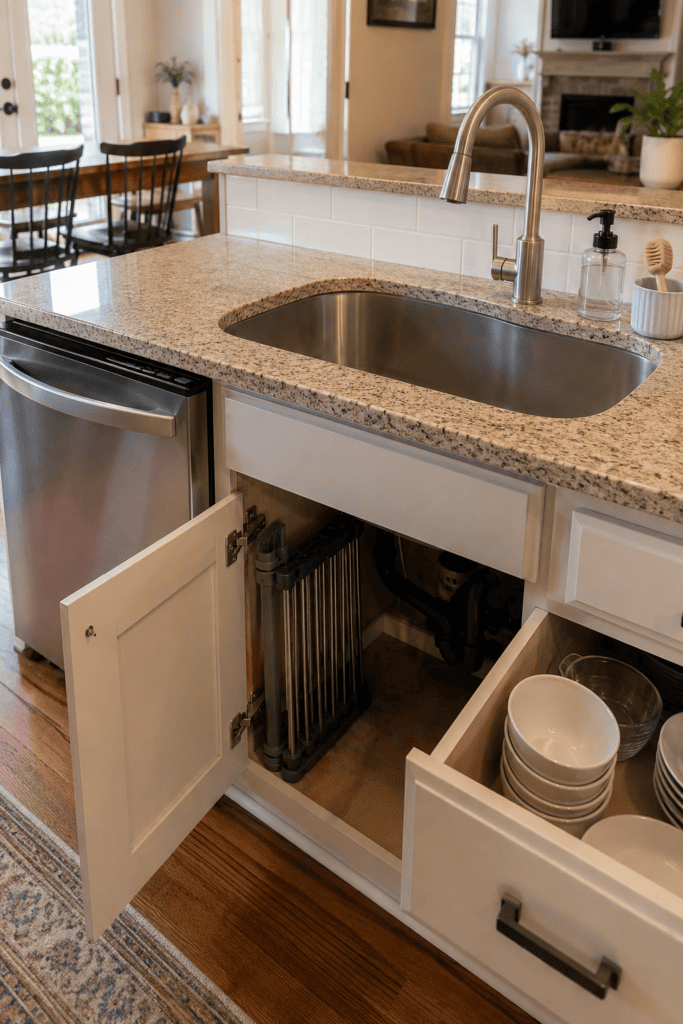
A sink full of dishes is going to make an open kitchen look messy faster than almost anything else.
But telling yourself to “never leave dishes in the sink” isn’t much of a system.
Make cleanup easier instead.
Keep the dishwasher easy to unload. Don’t overcrowd the cabinet where dishes belong. Give dish brushes and sponges a discreet home. If you hand-wash frequently, choose a drying rack that can be quickly put away or folded when it’s empty.
The easier the reset is, the more likely you’ll actually do it.
Do a Five-Minute Evening Reset
You don’t need a complicated nightly cleaning routine.
Spend five minutes returning the kitchen to its baseline.
Put stray objects away. Load dishes. Wipe the main counter. Return food to the pantry. Straighten the island.
That’s enough.
And importantly, don’t use this time for deep cleaning.
You’re simply restoring the room’s visual order so yesterday’s clutter doesn’t combine with today’s clutter.
Common Mistakes That Make an Open Kitchen Feel Busier
One mistake is trying to decorate your way out of clutter.
Adding matching canisters, baskets, trays, plants, signs, and countertop decor doesn’t necessarily make a kitchen more organized. Sometimes you’ve simply added prettier clutter.
Another mistake is hiding absolutely everything.
A kitchen should still feel usable. If making coffee requires opening three cabinets and pulling an appliance from a high shelf every morning, your system probably won’t last.
And finally, don’t reorganize your entire kitchen before identifying the real clutter hotspots.
Fix the surfaces you see from the adjoining rooms first. Then work backward into cabinets and drawers based on what needs a better home.
Final Thoughts
Learning how to make an open kitchen feel less cluttered isn’t really about becoming a minimalist. It’s about being more intentional with what your eye sees.
Start with the surfaces visible from your living and dining areas. Clear the island, reduce unnecessary appliances, group everyday essentials into compact zones, and create actual homes for mail, keys, and other non-kitchen clutter.
Then make the room easier to reset.
That’s the part that matters most. A beautifully organized kitchen that takes twenty minutes to restore every night isn’t practical. A kitchen you can bring back to calm in five minutes is.